Opioid Hormone Impact Calculator
Opioid Dose Calculator
Estimate potential hormonal impact of your opioid therapy
Results
Enter your daily opioid dose to see potential hormonal impact
When you’re on opioids for long-term pain, the focus is usually on whether they’re working - not on what they’re doing to your body underneath. But here’s the truth: long-term opioid use doesn’t just dull pain. It quietly rewires your hormones, and that changes everything - including your sex life, energy, mood, and even how you feel about yourself.
What’s Really Happening Inside Your Body?
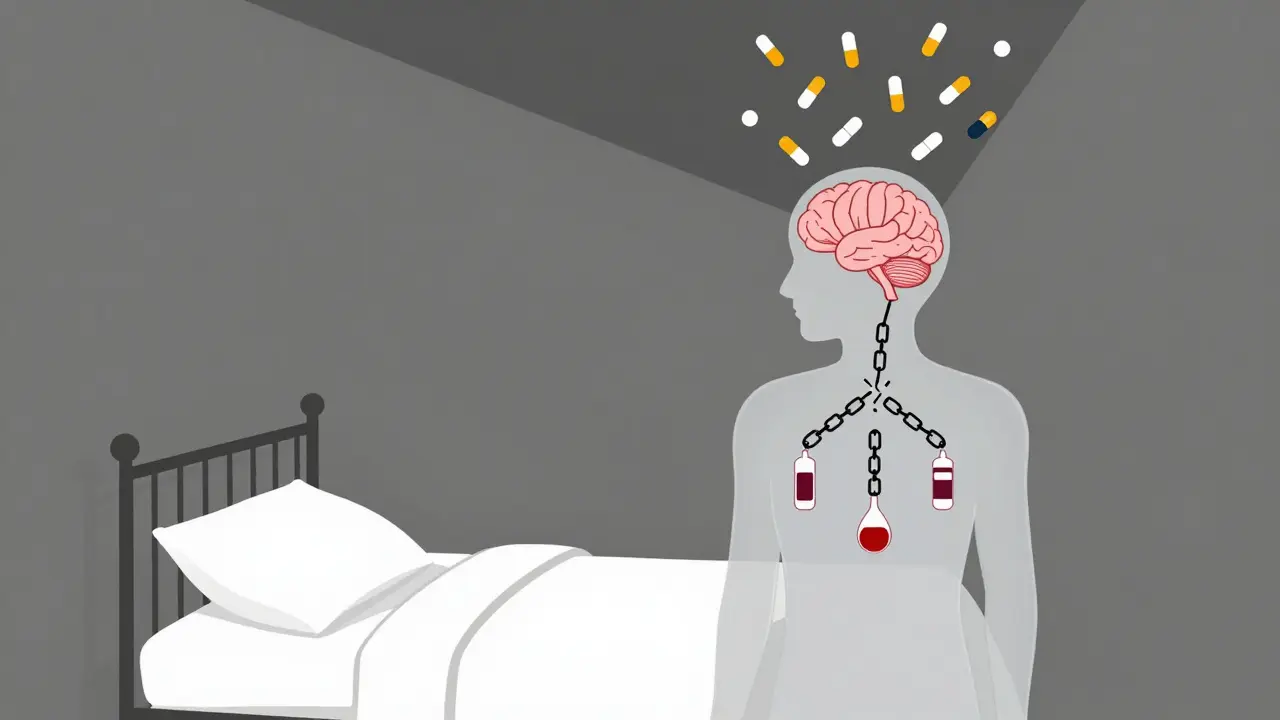
Opioids like oxycodone, hydrocodone, fentanyl, and morphine don’t just bind to pain receptors. They also slam the brakes on your hypothalamic-pituitary-gonadal (HPG) axis - the system that controls testosterone, estrogen, cortisol, and other key hormones. This isn’t a rare side effect. It’s the rule.Studies show that 63% of men on chronic opioid therapy develop biochemical hypogonadism - meaning their testosterone levels drop below 300 ng/dL. That’s not just low. That’s clinically significant. For many, this happens within just 30 days of starting daily use. By six months, nearly two out of three men are in the red zone.
Women aren’t spared. While estrogen levels often stay normal, testosterone drops. That’s enough to wreck libido, cause vaginal dryness, and trigger menstrual chaos. Up to 87% of premenopausal women on long-term opioids experience irregular periods. Nearly one in five stop getting their period entirely. And because these symptoms are often dismissed as ‘just stress’ or ‘aging,’ many women suffer in silence for years.
Why Do Opioids Do This?
It starts in the brain. Opioids suppress the release of gonadotropin-releasing hormone (GnRH). No GnRH means no luteinizing hormone (LH) from the pituitary. No LH means your testes or ovaries stop producing sex hormones. It’s a domino effect - and once it starts, it doesn’t reverse on its own.Dose matters. Even 60 morphine milligram equivalents (MME) per day - about two 30 mg oxycodone pills - can trigger hormonal disruption. At 120 MME or higher, the drop in testosterone becomes severe. That’s not a high dose for someone with chronic pain. It’s standard.
And it’s not just testosterone. Cortisol - your body’s main stress hormone - also drops in many users. That means fatigue, brain fog, and trouble handling stress. Combine that with low libido and depression, and it’s no surprise so many people on long-term opioids feel like they’re barely hanging on.
How Bad Is the Sexual Impact?
For men: erectile dysfunction hits 70-80%. Libido plummets. Orgasms feel flat or disappear. One Reddit user, ChronicPainWarrior87, wrote: ‘After two years on oxycodone, my testosterone was 180. My doctor didn’t test it until I asked. Took six months to get help.’ He’s not alone.For women: sex becomes painful or unappealing. Vaginal dryness, lack of arousal, and loss of interest are common. A 2021 survey of 342 women found 78% lost interest in sex. 41% said their depression got worse. And again - doctors often didn’t connect the dots.
It’s not just physical. The emotional toll is heavy. Many men feel emasculated. Many women feel broken. Partners notice. Relationships strain. Yet, in a 2023 JAMA study, only 38% of primary care doctors routinely screen for these issues.
What About Other Pain Medications?
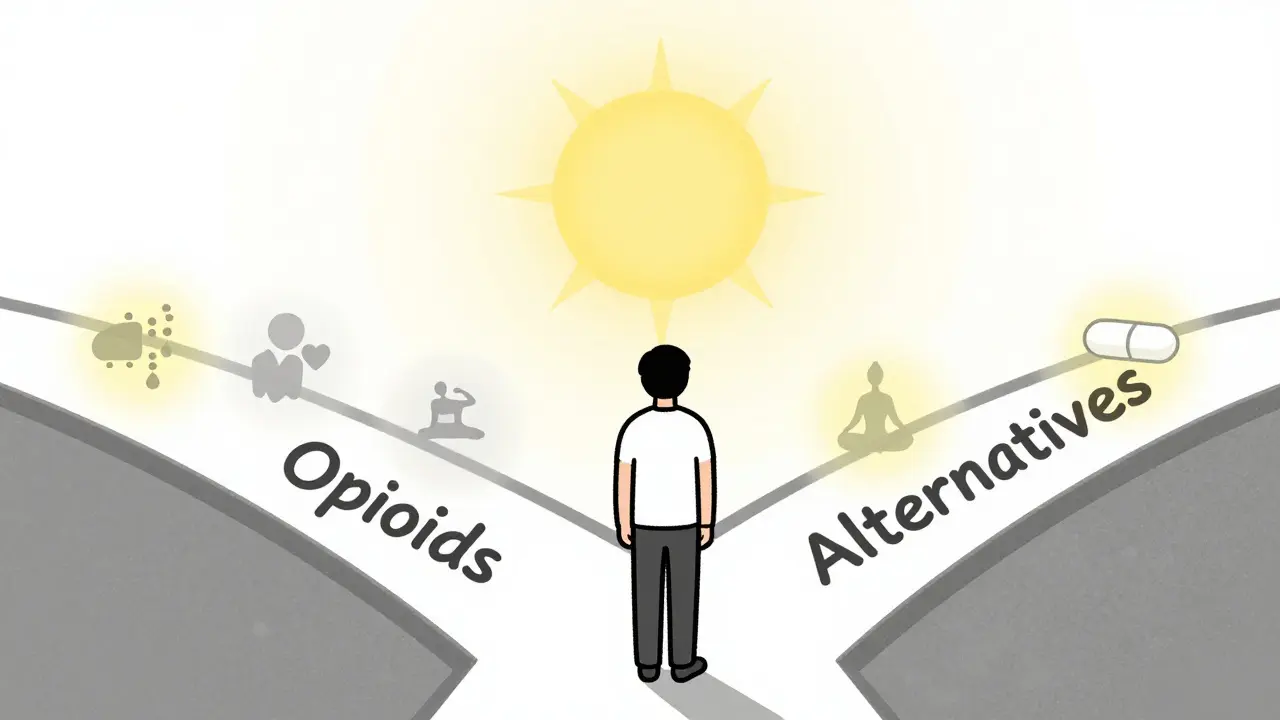
Not all painkillers are equal. NSAIDs like ibuprofen or acetaminophen might cause mild sexual side effects in 5-15% of users - but nothing like opioids. Gabapentinoids like pregabalin affect testosterone in only 12% of men - a fraction of the opioid rate.That’s why guidelines from the American Pain Society and the CDC now say: don’t start opioids for chronic non-cancer pain unless everything else has failed. Physical therapy, cognitive behavioral therapy, antidepressants like duloxetine, and even acupuncture have better long-term outcomes - without wrecking your hormones.
What Can You Do About It?
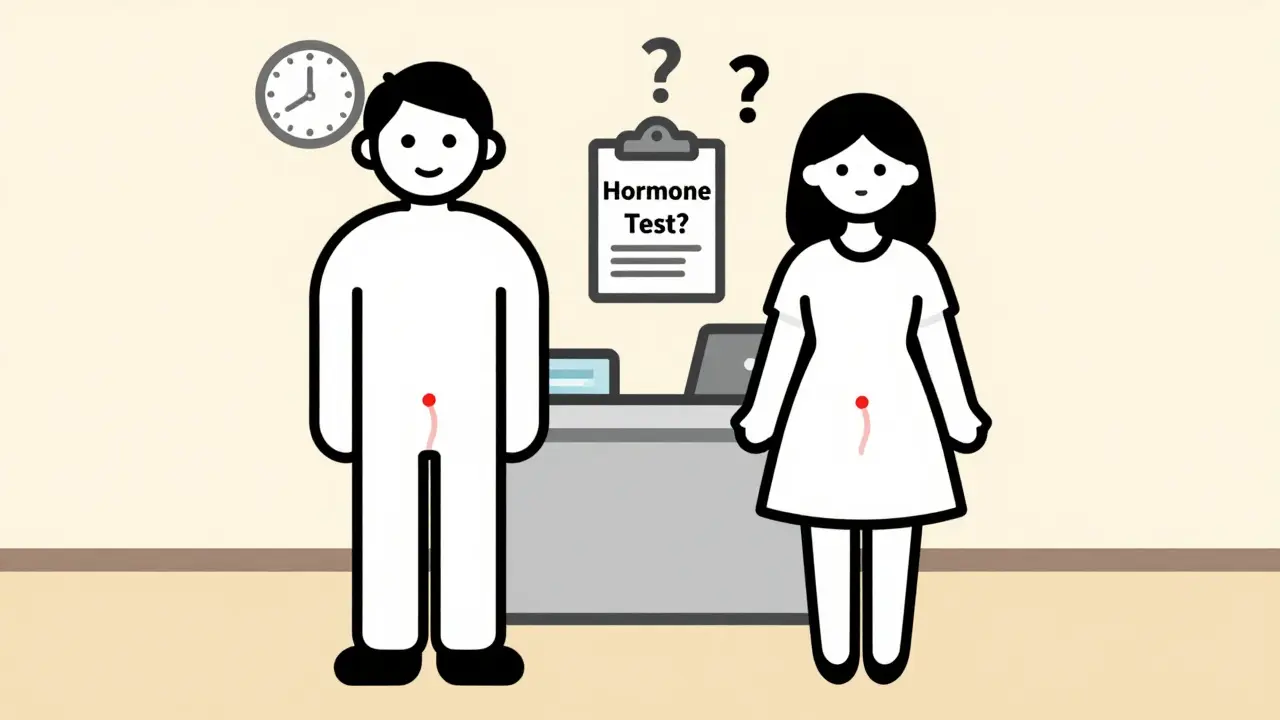
First: get tested. If you’ve been on opioids for more than 90 days, ask for a blood test for total testosterone (men) and a full hormone panel (women). Don’t wait for your doctor to bring it up. Most won’t.For men: testosterone replacement therapy (TRT) works. Studies show 70-85% of men see major improvements in libido, erections, and energy once levels are restored. TRT comes as gels, patches, or injections. But it’s not risk-free - it can raise red blood cell counts, so monitoring is required.
For women: options are limited. There’s no FDA-approved treatment for opioid-induced low libido in women. Some doctors use low-dose testosterone patches (1-2 mg daily) off-label, with 50-60% reporting improved desire. Others try adjusting opioid doses or switching to buprenorphine, which causes 40% less hormone disruption.
And here’s a game-changer: low-dose naltrexone. In a 2024 Cleveland Clinic study, combining a tiny dose of naltrexone with reduced opioid use improved testosterone levels by 25-35% in 68% of patients - without losing pain control. It’s not magic, but it’s promising.
Stopping Opioids Isn’t Easy - But It Can Be Done Safely
Some people think the only solution is quitting opioids cold turkey. That’s dangerous. Withdrawal can be brutal - nausea, sweating, anxiety, insomnia - and 73% of people who try it alone end up back on their old dose within 90 days.Successful tapering needs structure. Work with a pain specialist and an endocrinologist. Slow, supervised reductions - often over months - can help your body start making hormones again. Some patients regain normal testosterone levels within 3-6 months after stopping. Others need ongoing TRT. Either way, you don’t have to suffer in silence.
The Bigger Picture
This isn’t just about sex. It’s about quality of life. When your hormones are off, you’re not just less interested in intimacy - you’re more tired, more irritable, more depressed. You lose motivation. You pull away from friends. You stop exercising. It’s a downward spiral.And the system is failing. The Endocrine Society says failing to test for opioid-induced hypogonadism is ‘substandard care.’ Yet most clinics don’t even check. The FDA now requires warning labels on opioid packaging. But patients still aren’t being told.
There’s hope. The non-opioid pain market is growing fast - projected to hit $59 billion by 2027. New treatments are emerging. More doctors are learning. But until you speak up, you’re at risk.
What to Ask Your Doctor
If you’re on long-term opioids, here’s what to say next time you see your provider:- ‘Could my low energy or loss of sex drive be from my opioids?’
- ‘Can you test my testosterone level?’ (men)
- ‘Are my periods normal? Should I be worried about missed cycles?’ (women)
- ‘Are there alternatives to this dose or this drug?’
- ‘Could low-dose naltrexone or switching to buprenorphine help?’
You have the right to ask. And you deserve to feel like yourself again.
Can long-term opioid use cause permanent hormone damage?
In most cases, no - but it depends. Testosterone levels often bounce back after stopping opioids, especially if you taper slowly and give your body time. Some men recover normal levels within 3 to 6 months. Others need ongoing testosterone replacement. Women’s menstrual cycles usually return after stopping, though it can take months. The longer you’ve been on high doses, the longer recovery may take - but permanent damage is rare.
Do all opioids affect hormones the same way?
No. Morphine, oxycodone, and fentanyl are the worst offenders. Buprenorphine - especially in lower doses or as a buccal film (Belbuca) - causes about 40% less hormone disruption. Methadone also suppresses hormones, but less consistently than oxycodone. If you’re on long-term opioids and want to reduce side effects, talk to your doctor about switching to buprenorphine.
Is testosterone replacement therapy safe for men on opioids?
Yes, when monitored. TRT doesn’t interfere with pain relief and can improve energy, mood, and sexual function. The main risks are increased red blood cell count (polycythemia), which can raise stroke risk if unchecked, and possible prostate issues in older men. Regular blood tests every 3-6 months catch these early. Most men tolerate TRT well - and many say it’s the first time in years they’ve felt like themselves.
Why don’t doctors talk about this more?
Three reasons: they’re not trained to ask, they assume it’s ‘normal’ for chronic pain patients, or they’re uncomfortable discussing sex. A 2023 study found only 38% of primary care doctors routinely screen for opioid-induced hypogonadism. It’s not malice - it’s ignorance. That’s why you have to bring it up. Your symptoms aren’t ‘in your head.’ They’re biological - and treatable.
Can women get hormone therapy for low libido from opioids?
There’s no FDA-approved option yet, but off-label low-dose testosterone patches (1-2 mg daily) are used by some specialists with 50-60% success in improving desire. Other options include adjusting opioid doses, switching to buprenorphine, or using non-hormonal treatments like flibanserin (Addyi), though evidence is limited. The biggest barrier? Research. Only 2% of opioid trials include proper female sexual function data. That’s changing - slowly.
What are the best alternatives to opioids for chronic pain?
For most people, the best long-term options are physical therapy, cognitive behavioral therapy (CBT), movement-based therapies like yoga or tai chi, and certain antidepressants like duloxetine or amitriptyline. Nerve blocks, spinal cord stimulators, and acupuncture also help many. Non-opioid pain relievers like NSAIDs are safer for hormones. The key is combining approaches - not relying on one drug. Studies show this reduces opioid use by up to 50% while improving function and quality of life.
Ian Detrick
It’s wild how we treat pain like it’s a standalone problem, not a system-wide disturbance. Opioids don’t just mask pain-they mute your entire biological orchestra. Testosterone, cortisol, dopamine-all silenced by a molecule designed to trick your brain into thinking you’re safe. And we wonder why people feel empty even when the pain is gone. We’re not just treating symptoms; we’re erasing parts of what makes us feel alive.
Shruti Badhwar
While the medical data presented is compelling, it is imperative that we acknowledge the structural neglect of female patients in pain management. The fact that 87% of premenopausal women experience menstrual irregularities, yet are rarely screened, reflects a systemic bias. Hormonal health in women is too often dismissed as ‘emotional’ or ‘menstrual noise.’ This is not anecdotal-it is clinical negligence.
Liam Tanner
I’ve been on oxycodone for six years. No one ever mentioned hormones. I thought I was just getting older. Then I started waking up at 3 a.m. feeling like a ghost. No drive. No joy. My wife started crying during sex-not because I wasn’t trying, but because she could tell I wasn’t there. Got tested last year. T was at 190. Started TRT. Six months later, I hugged my kid for the first time in years and cried. It wasn’t the pain that broke me. It was the silence.
Ian Ring
Wow. This is… staggering. I mean, seriously-63% of men? 87% of women? That’s not a side effect. That’s a public health emergency. And yet, we’re still prescribing these like candy. I’ve got a cousin on fentanyl for back pain-she hasn’t had a period in 18 months. No one asked. No one tested. She just thought she was ‘stressed.’ We need to stop normalizing this. It’s not normal. It’s iatrogenic.
Angela Goree
Of course opioids wreck your hormones-you’re basically injecting poison into your system and wondering why your body falls apart. The real problem? People think they deserve relief at any cost. No. You don’t. You get physical therapy. You get acupuncture. You get your ass to yoga. America’s addiction to quick fixes is killing us-slowly, quietly, and with zero accountability.
Shanahan Crowell
My dad’s been on morphine for 11 years. He didn’t know his libido was gone because of the meds-he thought he was just ‘losing it.’ When we finally got him tested, his T was 140. He started TRT. Within months, he was gardening again. Laughing. Playing with his grandkids. He didn’t even realize how much he’d lost until he got it back. This isn’t just about sex. It’s about being present. And we owe it to people to tell them.
Kerry Howarth
Ask for a testosterone panel. If you’re on opioids longer than 90 days, it’s non-negotiable. No doctor will bring it up. So you have to. Print this post. Bring it to your appointment. Your health isn’t a suggestion-it’s your right.
Tiffany Channell
So now we’re giving men hormone shots because they got lazy and took pills instead of working out? This is why America’s falling apart. You want energy? Lift weights. You want sex drive? Stop being a zombie on prescription drugs. TRT is just a crutch for people who refuse to take responsibility for their bodies. The real epidemic isn’t opioid-induced hypogonadism-it’s entitlement.
Neela Sharma
Imagine your body as a garden. Opioids? They’re the drought. The weeds. The poisoned soil. You don’t just water the flowers-you have to dig out the rot. And no one tells you the roots are dying until the whole thing collapses. I’ve seen women cry because they stopped feeling desire-not because they didn’t love their partners, but because their biology had been hijacked. We don’t need more pills. We need more honesty. More listening. More humanity.
Michael Burgess
Just had a 45-min convo with my endo about this. Buprenorphine changed everything for me. My T went from 210 to 580 in 5 months. No TRT. Just a switch. And yes, I still have pain-but now I can feel my kid’s hug. I can wake up without dread. If you’re on high-dose opioids, talk to your doc about buprenorphine. It’s not a cure, but it’s a lifeline. And if they say no? Find someone who’ll listen. You deserve more than survival.
Hank Pannell
Let’s unpack the neuroendocrine cascade: opioid agonism → μ-receptor activation → inhibition of KNDy neurons → suppression of GnRH pulsatility → diminished LH/FSH → gonadal shutdown → hypogonadotropic hypogonadism. This isn’t ‘side effect’-it’s a pharmacologically induced endocrine disorder. The fact that primary care physicians aren’t trained to recognize this is a failure of medical education. We’re treating pain as a symptom, not a systemic insult. And until we reframe this as a neuroendocrine crisis-not a sexual complaint-we’ll keep missing the point.