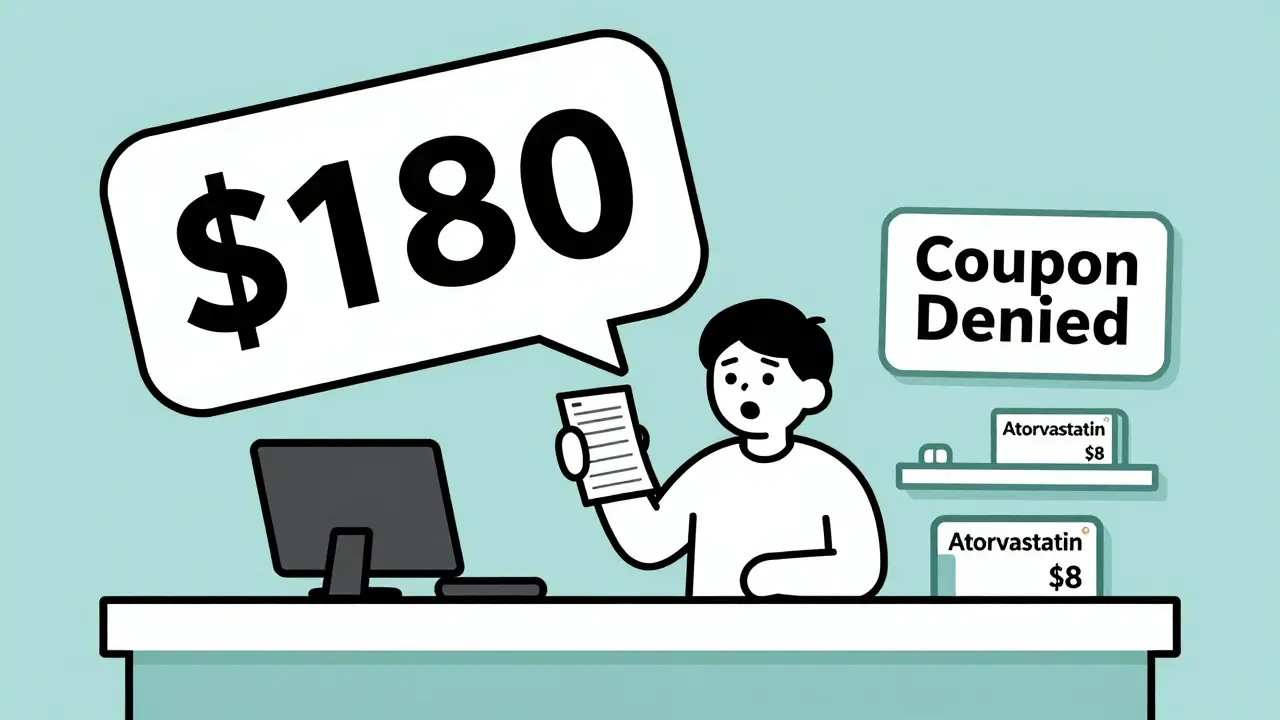
Every year, millions of Americans skip doses, split pills, or go without their meds because they can’t afford them. It’s not because they don’t care-it’s because the system is broken. You walk into the pharmacy with a script in hand, expecting to pay $20 for your blood pressure pill, and end up handing over $180. Or worse-you’re told your insurance won’t cover it until your doctor jumps through hoops called prior authorization. Meanwhile, your neighbor pays $5 for the same drug using a coupon. What’s going on?
Why Your Prescription Costs So Much (And Why It’s Not What You Think)
The sticker price on your prescription isn’t the real price. It’s called the list price, and it’s mostly for show. Pharmaceutical companies set it high to create room for discounts, rebates, and negotiations that happen behind closed doors between drugmakers, pharmacy benefit managers (PBMs), and insurers. You never see these deals. You just get stuck with the highest number. In 2025, Americans paid nearly three times more for the same brand-name drugs than people in Canada, Germany, or the UK. That’s not because our drugs are better-it’s because we have no price controls. Other countries negotiate drug prices directly with manufacturers. In the U.S., those negotiations have been left to private companies with profit motives. The Inflation Reduction Act of 2022 changed that-for Medicare. Starting January 2026, the government will negotiate prices for 10 high-cost drugs, and those new prices will cut out-of-pocket costs for nearly 19 million seniors by an average of $400 per year. That’s real savings. But if you’re under 65 and on private insurance, you’re still mostly on your own.Generics: The Secret Weapon You’re Not Using
Generic drugs are not cheaper because they’re worse. They’re cheaper because they don’t need to recoup billions in research and marketing costs. The FDA requires generics to have the same active ingredients, strength, dosage, and effectiveness as the brand-name version. Period. Yet, many doctors still default to prescribing brand names. Why? Sometimes it’s habit. Sometimes it’s pressure from reps. Sometimes you’re not even asked if you’d prefer the generic. If your script says “Lipitor,” ask for “atorvastatin.” If it says “Prilosec,” ask for “omeprazole.” You could save 80% or more. In 2025, the average cost of a 30-day supply of a generic statin was $8. The brand version? $156. That’s not a typo. And it’s not rare. For antidepressants, blood pressure meds, thyroid pills, and diabetes drugs-generics are almost always the smart choice. Some people worry generics are “inferior.” They’re not. A 2023 study in JAMA Internal Medicine reviewed over 1,000 bioequivalence studies and found no meaningful difference in effectiveness or side effects between generics and brands. The only exception? A few narrow-therapeutic-index drugs (like warfarin or levothyroxine), where consistency matters more. Even then, switching within the same generic manufacturer usually works fine.Coupons: A Lifeline-or a Trap?
Pharmaceutical coupons look like gifts. “Save $50 on your brand-name insulin!” “$0 copay for your antidepressant!” They’re everywhere-on TV, in mailers, on apps. But here’s the catch: they only work if your insurance lets them. Many insurers won’t let you use a coupon if you’re on a plan that uses a formulary. Why? Because coupons lower the list price, which reduces the rebate the PBM gets from the drugmaker. So your insurer might deny the coupon, forcing you to pay full price. Or worse-they’ll approve the coupon, but count the full list price toward your deductible. That means you’re paying more out of pocket than you think. The real winners? Drugmakers. Coupons keep people hooked on expensive brand-name drugs instead of switching to cheaper generics. They’re a marketing tool disguised as help. If you’re using a coupon, ask yourself: Is this drug really necessary? Is there a generic? Could I switch? There’s one exception: insulin. Thanks to new caps, many people with Medicare or private insurance now pay no more than $35 per month for insulin. But if you’re uninsured or underinsured, manufacturer coupons can be the only way to afford it. In those cases, use them. Just don’t assume they’ll always work.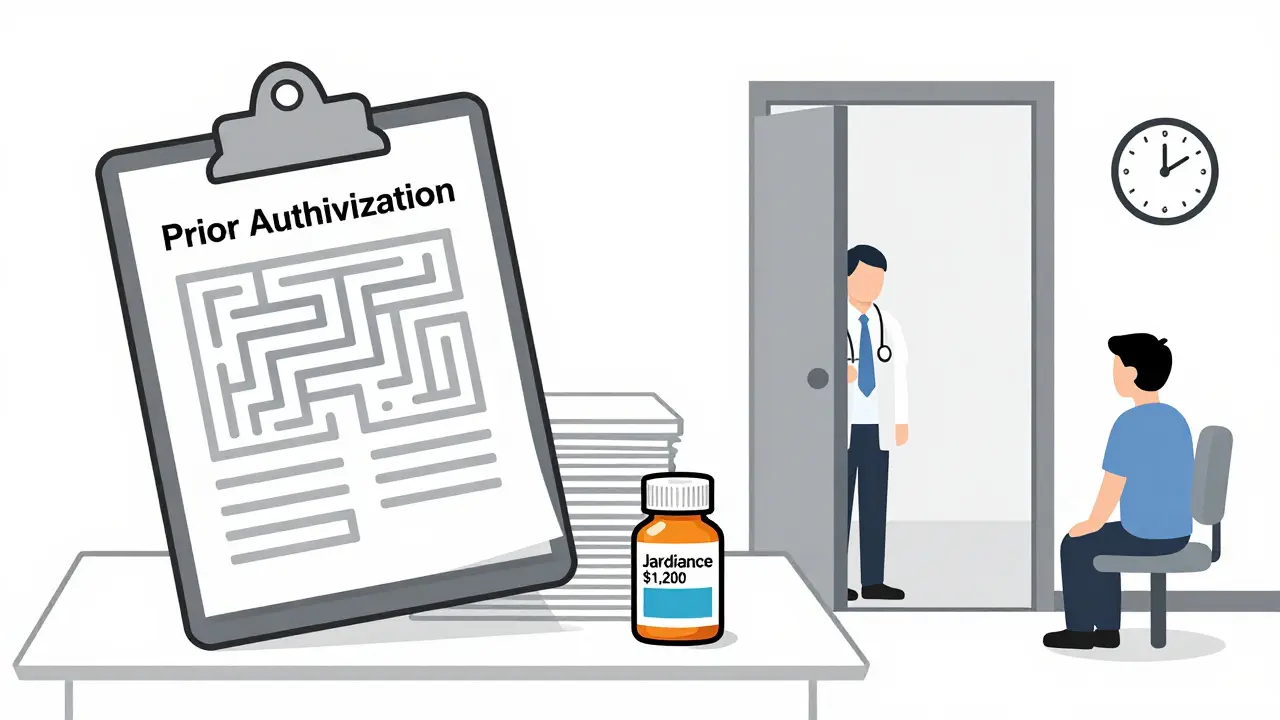
Prior Authorization: The Bureaucratic Wall Between You and Your Medicine
You’ve got a script. You’ve got the money. You’re ready to pick it up. Then the pharmacist says: “We need prior authorization.” Prior authorization is a gatekeeping tool used by insurers to control costs. Before they’ll pay for a drug, they require your doctor to prove it’s medically necessary, that cheaper options were tried first, or that the drug isn’t on their “preferred” list. It can take days. Sometimes weeks. For some drugs, it’s reasonable. You wouldn’t want someone on expensive biologics before trying a standard treatment. But for others? It’s pure bureaucracy. A 2024 survey by the American Medical Association found that 87% of physicians say prior authorization delays care. Nearly half say it’s led to patients abandoning treatment entirely. Worse? Many drugs that require prior authorization have no generic alternative. So you’re stuck waiting for approval to get a $1,200 pill your body actually needs. And if your doctor’s office is understaffed? The request might get lost. What can you do? Ask your doctor to file it immediately. Call your insurer and ask for a list of drugs that require prior authorization before you even get the script. Keep copies of everything. If your claim is denied, you have the right to appeal-and many appeals succeed if you push.What’s Changing in 2026 (And How It Affects You)
Big changes are coming, but they’re not universal. Medicare beneficiaries will benefit most. The $2,000 annual out-of-pocket cap on Part D drugs kicks in January 2026. The coverage gap (the infamous “donut hole”) is gone. And the first 10 negotiated drugs-like the diabetes drug Jardiance and the heart failure drug Entresto-will cost significantly less. But if you’re on private insurance? Not so much. The IRA doesn’t force private plans to adopt negotiated prices. Some insurers might follow suit to stay competitive. Others won’t. States are stepping in. Minnesota has started using Medicare’s negotiated prices as a ceiling for what insurers must pay. California and Colorado are testing similar models. If your state has a Prescription Drug Affordability Board, they might cap prices too. Meanwhile, the 340B program-designed to help clinics serving low-income patients-has been under attack. Some drugmakers now block 340B discounts at retail pharmacies, forcing patients to get meds through special clinics. That’s a problem if you don’t live near one.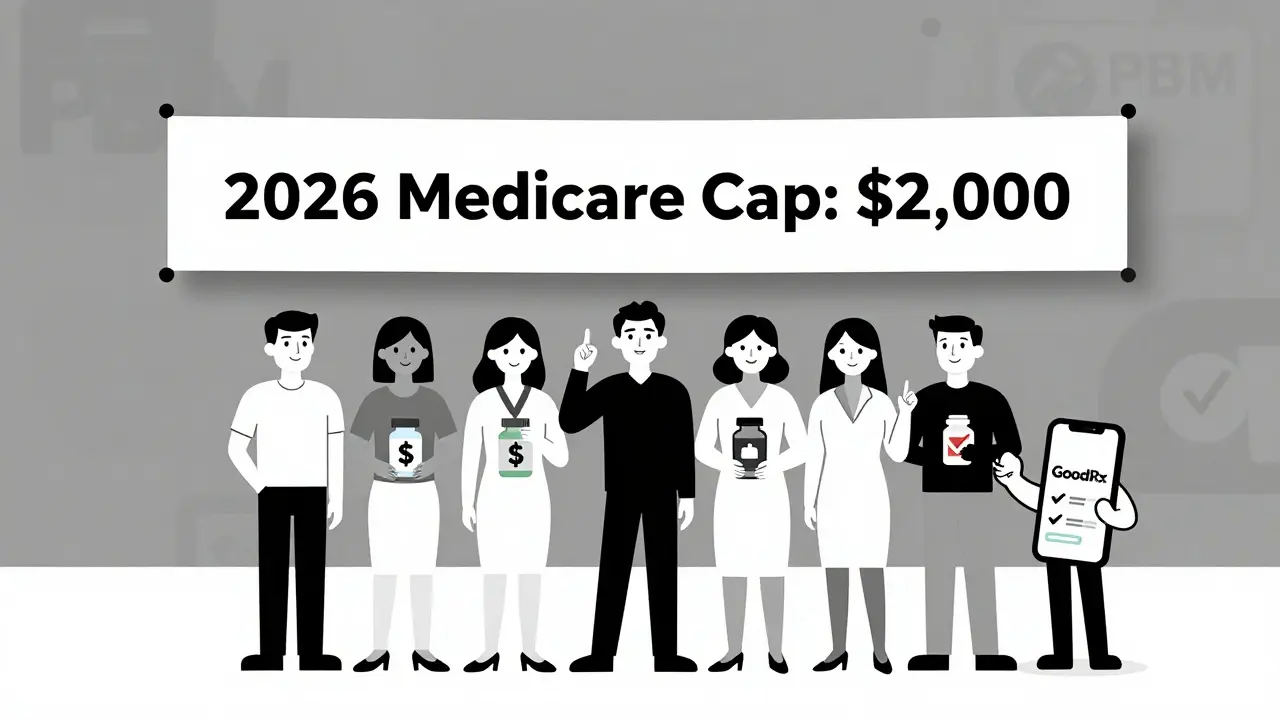
What You Can Do Today
You can’t fix the system overnight. But you can take control of your costs right now.- Always ask: “Is there a generic version?” If yes, insist on it.
- Use GoodRx or SingleCare to compare cash prices at nearby pharmacies. Sometimes paying cash is cheaper than using insurance.
- Ask your doctor to check if your drug requires prior authorization before writing the script.
- If you’re on Medicare, log into your plan’s website and check the formulary. Know which drugs are tiered and what your copay will be.
- Don’t assume coupons are free money. Ask your pharmacist: “Will this coupon reduce my deductible?” If not, it might not help.
- If you’re struggling to pay, ask about patient assistance programs. Most drugmakers have them. You just have to ask.
Final Thought: You’re Not Alone
You’re not lazy. You’re not careless. You’re just caught in a system designed to confuse and overcharge. But awareness is power. The more you know about generics, coupons, and prior authorizations, the less power the system has over you. The next time you’re handed a prescription, don’t just walk away. Ask questions. Push back. Advocate. Because your health shouldn’t depend on how much you can afford.Are generic drugs really as effective as brand-name drugs?
Yes. The FDA requires generic drugs to contain the same active ingredients, in the same strength and dosage form, and to work the same way as the brand-name version. Studies, including a major review in JAMA Internal Medicine, show no meaningful difference in effectiveness or safety for most medications. The only exceptions are a few narrow-therapeutic-index drugs like warfarin or levothyroxine, where consistency matters more-but even then, switching between generic manufacturers is usually safe.
Why does my insurance deny my coupon?
Insurers often block coupons because they reduce the list price of the drug, which lowers the rebate the pharmacy benefit manager (PBM) receives from the drugmaker. Even if the coupon saves you money at the counter, your insurer might count the full list price toward your deductible, meaning you pay more overall. Always ask your pharmacist: “Will this coupon reduce my deductible?” If not, it might not be worth using.
What is prior authorization and why does it delay my medication?
Prior authorization is a requirement by your insurance company that your doctor prove your medication is medically necessary before they’ll pay for it. This often means showing you tried cheaper alternatives first. It can take days or weeks, and if your doctor’s office is overwhelmed, the request can get lost. About 87% of doctors say it delays care, and nearly half say patients have stopped taking needed meds because of it. Always ask your doctor ahead of time if your prescription requires prior authorization.
Can I save money by paying cash instead of using insurance?
Yes, sometimes. Especially for generics. A 30-day supply of metformin might cost $15 with insurance but only $4 if you pay cash. Use apps like GoodRx or SingleCare to compare cash prices at nearby pharmacies. If your insurance plan has a high deductible or coinsurance, paying cash can be cheaper-even if you’re insured.
What’s new with Medicare drug pricing in 2026?
Starting January 2026, Medicare will cap out-of-pocket drug costs at $2,000 per year, eliminate the coverage gap (donut hole), and begin negotiating prices for 10 high-cost drugs. The first negotiated drugs include Jardiance, Entresto, and others. This will save the average Medicare beneficiary about $400 per year. These changes only apply to Medicare Part D, not private insurance.
Are there programs to help me afford my meds if I can’t pay?
Yes. Most major drugmakers offer Patient Assistance Programs (PAPs) for low-income, uninsured, or underinsured patients. These can provide free or deeply discounted medications. You can find them through NeedyMeds.org or by calling the manufacturer directly. You’ll usually need proof of income and a doctor’s signature, but the process is straightforward.
Solomon Ahonsi
This whole system is a scam. I pay $200 for a pill that costs $2 to make and the pharma bros laugh all the way to the bank. Fuck this.
George Firican
The tragedy isn't just the cost-it's the moral inversion. We've turned healthcare into a marketplace where compassion is the first thing sacrificed for profit margins. The fact that a senior in Minnesota can get insulin for $35 while a young adult in Ohio pays $500 for the same vial isn't a market failure-it's a societal failure. We've normalized absurdity until it feels inevitable. But it isn't. It's manufactured. And we're the ones who let them get away with it.
Matt W
I had to split my blood pressure pills for six months because my deductible was $6k. I didn't skip doses-I just cut them in half. My doctor didn't even ask if I could afford it. I'm not lazy. I'm just broke. And I'm not alone.
Anthony Massirman
Generics are the real MVP. Always ask.
jay patel
Man i was jst thinkin bout this yesterday. My cousin in delhi pays $1 for metformin and here i pay 40 even with insurance. The usa is so rich yet so dumb. Why cant we just copy canada? is it the lobbyists? or are we just too busy scrolling tiktok to care?
Ansley Mayson
People complaining about drug prices are the same ones who think Medicare for All is socialism. You want cheap meds? Then stop voting for the people who take the pharma money. Simple.
phara don
So if I use a coupon, does that mean my insurer is still getting a rebate from the drugmaker? Or is the rebate gone entirely?
Hannah Gliane
OMG I can't believe you're still using generics?? 😭 Like... do you even know what's in them?? 🤦♀️ I paid $180 for my brand-name antidepressant and my skin is glowing. Generics are for people who don't care about quality. #PharmaIsNotTheVillain
Murarikar Satishwar
I work in a clinic in rural India and we use generic drugs daily. The quality is excellent. The science is solid. The only barrier here is misinformation and marketing. If more people knew how rigorously generics are tested, the stigma would vanish. Ask your pharmacist for the manufacturer name-some generics are made in the same factories as the brand. You're not saving money by buying the logo.
Bob Hynes
I live in Vancouver and we pay like $12 for the same meds. I don't get how Americans let this happen. It's like we're proud of being exploited. Like 'oh yeah, I paid $150 for a pill, I'm so American.' Bro. We're better than this.
larry keenan
The structural inefficiencies within the PBM-industrial complex are non-trivial. The lack of transparency in rebate allocation, coupled with the perverse incentives embedded in the formulary design, creates a misalignment between patient outcomes and financial incentives. A systems-level intervention is required to recalibrate the value chain.
Nick Flake
This post hit me right in the chest. I lost my job last year and my insulin went from $35 to $400. I cried in the pharmacy parking lot. But then I found a patient assistance program through NeedyMeds. They sent me free meds for six months. I didn't know it existed until I started asking. Don't be afraid to ask. You deserve to live.
Akhona Myeki
In South Africa, we have universal access to essential medicines through public health clinics. The government negotiates bulk pricing. The result? No one dies because they can't afford a pill. The United States is the richest country on Earth. And yet, you have people choosing between insulin and rent. This is not capitalism. This is negligence dressed in a suit.