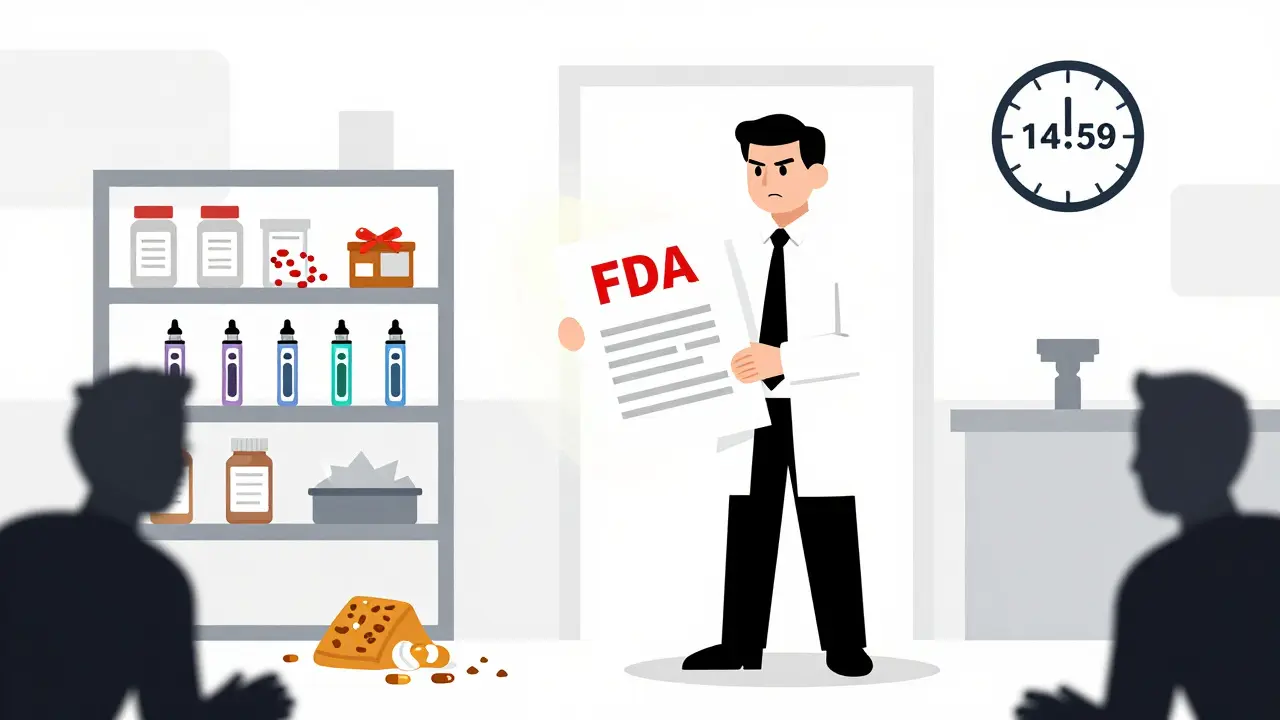
The U.S. Food and Drug Administration doesn’t wait for a public health crisis to act. When manufacturers cut corners, mislabel products, or skip critical safety steps, the FDA steps in - and it’s getting tougher. In 2025, the agency issued more than 700 warning letters targeting companies selling unauthorized tobacco products alone. That’s not an outlier. It’s part of a deliberate, nationwide shift toward aggressive oversight across pharmaceuticals, food, biologics, and medical devices. If you’re a manufacturer selling products in the U.S., ignoring FDA rules isn’t just risky - it’s a direct path to product seizures, fines, or even criminal charges.
What Is an FDA Warning Letter, Really?
An FDA Warning Letter isn’t a gentle reminder. It’s the agency’s formal signal that you’ve crossed a line. These letters are issued when inspectors find violations during facility audits, and they’re not optional. The FDA uses them to notify companies that their products, labeling, manufacturing, or marketing practices violate the Federal Food, Drug, and Cosmetic Act (FDCA). Unlike Untitled Letters - which are used for minor or unclear issues - Warning Letters are reserved for violations of regulatory significance.Here’s how it works: After an inspection, if FDA inspectors find serious issues, they issue an FDA Form 483 listing observations. If those issues aren’t fixed quickly or are severe enough, the agency follows up with a Warning Letter. Recipients have just 15 business days to respond with a detailed corrective action plan. No extension. No excuses. The letter itself is signed by the Director of CDER (Center for Drug Evaluation and Research) or CBER (Center for Biologics Evaluation and Research), not a junior reviewer. That change, implemented in 2024, means these letters now carry the full weight of the agency’s leadership.
And the tone has changed. Older letters said, “We request you cease violations.” New ones say, “FDA requests you take immediate action.” That’s not just wording - it’s a power shift. The FDA is no longer asking. It’s commanding.
What Happens If You Ignore It?
Ignoring a Warning Letter is one of the worst decisions a manufacturer can make. The FDA doesn’t wait around. If your response is late, incomplete, or unconvincing, the agency moves fast. Here’s what comes next:- Civil Monetary Penalties (CMPs): Fines range from $10,000 to $1 million per violation under 21 U.S.C. § 333(f). For a company with multiple violations, that adds up fast.
- Import Alerts: If you import products into the U.S., your goods can be automatically detained at the border without physical inspection. You get 30 days to prove compliance - if you can’t, your shipment is refused and you’re barred from future imports.
- Recalls: The FDA can demand a voluntary recall, or if you refuse, issue a mandatory recall order. This forces you to pull products from shelves, warehouses, and even consumers’ hands.
- Withdrawal of Approval: For drugs, biologics, or devices, the FDA can permanently remove your product’s authorization. That’s a death sentence for your product line.
- Criminal Charges: Under Section 303(f) of the FDCA, delaying or denying an inspection - like refusing access to records or redacting documents - can lead to federal prosecution. This applies even to foreign facilities.
There’s no second chance after a Warning Letter. The FDA documents every response. If you fail once, they watch you closer the next time. And with unannounced inspections on the rise, you won’t get a heads-up.
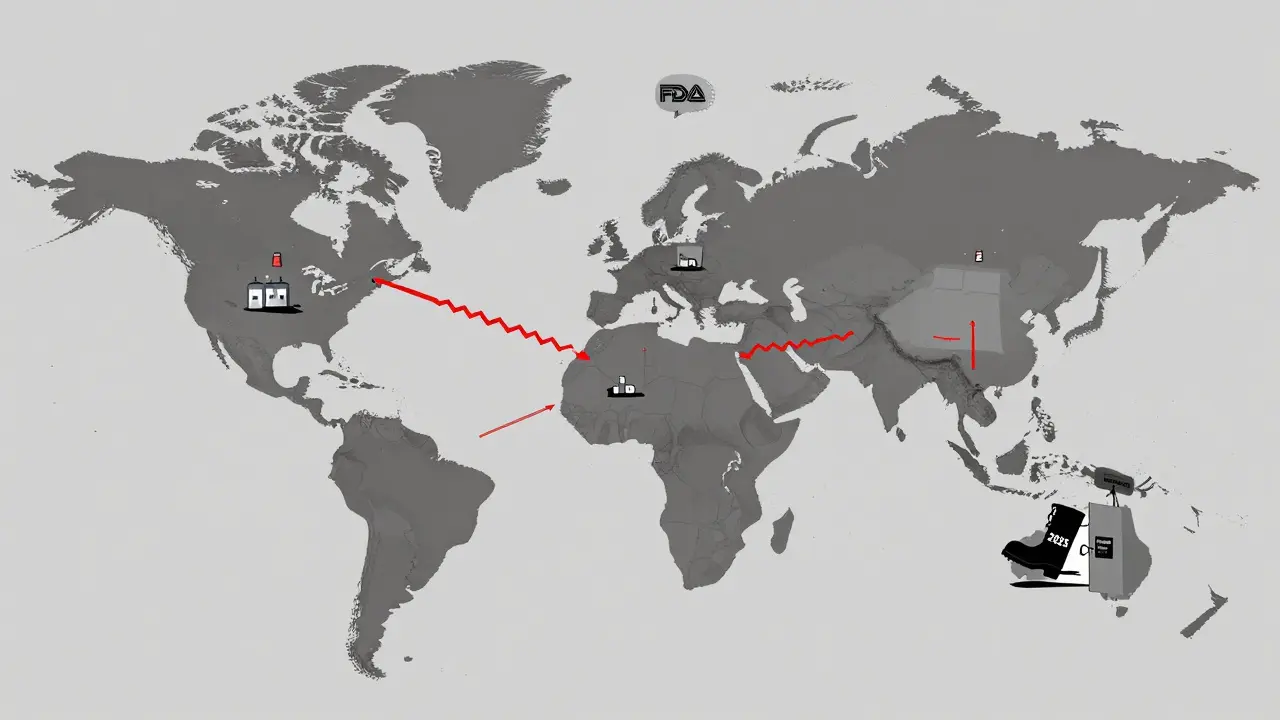
How Enforcement Differs by Industry
The FDA doesn’t treat all industries the same. Each sector has its own compliance traps.Pharmaceuticals and Compounding: In the first half of 2025 alone, the FDA issued 58 Warning Letters targeting telehealth companies and compounding pharmacies selling unauthorized versions of GLP-1 drugs like semaglutide and tirzepatide. These companies were marketing compounded drugs as if they were FDA-approved, making false claims about weight loss or diabetes treatment. The FDA considers this misbranding under Sections 502(a) and 502(bb) of the FDCA. The letters don’t mince words - they state the product is “not approved” and “not safe or effective.”
Food Manufacturing: In 2024, the FDA issued 149 Warning Letters to human food facilities and 37 to animal food facilities. The top violations? Failure to implement Hazard Analysis and Risk-Based Preventive Controls (HARPC) under the Food Safety Modernization Act (FSMA). Many companies still think they only need to follow old cGMP rules. They don’t. The FDA now expects proactive risk controls - not just reactive cleaning.
Tobacco Products: This is where enforcement is the most aggressive. Since 2021, the FDA has issued over 700 Warning Letters to companies selling unauthorized electronic nicotine delivery systems (ENDS), especially those targeting youth with flavored vapes. Even if a product is technically “legal” in another state, if it lacks premarket authorization, the FDA treats it as illegal. The agency has made this its top priority - and it’s not backing down, even amid legal challenges.
Biologics: The Center for Biologics Evaluation and Research (CBER) uses specialized tools like NIDPOE Letters (Notice of Initiation of Disqualification Proceedings and Opportunity to Explain) to suspend or disqualify manufacturers of vaccines, blood products, and gene therapies. These letters can shut down production lines without a court order.
The New Reality: Unannounced Inspections
One of the biggest shifts since 2023 is the FDA’s push for unannounced inspections - especially for foreign manufacturers. In 2025, the agency planned a 300% increase in these surprise visits. Why? Because companies that know an inspection is coming have time to clean up, hide records, or stage fake compliance.Now, inspectors show up without notice. They walk into facilities, demand access to digital records, and check raw data logs. If you refuse, or if you redact documents claiming “trade secrets,” you’re at risk of criminal charges. McGuireWoods attorneys call this the FDA’s “underutilized but powerful” tool - and companies are starting to feel the pressure.
Foreign manufacturers are especially vulnerable. Many assume U.S. rules don’t apply to them. They’re wrong. If your product enters the U.S. market, you’re subject to the same rules as a company in Ohio. And the FDA is now hiring more inspectors trained specifically for international operations.
What Manufacturers Must Do Now
If you’re a manufacturer, here’s what you need to do - not next quarter, not next year - right now:- Know your FDA classification. Are you making a drug, device, food, or supplement? Each has different rules.
- Map your compliance gaps. Audit your labeling, manufacturing processes, recordkeeping, and marketing materials. Look for anything that could be interpreted as misbranding, adulteration, or false claims.
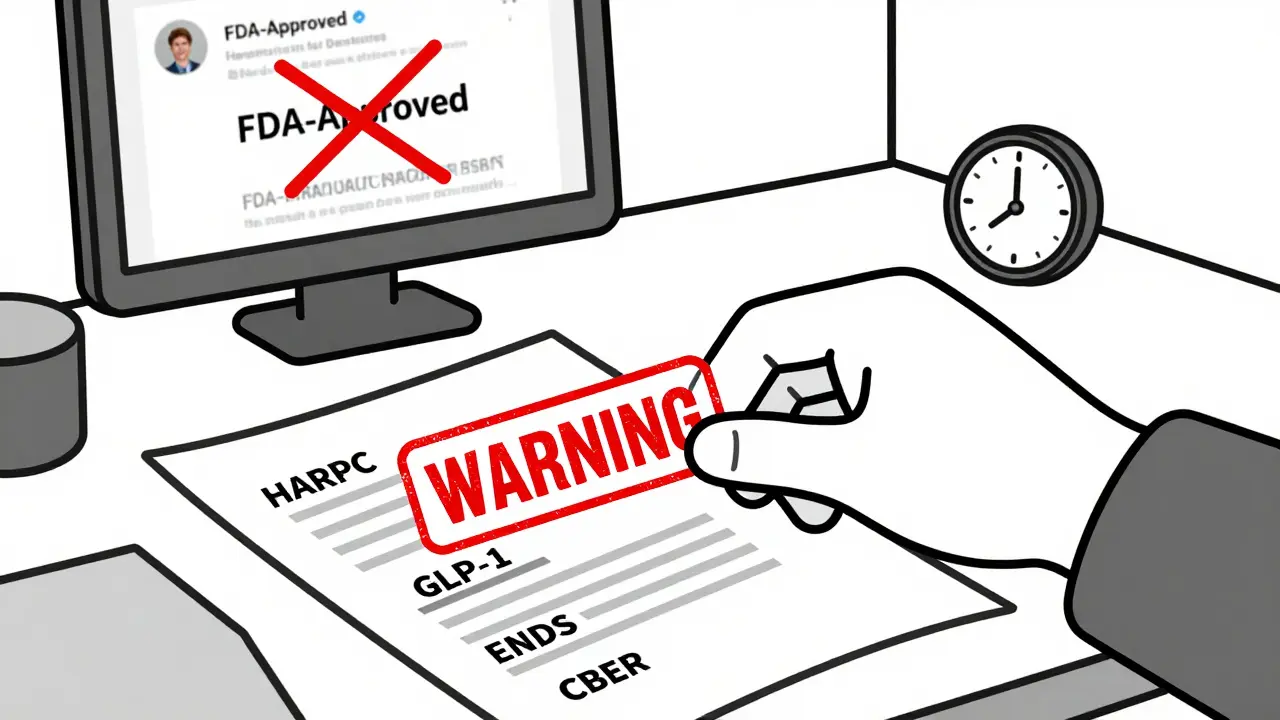
- Train your team. Quality assurance, regulatory affairs, and marketing staff must understand FDA expectations. A social media post saying “FDA-approved” for a compounded drug? That’s a Warning Letter waiting to happen.
- Prepare for inspections. Have your records digital, organized, and ready to share. No redactions. No delays. No excuses.
- Have a response plan. If you get a Warning Letter, assemble your team within 24 hours. Legal counsel, QA, and executives must work together. Don’t wait for your lawyer to reply - act immediately.
The FDA isn’t trying to shut down businesses. It’s trying to protect consumers. But if you’re cutting corners, they will find you. And they will act.
What’s Next for FDA Enforcement?
The agency’s 2026 budget request includes $50 million for more inspectors, better data tools, and expanded digital monitoring. That means more surveillance of websites, social media, and online marketplaces. If you’re advertising a drug on Instagram or Amazon, the FDA is watching.Expect more Warning Letters signed by the Office of the Commissioner - not just center directors. That means decisions are becoming more centralized, consistent, and harder to appeal. The days of negotiating with a junior reviewer are over.
The message is clear: Compliance isn’t optional. It’s the cost of doing business in the U.S. market. And the FDA is no longer playing nice.
What happens if I don’t respond to an FDA Warning Letter?
If you don’t respond within 15 business days, or if your response is inadequate, the FDA can escalate enforcement. This includes civil penalties up to $1 million per violation, import detention, mandatory product recalls, withdrawal of product approval, or even criminal prosecution for obstructing inspections. The FDA considers silence or delay as evidence of non-compliance.
Can the FDA shut down my facility?
The FDA cannot directly shut down a facility with a single action, but it can effectively do so. By issuing a Warning Letter, followed by a mandatory recall, import alert, or withdrawal of approval, the agency removes your ability to legally sell your product. Without sales, operations stop. In extreme cases, the FDA can seek a court order to halt production if public health is at risk.
Do FDA Warning Letters apply to foreign companies?
Yes. Any company that exports products to the U.S. is subject to FDA regulations. Foreign manufacturers are subject to unannounced inspections, import detentions, and Warning Letters. The FDA has increased inspections of overseas facilities by 300% since 2023. Ignoring FDA rules won’t protect you - it just delays the consequences.
What’s the difference between a Warning Letter and an Untitled Letter?
An Untitled Letter is for minor or ambiguous violations - often about marketing claims that are misleading but not clearly illegal. It’s a heads-up, not a threat. A Warning Letter is for serious, documented violations of regulatory standards - like unsafe manufacturing, false labeling, or unapproved drugs. It’s the first step toward legal penalties and requires a formal, time-bound response.
Can I appeal an FDA Warning Letter?
You can respond to a Warning Letter with evidence that the violation was incorrect or has been corrected. But there’s no formal “appeal” process. The FDA doesn’t review letters through a court-like system. Your only path is to fix the problem, prove it, and hope the agency closes the case. If the FDA still disagrees, they move to higher enforcement - fines, recalls, or legal action.
How long does a Warning Letter stay on record?
FDA Warning Letters are public records and remain on the agency’s website indefinitely. Even if you fix the issue, the letter stays posted. Future customers, partners, or regulators will see it. Some companies have lost contracts or investment because of past Warning Letters - even years after the violation was resolved.
Are FDA Warning Letters only for drugs?
No. The FDA issues Warning Letters across all regulated products: food, dietary supplements, medical devices, tobacco, biologics, and cosmetics. In 2024, more than 180 letters went to food manufacturers for failing to follow FSMA preventive controls. The agency’s authority covers anything it regulates - not just pharmaceuticals.
Vatsal Srivastava
The FDA's been turning into a regulatory cult with its unannounced raids and 15-day ultimatums
Real businesses don't operate like this
It's not compliance it's control
And don't get me started on how they treat foreign manufacturers like second-class citizens
Brittany Marioni
Okay, let's pause for a second-this is actually really important, and I want to make sure everyone understands: the FDA isn't being 'harsh,' they're being responsible. Manufacturers who skip safety protocols aren't just 'cutting corners,' they're putting lives at risk. And yes, the 15-day response window is tight-but when it's about contaminated baby formula or unapproved GLP-1 injections, do you really want them to wait? I'm not saying it's perfect, but I'm saying it's necessary. Let's not confuse toughness with tyranny.
Bob Hynes
bro the FDA is straight up playing hardball now
like i get it they wanna protect people but man
theyre treating small compounding labs like theyre drug cartels
one guy in a garage trying to make a niche hormone blend gets a warning letter signed by the director??
the whole system feels like it got hijacked by bureaucrats with power trips
and dont even get me started on how they ignore the fact that 70% of the meds we use are made overseas and we still act like they're sneaking in under the radar
Akhona Myeki
im from india and i work with a few small pharma co's that export to the us
we got a warning letter last year for mislabeled packaging (typo in the batch number, honestly)
we fixed it in 3 days and sent proof
they still kept the letter up for 2 years
now no investor wants to touch us
the system is broken
it punishes mistakes more than malice
and no one gets a second chance
even if you fix it
Chinmoy Kumar
wait so if i run a small herbal supplement biz in missouri and i say 'supports immune health' on the label, that's a warning letter?
but if i say 'boosts immunity' it's criminal?
what's the difference?
the fda is so inconsistent it's almost comical
and why do they care if a vape flavor is 'youth targeting' when teens just buy whatever's on the shelf anyway?
maybe they should focus on enforcement, not psychology
Brett MacDonald
the fda isn't enforcing rules
they're enforcing a belief system
the belief that all innovation must be pre-approved
that all risk must be eliminated
that no one should be allowed to make a choice unless the government says it's safe
and now they're using digital surveillance to police instagram ads
next they'll be scanning your google searches for 'natural sleep aid'
we're not regulating products anymore
we're regulating thought
Sandeep Kumar
india makes 20% of the world's generic drugs
yet every time we export to the us they act like we're smuggling cocaine
we follow our own standards and they're better than most
but no
they need us to bow to their rules
even when their rules are outdated
and then they wonder why we're building new pharma hubs in africa
the fda thinks they own the world
they don't
Gary Mitts
so you're telling me if i accidentally label a vitamin bottle 'supports heart health' instead of 'may support heart health' they'll seize my inventory and sue me?
got it
thanks for the update
now i know not to breathe near a pharmacy
Anthony Massirman
the fda is the ultimate gatekeeper
and they're not just watching
they're hunting
they're using ai to scan social media for keywords
they're sending inspectors to factories in bangladesh at 5am
they're treating every typo like a crime against humanity
and honestly?
i'm kinda impressed
they're not bluffing
they're not waiting
they're not negotiating
they're just… doing it
and if you're not ready?
you're dead
no second chances
no mercy
just a public letter and a 30-day countdown to oblivion
respect the machine