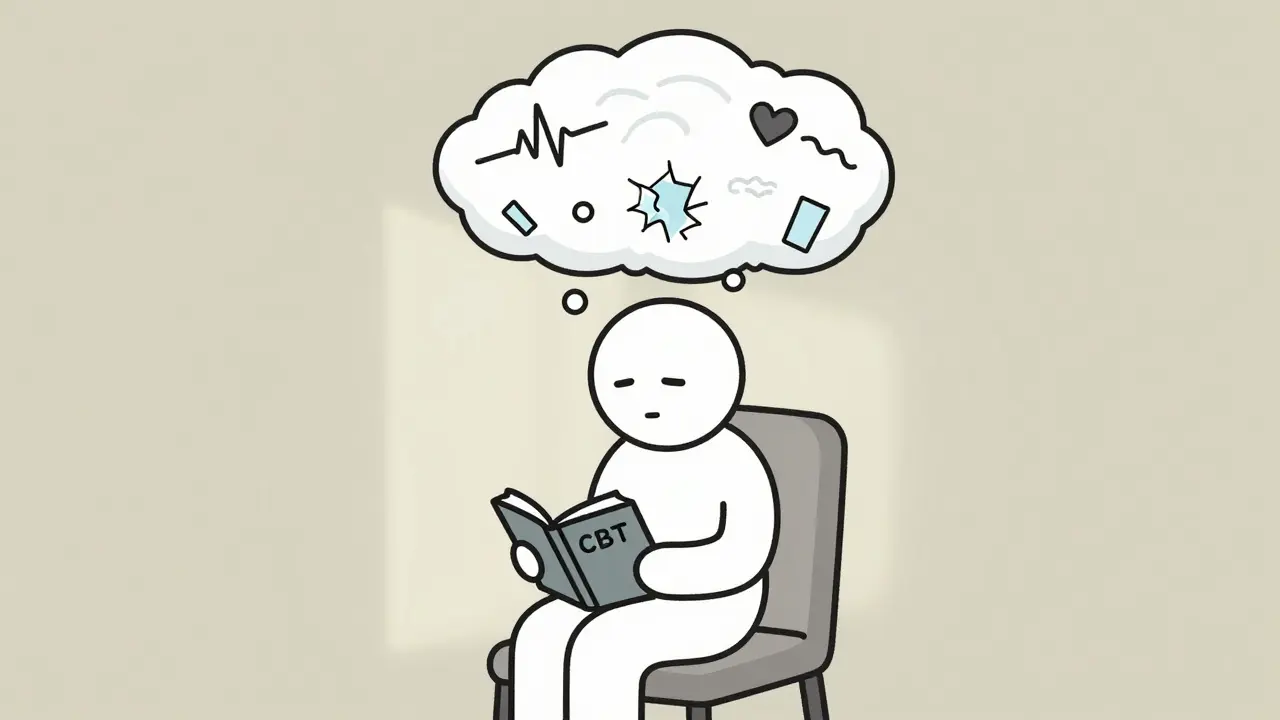
What Are Anxiety Disorders?
Anxiety disorders aren’t just feeling nervous before a presentation or worrying about bills. They’re persistent, overwhelming, and often irrational fears that take over your life. You might feel your heart racing for no reason, avoid social events because you’re terrified of being judged, or spend hours checking locks and appliances just to feel safe. These aren’t quirks-they’re clinical conditions recognized by the Diagnostic and Statistical Manual of Mental Disorders, Fifth Edition (DSM-5) and backed by decades of research.
According to the National Institute of Mental Health (NIMH), nearly 1 in 5 U.S. adults deals with an anxiety disorder each year. Women are almost twice as likely to be affected as men. The symptoms don’t just fade with time. Left untreated, they can lead to missed work, strained relationships, and even physical health problems like high blood pressure or digestive issues.
Seven Main Types of Anxiety Disorders
Anxiety isn’t one thing. It shows up in different forms, each with its own triggers and patterns. Here are the seven most common types:
- Generalized Anxiety Disorder (GAD): Constant, excessive worry about everyday things-work, health, family, even minor decisions. People with GAD often feel on edge, fatigued, and struggle to concentrate. It lasts at least six months and isn’t tied to one specific event.
- Panic Disorder: Sudden, intense episodes of fear that hit without warning. These panic attacks include racing heart, chest pain, shaking, dizziness, and the terrifying feeling that you’re dying or losing control. After an attack, people often live in fear of the next one.
- Social Anxiety Disorder: Extreme fear of being watched, judged, or embarrassed in social situations. This isn’t shyness. It’s so severe that people avoid speaking up in meetings, eating in public, or even making phone calls.
- Specific Phobias: Overwhelming fear of a specific object or situation-heights, spiders, flying, needles. People know their fear is irrational, but the physical reaction is real and intense.
- Obsessive-Compulsive Disorder (OCD): Unwanted, intrusive thoughts (obsessions) that trigger repetitive behaviors (compulsions) like hand-washing, checking, or counting. These rituals are meant to reduce anxiety but only offer temporary relief.
- Separation Anxiety Disorder: Not just for kids. Adults with this condition experience extreme distress when separated from loved ones, fearing something bad will happen to them or themselves.
- Selective Mutism: A child’s inability to speak in certain settings-like school-even though they speak normally at home. It’s not defiance; it’s a paralyzing fear of speaking.
Each type has unique diagnostic criteria, but they all share one thing: the fear is out of proportion to the actual threat.
Physical and Mental Symptoms You Can’t Ignore
Anxiety doesn’t just live in your mind. It shows up in your body. Common physical signs include:
- Heart rate jumping to 110-140 beats per minute during panic attacks
- Excessive sweating (reported by 92% of panic disorder patients)
- Trembling or shaking (87% prevalence)
- Shortness of breath (83%)
- Dizziness, nausea, or stomach pain
Cognitive symptoms are just as disruptive:
- Racing thoughts that won’t shut off (82%)
- Difficulty focusing at work or school (89% in GAD cases)
- Catastrophic thinking: "What if I collapse? What if I lose my job? What if I die?"
- Rumination: Replaying the same worry over and over, like a broken record
Emotionally, people often feel:
- An impending sense of doom (95% during panic attacks)
- Fear of losing control or going crazy
- Constant dread, even when nothing is wrong
These aren’t "bad days." They’re symptoms of a brain stuck in fight-or-flight mode-even when there’s no real danger.
What Treatments Actually Work?
There’s no magic pill, but science has identified two treatments that consistently help: Cognitive Behavioral Therapy (CBT) and Selective Serotonin Reuptake Inhibitors (SSRIs).
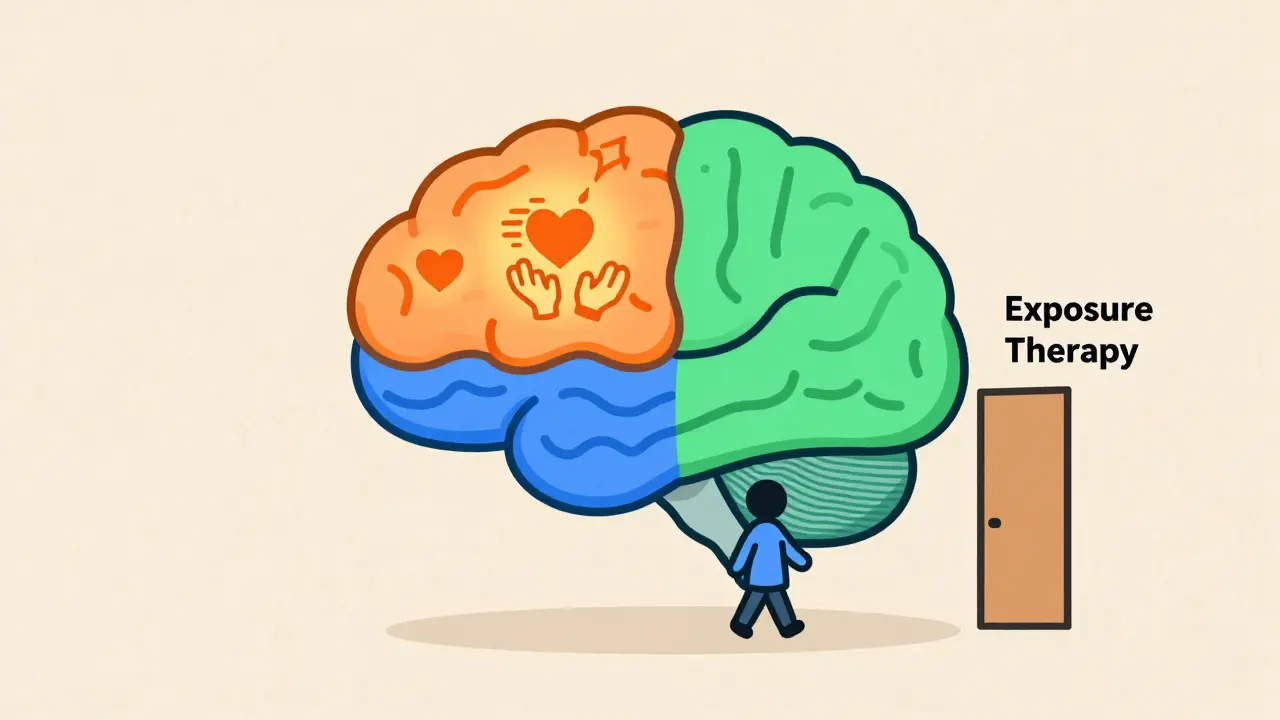
CBT is the gold standard. It teaches you to recognize distorted thinking patterns and replace them with realistic ones. For example, instead of thinking, "Everyone thinks I’m awkward," you learn to ask, "What’s the evidence for that?" It also includes exposure therapy-gradually facing feared situations in a controlled way. Studies show 50-60% of people see major improvement after 12-20 sessions. For specific phobias and social anxiety, success rates climb to 60-80%.
SSRIs like sertraline (Zoloft) and fluoxetine (Prozac) help balance brain chemicals linked to mood and fear. They don’t work overnight. It takes 4-8 weeks to feel the full effect. But once they do, they reduce physical symptoms like heart palpitations and sweating. About 40-60% of people respond well. They’re safer long-term than older medications and don’t cause dependence.
Other options include Serotonin-Norepinephrine Reuptake Inhibitors (SNRIs) like venlafaxine, and newer treatments like Acceptance and Commitment Therapy (ACT), which helps you accept anxious thoughts without fighting them.
What Doesn’t Work (and Why)
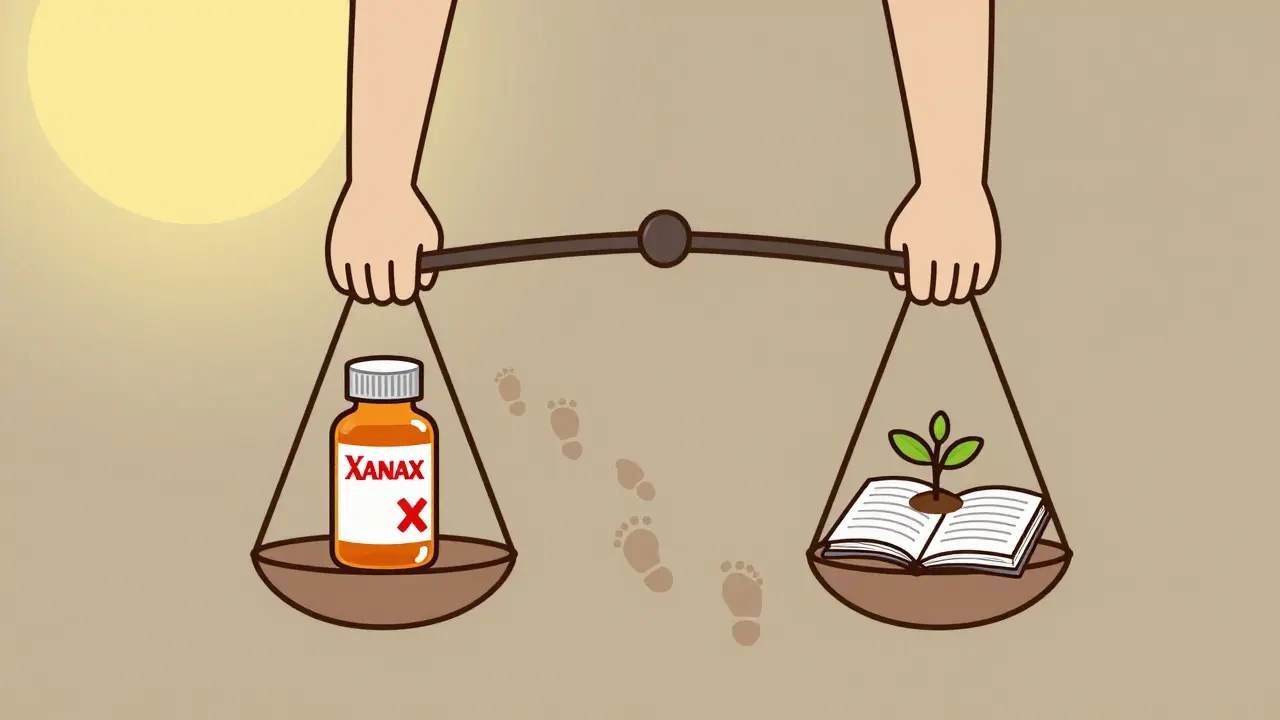
Benzodiazepines-like Xanax or Valium-give quick relief. But they’re not a long-term solution. They can cause dependence in 15-30% of users, lead to memory problems, and make withdrawal worse than the original anxiety. Doctors now avoid prescribing them for more than a few weeks.
Self-help books and mindfulness apps can help, but they’re not enough for moderate to severe anxiety. A 2023 study found that people using only apps saw 20-30% symptom reduction-good, but not enough to restore daily function. Therapy and medication together work best.
And no, caffeine, alcohol, or avoiding triggers won’t fix it. Avoiding situations might feel safe in the moment, but it makes anxiety stronger over time.
Real People, Real Struggles
Reddit threads and patient reviews tell the real story. One person wrote: "CBT helped my panic attacks drop from 5-7 a week to 1-2. But the exposure exercises? I wanted to quit every time." Another said: "SSRIs made me feel numb. I switched to buspirone-and finally felt like myself again."
Barriers are real. Sixty-eight percent of people who don’t improve say they couldn’t find a therapist. Wait times for specialists can be 6-8 weeks. Insurance often limits sessions. And side effects-weight gain, nausea, emotional flatness-can make people quit.
But success stories exist. A 2023 NAMI survey found that 58% of people who used both therapy and medication reported big improvements. Only 38% did with therapy alone. That’s why combining treatments matters.
What’s New in Anxiety Treatment?
The field is evolving fast. In 2023, the FDA approved zuranolone (Zurzuvae), the first oral drug specifically for postpartum anxiety. Clinical trials showed a 54% remission rate.
Researchers are also using brain scans to identify three distinct "anxiety biotypes." This could mean future treatments will be personalized-your brain scan might tell your doctor which medication or therapy will work best for you.
Ketamine-assisted therapy is showing promise for treatment-resistant anxiety, with 65% of patients improving within days. Digital tools like nOCD and Wysa are FDA-cleared and help users practice CBT at home. One study showed a 35-45% drop in symptoms after eight weeks of daily use.
And AI is getting involved. Stanford researchers built an algorithm that predicts panic attacks 24 hours in advance with 87% accuracy by tracking breathing patterns and heart rate variability.
How to Start Getting Help
Step one: Talk to your doctor. Don’t wait until it’s "bad enough." Anxiety doesn’t get better on its own.
Step two: Ask for a referral to a therapist trained in CBT. Look for someone who specializes in anxiety-not just general counseling.
Step three: Be patient. CBT takes time. Medication takes weeks. Progress isn’t linear. Some days will feel worse before they get better.
Step four: Use support resources. The Anxiety and Depression Association of America (ADAA) offers free support groups and therapist directories. NAMI runs a 24/7 helpline and has local chapters.
Step five: Don’t give up. Recovery isn’t about being "cured." It’s about learning to live well despite anxiety. Thousands have done it. You can too.
When to Seek Emergency Help
If you’re having thoughts of self-harm, or if your anxiety is so severe you can’t eat, sleep, or leave your house, get help immediately. Go to an emergency room or call a crisis line. You’re not alone, and you don’t have to suffer in silence.
kelly tracy
This is the most patronizing garbage I've read all week. You act like anxiety is just a checklist you can tick off with CBT and SSRIs. Try living with it when your insurance denies 12 sessions and your therapist ghosts you after two visits. Real people aren't case studies.
Cheyenne Sims
The diagnostic criteria referenced in this article are accurate and well-cited. However, the use of colloquial phrasing such as 'stuck in fight-or-flight mode' undermines the clinical rigor expected in medical communication. Precision in language is non-negotiable when discussing psychiatric conditions.
srishti Jain
CBT didn't help me. SSRIs made me cry for no reason. Now I'm on buspirone and actually feel human. Stop acting like there's one right way.
Shae Chapman
This literally made me cry in public 😭 I’ve been waiting 8 months for a therapist and just started CBT last week. It’s HARD but I’m holding on. Thank you for saying recovery isn’t about being ‘cured’-it’s about learning to live. 🙏
Nadia Spira
You're conflating symptom management with treatment. CBT is behavioral conditioning. SSRIs are chemical band-aids. Neither addresses the ontological dissonance inherent in modern subjectivity. The real pathology is capitalism's commodification of mental distress. You're treating the symptom, not the systemic wound.
henry mateo
i just wanted to say thank you for writing this. i’ve been too scared to talk to my doctor but this made me feel less alone. sorry if i messed up some spelling 😅
Kunal Karakoti
Anxiety, as a phenomenon, reflects the tension between individual agency and the accelerating complexity of social systems. The biological model reduces it to neurotransmitters, but perhaps it is also a rational response to an irrational world. We medicate the messenger while ignoring the message.
Glendon Cone
I’ve been doing CBT for 6 months and it’s been a game-changer. The exposure stuff is brutal but worth it. Also, the nOCD app helped me stick with it on days I didn’t feel like showing up. You don’t have to do it alone 🤝
Aayush Khandelwal
The biotype research is the future. We're moving from one-size-fits-all psych meds to neurophenotyping-imagine matching your anxiety profile to a treatment algorithm like a Spotify playlist for your brain. This isn't sci-fi anymore.
Hayley Ash
So let me get this straight-after all this science and data, the solution is still 'see a therapist' and 'take a pill'? Wow. Groundbreaking. I'm sure the 68% who can't find a therapist are just thrilled