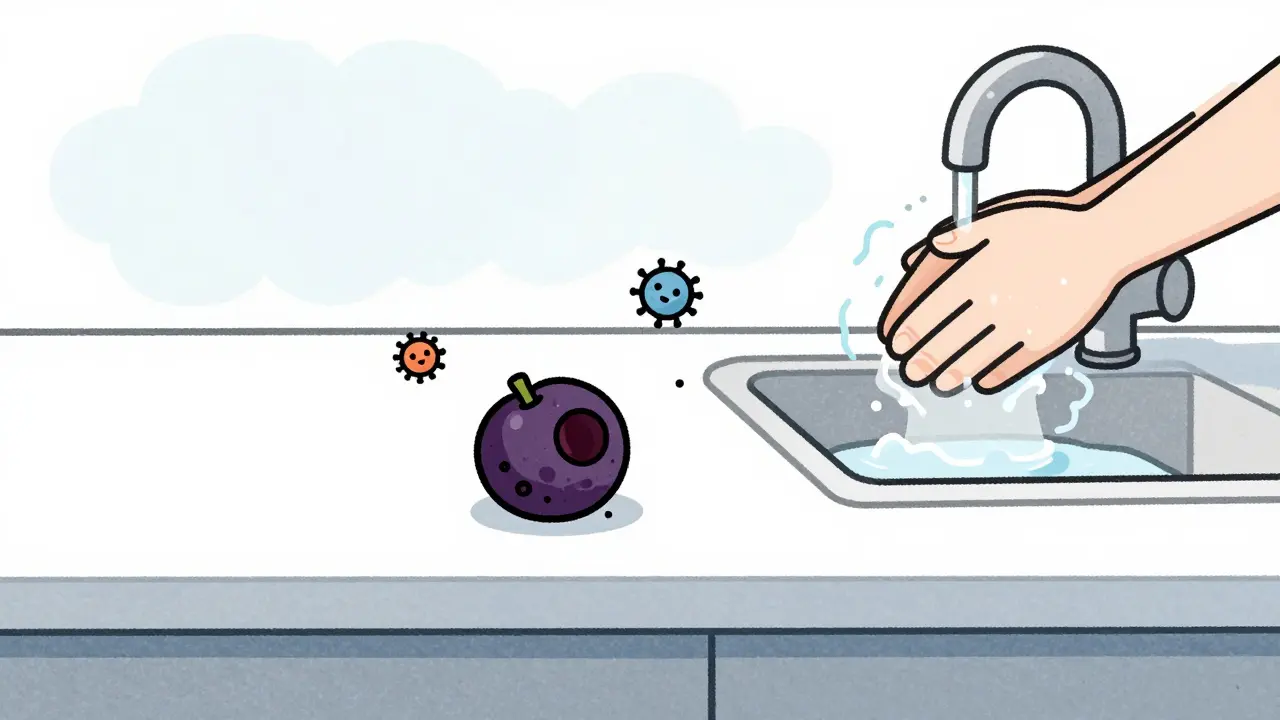
Most people think of hepatitis as a long-term liver problem-something that sticks around for years. But hepatitis A is different. It doesn’t hang around. It hits hard, makes you feel awful for weeks, and then, for most people, it’s gone for good. No lifelong treatment. No chronic damage. Just a tough few weeks, sometimes months, and then back to normal. The catch? It’s incredibly easy to catch, and if you’re not careful, you could spread it to others without even knowing it.
How Hepatitis A Spreads (And Why It’s So Contagious)
Hepatitis A isn’t spread through blood or sex like hepatitis B or C. It’s spread through poop. Yes, really. The virus lives in the stool of infected people, and it gets into your body when you swallow even tiny amounts of it. This can happen in lots of ways: eating food prepared by someone who didn’t wash their hands after using the bathroom, drinking water contaminated by sewage, or touching a doorknob, phone, or surface that someone with the virus touched-and then touching your mouth.
The virus is tough. It can survive on surfaces for up to 30 days. It doesn’t care if the food is cold or hot. It can live in shellfish from polluted water. Even fruits and vegetables washed in contaminated water can carry it. In 2022, the FDA tracked 17 foodborne outbreaks in the U.S. linked to infected food workers. Most of these cases involved produce like berries, greens, or scallions.
What makes it worse is that you’re most contagious before you even feel sick. The virus peaks in your stool two weeks before jaundice (yellow skin or eyes) shows up. That means you could be shaking hands, cooking dinner, or hugging your kids-and spreading the virus-without knowing you have it.
What Happens When You Get Infected
After you swallow the virus, it takes about 28 days on average for symptoms to show up. But that window can be as short as 15 days or as long as 50. During that time, the virus travels from your gut into your liver, where it starts attacking liver cells. Your body fights back, and that’s when symptoms hit.
Not everyone feels sick. In fact, about 70% of children under 6 show no symptoms at all. That’s why outbreaks in daycare centers can spread unnoticed. But in teens and adults, symptoms are clear and often sudden:
- Jaundice (yellow skin or eyes) - affects 70-80% of adults
- Dark urine - reported by nearly 90% of patients
- Extreme fatigue - affects more than 80%
- Loss of appetite - nearly 90%
- Nausea, vomiting, abdominal pain
- Fever, clay-colored stools, joint pain
These symptoms don’t creep in slowly. They hit like a storm. One day you’re fine; the next, you can’t get out of bed. Many people mistake it for the flu or food poisoning at first. A Mayo Clinic survey found that 41% of patients were misdiagnosed as having gastroenteritis-delaying proper care by nearly 8 days on average.
How Long Does Recovery Take?
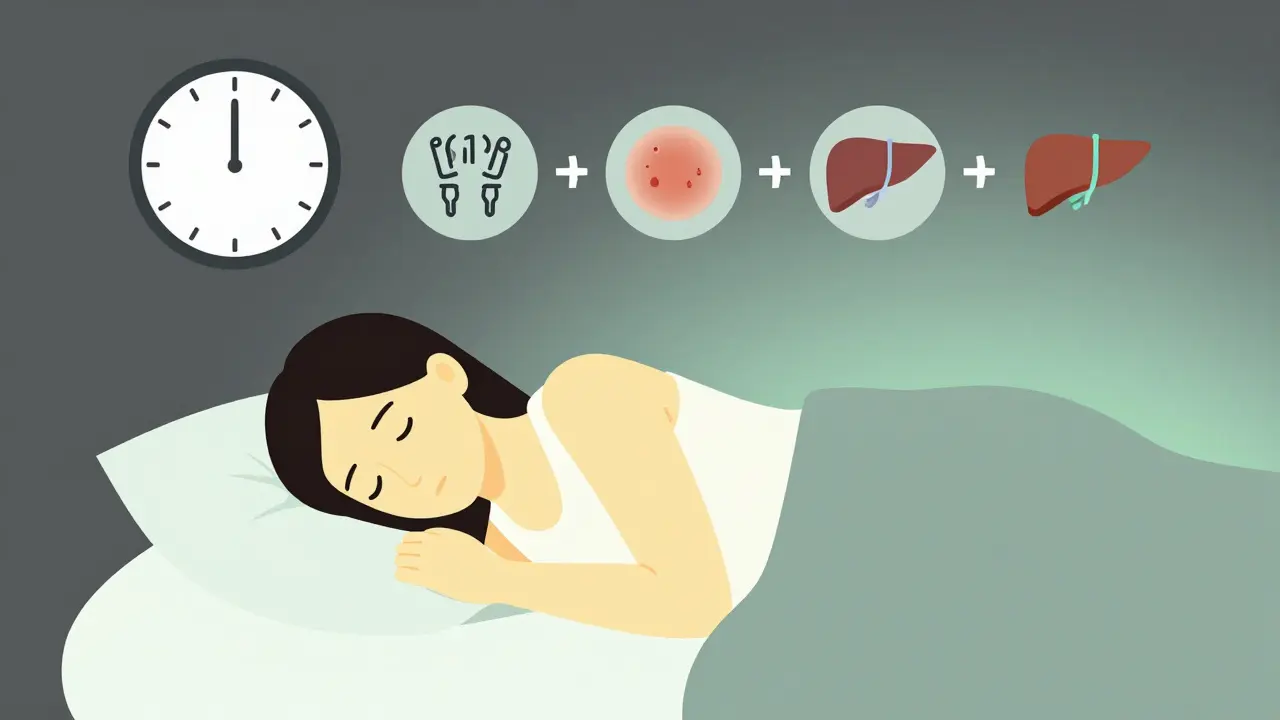
Recovery isn’t quick, but it’s predictable. Most people start feeling better after 2 to 4 weeks. But full recovery? That takes longer.
Here’s what to expect:
- Weeks 1-4: Symptoms peak. Fatigue is overwhelming. You’ll likely lose your appetite. Rest is non-negotiable.
- Weeks 4-8: Jaundice fades. Appetite returns. Energy starts to creep back-but slowly. Many people think they’re cured by now. They’re not.
- Weeks 8-12: Liver enzymes (ALT, AST) begin to drop toward normal. Most people (80%) are back to baseline by 12 weeks.
- Months 3-6: The last 15% of people take up to six months to fully recover. Some report relapses-feeling better, then crashing again for a week or two. About 68% of adults on Reddit forums reported this pattern.
Studies show the median recovery time is 8 weeks. But if you’re over 50, or you already have liver disease, recovery can be longer-and riskier. The CDC says case-fatality rates jump from 0.1% in kids to 2.6% in adults over 50. That’s why even if you feel okay, you shouldn’t rush back to work or ignore follow-up blood tests.
How to Prevent Hepatitis A
The best way to avoid hepatitis A? Get vaccinated. The hepatitis A vaccine is one of the most effective vaccines out there. After the first shot, you’re 95% protected within 4 weeks. After the second-given 6 to 18 months later-you’re nearly 100% protected for life.
The CDC recommends the vaccine for all children at age 1. But adults need it too-especially if you:
- Travel to countries with poor sanitation (think: parts of Asia, Africa, Central and South America)
- Work in healthcare, food service, or childcare
- Use recreational drugs
- Live in or work with homeless populations
- Have chronic liver disease (like hepatitis B or C)
It’s not just for travelers. Since 1995, hepatitis A cases in the U.S. have dropped by 95% thanks to childhood vaccination programs. But outbreaks still happen-especially among unvaccinated adults. In 2022, cases fell by 40% after targeted vaccination campaigns in high-risk communities.
If you’ve been exposed and haven’t been vaccinated, you still have a window. Getting the vaccine or an injection of immune globulin within two weeks of exposure can prevent infection in 85-90% of cases.
What to Do If You’re Infected
There’s no cure for hepatitis A. Treatment is all about support:
- Rest. Your body needs energy to fight the virus. Don’t push through fatigue.
- Hydrate. Vomiting and poor appetite can lead to dehydration. Sip water, broth, or electrolyte drinks.
- Eat small, low-fat meals. Your liver is damaged. Heavy or greasy food makes it harder to process. Aim for 1,800-2,200 calories a day-mostly carbs and protein.
- Avoid alcohol completely. Even a small drink can delay recovery or cause more damage.
- Don’t take acetaminophen (Tylenol) over 2,000 mg per day. It’s hard on the liver. Use ibuprofen instead, if needed.
- Wash your hands constantly. Soap and water for at least 20 seconds, especially after using the bathroom and before preparing food. This cuts transmission risk by 30-50%.
Return to work or school? Wait until at least one week after jaundice appears-or until your doctor confirms you’re no longer contagious. Most health departments require this before allowing food workers or caregivers back on the job.

What Happens After You Recover?
Once you recover, you’re immune for life. Your body builds antibodies that protect you forever. You won’t get hepatitis A again.
And here’s the good news: hepatitis A doesn’t cause chronic liver disease. It doesn’t lead to cirrhosis or liver cancer. Your liver repairs itself. Lab tests will show normal enzyme levels within 6 months for 95% of people.
But recovery isn’t just physical. Many adults lose 15 workdays on average. That’s $300 million in lost productivity in the U.S. every year. The fatigue is real. The brain fog is real. And the emotional toll? It’s often ignored.
People on forums like Hepatitis Foundation International say the worst part isn’t the jaundice-it’s the exhaustion that lasts for weeks. One woman wrote: “I thought I was fine after two weeks. Then I tried to walk to the mailbox-and collapsed. I didn’t understand why I still felt like I’d been hit by a truck.”
Be patient. Don’t compare yourself to how you felt before. Your liver needs time. Pushing too hard too soon can lead to relapse.
Final Thoughts
Hepatitis A is preventable. It’s treatable. And for most people, it’s temporary. But it’s also silent, sneaky, and easily spread. If you’ve never been vaccinated, talk to your doctor. If you’ve had it, you’re immune-but make sure your close contacts are protected. If you’re caring for someone with hepatitis A, wear gloves when handling their laundry or cleaning bathrooms. Disinfect surfaces with a bleach solution (5-10 tablespoons per gallon of water)-it kills the virus in under two minutes.
The biggest mistake people make? Thinking it’s just a bad case of the flu. It’s not. It’s a liver infection that can knock you out for months. But with the right care and prevention, you’ll come out the other side-stronger, wiser, and protected for life.
jonathan soba
Hepatitis A isn't just a bad stomach bug-it's a liver assault disguised as the flu. The fact that you're contagious before symptoms show is the real horror story. No wonder outbreaks keep happening.
matthew martin
I remember getting this back in college-thought I had food poisoning, ended up in bed for six weeks. The fatigue didn't just fade; it crept out like a ghost. People don't get how brutal the recovery is. You think you're fine, then you try to walk to the fridge and your legs turn to jelly. No joke.
doug b
Get the vaccine. Seriously. It's one shot that saves you months of misery. I work in a kitchen-I got it after a coworker got sick. Best $50 I ever spent.
Robert Cardoso
Let's not romanticize this. The CDC data shows 80% recovery at 12 weeks, but that's a median-not a guarantee. People with preexisting liver conditions are playing Russian roulette. And yes, the 68% relapse rate on Reddit? That's not anecdotal-it's clinical. You're not weak if you relapse. Your liver is still healing. But you're reckless if you ignore it.
Also, bleach solutions? 5-10 tablespoons per gallon? That's dangerously high. The EPA recommends 1/3 cup per gallon for disinfecting surfaces. Overdoing it creates toxic fumes and damages surfaces. Don't be that guy who kills his kitchen with chlorine.
And for the love of God, stop saying 'it's just the flu.' That phrase kills people. Hep A kills. It's not a metaphor. It's a viral attack on your most vital organ.
Also, acetaminophen limits? 2,000 mg is correct, but most people don't realize that cold meds, migraine pills, and sleep aids often contain it. Read labels. Your liver doesn't care if you 'just took one.' It only sees the cumulative dose.
And no, ibuprofen isn't always safer. If you're dehydrated or have kidney issues, NSAIDs can crash your renal function. There's no universal fix here. Just rest, hydrate, and wait. No shortcuts.
Finally, the claim that 'your liver repairs itself'? True-but only if you give it the time. Pushing yourself back to work at week 3? That's not resilience. That's arrogance. And arrogance kills livers.
Katie Mccreary
I got it from my roommate. He didn't wash his hands after peeing. I knew he was gross but I didn't think he'd literally poison me.
Jeffrey Carroll
While the article provides a comprehensive overview, I would encourage readers to consider the broader public health implications. The decline in U.S. cases since 1995 is a testament to the success of universal childhood immunization. Yet, disparities persist in adult vaccination rates, particularly among marginalized communities. Expanding access to free or low-cost vaccines in food service and homeless shelters could prevent thousands of preventable cases annually. Prevention, not just education, is the true solution.
Mel MJPS
My aunt had this last year. She was 62 and had hepatitis C already. The recovery took five months. She couldn't even hold a cup of tea without shaking. I just sat with her every day, brought her broth, and reminded her it was okay to rest. Nobody talks about how lonely it feels when you're too tired to talk to anyone. Just… be gentle with yourselves. And others.
Phil Davis
So let me get this straight: we’re telling people to avoid Tylenol, wash hands like they’re defusing bombs, and get a vaccine that’s basically a lifetime pass… but we’re still having outbreaks because people think ‘it’s just a stomach bug’? We’re not fighting a virus here. We’re fighting human arrogance. And the virus? It’s winning.
Brittany Fiddes
As a British woman who lived in Lagos for two years, I can tell you-this isn't even the worst. In Nigeria, we had kids getting hepatitis A from street food vendors who wiped their hands on their saris after using the toilet. And people still ate it because ‘it’s just how things are.’ Here in the UK, we have clean water, vaccines, and hand sanitizer. So if you get this in America? You didn't get unlucky-you got lazy. And now you're wasting public health resources because you refused to be responsible.
Lexi Karuzis
I'm not saying this is a hoax, but... have you ever wondered if the 'hepatitis A vaccine' is just a way to sell more shots? What if the real cure is detoxing your liver with lemon water and fasting? The FDA has been corrupted since 2008. Why do you think they pushed this vaccine so hard? Think about it. The numbers don't add up. And why is everyone so obsessed with bleach? Is it really the virus... or are they trying to make you afraid of your own home?
Irebami Soyinka
As a Nigerian, I’ve seen this in villages where children drink from puddles and no one washes hands. You think this is a ‘Western problem’? No. This is a global problem of neglect. But here’s the truth: in Africa, we don’t have vaccines. We have mothers who boil water, scrub pots with ash, and teach their kids to never touch food after using the latrine. We don’t need fancy science-we need discipline. America? You have everything. You’re not getting sick because you’re unlucky. You’re getting sick because you’re lazy. And now you want a vaccine like it’s a magic spell? No. Wash your hands. Teach your kids. That’s the real cure.
And yes, I’ve seen babies survive this with nothing but clean water and love. You don’t need a doctor. You need a parent who cares enough to be clean.