
Handling chemotherapy drugs isn’t just about giving a patient a pill or an IV. It’s about protecting the person receiving treatment, the nurse giving it, the pharmacist mixing it, and even the caregiver at home. These drugs are powerful. They kill cancer cells-but they don’t stop there. They can damage healthy tissue, cause birth defects, or linger on surfaces long after the treatment is done. If you’re not following strict safety rules, you’re putting lives at risk-including your own.
Why Chemotherapy Safety Rules Exist
Cancer chemotherapy, now more accurately called antineoplastic therapy, isn’t just one kind of drug. It includes targeted therapies, immunotherapies, and antibody-drug conjugates. Each has unique risks. Some can become airborne. Others seep through regular gloves in minutes. In 2022, the National Comprehensive Cancer Network (NCCN) reported that 18% of chemotherapy-related errors came from simple mix-ups: wrong patient, wrong drug, wrong dose. That’s not rare. It’s predictable when systems are weak. The 2024 update from the American Society of Clinical Oncology (ASCO) and Oncology Nursing Society (ONS) didn’t just tweak old rules. It rebuilt them. The goal? Zero preventable harm. That means every step-from the moment the drug leaves the pharmacy to when it enters the patient’s vein-must be locked down like a vault.What You Need to Wear: PPE That Actually Works
Forget the thin latex gloves you use for routine blood draws. Chemo gloves are different. They’re tested. They’re thick. And they’re double-layered. NIOSH requires chemotherapy-tested double gloves for handling drugs like carmustine and thiotepa-drugs that can penetrate standard gloves in under 10 minutes. The gloves must be changed every 30 minutes, or immediately if torn or contaminated. Gowns aren’t optional. They must be made of impermeable material, not cotton or polyester. Eye protection is required if splashing is possible. A mask or respirator? Needed if aerosols could form-like during IV bag preparation or when opening vials under pressure. And here’s the hard truth: once you’ve handled chemo, your PPE is contaminated. Studies since 1992 show that outer gloves transfer chemicals to skin, surfaces, and even your phone. That’s why you never take your gown or gloves out of the chemo room. You dispose of them as hazardous waste. No exceptions.The Four-Step Verification: Your Last Line of Defense
The biggest change in the 2024 standards is the fourth verification step. Before the drug touches the patient’s skin, two licensed clinicians must verify four things-right patient, right drug, right dose, right route-while standing at the bedside. They use two patient identifiers: name and date of birth. Not just one. Not just a wristband. Two. This step didn’t come from a theory. It came from data. In 2022, 18% of chemo errors were due to misidentification. One nurse gave a drug meant for a 68-year-old man to a 42-year-old woman. Both had the same last name. Both were in adjacent rooms. The fourth verification would have caught it. Now, it’s mandatory. And it’s not just a formality. It’s a pause. A time-out. A moment where the whole team confirms: Is this right?Engineering Controls: More Than Just Gloves
You can’t rely on people alone. You need tools. Closed-system transfer devices (CSTDs) are now standard in most accredited facilities. These are special adapters that prevent vapors and droplets from escaping when you draw up or transfer chemo. They cut exposure risk by up to 95%. Ventilated cabinets, known as biological safety cabinets, are required for compounding. Not every clinic has them-but they should. The European Society for Medical Oncology (ESMO) says CSTDs and proper ventilation are non-negotiable. In the U.S., 92% of accredited cancer programs now have formal safety committees meeting quarterly. That’s up from 64% in 2016. But in rural clinics? Many still can’t afford them. That’s a gap. A dangerous one.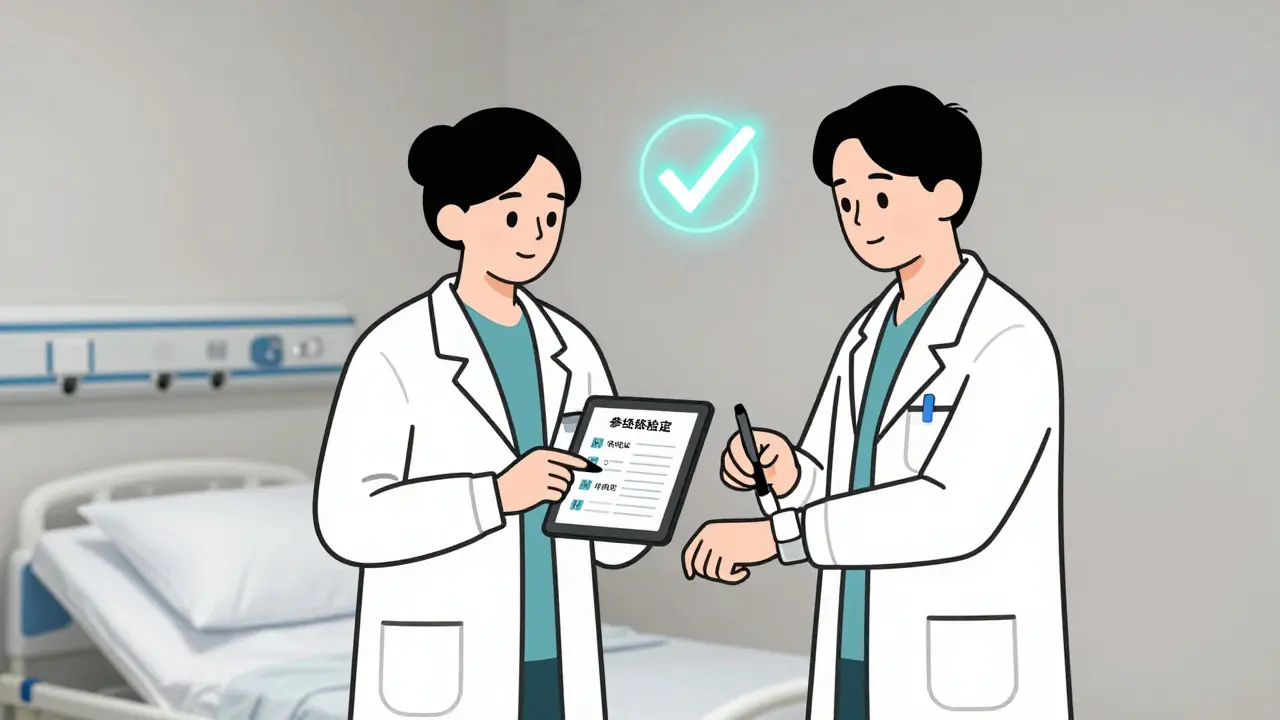
Home Chemotherapy: The Hidden Risk
About 22% of home chemo incidents involve improper waste disposal. Another 17% involve spills not cleaned correctly. Patients and caregivers are told to handle bodily fluids for 48 to 72 hours after treatment as if they’re hazardous. That means flushing toilets twice. Wearing gloves to change bedding. Using special spill kits for leaks. But here’s the problem: 65% of caregivers feel unprepared. They get a pamphlet. That’s it. No hands-on training. No demonstration. No follow-up. Facilities using the ASCO-developed Chemotherapy Safety at Home toolkit saw a 41% drop in caregiver safety concerns. That toolkit includes videos, checklists, and a 24/7 hotline. Simple. Practical. Life-saving.What Happens When You Don’t Follow the Rules
In 2022, OSHA issued 142 citations for hazardous drug handling violations. The average fine? $14,250 per violation. That’s not just a slap on the wrist. It’s a financial hit. But the real cost is human. Nurses exposed to chemo over time report higher rates of miscarriage, infertility, and even leukemia. One nurse in a 2022 ONS survey said she had two miscarriages after five years of handling chemo without proper PPE. She never reported it because she feared being labeled a complainer. Cytokine release syndrome (CRS)-a life-threatening immune reaction triggered by some immunotherapies-has increased 300% since 2018. If not treated immediately with tocilizumab or steroids, mortality hits 12-15%. Now, every facility must have antidotes ready and staff trained to recognize CRS within minutes. No more waiting for a doctor to show up.Implementation Costs and Real-World Barriers
Full compliance isn’t cheap. For a medium-sized oncology practice, expect to spend $22,000-$35,000 on facility upgrades. Another $8,500-$12,000 on staff training. Annual PPE and waste disposal? $4,200-$6,800. And if your electronic health record doesn’t support the four-step verification? You’ll need a custom build-$15,000 to $40,000 more. That’s why 43% of rural clinics can’t meet the CSTD requirement. It’s not laziness. It’s lack of funding. And that creates a two-tiered system: patients in big cities get full protection. Those in rural areas? They get the bare minimum.
What’s Next: AI, Certification, and New Drugs
The future is coming fast. By 2026, the U.S. may require national certification for anyone handling antineoplastic drugs. Think of it like a license to drive a truck-only this one requires passing a written exam (minimum 85%) and a live skills test. Pilot programs are already testing AI systems that scan patient IDs, match drug orders, and flag mismatches in real time. At 12 top cancer centers, these tools are reducing manual verification time by 40%. That’s huge when nurses are stretched thin. And new drugs? Bispecific antibodies and antibody-drug conjugates are changing the game. They’re more potent. More toxic. And current guidelines don’t fully cover them. Experts are already drafting updates.Final Reality Check
Chemotherapy safety isn’t about perfection. It’s about discipline. It’s about doing the same thing the same way, every time-even when you’re tired. Even when you’re rushed. Even when no one is watching. The data is clear: facilities that follow all 2024 standards see 63% fewer medication errors and 78% fewer staff exposures. That’s not a guess. That’s measurable. That’s life saved. If you’re a clinician, don’t skip the fourth verification. If you’re a caregiver, use the spill kit. If you’re a facility manager, invest in CSTDs. Because this isn’t about rules. It’s about respect-for the patient, for the staff, for the science.One mistake doesn’t just hurt one person. It ripples through families, teams, and systems. The cost of cutting corners? Too high to pay.
Do I need special gloves for handling chemotherapy drugs?
Yes. Standard exam gloves are not enough. You must use chemotherapy-tested double gloves that meet NIOSH standards. These are thicker, chemically resistant, and tested for permeation. Change them every 30 minutes or immediately if torn. For high-risk drugs like carmustine or thiotepa, double gloving is mandatory.
What is the fourth verification step in chemotherapy administration?
The fourth verification is a mandatory bedside check performed just before giving chemotherapy. Two licensed clinicians must independently confirm the patient’s identity using two identifiers (name and date of birth), the correct drug, the right dose, and the proper route. This step was added in the 2024 ASCO/ONS standards to prevent fatal misidentification errors, which caused 18% of chemotherapy-related adverse events in 2022.
Can chemotherapy be safely administered at home?
Yes, but only with strict protocols. Patients and caregivers must use chemotherapy spill kits, wear gloves when handling bodily fluids for 48-72 hours after treatment, store medications in child-proof containers, and dispose of sharps and waste in approved hazardous containers. Facilities using the ASCO Chemotherapy Safety at Home toolkit report a 41% drop in caregiver safety concerns.
What should I do if I spill chemotherapy medication?
Never clean a chemo spill with bare hands. Use a dedicated chemotherapy spill kit, which includes impermeable gloves, gowns, absorbent pads, and a sharps container. Isolate the area, put on full PPE, then carefully absorb and contain the spill. Dispose of all cleanup materials as hazardous waste. Report the spill to your safety officer immediately-even if you think you didn’t get exposed.
Are there any new risks with newer cancer treatments like immunotherapy?
Yes. Immunotherapies like CAR-T and bispecific antibodies can trigger cytokine release syndrome (CRS), a severe immune reaction that can be fatal if not treated quickly. The 2024 standards now require all facilities to have antidotes like tocilizumab and steroids immediately available and staff trained to recognize CRS within minutes of infusion. CRS cases have increased 300% since 2018, making this a critical new safety focus.
ellen adamina
I worked chemo floor for 8 years and still get nervous handling the vials. It's not just about gloves-it's about the mindset. Every time you reach for that syringe, you pause. Not because you're scared, but because you respect what it can do.
Sarah Mailloux
My sister got home chemo last year and the pamphlet they gave her was like 3 pages. No videos, no demo. She spilled a drop on the carpet and panicked for three days. The ASCO toolkit should be mandatory-like, right now.
Nilesh Khedekar
Oh wow, another government-approved checklist... next they'll make us sign a waiver before breathing near a chemo bag. I mean, sure, safety's great-but let's not turn oncology into a TSA screening at 3 a.m. with 17 forms and a notary.
Amy Ehinger
I’ve seen nurses work 12-hour shifts, then go home and change their clothes before hugging their kids. No one talks about that. The gloves, the gowns, the double checks-they’re not just policy. They’re the quiet rituals that keep people alive. And the fact that rural clinics can’t afford CSTDs? That’s not a gap. That’s a moral failure.
RUTH DE OLIVEIRA ALVES
The implementation of the fourth verification step represents a paradigm shift in patient safety protocols. It is not merely an administrative formality but a fundamental safeguard rooted in empirical evidence demonstrating a statistically significant reduction in misidentification errors. Furthermore, the integration of closed-system transfer devices aligns with the principles of occupational health and safety as codified by NIOSH and OSHA guidelines. The continued disparity in resource allocation between urban and rural oncology facilities constitutes a systemic inequity that demands immediate policy intervention.
Frank Geurts
I must respectfully and emphatically underscore the critical importance of adhering to the 2024 ASCO/ONS guidelines-particularly with regard to the mandatory four-step verification protocol. Failure to implement this protocol with rigorous precision constitutes a breach of the fundamental ethical obligation to ‘do no harm.’ Moreover, the omission of closed-system transfer devices in resource-limited settings is not merely an operational deficiency-it is an unconscionable risk to human life. The data is unequivocal. The standards are clear. The time for compromise has passed.
Crystel Ann
I just want to say thank you to every nurse who does this every day. I know it’s not glamorous. I know no one claps when you throw away a gown. But you’re the reason people get to see their grandkids. I don’t say it enough.
Jami Reynolds
Let’s be real-this whole thing is a cover-up. The real danger isn’t the drugs, it’s the pharmaceutical companies pushing these toxic cocktails and then hiding behind ‘safety protocols’ to avoid liability. You think they care about nurses getting leukemia? No. They care about patents. The ‘fourth verification’? A distraction. The real fix is banning these drugs entirely.
Mike Berrange
You know what’s funny? They spend $35k on CSTDs but won’t hire an extra nurse. So now you’re double-gloving while rushing through 12 patients because you’re short-staffed. The protocol looks good on paper. In real life? It’s a joke. I’ve seen nurses skip the second verification just to get through their shift. No one’s going to report it. They’re too tired. Or scared. Or both.
Nat Young
So let me get this straight-we’re spending tens of thousands on gloves and AI scanners because one nurse gave the wrong drug to the wrong person? What if we just... trained people better? Or hired more? Or paid them enough so they don’t work 70-hour weeks? This isn’t safety. It’s performance theater. And someone’s getting paid to make sure it stays that way.