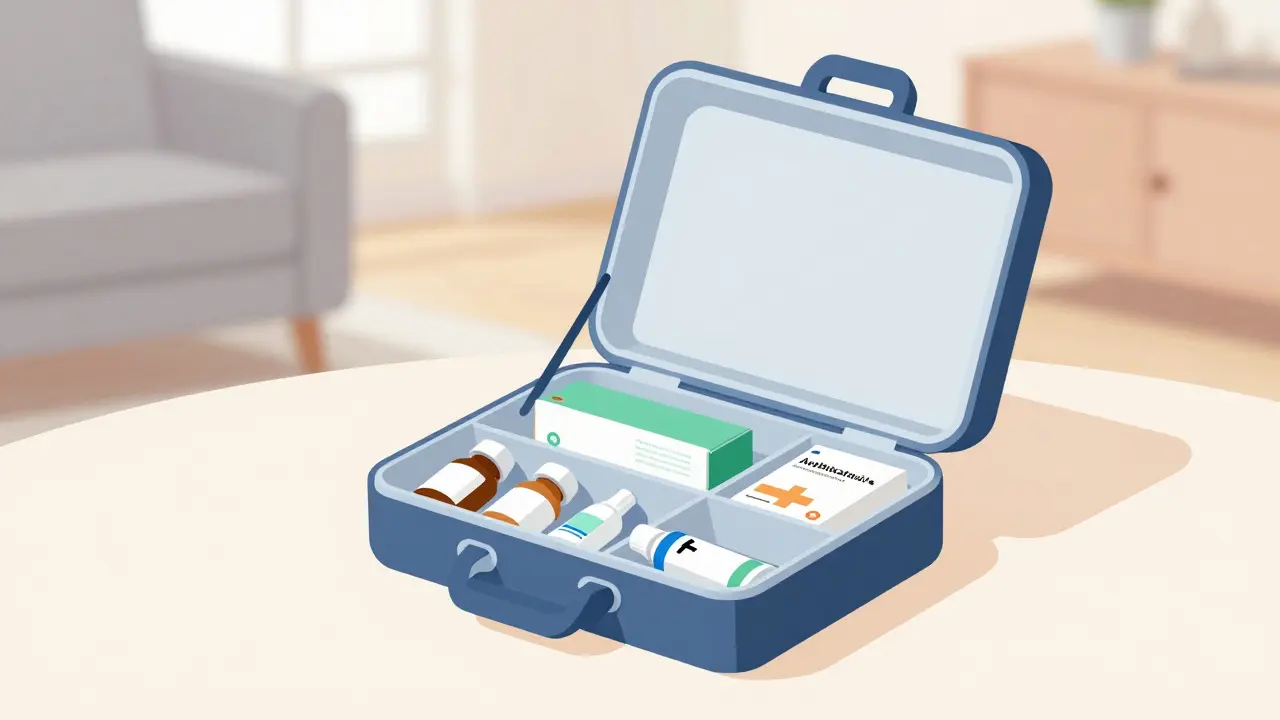
Customized Home Medication Emergency Kit Planner
Step 1: Household Profile
Define who lives in your home to tailor the safety recommendations.
Step 2: Health Risks
Select any conditions that require specialized supplies.
Your Recommended Kit Inventory
Emergency Contact Card Template
Fill these out and tape them inside your kit lid.
Most people think they're prepared when they stock a first-aid box with bandages and antiseptic wipes. But what happens when your heart races after a cold tablet or you break out in hives following a prescribed antibiotic? That's the gap most standard kits miss entirely. A specialized Home Emergency Kit for medication issues isn't about fixing cuts; it is about managing pharmacological risks before they become life-threatening emergencies.
We live in a world where nearly everyone takes at least one prescription drug regularly. In New Zealand, as elsewhere, medication errors and adverse reactions are surprisingly common. While the American data suggests millions of annual cases, the principle remains identical here: knowing exactly what to reach for when a reaction strikes can mean the difference between a quick recovery and an ambulance ride. This guide breaks down exactly what belongs in this specialized safety container, ensuring you aren't caught off guard by an unexpected body response.
Why Standard First-Aid Boxes Fall Short
A typical plastic tin usually contains plasters and sterile gauze. These tools address physical trauma-bleeding, scratches, burns. They do nothing when your stomach turns over due to a new acid-reflux drug or when your skin starts itching from a penicillin allergy. The problem stems from the fact that standard first-aid training rarely covers "internal" chemical injuries. According to major health organizations, gastrointestinal disturbances alone account for roughly 20% to 30% of all medication-related adverse events. Ignoring these potentialities leaves a significant blind spot in your household safety plan.
You also face the risk of delayed treatment. If you wait until a pharmacist opens on a Sunday morning to get relief, a mild reaction could escalate into something requiring hospital intervention. For instance, untreated allergic responses can progress rapidly. Having a designated stash of counteractive measures ready immediately bridges the time gap between onset and professional care.
The Essential Medicine List
This section covers the specific active ingredients required for immediate symptom management. Do not simply fill the kit with whatever looks old in your bathroom cabinet. Each inclusion should serve a direct purpose related to adverse drug reactions. Here is the core inventory:
- Antihistamines: Products containing diphenhydramine or similar active ingredients are critical. About 5% to 10% of people experience allergic symptoms upon medication exposure. Keeping a non-drowsy or standard formula on hand allows for fast relief of itching, swelling, or respiratory tightness.
- Skin Creams: Hydrocortisone cream (1%) is recommended for dermatological reactions. Skin rashes account for a small but significant percentage of adverse drug events. Applying this early can stop a rash from spreading across the body.
- Digestive Aids: Antacids help neutralize stomach upset, while anti-diarrheal medications like loperamide manage gut motility issues. These are vital because up to a quarter of patients taking antibiotics experience bowel disturbances.
- Pain Relief Caution: Be extremely careful adding acetaminophen or paracetamol to your kit. Overdose is a real danger; in many regions, thousands of ER visits occur annually from accidental overdosing. Only include this if you have tracked dosages meticulously and understand how it interacts with other medicines.
- Epinephrine Auto-injectors: If you have been prescribed an EpiPen or similar device for severe allergies, store a spare unit here. Anaphylaxis moves fast, often within minutes of exposure. Access to this tool is non-negotiable for high-risk individuals.
Note: Consult your local pharmacist before purchasing any over-the-counter items. Interactions can happen unexpectedly, and a professional review ensures the combination is safe for your specific health history.
Critical Documentation and Contacts
Medicines help, but information saves lives. The most dangerous part of an emergency is confusion. Who are you calling? What drugs were taken? A dedicated folder inside the kit must hold this data. You should maintain a "Medical Passport" for every family member that lists current prescriptions, known allergies, and previous bad reactions. It is equally important to keep dosage records clear so you know exactly what was taken recently.
In Wellington, and throughout New Zealand, you need immediate access to expert support. Keep the number for our local poison control line written clearly in large print. While US-based resources cite their own hotlines, New Zealand residents should prioritize Healthline (0800 611 116) or contact the National Poisons Centre directly if accessible. Including the number for your regular General Practitioner (GP) and pediatrician is mandatory. If you have children, their school nurse's contact details should also be listed, as they may observe side effects first.
Don't forget the basics of emergency logic. Write down the number for 111 prominently. Experts agree that in true emergencies-chest pain, inability to breathe-you call professional services first. The kit buys you stability, but it does not replace a doctor. Having these numbers taped to the lid eliminates the panic of searching through a phone during a crisis.
Storage, Maintenance, and Safety Rules
Requirement
Action Step
Frequency
Temperature Control
Keep cool and dry, away from bathroom steam.
Permanent
Expiration Checks
Verify dates on all liquids and tablets.
Quarterly
Battery Function
Test batteries in auto-injectors or flashlights.
Annually
Accessibility
Store at eye level, out of child reach.
During rotation
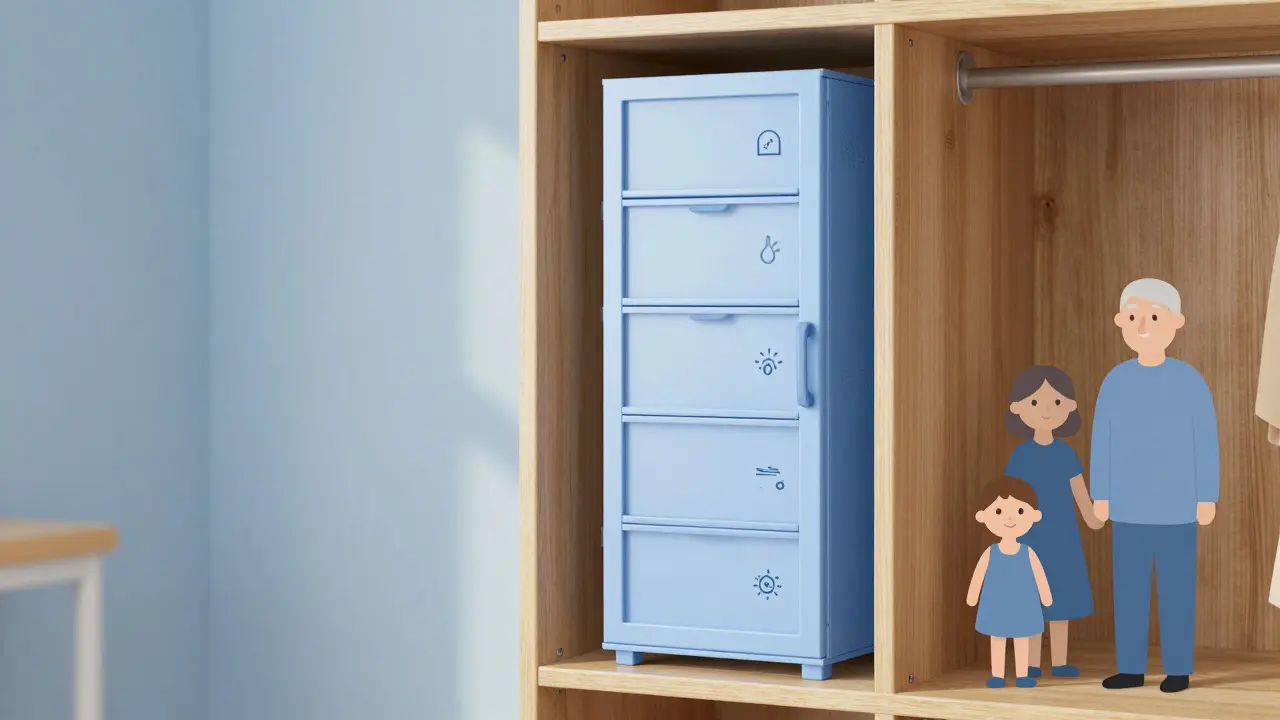
Medications lose potency over time, sometimes losing 50% of their effectiveness well before the printed date if stored poorly. Heat and humidity are the enemy. A bathroom cupboard is notoriously bad for this because showers create damp conditions. Instead, choose a bedroom closet or pantry shelf where temperatures remain stable. You must inspect your supplies every three months. Check the expiry dates carefully; rotating stock ensures the medication works when you actually press the button.
Child safety is paramount. The CDC notes that hundreds of thousands of children suffer accidental poisoning each year. Your kit must be locked or placed high enough that toddlers cannot reach it. Never treat a pill bottle like candy. Additionally, be aware of "hidden" interactions. If a kit includes Tylenol/Paracetamol and you are also taking a flu syrup that contains the same ingredient, you risk liver damage without realizing it. Always check the label names, not just the brand names.
Managing Special Needs in the Family
One size does not fit all. Children and seniors require tailored approaches within this safety framework. For infants and kids, aspirin is strictly prohibited. The link to Reye's Syndrome makes it unsafe for anyone under 18. Instead, use weight-based dosing guides for ibuprofen or acetaminophen so you can calculate the exact milliliter amount instantly. Keep a chart that correlates weight to dose right next to the medicines.
For elderly relatives, who often juggle multiple prescriptions, the kit changes slightly. Visual impairment means labels need to be larger. Reading tiny font sizes leads to mistakes. Use a magnifying glass in the kit and organize boxes with big, handwritten labels. Also, consider withdrawal risks. If someone stops beta-blockers or antidepressants abruptly, the result can be dangerous. A "rescue week" supply of their maintenance drugs helps bridge gaps if travel delays them returning to their daily routine.
When the Kit Isn't Enough
Knowing when to abandon the kit and call for help is the most critical skill you can learn. There is a line between manageable side effects and signs of systemic failure. If you notice difficulty swallowing, swelling of the tongue, or chest pain, this is beyond the scope of a home solution. New symptoms appearing suddenly after a new drug intake warrant immediate attention. Remember, the goal of this kit is stabilization and communication.
Documentation plays a massive role here. Keep a small notepad and a waterproof pen in the box. Record the time the symptom started, what medicine was taken, and what step you took to fix it. Medical professionals rely on this timeline to diagnose whether a reaction is acute or cumulative. Writing it down clears your head for more urgent tasks and gives the triage nurse a precise picture of the situation.
What is the difference between a standard first-aid kit and a medication emergency kit?
Standard kits focus on external injuries like cuts and scrapes using bandages and ointments. A medication emergency kit focuses on internal or systemic reactions, such as allergies, stomach upset, or rashes caused by pharmaceutical drugs.
How often should I check expiration dates on my emergency medicines?
You should check expiration dates at least once every three months. Moisture and heat can degrade medications faster than the printed date suggests, so quarterly reviews are safer than yearly checks.
Is it safe to give aspirin to children for pain relief?
Absolutely not. Aspirin is linked to Reye's Syndrome in children, a rare but serious condition affecting the liver and brain. Use age-appropriate alternatives like acetaminophen or ibuprofen instead.
Where is the best place to store this kit in my house?
A cool, dry place like a bedroom closet or pantry is ideal. Avoid bathrooms or kitchen cupboards where temperature fluctuations and humidity can ruin the medication potency.
Should I include a supply of my regular daily prescription medications?
Yes, experts recommend keeping a minimum seven-day supply of essential chronic medications in the kit. This prevents withdrawal symptoms or destabilization during unforeseen disruptions.