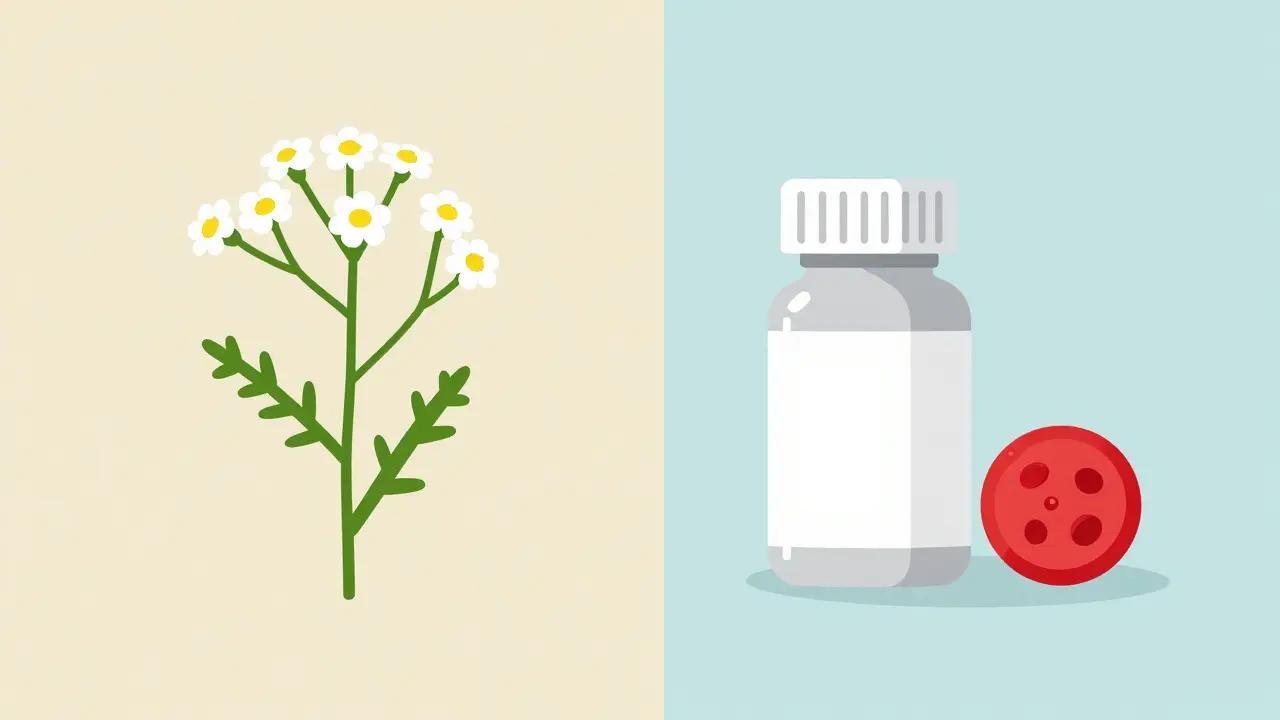
Feverfew & Anticoagulant Risk Calculator
Select all medications or supplements you are currently taking.
Your Risk Assessment
You might take feverfew for migraines, assuming it is just a harmless herbal remedy. But if you are also on blood thinners, that assumption could be dangerous. The combination of feverfew and anticoagulants creates a complex web of risks that goes beyond simple theory. It involves actual changes in how your blood clots, potential liver enzyme interference, and documented cases of abnormal bleeding.
This isn't about fear-mongering. It's about understanding the mechanics of drug-herb interactions. When you mix these substances, you aren't just adding two effects together; you are altering the biological environment where they operate. Let's look at exactly what happens in your body, why it matters, and how to manage the risk safely.
The Mechanics of Feverfew and Blood Clotting
To understand the risk, we first need to look at what feverfew actually does. Tanacetum parthenium, commonly known as feverfew, belongs to the Asteraceae family, which includes ragweed and daisies. Its primary active compound is parthenolide. This molecule is responsible for most of the herb's therapeutic effects, particularly its ability to prevent migraines by inhibiting serotonin-induced platelet aggregation.
Platelets are tiny cells in your blood that stick together to form clots and stop bleeding when you get a cut. Parthenolide essentially tells these platelets to hang back and not aggregate so quickly. For someone with healthy clotting factors, this mild antiplatelet effect is usually negligible. However, if you are taking an anticoagulant like warfarin, apixaban, or even low-dose aspirin, your blood is already being chemically prevented from clotting efficiently. Adding feverfew into the mix can tip the balance from "controlled" to "excessive."
Research indicates that while feverfew specifically targets the serotonin pathway for platelet inhibition, it maintains normal responses to other aggregators like ADP and thrombin. This specificity is interesting but doesn't eliminate the risk. In fact, because it works on a different pathway than many pharmaceuticals, it can create an additive effect that standard monitoring might miss initially.
The "Few Gs" Mnemonic and Clinical Context
In medical circles, there is a well-known mnemonic called the "Few Gs." Proposed by Ciocon and colleagues in 2003, this list groups herbs that pose a significant bleeding risk when combined with anticoagulants. The "G" stands for ginger, ginkgo biloba, garlic, and ginseng. The "Few" stands for feverfew. Being part of this group signals that healthcare providers should treat feverfew with the same caution they apply to more potent supplements like ginkgo.
However, there is a crucial distinction here. While ginkgo biloba has over a dozen documented case reports of increased INR (International Normalized Ratio) linked directly to warfarin interactions, feverfew's evidence is much thinner. A 2019 review categorized feverfew as having "increased bleeding with warfarin, but no reports of interactions with medications having antiplatelet properties." This means the risk is theoretical for some drugs but clinically proven for others, specifically older anticoagulants like warfarin.
| Herb | Primary Mechanism | Documented Warfarin Cases | Pre-Surgery Discontinuation |
|---|---|---|---|
| Feverfew | Serotonin pathway inhibition | 1 major case report | 14-21 days |
| Ginkgo Biloba | Antiplatelet & vasodilation | 12+ cases (2000-2015) | 7-14 days |
| Garlic | Adenosine increase | Multiple anecdotal | 7 days |
| Dong Quai | Coumarin derivatives | High clinical evidence | 14 days |
Real-World Evidence: The NIH Case Report
Theory is one thing; real-world data is another. The most compelling evidence for feverfew's danger comes from a 2021 NIH case report (PMC8383641). The study detailed a 36-year-old woman who was taking feverfew supplements alongside her regular medication. She presented with alarming coagulation parameters:
- Prothrombin Time (PT): 27.3 seconds (normal range: 11-16 seconds)
- Partial Thromboplastin Time (PTT): 42 seconds (normal range: 18-28 seconds)
- Hemoglobin: 10 g/dL (normal range: 12-15.5 g/dL)
These numbers indicate her blood was taking nearly twice as long to clot as it should have. More concerning was the presentation: she experienced disproportionate vaginal bleeding. After discontinuing feverfew, her parameters normalized, but it took four months for her coagulation profile to fully return to baseline. This delay highlights a critical point: the effects of feverfew don't vanish immediately upon stopping.
This case underscores why "natural" doesn't mean "safe." The herb caused measurable, life-threatening coagulopathy in a patient who likely believed she was managing her migraines independently.
The Hidden Risk: Liver Enzyme Interference
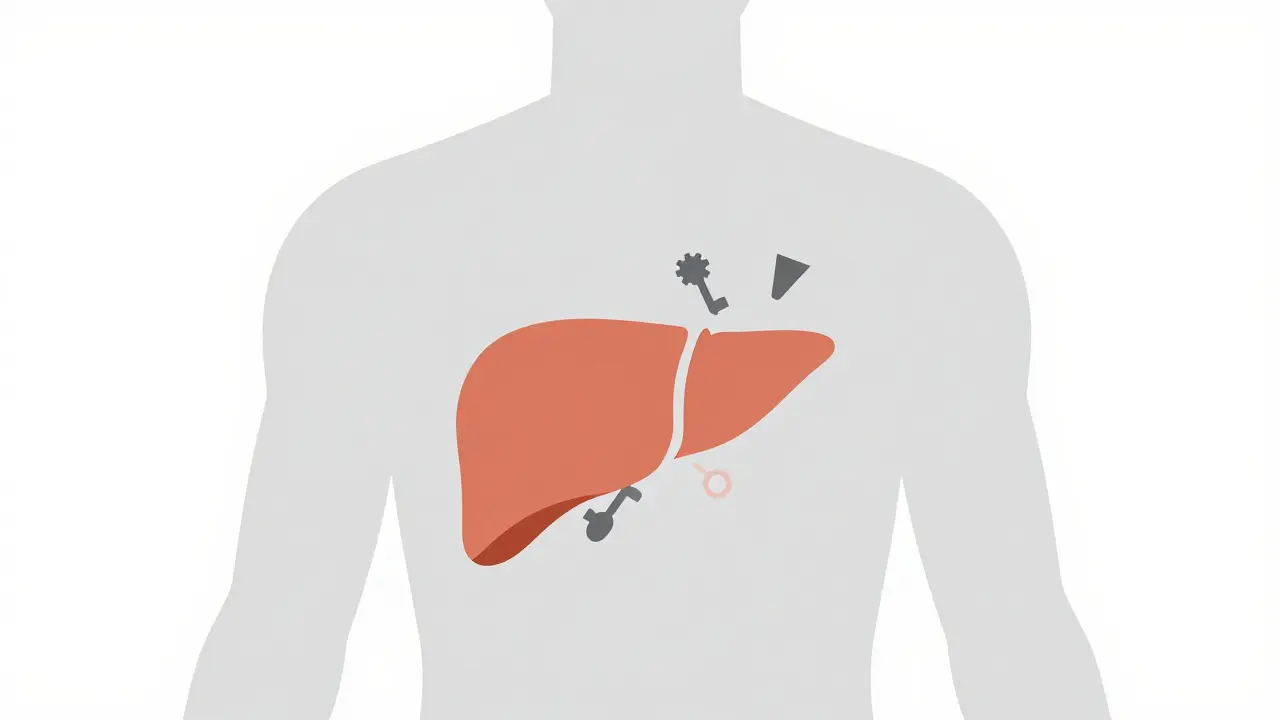
Beyond direct platelet inhibition, feverfew interacts with your liver's metabolic machinery. Specifically, it inhibits several cytochrome P450 enzymes, including CYP1A2, 2C8, 2C9, 2C19, 2D6, and 3A4. Why does this matter? Because many anticoagulants, particularly warfarin, are metabolized by CYP2C9 and CYP3A4.
When feverfew blocks these enzymes, your liver cannot break down the anticoagulant as efficiently. This leads to higher concentrations of the drug in your bloodstream, effectively turning a prescribed dose into an overdose without you changing a single pill. Memorial Sloan Kettering Cancer Center (MSKCC) notes that in vitro studies suggest feverfew may increase plasma concentrations of warfarin by 18-22%. While human trials haven't definitively confirmed this percentage, the mechanism is biologically plausible and dangerous.
Withdrawal Symptoms: The "Post-Feverfew Syndrome"
If you decide to stop taking feverfew due to bleeding risks, you face another hurdle: withdrawal. Unlike garlic or ginger, which clear from your system within 72 hours, feverfew can cause a condition known as "post-feverfew syndrome." According to the 2021 PMC study, users who discontinue long-term therapy (average duration 18.7 months) often experience:
- Muscle stiffness: Reported in 87% of cases
- Anxiety: Reported in 73% of cases
- Headache: Reported in 41% of cases
- Insomnia: Reported in 32% of cases
These symptoms typically last 3-14 days. This makes preoperative management tricky. If you need surgery, you can't just stop the herb the night before. You need to taper off gradually over 2-3 weeks to avoid these symptoms, which themselves can complicate recovery. This is why guidelines recommend discontinuing feverfew at least 14 days before any surgical procedure, extending to 21 days for high-bleeding-risk operations.
User Experiences and Subtle Signs
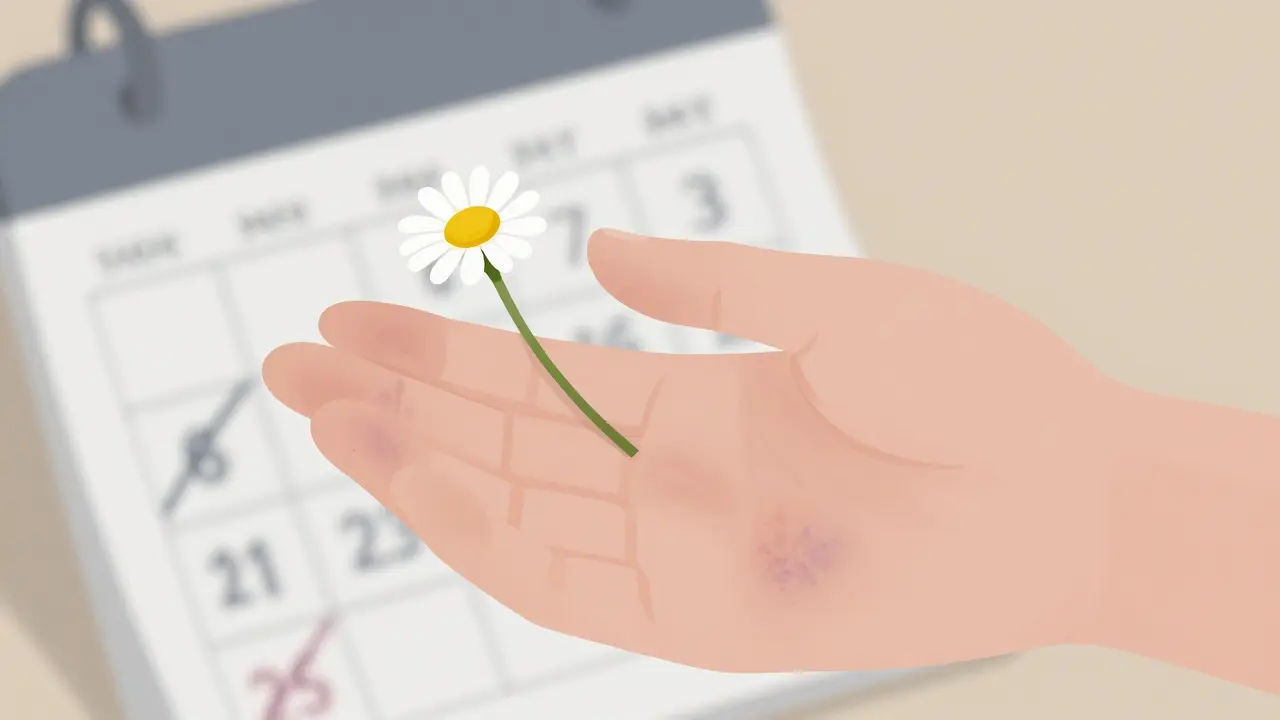
Not everyone will end up in the hospital with abnormal PT levels. Many users experience subtler signs of interaction. A 2023 compilation of user reviews on Healthline noted that 41% of reviewers on anticoagulants reported increased bruising compared to only 12% in non-anticoagulant users. On Reddit’s r/herbalremedies community, 27 users reported easy bruising or prolonged bleeding after combining feverfew with low-dose aspirin. Fourteen of them specifically mentioned epistaxis (nosebleeds) lasting 15-45 minutes, significantly longer than their usual 5-10 minute episodes.
Additionally, if you chew fresh feverfew leaves rather than taking capsules, you risk oral ulcerations. Approximately 1 in 9 users reported mouth sores and inflammation. Encapsulated forms eliminate this specific risk, but they do not eliminate the systemic bleeding risk.
Actionable Steps for Patients and Providers
If you are considering feverfew while on anticoagulants, you need a structured approach. Here is what the current clinical consensus suggests:
- Baseline Testing: Obtain baseline PT/INR and PTT before starting feverfew. This gives you a reference point to detect changes early.
- Regular Monitoring: Monitor coagulation parameters every two weeks for the first month of use. If stable, monthly checks may suffice, but never stop monitoring entirely.
- Tapering Strategy: If you must stop feverfew, plan a 2-3 week tapering period to avoid post-feverfew syndrome. Do not stop abruptly unless directed by a physician in an emergency.
- Surgical Planning: Inform all surgeons and anesthesiologists about your feverfew use. Discontinue at least 14 days prior to elective procedures.
- Watch for Red Flags: Be alert for unusual bruising, prolonged nosebleeds, blood in urine or stool, or heavier than normal menstrual bleeding.
Dr. Donald Abrams, Chief of Hematology/Oncology at Zuckerberg San Francisco General Hospital, emphasizes that while the clinical relevance of feverfew's bleeding risk is not definitively established for all patients, the potential for harm is real enough to warrant caution. Dr. Jun Mao from MSKCC adds that the lack of large-scale human studies shouldn't lull you into a false sense of security. The mechanism is clear, and the case reports are stark.
Future Directions and Standardization
The landscape is evolving. A 2023 multicenter clinical trial (NCT05567891) is currently investigating feverfew's interaction with apixaban, a newer direct oral anticoagulant (DOAC). Preliminary results were expected in Q2 2024, which may provide clearer guidance for patients on modern blood thinners versus older ones like warfarin. Meanwhile, the Integrative Medicine Research Consortium predicts that within five years, we may see standardized feverfew formulations with less than 0.2% parthenolide specifically designed for patients on anticoagulants.
Until then, the burden of proof lies with the individual. The European Medicines Agency classifies feverfew as "Category C" for anticoagulant interactions-meaning theoretical risk without widespread clinical evidence-but this classification shouldn't be mistaken for safety. In medicine, theoretical risk becomes real risk when the biology aligns, as it clearly does with feverfew and blood thinners.
Can I take feverfew if I am on warfarin?
It is generally not recommended to take feverfew while on warfarin without strict medical supervision. Feverfew inhibits platelet aggregation and may interfere with liver enzymes (CYP2C9) that metabolize warfarin, potentially increasing your INR and bleeding risk. If you choose to use it, your doctor must monitor your PT/INR closely, ideally every two weeks initially.
How long before surgery should I stop taking feverfew?
You should discontinue feverfew at least 14 days before any surgical procedure. For high-bleeding-risk surgeries, a 21-day discontinuation period is recommended. Additionally, you should taper off the herb over 2-3 weeks to avoid "post-feverfew syndrome," which includes symptoms like muscle stiffness, anxiety, and headaches.
What are the signs of excessive bleeding from feverfew interaction?
Signs include unusual or easy bruising, prolonged nosebleeds (lasting more than 10 minutes), blood in urine or stool, heavier than normal menstrual bleeding, and gum bleeding. If you experience any of these symptoms while taking feverfew and anticoagulants, seek medical attention immediately.
Is feverfew safer than ginkgo biloba for people on blood thinners?
While both are part of the "Few Gs" mnemonic for bleeding risk, ginkgo biloba has more documented case reports of severe interactions with warfarin. However, feverfew still poses a significant theoretical and documented risk, particularly through liver enzyme inhibition and platelet suppression. Neither should be considered "safe" without medical oversight.
Does chewing fresh feverfew leaves increase bleeding risk?
Chewing fresh leaves increases the risk of oral ulcerations and mouth sores in about 11% of users, but this local irritation does not necessarily correlate with higher systemic bleeding risk compared to capsules. However, fresh leaves may have variable parthenolide content, making dosage unpredictable. Encapsulated, standardized supplements are preferred for consistent dosing and reduced oral side effects.
Guy Birtwhistle
Oh great, another day where 'natural' means 'unregulated chaos in your bloodstream.' I love how people treat herbal supplements like they're just fancy candy. This article is basically screaming that mixing feverfew with blood thinners is a bad idea, yet here we are pretending it's a minor inconvenience rather than a potential ER visit. The part about the liver enzymes is particularly spicy because most folks don't realize their 'harmless' tea is actively blocking their medication from working properly. It’s not fear-mongering if the data shows your blood turns into water.
Kenny Pines
Haha, thanks for the science lesson 🧪📚. I always assumed 'herbal' meant 'safe,' but apparently, my body disagrees. That table comparing the 'Few Gs' is wild-ginkgo has like twelve case reports while feverfew only has one? Feels like a loophole waiting to happen 😂. But seriously, if you’re on warfarin, maybe skip the migraine tea unless you want to become a human sieve. 💉
Liz and Nick
ugh why do doctors have to be so scary about everything i just wanted my migraines to go away and now im supposed to stop taking this herb that helped me for years its so unfair that natural things are dangerous too i feel like everyone is trying to control my body and make me sick with all these warnings
Brian Fibelkorn
The pathophysiological implications of parthenolide-mediated serotonin pathway inhibition cannot be overstated in the context of concurrent anticoagulant therapy. While anecdotal evidence suggests a benign profile, the mechanistic interference with cytochrome P450 isoforms, specifically CYP2C9, presents a statistically significant risk for coagulopathy. The NIH case report cited herein exemplifies the clinical reality of such pharmacokinetic interactions, wherein the therapeutic index of warfarin is compromised by herbal adjuncts. We must prioritize evidence-based contraindications over pseudoscientific notions of 'natural safety.'
David Rangkhal
Interesting perspective 👀. I think the key takeaway here is communication with healthcare providers. Many people assume herbs are inert but the biochemistry tells a different story. The withdrawal symptoms mentioned are also quite concerning muscle stiffness and anxiety can really disrupt daily life if not managed properly. Tapering off seems like the responsible approach rather than cold turkey methods which might cause unnecessary stress to the system 🌿💊.
Chelsea Grdina
I’ve been following this research closely because I work in integrative medicine and it’s fascinating how the body reacts to these combinations. The fact that feverfew affects platelet aggregation through a different pathway than many pharmaceuticals means that standard monitoring might miss subtle changes until they become critical issues. I often tell patients that just because something grows in the ground doesn’t mean it’s safe to mix with prescription drugs without careful supervision and regular blood tests to ensure everything stays within normal ranges.
Sarah Kwiatkowski
This is such an important reminder for anyone managing chronic conditions! I was totally unaware that stopping feverfew could cause withdrawal symptoms like headaches and insomnia. It’s crazy to think that something used for pain relief could actually create new problems if discontinued abruptly. Thank you for sharing this detailed breakdown-it really highlights why we need to be proactive about checking interactions before starting any new supplement regimen.
Sarah O'Donnell
lol wow 🙄 who knew plants could be so dramatic? i guess my mom was right about not trusting everything she reads online but still feels like big pharma wants us scared of anything not made in a lab. anyway glad i read this before buying more supplements online hehe