Passing a kidney stone is often described as one of the most painful experiences a human can endure. It feels like being stabbed from the inside out. For many, the shock wears off, but the fear remains. You know the statistics: roughly 40% to 50% of people who pass one stone will get another within five years. The good news? You have more control over this than you think. Specifically, if you are dealing with calcium oxalate stones, which account for 70-80% of all cases, there are precise, evidence-backed steps you can take to stop them from forming again.
This isn't about guessing what foods to avoid. It’s about understanding the chemistry in your urine and manipulating it through specific hydration and dietary targets. Let’s look at exactly how to lower your risk using data from major urological guidelines.
The Hydration Goal: More Than Just "Drink Water"
Hydration is the single most effective tool against kidney stones, but "drink more water" is too vague to be useful. You need a specific target. According to the National Institutes of Health (NIH) Evidence Report, your goal should be to produce more than 2.5 liters of urine per day. This usually requires consuming 2.5 to 3.0 liters of fluid daily, depending on your climate and activity level.
Why this number? A meta-analysis published in the *Clinical Journal of the American Society of Nephrology* found that individuals producing 2.0 to 2.5 liters of urine daily had a 50% lower risk of stone recurrence compared to those producing less than 1.0 liter. There is a linear protective effect up to that 2.5L threshold. Drinking beyond that point offers diminishing returns, so aim for that sweet spot rather than chugging gallons unnecessarily.
- Primary Fluid: Plain water is best because it has no additives.
- Protective Beverages: Coffee and beer actually show protective effects against stone formation according to Harvard Health publications. Moderate consumption counts toward your total.
- Risky Beverages: Avoid grapefruit juice entirely. A study in the *American Journal of Epidemiology* linked it to increased risk. Also, skip fizzy drinks and colas, which contain phosphoric acid that can contribute to stone formation.
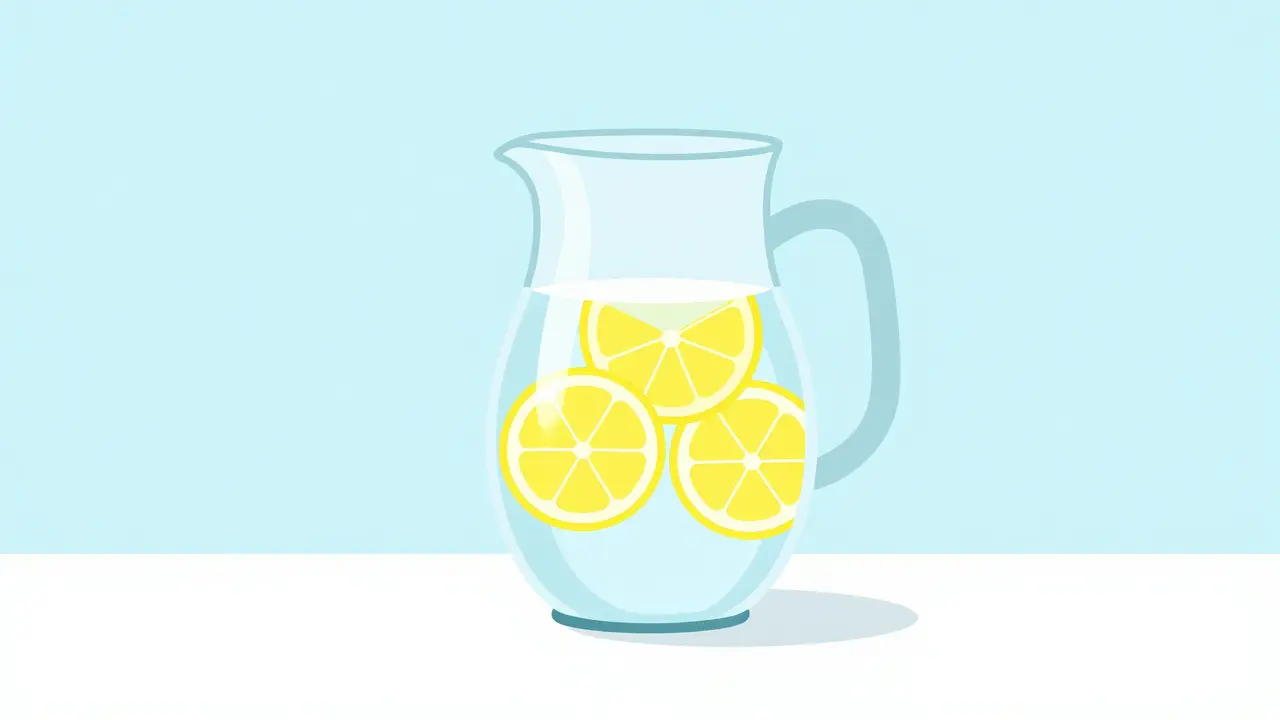
A pro tip from Dr. Eisner at Massachusetts General Hospital: add lemon juice to your water. Citrate prevents crystals from sticking together. Research shows that drinking half a cup of lemon juice concentrate diluted in water daily increases urine citrate levels by approximately 120 mg/day. That’s equivalent to the juice of two lemons. It tastes better than plain water and works harder for your kidneys.
Dietary Calcium: The Counterintuitive Truth
If you’ve been told to cut calcium to prevent calcium stones, you’ve been given outdated advice. In fact, restricting dietary calcium can increase your risk. Here is why: calcium binds to oxalate in your gut. When they bind there, they leave the body together in stool. If you don’t eat enough calcium, the oxalate stays free, gets absorbed into your bloodstream, and ends up in your urine where it meets calcium to form stones.
The National Kidney Foundation recommends consuming 1,000 to 1,200 mg of calcium daily from food sources. Aim for 2-3 servings of dairy or fortified alternatives. One serving equals one cup of milk, one ounce of cheese, or three-quarters of a cup of yogurt.
| Type | Impact on Stone Risk | Reason |
|---|---|---|
| Dietary Calcium (Food) | Reduces Risk | Binds oxalate in the intestine before absorption |
| Calcium Supplements | Increases Risk | Can increase urinary calcium excretion if not taken with meals |
| Calcium Citrate (Supplement) | Neutral/Safe* | Citrate helps prevent stones; safer option if supplements are needed |
*Note: Only use supplements if you cannot meet dietary needs. Dr. David Goldfarb of NYU Langone Health notes that calcium citrate is preferable to calcium carbonate if supplementation is necessary, especially for those with low urine citrate.
Oxalate Management: Timing Is Everything
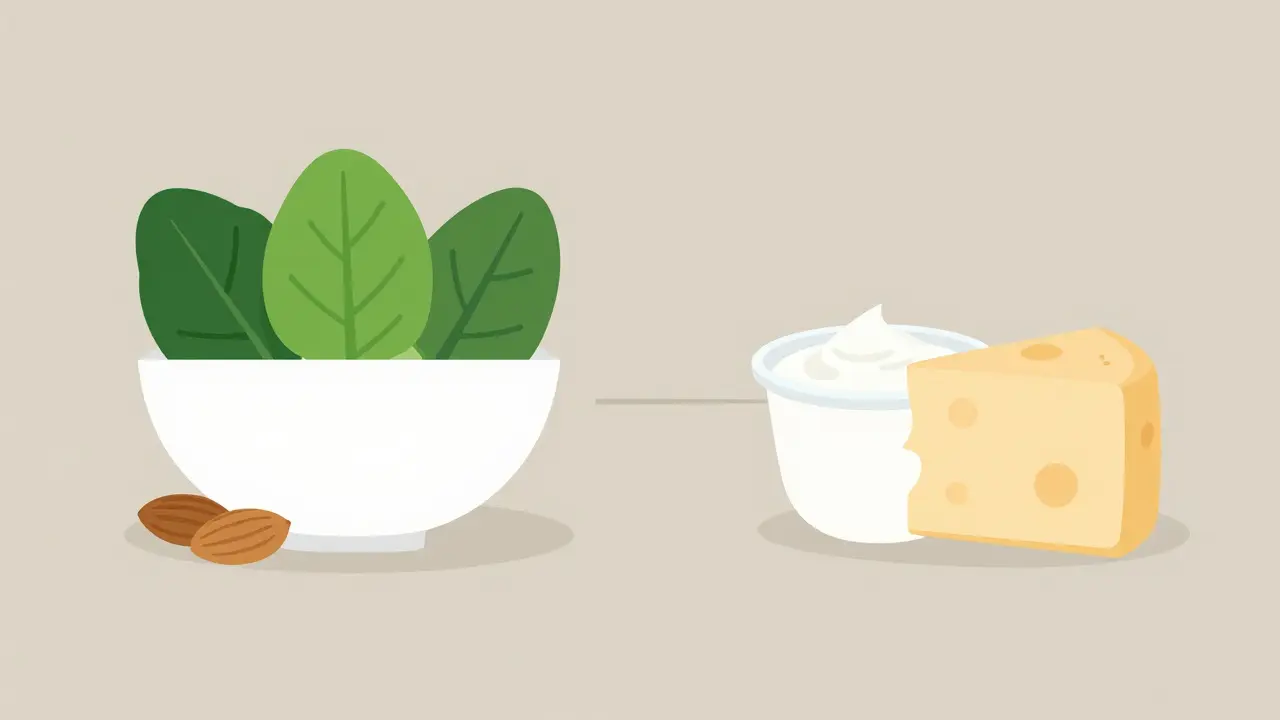
You cannot eliminate oxalate from your diet without starving yourself, as it exists in many healthy vegetables and fruits. Instead of strict avoidance, focus on timing. The key rule is simple: consume calcium-rich foods at the same time you eat high-oxalate foods.
A study in *Clinical Nutrition* demonstrated that eating calcium two hours before or after an oxalate-rich meal reduced oxalate binding by 40-50%. Simultaneous consumption ensures the calcium traps the oxalate in your digestive tract.
Be mindful of these high-oxalate offenders:
- Spinach: 755 mg of oxalate per half-cup cooked (very high)
- Rhubarb: 541 mg per half-cup
- Almonds: 122 mg per ounce
- Navy Beans: 89 mg per half-cup
If you love spinach salads, pair them with a source of calcium like feta cheese or a glass of milk. Do not eat them alone. For most people, moderate intake of these foods is fine if balanced with calcium. However, if you have a genetic mutation affecting oxalate transporters, your doctor may advise stricter limits.
Sodium and Protein: The Hidden Drivers
High sodium intake forces your kidneys to excrete more calcium. Every additional 1,000 mg of sodium you eat correlates with a 25-30 mg increase in urinary calcium. To keep urinary calcium low, stick to the American Heart Association’s limit of 2,300 mg of sodium per day. Processed foods, canned soups, and deli meats are the usual suspects here.
Animal protein also plays a role. High intake of meat, poultry, and eggs lowers urine citrate (the stone inhibitor) and increases uric acid. Guidelines suggest limiting animal protein to less than 30% of your total caloric intake. For a standard 2,000-calorie diet, that’s about 75 grams of protein per day. You don’t need to go vegan, but swapping some meat days for plant-based proteins like lentils or chickpeas can help balance your urine chemistry.
When Diet Isn’t Enough: Medical Interventions
For some patients, lifestyle changes alone aren’t sufficient to correct underlying urinary abnormalities. This is where medical management comes in, based on results from a 24-hour urine test.
- Thiazide Diuretics: Drugs like hydrochlorothiazide or chlorthalidone reduce urinary calcium. They can cut recurrence rates by 30-50% in patients with hypercalciuria (high urine calcium). Note: These require monitoring for potassium levels.
- Potassium Citrate: Prescribed for hypocitraturia (low urine citrate). It raises citrate levels, preventing crystal aggregation. The standard dose is 10-20 mEq twice daily.
- Allopurinol: Used for patients with hyperuricosuria (high urine uric acid), reducing recurrence by 35% in clinical trials.
Emerging research also looks at probiotics. The bacterium *Oxalobacter formigenes* breaks down oxalate in the gut. Early trials suggest probiotic supplementation could reduce urinary oxalate excretion by 30%, though this is still considered experimental.
Monitoring Your Progress
You can’t manage what you don’t measure. If you are prone to stones, ask your urologist for a 24-hour urine collection test. This provides a baseline of your urinary chemistry. Target ranges generally include:
- Urine Volume: >2.5 L/day
- Calcium: <250 mg/24 hours
- Oxalate: <40 mg/24 hours
- Citrate: >320 mg/24 hours
- Sodium: <200 mEq/24 hours
Adherence is tough. Studies show only 35% of patients maintain adequate fluid intake after a year. Using mobile apps to track water intake can double your adherence rate. Set reminders, carry a reusable bottle, and treat hydration as a non-negotiable part of your health routine, just like brushing your teeth.
How much water should I drink to prevent kidney stones?
You should aim to produce more than 2.5 liters of urine per day. This typically requires drinking 2.5 to 3.0 liters of fluid daily. Water is best, but coffee and tea also count. Adding lemon juice can boost protective citrate levels.
Should I avoid calcium if I have calcium oxalate stones?
No. You should consume 1,000-1,200 mg of calcium daily from food sources. Dietary calcium binds to oxalate in the gut, preventing it from reaching the kidneys. Avoid calcium supplements unless prescribed, as they may increase stone risk.
What foods are highest in oxalate?
High-oxalate foods include spinach, rhubarb, almonds, cashews, beets, and navy beans. You do not need to eliminate them, but you should eat them alongside calcium-rich foods to neutralize their effect.
Does salt affect kidney stones?
Yes. High sodium intake increases the amount of calcium your kidneys excrete into your urine. Keeping sodium under 2,300 mg per day helps keep urinary calcium levels lower and reduces stone risk.
Can medication help prevent kidney stones?
Yes. Thiazide diuretics can reduce urinary calcium, while potassium citrate can increase urinary citrate. Allopurinol helps if you have high uric acid. These require a prescription and monitoring via 24-hour urine tests.