
Imagine you are sitting in a hotel room after a long flight. You reach for your evening dose of controlled medication, which is prescription drugs regulated by government agencies due to their potential for abuse and dependency. The bottle is gone. This isn't just an inconvenience; it is a medical crisis. According to the Centers for Disease Control and Prevention (CDC), medication theft accounts for roughly 12% of all travel-related health incidents. For those carrying Schedule II substances like oxycodone or hydrocodone, the stakes are even higher because these drugs have significant street value and are prime targets for thieves.
The good news is that theft is largely preventable. By understanding the specific risks associated with traveling with controlled substances and implementing strict security protocols, you can protect your health and avoid legal trouble. This guide breaks down exactly how to pack, document, and safeguard your medications whether you are flying domestically or crossing international borders.
Understanding the Risks and Regulations
Before you pack a single pill, you need to understand what you are dealing with. In the United States, the Drug Enforcement Administration (DEA) classifies medications into five schedules based on their abuse potential. Schedule I and II drugs, such as fentanyl, oxycodone (OxyContin®), and hydrocodone (Vicodin®), carry the highest risk for theft. These are the pills criminals look for first. Schedule III through V drugs, including certain benzodiazepines and anabolic steroids, are also targeted but face slightly less scrutiny at checkpoints.
The International Narcotics Control Board (INCB) updated its guidelines in 2020 to address this exact problem. They recognize that stolen medications don't just harm the traveler; they feed the illicit drug trade. If you lose your medication, you are not only at risk of withdrawal or untreated pain, but you may also face legal issues if authorities suspect you were trafficking drugs rather than traveling with personal medicine. Understanding this dual risk-health and legal-is the first step in protecting yourself.
Packing Strategies That Actually Work
Your packing method determines whether your medication stays safe or ends up in someone else's pocket. The Transportation Security Administration (TSA) has clear rules here, and ignoring them is a mistake many travelers make.
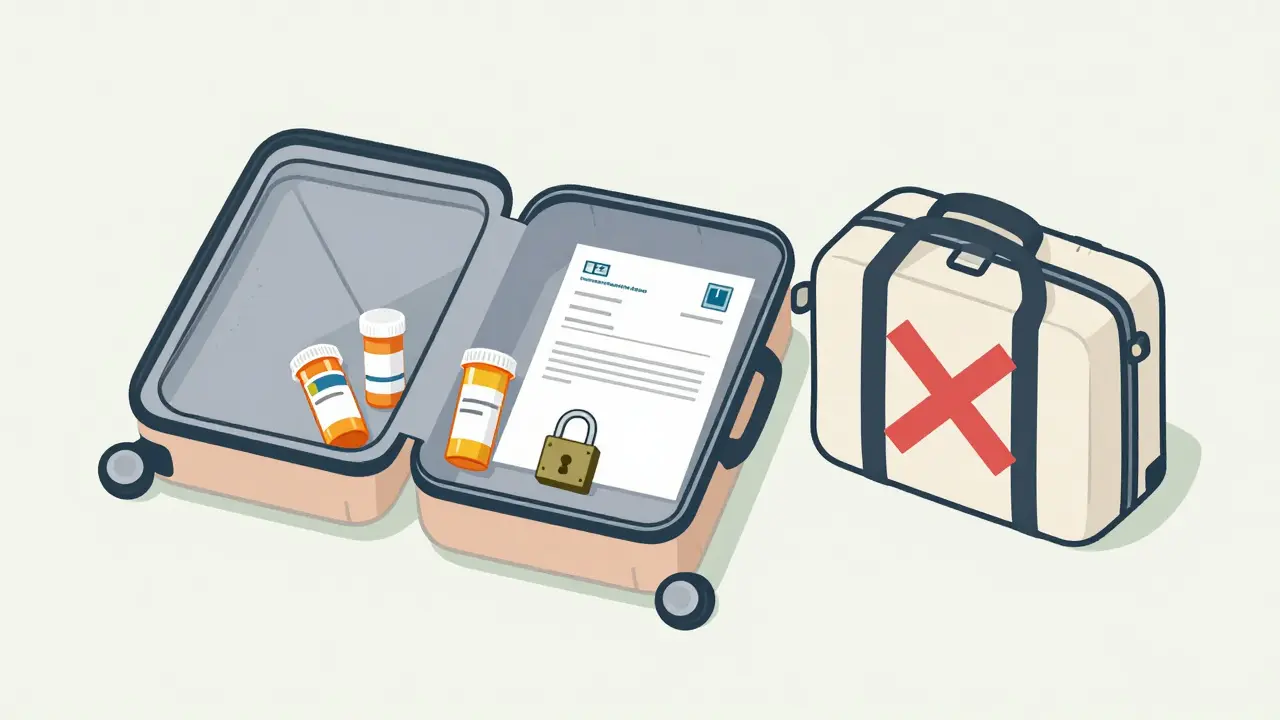
- Never check your meds: Checked baggage is lost or mishandled approximately 25.5 times per 1,000 passengers, according to SITA's 2022 Baggage Report. Once your bag leaves your sight, you lose control over who accesses it. Keep all controlled substances in your carry-on luggage.
- Stick to original containers: Cleveland Clinic pharmacists report that 78% of security issues at airports involve medications not in properly labeled containers. Original pharmacy labels show the patient's name, doctor's name, dosage, and dispensing date. This transparency proves legitimacy instantly.
- Limit quantities: Enlyte pharmacists recommend carrying no more than a 14-day supply for a seven-day trip, plus 2-3 extra doses for emergencies. Carrying large amounts raises red flags for security personnel and makes you a bigger target for theft.
If you must use a secondary container for discretion, ensure it has identical labeling information. However, be aware that some states, including California, Texas, and Florida, require original pharmacy labels for full compliance. When in doubt, keep the original bottle.
Documentation Is Your Best Defense
A thief might steal your pills, but proper documentation protects you from legal detention. The CDC’s Yellow Book 2024 notes that 67% of countries will confiscate medications without proper paperwork. For 41 countries, you need advance authorization even for small quantities of Schedule III-V substances.
You should carry a standardized medication travel letter. This document should include:
- Your physician’s signature and contact information.
- Detailed prescription information (drug name, strength, dosage).
- A brief justification of the medical necessity (diagnosis).
For international travel, consider having this letter notarized. Canadian travelers following this protocol see a 98.7% success rate in avoiding delays, according to Travel.gc.ca. Without this letter, you could end up like the traveler detained for four hours at Heathrow Airport in 2023 simply because his oxycodone was in a generic pill organizer.
Securing Your Medication During Stay
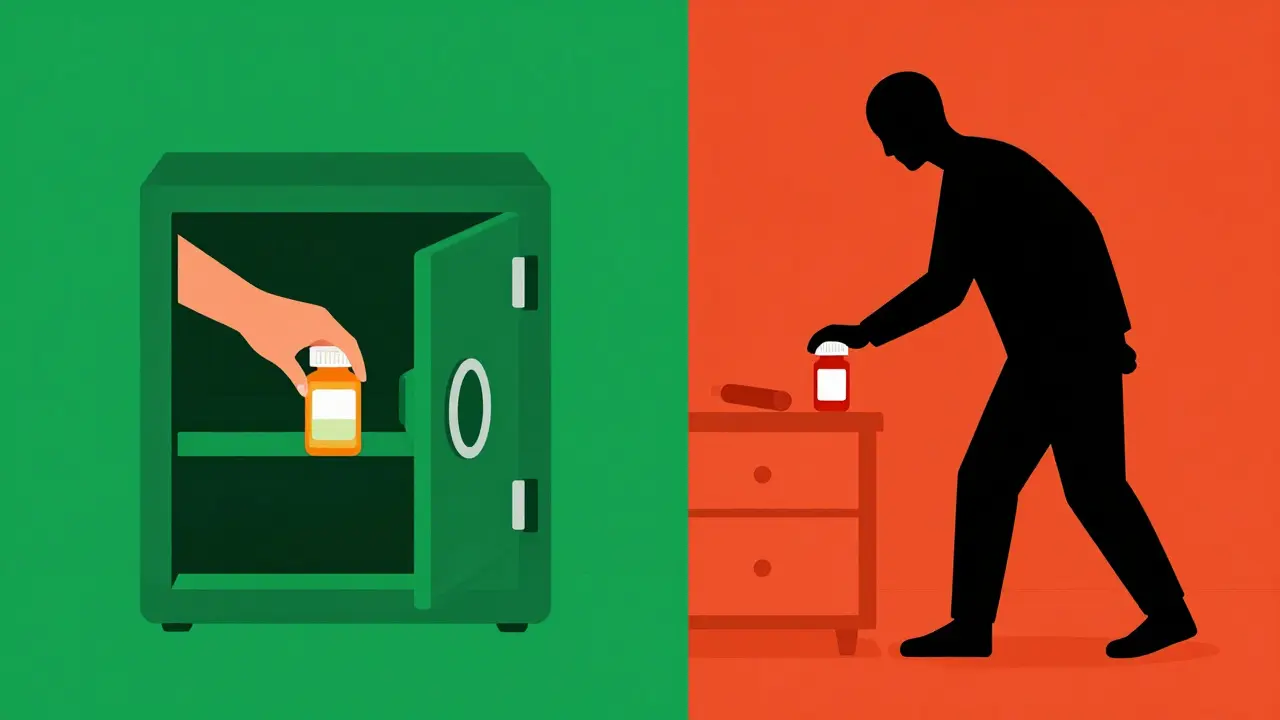
Many travelers think the danger ends once they pass through airport security. It doesn’t. Dr. Sarah Wyman, Chief Pharmacy Officer at Cleveland Clinic, points out that 92% of medication theft incidents occur during hotel stays or when medications are left unattended in rental vehicles.
To mitigate this risk, treat your medication like cash or jewelry. Never leave it on a nightstand or in a bathroom. Use the hotel safe immediately upon arrival. If the safe seems unreliable, keep the medication on your person at all times. Some travelers use RFID-blocking medication cases, which aggregated user reports on PackPoint say reduce theft incidents by 76%. These cases protect against digital skimming and provide a physical barrier that discourages casual theft.
Be mindful of your surroundings. The American Academy of Family Physicians (AAFP) reports that diversion incidents increase by 37% during peak travel seasons. Thieves often target people who openly discuss their medication needs or display visible pill bottles in public spaces. Discretion is key.
International Travel Considerations
Traveling abroad adds layers of complexity. Different countries have different laws regarding what constitutes a "controlled" substance. Japan, for example, strictly regulates pseudoephedrine, leading to over 2,000 confiscations in 2022 alone. Saudi Arabia prohibits 147 controlled substances entirely, regardless of prescription status.
Before you book your flight, check the INCB’s interactive portal for country-specific exceptions. As of September 2024, the INCB standardized maximum allowable quantities at 30-day supplies for Schedule III-V medications, but exceptions apply. Always verify with the embassy of your destination country. Bringing a medication that is illegal in your destination can lead to arrest, not just confiscation.
What to Do If Theft Occurs
If the worst happens and your medication is stolen, act quickly. Time is critical for both your health and your insurance claim.
- File a police report immediately: Most insurance companies, including UnitedHealthcare, require a police report filed within 24 hours. In 2023, only 17% of claims were approved without timely documentation, compared to 89% with it.
- Contact your doctor: You will need a new prescription. Be aware that DEA regulations prevent pharmacies from dispensing Schedule II medications more than five days early without special authorization. This means replacement might take longer than expected.
- Use electronic verification: The DEA launched a pilot program in April 2024 allowing electronic prescription verification for stolen controlled substances at participating pharmacies. This can reduce replacement wait times from 72 hours to under four hours.
If you have previously had medication stolen, keep copies of old police reports. A 2022 survey found that travelers with prior documentation experienced 63% faster processing through insurance channels.
| Factor | Domestic (U.S.) Travel | International Travel |
|---|---|---|
| Container Requirements | TSA allows non-original, but 32 states prefer original labels | Original containers strongly recommended; some countries mandate them |
| Documentation | Prescription label usually sufficient | Notarized doctor’s letter often required; advance authorization for some countries |
| Quantity Limits | No federal limit, but state laws vary | Often capped at 30-day supply; varies by country |
| Theft Risk Source | Airport security, rental cars | Hotel rooms, border crossings, customs inspections |
Frequently Asked Questions
Can I put my controlled medication in checked luggage?
No, you should never place controlled medications in checked luggage. The Transportation Security Administration (TSA) advises keeping all medications in your carry-on bag. Checked bags are more prone to loss, delay, or unauthorized access, which significantly increases the risk of theft. Additionally, if your medication requires temperature control, checked luggage holds are not climate-controlled, potentially degrading the drug's efficacy.
Do I need a doctor's note for domestic flights?
While the TSA does not require a doctor's note for domestic flights, it is highly recommended. Having a copy of your prescription or a letter from your physician can speed up security screening if your medication triggers an alarm. Furthermore, some states have specific labeling laws that may require original pharmacy labels, so carrying documentation helps prove compliance if questioned by local law enforcement.
What should I do if my medication is stolen while traveling?
First, file a police report immediately. Most insurance providers require this document within 24 hours to process a claim. Second, contact your prescribing physician to request a replacement prescription. Be aware that for Schedule II drugs, pharmacies cannot dispense refills more than five days early without special authorization. Finally, check if you are near a pharmacy participating in the DEA's electronic prescription verification pilot program, which can expedite replacements.
How much medication can I bring when traveling internationally?
Generally, it is safest to carry no more than a 30-day supply. However, this varies significantly by country. The International Narcotics Control Board (INCB) recommends checking their interactive portal for specific country limits. Some nations, like Japan and Saudi Arabia, have extremely strict laws and may prohibit certain substances entirely. Always consult your destination's embassy before departure to confirm allowable quantities.
Is it safer to use a pill organizer instead of original bottles?
No, using a pill organizer is generally riskier, especially for controlled substances. Original pharmacy containers provide crucial information such as the patient's name, doctor's details, and dosage instructions. Security personnel and customs agents rely on this information to verify legitimacy. Using a generic organizer can lead to delays, additional screening, or even detention, as seen in multiple reported cases at international airports.