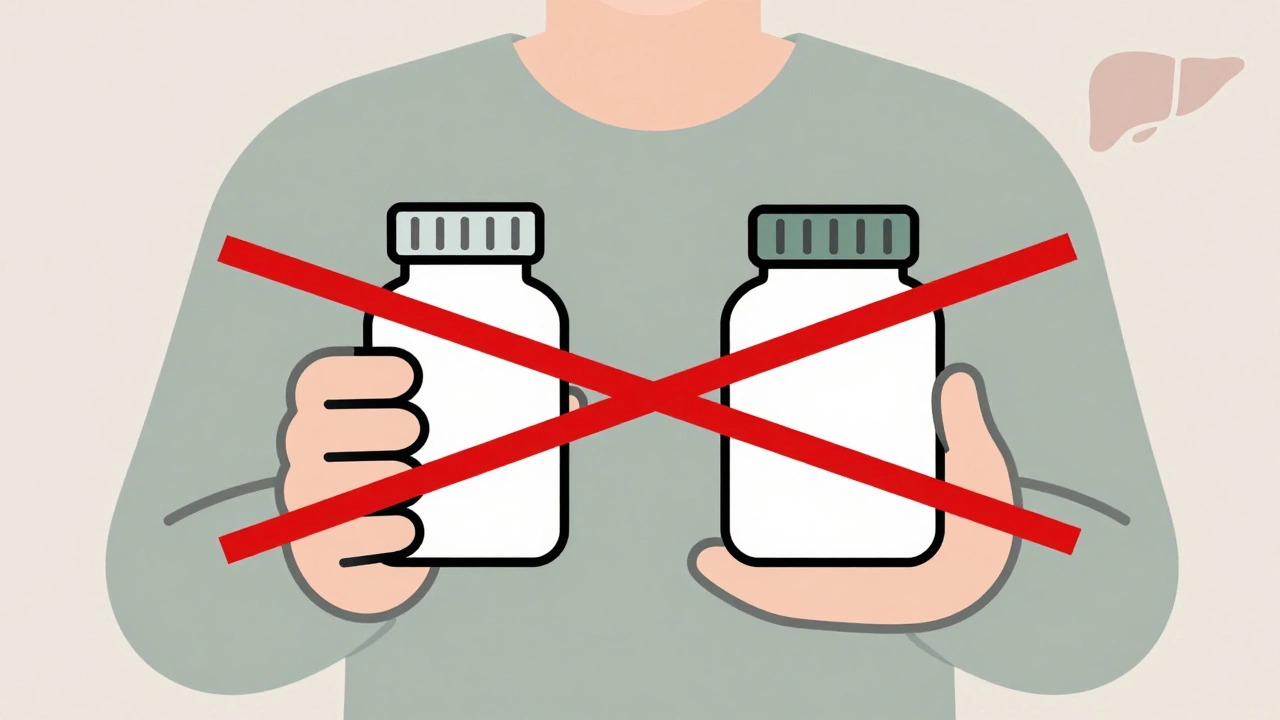
Every year, 23,000 people in the U.S. end up in the emergency room because of bad reactions between supplements and medications. That’s not a small number. And it’s not just happening to older adults-it’s happening to people in their 30s, 40s, and 50s who think, “It’s just a pill from the health store. How bad could it be?”
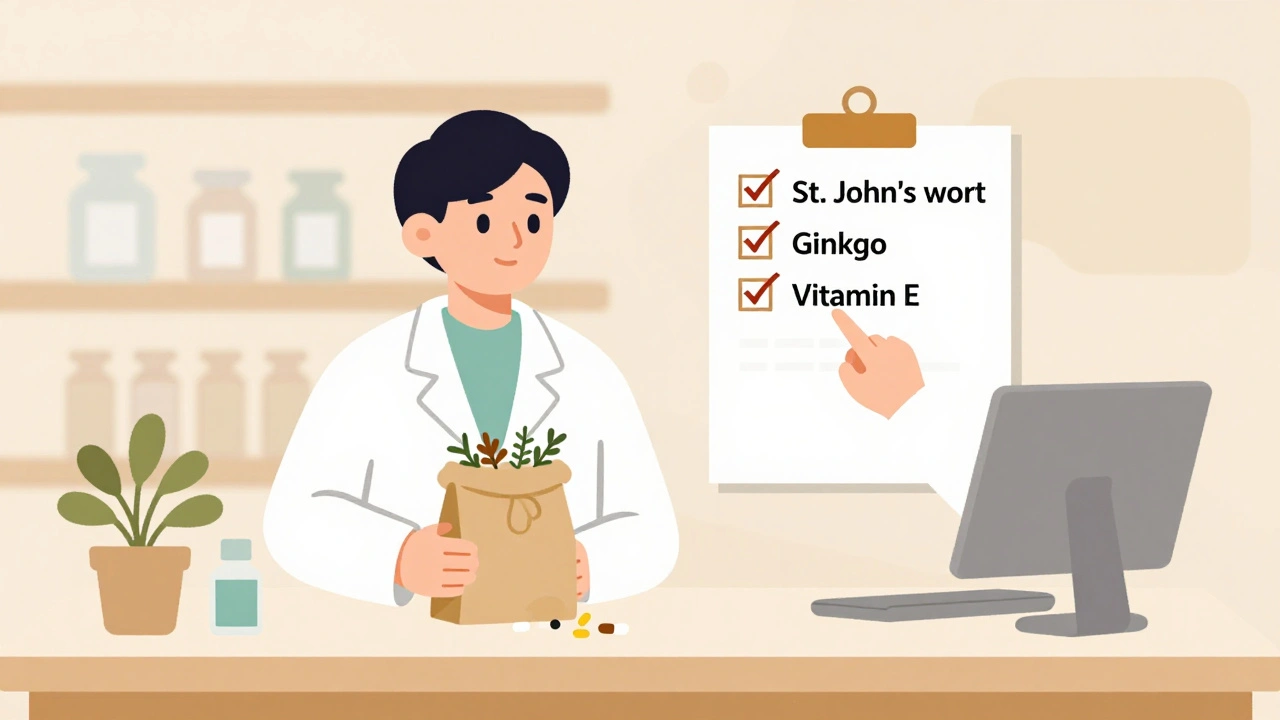
The truth? Just because something is labeled “natural” doesn’t mean it’s safe with your prescriptions. St. John’s wort, for example, can cut the effectiveness of your birth control, HIV meds, or even your heart transplant drug by up to half. Ginkgo biloba might seem harmless, but if you’re on warfarin, it can turn a minor bruise into a life-threatening bleed. And vitamin E? At 400 IU or more, it can push your INR levels into dangerous territory if you’re already on blood thinners.
Why Supplements Can Be Dangerous With Medications
Your body doesn’t know the difference between a prescription drug and a supplement. Both are chemicals. And both are processed by the same systems-especially your liver, where enzymes like CYP3A4 and CYP2C9 break things down. When a supplement interferes with those enzymes, it can make your medication too strong, too weak, or cause unpredictable side effects.
Take calcium, magnesium, or iron supplements. If you take them at the same time as your thyroid med or antibiotics like ciprofloxacin, they can bind together in your gut and stop your body from absorbing either one. That means your medication isn’t working-and you don’t even know it.
Other supplements work by changing how your body responds to drugs. For example, St. John’s wort speeds up the breakdown of many medications, so your body clears them out faster than it should. That’s why people on cyclosporine (used after organ transplants) have seen their drug levels drop by 50%-and their bodies start rejecting the new organ.
Which Supplements Are Highest Risk?
Not all supplements are created equal when it comes to interactions. Some are mostly safe. Others? They’re ticking time bombs.
High-risk supplements (avoid unless cleared by your doctor):
- St. John’s wort - Interacts with over 57 medications, including antidepressants, birth control, blood thinners, and transplant drugs. It’s the most dangerous supplement you can buy over the counter.
- Ginkgo biloba - Safe for most people, but doubles your bleeding risk if you’re on warfarin, aspirin, or Eliquis. One user on Reddit spent seven days in the hospital after combining it with Eliquis.
- Vitamin E (400 IU or more) - Can make blood thinners too powerful. A 15-20% spike in INR isn’t just a number-it’s a red flag.
- Garlic, ginger, and fish oil - All can thin your blood. Surgeons ask you to stop these 7-10 days before surgery for a reason.
- Goldenseal - Blocks liver enzymes and can make your meds build up to toxic levels.
Lower-risk supplements (still check with your doctor):
- Milk thistle
- Black cohosh
- Cranberry
- American ginseng
- Saw palmetto
- Valerian
Even “low-risk” doesn’t mean zero risk. If you’re on a drug with a narrow therapeutic index-like warfarin, digoxin, or cyclosporine-any supplement could push you over the edge.
How to Check for Interactions (Step by Step)
You don’t need a pharmacy degree to protect yourself. Here’s how to do it right:
- Make a complete list. Write down every pill, capsule, powder, or tincture you take-prescription, over-the-counter, herbal, vitamins, and even CBD or melatonin. Don’t leave anything out.
- Bring it to your doctor or pharmacist. This is called the “brown bag method.” Bring your entire medicine cabinet to your next appointment. Studies show this cuts medication errors by 37%.
- Ask specifically: “Is this supplement safe with my meds?” Don’t say, “I take this sometimes.” Name each one. Say the brand if you know it. Say the dose. Say how often you take it.
- Check the label. Look for warning statements. If it says “May interact with blood thinners” or “Consult your doctor if on antidepressants,” that’s a red flag. If it says nothing? That’s not a good sign. Supplements aren’t required to list interactions.
- Use a trusted tool. The FDA is launching a new app in late 2024 that lets you scan supplement labels and get instant interaction alerts. Until then, use the Drugs.com interaction checker or the MedlinePlus Drug Information tool. Both are free and updated regularly.
Don’t rely on Google searches or Reddit advice. One person’s “worked for me” could be your next hospital trip.
What Your Pharmacist Can Do for You
Pharmacists are your secret weapon. They see hundreds of medication combinations every week. Since 2021, Walgreens and CVS have required pharmacists to screen for supplement interactions during every refill. In 18% of cases, they catch something dangerous.
Ask your pharmacist: “Can you check my whole list-prescriptions and supplements-for interactions?” Most will do it for free. No appointment needed. Just walk in with your bag.
They can also tell you if you’re taking two supplements that compete for absorption-like calcium and iron-or if your vitamin D dose is dangerously high when combined with your thyroid med.
Who’s Most at Risk?
People over 50 are the most likely to be taking both medications and supplements. In fact, 78% of adults in that group do. But only 32% talk to their doctor about the supplements.
Why? Many think:
- “It’s natural, so it’s safe.”
- “My doctor doesn’t need to know.”
- “I’ve been taking it for years.”
That’s dangerous thinking. The supplement industry is huge-$56 billion in sales in 2023-and it’s barely regulated. The FDA doesn’t approve supplements before they hit the shelf. They only step in after someone gets hurt.
That’s why the FDA issued 142 warning letters in 2023 to companies selling supplements that claimed to treat diseases like cancer or Alzheimer’s. Those aren’t just shady products-they’re deadly.
What to Do Before Surgery
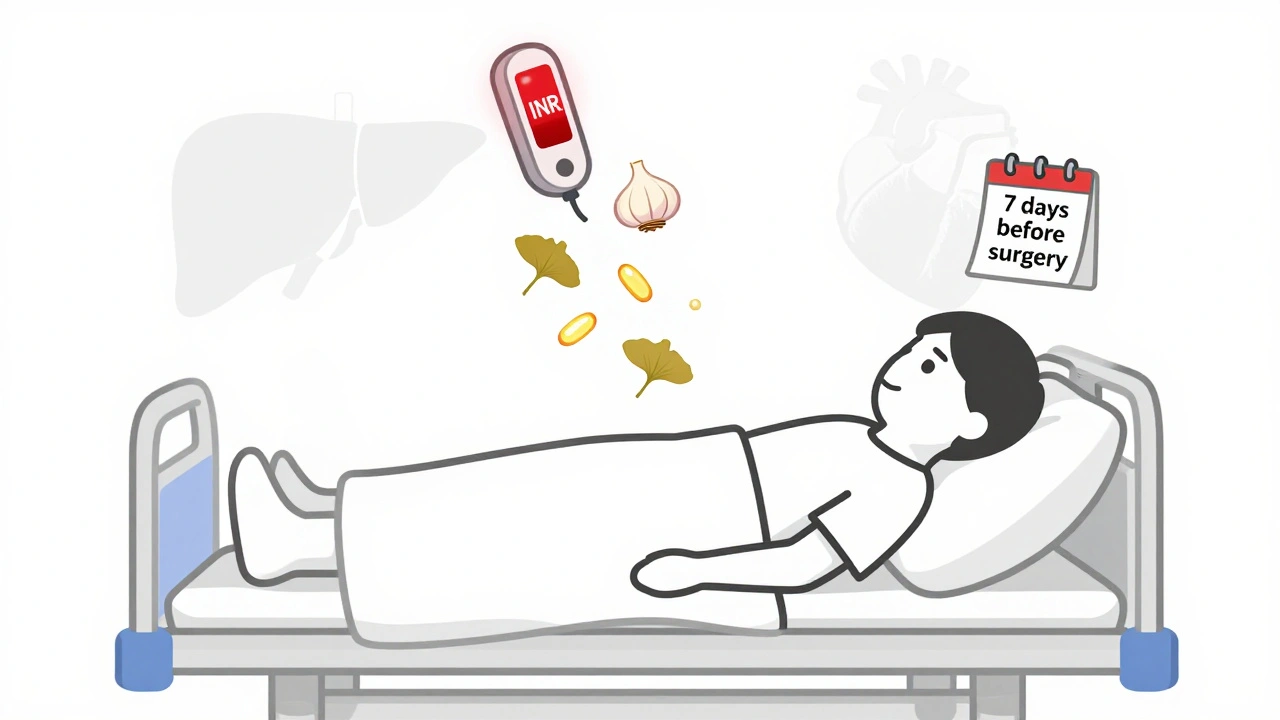
If you’re scheduled for surgery, stop taking certain supplements at least 7-10 days before. That includes:
- Ginkgo biloba
- Garlic
- Green tea extract
- Fish oil
- Valerian
- Black cohosh
These can increase bleeding during surgery or interfere with anesthesia. Your surgeon might not ask you about them. So tell them-before the day of the procedure.
What’s Changing in 2025?
Things are starting to shift. The American Medical Association now requires doctors to ask about supplement use during every medication review. Epic Systems, the biggest electronic health record provider in the U.S., has started adding supplement interaction alerts to hospital systems in 15% of facilities-and that number is growing fast.
The FDA’s new Dietary Supplement Ingredient Database app will launch in late 2024. It’ll scan labels and tell you instantly if your supplement clashes with your meds. It’s a game-changer.
But until then? You’re the only one who can protect yourself.
Final Rule: Never Assume Safety
There’s no such thing as a “safe” supplement without context. A supplement that’s fine for your neighbor might be deadly for you because of your meds, your liver function, your age, or your kidney health.
Don’t guess. Don’t hope. Don’t assume.
Always check. Always ask. Always tell your doctor and pharmacist everything you’re taking.
Because when it comes to your health, the safest supplement you can take is information.
Desmond Khoo
Bro this hit different. I was taking ginkgo with my blood thinner and thought I was being ‘natural’ 😅 Turned out I was one bruise away from the ER. Thanks for the wake-up call. Now I bring my whole medicine cabinet to my pharmacist like a pro.
Sadie Nastor
sooo i just realized i’ve been taking vitamin e with warfarin for 3 years?? 😳 i thought it was just ‘for my skin’… i’m gonna go check my inr right now. thanks for the nudge 🙏
Kyle Flores
Just wanted to say this is one of the most thoughtful posts I’ve seen on this topic. So many people think ‘natural’ = ‘safe’ and it’s scary. I’m a nurse and I see this every week. Please, if you’re on meds-don’t guess. Ask. Bring the bag. Your liver will thank you.
Olivia Hand
St. John’s wort is the silent assassin of the supplement aisle. I had a patient on cyclosporine who didn’t tell her transplant team she was taking it ‘for anxiety.’ Her rejection markers spiked overnight. She’s lucky she didn’t lose the kidney. This isn’t herbal tea-it’s pharmacology with a yoga mat on top.
Louis Llaine
Wow. 23,000 ER visits. Must be nice to have so many people willing to die for the ‘natural’ lifestyle. Next you’ll tell me kombucha cures cancer. 😴
Jane Quitain
OMG I JUST STOPPED MY FISH OIL BEFORE MY SURGERY BECAUSE OF THIS!! 🙌 I thought it was just ‘heart healthy’ but now I’m like… wait, am I gonna bleed out on the table?? THANK YOU FOR THIS. I’m telling my whole family.
Sam Mathew Cheriyan
lol the FDA? you think they care? they let big pharma control everything. supplements are safer than your pills. they just wanna scare you so you keep buying prescriptions. i take 10 herbs a day and i’m 82 and still hiking. they don’t want you to know this.
Ernie Blevins
you’re all dumb. if you’re on meds you shouldn’t be taking anything. period. end of story. just take your pills and shut up.
Nancy Carlsen
Y’all need to know: your pharmacist is your BFF. I walk in every month with my bag and they always catch something I forgot. Last time they told me my magnesium was blocking my thyroid med. I cried. I didn’t even know. 💕
Ted Rosenwasser
Let’s be real-the only reason this is even a ‘problem’ is because the FDA doesn’t regulate supplements like drugs. Which is absurd. If this were a pharmaceutical product, it’d be pulled off shelves in 48 hours. The fact that we’re still having this conversation in 2025 is a national disgrace.
Helen Maples
STOP saying ‘natural’ is safe. That phrase has killed people. You wouldn’t say ‘natural’ poison is okay. Don’t say it about supplements. Use the Drugs.com checker. Write down every ingredient. Tell your doctor. Do not skip steps. This is not optional.
Ashley Farmer
My mom took St. John’s wort with her antidepressants and didn’t tell anyone. She ended up in the psych ward for a week. I’m sharing this with everyone I know. You’re not being ‘independent’ by hiding supplements-you’re putting your life at risk.
David Brooks
I just got back from my doctor’s office and I told them I take turmeric, ashwagandha, and a ‘wellness blend’ I bought on Amazon. They looked at me like I’d just confessed to smuggling illegal raccoons. I’m now on a 30-day supplement cleanse. And I’m crying. But it’s a good cry.
Jennifer Anderson
i never knew garlic could mess with blood thinners 😳 i thought it was just for colds… i’m gonna stop it till after my surgery. thanks for the heads up!!