Why Your Psoriasis Flares Up When You Least Expect It
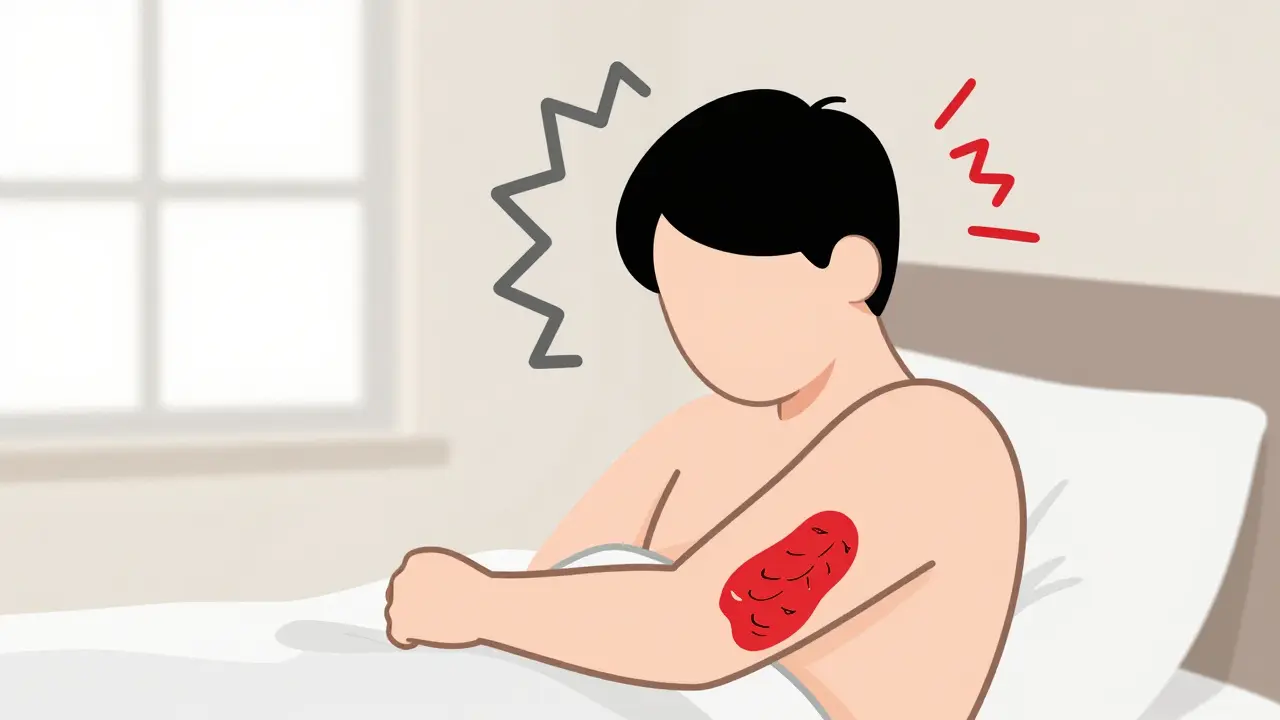
You wake up one morning and notice a new patch of red, scaly skin on your elbow. You didn’t change your soap. You didn’t get sunburned. You didn’t scratch it. So why now? For millions living with psoriasis, flares don’t come out of nowhere. They’re often triggered by three invisible forces: stress, infections, and a broken skin barrier. These aren’t just coincidences-they’re biological signals your body sends when something’s out of balance.
Stress Isn’t Just in Your Head-It’s in Your Skin
Stress doesn’t just make you feel overwhelmed. It rewires your immune system. When you’re under pressure-whether from a deadlined project, a family loss, or even a big move-your body releases cortisol and other inflammatory chemicals. These don’t just raise your heart rate. They activate immune cells that normally stay quiet, turning them loose on your skin.
Research from Mount Sinai shows that people with psoriasis often report their first major flare happening within a year after a major life stressor. One Reddit user shared how, after losing their mother, their mild elbow patches exploded into covering 30% of their body in just three months. That’s not rare. A 2022 survey by the National Psoriasis Foundation found that over 70% of patients link their worst flares to emotional or mental stress.
Even positive stress can trigger flares. Starting a new job, getting married, or moving houses can be just as disruptive as grief or financial strain. The body doesn’t distinguish between good and bad stress-it just reacts to change.
And here’s the cruel twist: once psoriasis shows up, the stress of dealing with it can make things worse. You worry about how others see you. You avoid social events. You lose sleep. That stress feeds back into the cycle, making the skin worse, which makes the stress worse. It’s a loop many don’t realize they’re stuck in.
Infections Are Silent Spark Plugs
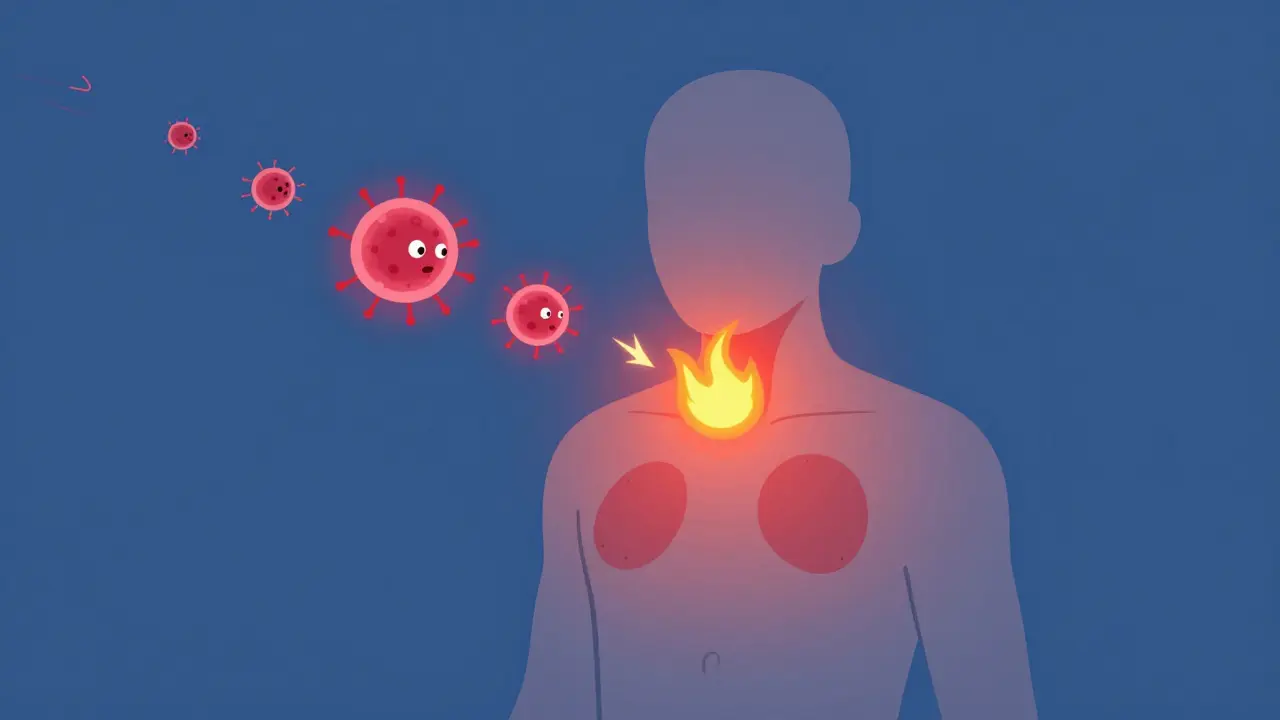
Think of infections as matchsticks in a room full of gasoline. If your genes make you prone to psoriasis, a simple throat infection can light the fuse.
Strep throat is the most well-documented infection trigger, especially in kids and young adults. It doesn’t just cause a sore throat-it can trigger guttate psoriasis, a type that looks like small, drop-like spots all over the torso and limbs. That’s because strep bacteria activate immune cells called dendritic cells, which then pump out IL-23, a key inflammatory signal in psoriasis.
But it’s not just strep. Colds, the flu, and even COVID-19 have been linked to flare-ups. Viruses trigger something called the RIG-I pathway, a cellular alarm system that, in people with psoriasis genes, goes haywire and turns on skin inflammation. Even a minor ear infection or sinus congestion can be enough to tip the balance.
There’s a strange paradox: HIV weakens the immune system by killing T-cells, and you’d think that would help psoriasis. But in reality, many HIV patients develop more severe psoriasis. Why? Because the virus messes with immune regulation in ways that accidentally activate the same pathways psoriasis uses.
That’s why prevention matters. Getting your annual flu shot can reduce infection-triggered flares by 35%, according to data from Schweiger Dermatology. Washing your hands regularly, avoiding crowded places during flu season, and treating infections early aren’t just good habits-they’re part of your psoriasis management plan.
Your Skin Barrier Is Your First Line of Defense
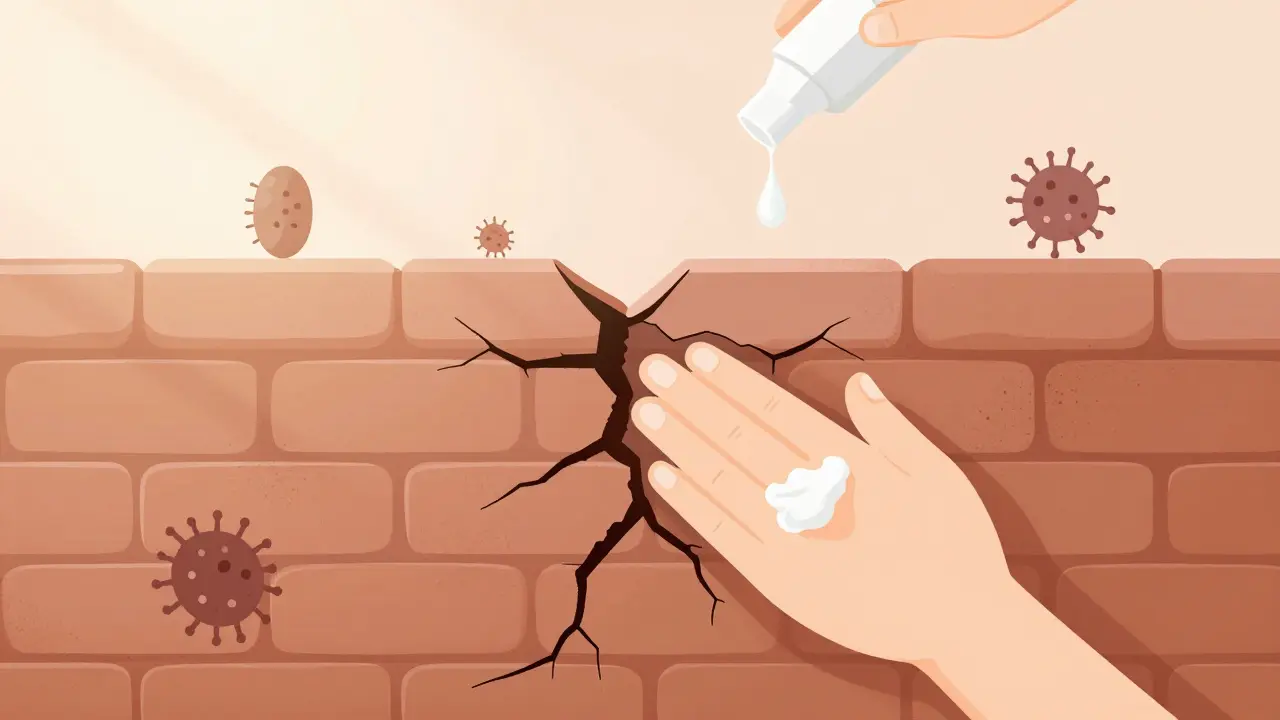
Imagine your skin as a brick wall. The bricks are skin cells. The mortar is the natural oils and proteins that hold them together. In psoriasis, that wall is cracked. Moisture escapes. Germs get in. And your immune system panics, thinking it’s under attack.
Research from 2024 shows that people with psoriasis often have a genetic flaw in the LCE gene family, which codes for proteins that help build and maintain this skin barrier. When the barrier breaks down, bacteria like Staphylococcus aureus move in. These bacteria don’t cause infection-but they do trigger inflammation. They stir up IL-17 and IL-22, the same chemicals that cause the thick, scaly plaques.
Studies on mice with broken skin barriers showed that applying topical antibiotics reduced inflammation and cleared psoriasis-like patches. That’s not a fluke. It means your skin’s microbiome-the tiny ecosystem of bacteria living on it-plays a direct role in flare-ups.
So how do you fix it? Simple, but consistent: moisturize. Not just any moisturizer. Use fragrance-free products with ceramides, cholesterol, and fatty acids. These are the exact building blocks your skin’s barrier needs to repair itself. Apply twice a day-morning and night-even when your skin looks fine. Prevention beats treatment every time.
Avoid harsh soaps. Most bar soaps have a pH of 9 or higher. Your skin’s ideal pH is around 5.5. High-pH soaps strip away protective oils and leave your skin dry and vulnerable. Switch to a gentle, pH-balanced cleanser. And don’t skip humidity. Dry air, especially in winter, pulls moisture out of your skin. Use a humidifier to keep indoor levels between 40% and 60%.
What You Can Do Today to Cut Flares
Knowing your triggers is half the battle. The other half is acting on them. Here’s what works, based on real patient data and clinical studies:
- For stress: Try 20 minutes of mindfulness meditation daily. Studies show this lowers cortisol by 25% in eight weeks. If meditation feels too quiet, try walking in nature, journaling, or yoga. The goal isn’t to eliminate stress-it’s to stop it from hijacking your immune system.
- For infections: Get your flu shot every year. Wash hands before touching your face. Treat sore throats early. If you notice a flare after a cold, don’t wait-see your dermatologist. Early treatment can stop it from spreading.
- For skin barrier: Use ceramide-rich moisturizers twice daily. Avoid hot showers. Pat skin dry, don’t rub. Wear gloves when washing dishes or cleaning. Use insect repellent to avoid bites. Even a tiny bug bite can trigger a new patch through the Koebner effect-where trauma creates new psoriasis spots.
And don’t underestimate small things. A 2022 study at Sanford Dermatology found that 45% of new plaques started at sites of unnoticed insect bites or minor scrapes. People often think, “It’s just a little scratch,” but in psoriasis, it’s not.
What Doesn’t Work (And Why)
There’s a lot of noise out there. “Drink apple cider vinegar.” “Cut out dairy.” “Use coconut oil.” Some of these help some people-but they’re not universal fixes.
Yes, some patients report fewer flares when they avoid dairy, gluten, or nightshades. But in a survey of over 1,200 people, only 32% said dairy triggered them, 25% said gluten. That means two out of three people saw no change. Don’t eliminate entire food groups unless you’ve tested it yourself over weeks.
Same with “natural” remedies. Tea tree oil, aloe vera, and turmeric may soothe itching, but they don’t fix the root cause. They’re bandaids, not treatments. If your barrier is broken or your immune system is firing, you need targeted repair-not just surface relief.
The Future Is Personal
Right now, doctors treat psoriasis based on what the skin looks like. In five years, they’ll know what’s triggering it in you.
Wearable stress monitors are already being tested. They track heart rate variability, sleep quality, and skin conductance-signals that show when your body is under stress before you even feel it. AI apps are learning to predict flares by linking your daily habits (sleep, mood, weather, activity) to your symptom logs.
One 2023 study at Mount Sinai modeled that personalized tracking could reduce flare frequency by 40-60%. Imagine getting a notification: “Your stress levels are high. Try 10 minutes of breathing. You’re at risk for a flare.” That’s not sci-fi. It’s coming.
For now, focus on the three pillars: manage stress like your skin depends on it (because it does), treat infections fast, and rebuild your skin barrier every single day. These aren’t optional. They’re the foundation.
Psoriasis Isn’t Just Skin Deep
It’s an immune system shouting for help. Stress, infection, and skin damage aren’t just triggers-they’re clues. Listen to them. Act on them. And remember: you’re not fighting your skin. You’re helping it heal.
Can stress cause psoriasis or just make it worse?
Stress doesn’t cause psoriasis on its own-you need the right genes. But it can trigger your first flare or make existing psoriasis much worse. Studies show many people experience their first major outbreak within a year of a major stressful event. Stress activates immune chemicals that inflame the skin, turning a quiet genetic risk into active disease.
Do I need to avoid all infections to prevent flares?
No, you don’t need to live in a bubble. But you should be smart. Treat infections early, especially throat infections like strep. Get your flu shot every year-it cuts infection-triggered flares by 35%. Wash your hands often, especially in winter. If you get sick, monitor your skin. A flare after an illness is common, but catching it early helps control it.
What’s the best moisturizer for psoriasis?
Look for fragrance-free, thick creams or ointments with ceramides, cholesterol, and fatty acids. These are the exact components your skin’s barrier needs to repair. Avoid lotions with alcohol or perfume-they dry you out. Brands like CeraVe, Vanicream, and Eucerin have options that work well. Apply right after showering, while skin is still damp, to lock in moisture.
Can weather make psoriasis worse?
Yes. Cold, dry air pulls moisture from your skin and worsens flares in about 68% of people. Hot, humid weather helps 72% of patients. But 8% have photosensitive psoriasis-sun makes it worse. If you’re unsure, track your flares with the seasons. Use a humidifier indoors in winter. When it’s cold, cover exposed skin and moisturize more often.
Is psoriasis caused by poor hygiene?
No. Psoriasis is an autoimmune condition, not caused by dirt or poor cleaning. In fact, over-washing or using harsh soaps can damage your skin barrier and make flares worse. Gentle cleansing and consistent moisturizing are key. You don’t need to scrub-it’s about protecting your skin, not cleaning it.
Will losing weight help my psoriasis?
Yes, especially if you’re overweight. Fat tissue produces inflammatory chemicals that worsen psoriasis. Studies show that losing 5-10% of body weight can reduce flare severity by up to 50%. It’s not a cure, but it’s one of the most effective lifestyle changes you can make. Combine it with stress management and skin care for the best results.
Faith Wright
This is why America is falling apart. Everyone thinks their skin is special. Back in Nigeria we just deal with it. No meditation. No ceramides. Just soap and pray. You think your body is a lab experiment? Grow up.
Rebekah Cobbson
I love how this breaks it down without shame. I used to think my flares were my fault until I learned stress and infections are biological triggers-not moral failures. Small steps matter. Moisturizing every night changed everything for me.
Sonal Guha
The data here is cherry picked 70% stress correlation means 30% dont care and the rest are placebo driven the moisturizer thing is marketing bullshit ceramides dont fix genetics
gary ysturiz
You got this. I used to think I had to fix everything at once. Then I started with just one thing-moisturizing after showers. Just that. And guess what? My skin started healing. You don’t need to be perfect. Just consistent.
laura manning
The assertion that ‘stress doesn’t cause psoriasis’ is scientifically accurate; however, the conflation of immune modulation with emotional causality remains methodologically problematic. The cited Mount Sinai data lacks longitudinal controls, and the NPF survey exhibits selection bias. Furthermore, the recommendation for ceramide-based emollients is empirically supported only in Type I psoriasis, not generalized forms.
Alice Elanora Shepherd
I’ve been managing this for 12 years. The skin barrier point? Critical. I used to use those ‘natural’ oils-coconut, tea tree, etc.-and they just made it worse. Then I switched to CeraVe Cream, applied right after showering, and the itching dropped by 80%. No magic. Just science. And patience.
Christina Widodo
Wait so if I get a bug bite and it turns into a plaque… is that the Koebner effect? I had one on my ankle last summer and I thought it was just a weird rash. Is that why my dermatologist told me to avoid scratching?
Audu ikhlas
I dont know why you all waste time with this. In my village we just use neem leaves. No apps. No moisturizers. Your body knows what to do. Stop overthinking. Just live.
Faith Wright
Exactly. You think your phone knows your skin better than your ancestors? We survived without ceramides. You're weak.
Rebekah Cobbson
I used to think I had to choose between science and tradition. Turns out I didn’t. I use neem soap sometimes, but I also use ceramides. One helps me feel grounded. The other helps my skin heal. Why not both?