Pregnancy Antihistamine Safety Checker
Check Your Antihistamine Safety
Enter your pregnancy details to see if your antihistamine is safe.
How It Works
This tool analyzes your selections against the latest medical guidelines. Results are based on:
- ACOG and AAFP recommendations
- National Birth Defects Prevention Study data
- Medical guidelines for pregnancy safety
When you're pregnant and battling sneezing, itchy eyes, or a runny nose, it’s natural to wonder: can I take an antihistamine? Allergies don’t take a break just because you’re expecting. In fact, about 1 in 3 pregnant women experience worsened allergy symptoms. But not all antihistamines are the same - and not all are equally safe. The good news? Several options have been studied extensively and are considered low-risk. The key is knowing which ones to use, when, and how.
First-Generation vs. Second-Generation Antihistamines
Antihistamines fall into two main groups: first-generation and second-generation. The difference isn’t just about how strong they are - it’s about how they affect your body.
First-generation antihistamines like chlorpheniramine (ChlorTrimeton), diphenhydramine (Benadryl), and dexchlorpheniramine cross into your brain. That’s why they make you drowsy. But that same trait is why they’ve been used for decades - since the 1940s and 1950s - with no clear link to birth defects. Studies tracking thousands of pregnancies show these drugs don’t increase the risk of major malformations. The American College of Obstetricians and Gynecologists (ACOG) and the American Academy of Family Physicians (AAFP) both list chlorpheniramine as a top choice for pregnancy because of this long safety record.
Second-generation antihistamines like loratadine (Claritin), cetirizine (Zyrtec), and fexofenadine (Allegra) were designed to avoid the brain. They don’t cause drowsiness in most people. That’s a big plus if you’re trying to work, drive, or care for other kids. While they haven’t been around as long, data from the National Birth Defects Prevention Study and other large databases show no consistent pattern of harm. The Mayo Clinic and ACOG now say loratadine and cetirizine “may also be safe” during pregnancy. In practice, they’re often the first choice because they work well without the side effects.
What the Experts Say
Major medical groups agree: untreated allergies can be risky. Severe nasal congestion can lead to poor sleep, difficulty eating, or even worsening asthma. That’s worse for you and your baby than taking a well-studied antihistamine.
The American College of Allergy, Asthma & Immunology (ACAAI) reminds doctors that if allergies are keeping you from sleeping or eating, treatment isn’t optional - it’s necessary. The same goes for chronic hives or eczema that won’t quit. These conditions can raise stress hormones, which may affect pregnancy outcomes.
Here’s what the top sources recommend:
- ACOG (March 2025): Chlorpheniramine is first-line. Loratadine and cetirizine are acceptable alternatives.
- Mayo Clinic: Loratadine and cetirizine are preferred for mild symptoms. For moderate to severe cases, they suggest pairing an antihistamine with a steroid nasal spray like budesonide or fluticasone - both considered safe in all trimesters.
- AAFP: Both first- and second-generation antihistamines show no increased risk of birth defects. Evidence rating: B (based on consistent observational data).
One thing all agree on: avoid pseudoephedrine in the first trimester. This decongestant, often found in combination cold meds, has been linked to a small but real risk of abdominal wall defects like gastroschisis. ACOG says it should not be used in the first 3 months. If you need it later in pregnancy, some providers may allow it at low doses (30-60 mg every 4-6 hours, max 240 mg/day) - but only if you don’t have high blood pressure.
Which Antihistamines Are Safest?
Based on decades of data and recent reviews, here’s the clearest picture:
| Antihistamine | Generation | Common Brand Names | Pregnancy Safety Rating | Key Notes |
|---|---|---|---|---|
| Chlorpheniramine | First | ChlorTrimeton | Best-supported safety profile | Longest track record. Causes drowsiness. Often recommended as first choice. |
| Cetirizine | Second | Zyrtec | Reassuring data | Minimal sedation. Used in thousands of pregnancies. No consistent link to birth defects. |
| Loratadine | Second | Claritin, Alavert | Reassuring data | Non-sedating. Most commonly recommended by OBs and allergists. |
| Diphenhydramine | First | Benadryl | Safe but not ideal | Effective, but causes strong drowsiness. Shorter duration. Avoid for daily use. |
| Hydroxyzine | First | Atarax, Vistaril | Use with caution | Limited data. Some studies suggest possible link to conotruncal heart defects. Not recommended unless other options fail. |
Notice something? Chlorpheniramine, loratadine, and cetirizine appear on every top list. They’re the safest bets. Avoid hydroxyzine unless you’ve tried everything else - the data is too thin. And always check the label. Many over-the-counter products combine antihistamines with decongestants or pain relievers. You don’t need those extra ingredients.
What About Nasal Sprays?
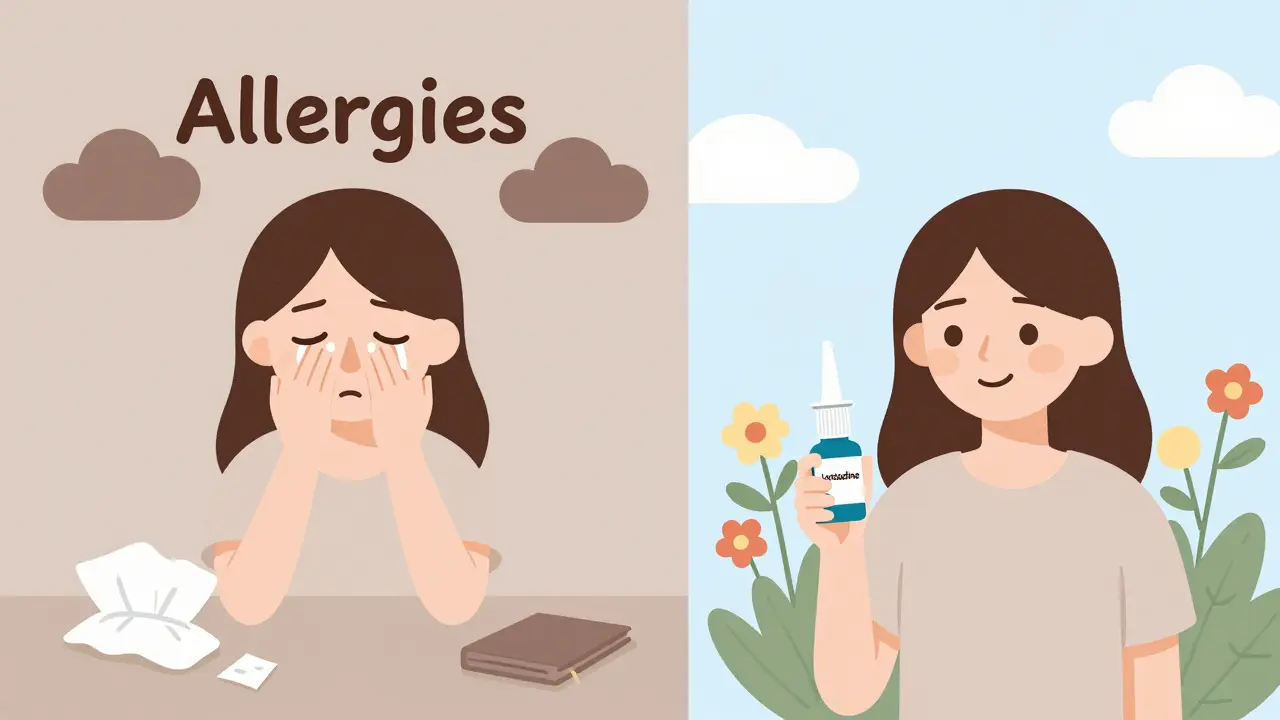
If oral antihistamines aren’t enough, nasal sprays are often the next step. And here’s the best part: corticosteroid nasal sprays are safe during pregnancy.
Fluticasone (Flonase), budesonide (Rhinocort), and mometasone (Nasonex) don’t get absorbed into your bloodstream in significant amounts. They work right where you need them - in your nose. The AAFP and Mayo Clinic both rate these as category B for pregnancy. Many women find that using one daily cuts down their need for oral meds entirely.
For best results, use them consistently, not just when symptoms flare. It can take a few days to work. Combine them with a saline rinse for even better relief.
What to Avoid
Not all allergy meds are created equal. Here’s what to skip:
- Pseudoephedrine - Avoid in first trimester. Risk of birth defects. Use only in second/third trimester if absolutely needed and under medical supervision.
- Phenylephrine - Limited data. Not recommended as a first option.
- Combination products - Cold & flu tablets often contain antihistamines + decongestants + acetaminophen + caffeine. Stick to single-ingredient meds.
- Hydroxyzine - Too few studies. Potential risk. Save for last resort.
Practical Tips for Safe Use
Here’s how to use antihistamines wisely during pregnancy:
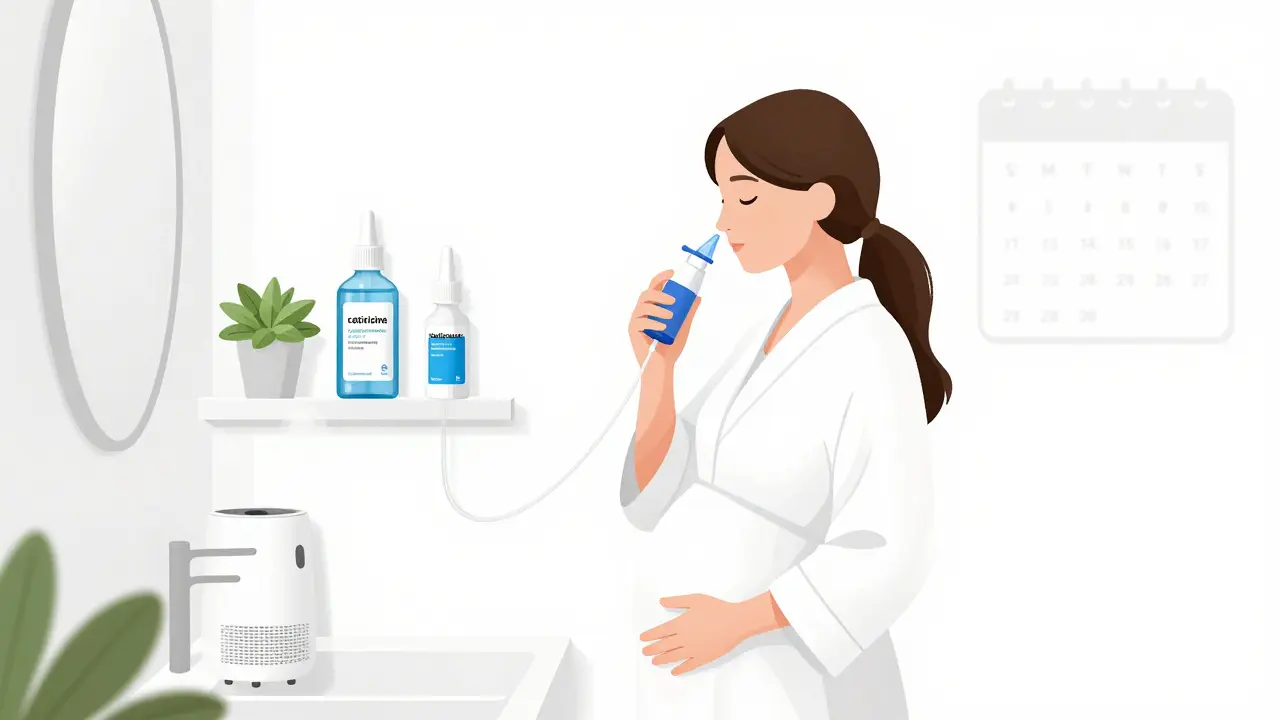
- Start with the lowest dose - Use just enough to get relief. You don’t need to take more than you need.
- Use non-drug methods first - Try saline nasal sprays, humidifiers, avoiding allergens (like dust mites or pet dander), and keeping windows closed during high pollen season.
- Don’t self-prescribe - Even OTC meds need a conversation with your OB or midwife. They know your history and can spot hidden risks.
- Track your symptoms - If your allergies are getting worse, it might be time to adjust your plan. Don’t wait until you’re miserable.
- Watch for drowsiness - If you’re taking chlorpheniramine or diphenhydramine, avoid driving or operating machinery. Plan to take them at night.
When to Call Your Provider
You should reach out if:
- Your symptoms don’t improve after 3-5 days of using a safe antihistamine.
- You’re using antihistamines daily for more than 2 weeks without relief.
- You develop new symptoms like swelling, trouble breathing, or skin rashes.
- You’re unsure whether a product contains pseudoephedrine or another risky ingredient.
Remember: your health matters. If allergies are making you exhausted, anxious, or unable to eat properly, treatment isn’t a luxury - it’s part of prenatal care.
Can I take Zyrtec while pregnant?
Yes, cetirizine (Zyrtec) is considered safe during pregnancy. Multiple studies involving thousands of pregnant women show no increased risk of birth defects. It’s one of the most commonly recommended second-generation antihistamines by obstetricians and allergists. It’s non-sedating for most people and works well for runny nose, sneezing, and itchy eyes.
Is Claritin safe during pregnancy?
Yes, loratadine (Claritin) is considered safe and is often the first choice for mild allergy symptoms in pregnancy. It’s non-sedating and has been studied extensively. Data from the National Birth Defects Prevention Study and other large databases show no consistent pattern of harm to the developing baby.
What’s the safest antihistamine for pregnancy?
Chlorpheniramine is the most studied and has the longest safety record, making it the top recommendation for first-generation options. For second-generation, both loratadine (Claritin) and cetirizine (Zyrtec) are equally safe and preferred for their lack of drowsiness. Most providers recommend starting with one of these three.
Can antihistamines cause miscarriage?
There is no strong evidence that antihistamines like chlorpheniramine, loratadine, or cetirizine increase the risk of miscarriage. Large studies tracking pregnancy outcomes have not found a connection. However, untreated severe allergies that lead to poor sleep, stress, or asthma flare-ups may indirectly raise risks - so managing symptoms is important.
Are steroid nasal sprays safe during pregnancy?
Yes, corticosteroid nasal sprays like budesonide (Rhinocort), fluticasone (Flonase), and mometasone (Nasonex) are considered safe in all trimesters. They work locally in the nose and don’t significantly enter the bloodstream. Many women find them more effective than oral antihistamines alone.
Scott Conner
so i took zyrtec like 3 weeks in first trimester and now my kid is 2 and fine but like... idk man. maybe i just got lucky? everyone says it's safe but still kinda scary when you're the one taking it.
Alex Ogle
you know what's wild? i used to think antihistamines were just for allergies, but after my second pregnancy, i realized they're basically life support when you're stuck in a sinus nightmare 24/7. the drowsiness from chlorpheniramine? yeah, it's a bummer, but i'd rather nap than have my nose feel like a desert. and honestly? the fact that we've been using these since the 40s and still have no solid link to birth defects? that's not luck. that's science.
also, i swear by flonase. it's like a silent ninja for your sinuses. no drowsiness, no crash, just... relief. and i didn't even need the pill until week 20. big win.
Brett Pouser
as someone who's been through two pregnancies and a whole lot of sneezing, i just want to say: don't feel guilty for taking something that helps. your body's doing enough already. if you're breathing better, sleeping better, eating better - that's a win. no one's gonna thank you for suffering through hay fever like it's some kind of rite of passage.
also, if your doc says it's fine, trust them. they didn't just pull this out of thin air. thousands of studies, real data, real moms. you're not doing anything crazy. you're doing what you gotta do.
Frank Baumann
okay but what if the government is hiding something? like... why are there no long-term studies on kids born to moms who took cetirizine for 8 months straight? why is it always 'no consistent pattern of harm' and never '100% proven safe'? i'm not saying it's dangerous - i'm saying we're being sold a bill of goods. what if the side effects show up when they're 16? what if they have anxiety? what if they can't focus? who's tracking that? no one.
and don't even get me started on 'steroid' nasal sprays. steroids? really? that's what you're calling it? it's a chemical assault on your developing baby's immune system. they're calling it 'local' but how do we know it doesn't cross? what if it's just slow? what if it's cumulative? what if we're the guinea pigs?
Chelsea Deflyss
zrytec?? u mean zyrtec?? u spell it right or u just dont care??
Tricia O'Sullivan
Thank you for this comprehensive and evidence-based overview. It is refreshing to encounter such a well-structured and clinically grounded resource amidst the overwhelming noise of anecdotal advice online. I have shared this with several expectant patients, and their relief has been palpable. The distinction between first- and second-generation agents, coupled with clear guidance on nasal corticosteroids, is precisely the clarity that clinical practice requires.
Random Guy
so like... i took benadryl every night for 6 months and now my kid is a genius. coincidence? i think not. also, i think the FDA is in cahoots with big pharma and they don't want you to know that chlorpheniramine is just a repackaged 1950s experiment. i'm 100% sure my baby has extra brain cells because of it.
Ryan Vargas
let me ask you this: if antihistamines are so safe, why do we still have birth defect registries? why do we track anything at all? if it's truly harmless, then why is there a whole industry built around monitoring outcomes? the answer is simple: we don't know. we're guessing. and every 'reassuring data' is just a polite way of saying 'we haven't found the smoking gun yet'.
also, the fact that they recommend chlorpheniramine because it's been around since the 40s? that's not science - that's tradition. back then, they thought lead paint was safe too. and thalidomide. and cigarettes. you don't get a pass just because it's old.
we're treating pregnancy like a lab experiment where the control group is 'not taking anything' - but what if the control group is the one that's actually at risk? what if not treating allergies is the real danger? we're flipping the script here.
Tasha Lake
as an allergist, i can confirm: the data on loratadine and cetirizine is robust. we're talking prospective cohort studies with >10,000 exposures. the RR for major malformations? 1.02 - statistically indistinguishable from baseline. that's not 'maybe safe' - that's 'as safe as breathing air'. and nasal steroids? they're literally designed to have <1% systemic absorption. the amount that reaches the fetus is less than what you'd get from a banana. seriously. if you're worried about flonase, you should be more worried about your coffee.
also - stop mixing meds. OTC 'allergy + cold' combos are the #1 cause of accidental pseudoephedrine exposure in pregnancy. read the label. it's not hard.
Simon Critchley
bloody hell, this is the most sensible thing i've read on this topic in years. i'm in the UK and we've got the same guidance - chlorpheniramine as first-line, flonase as MVP. i had a patient last week who was terrified of zyrtec because her mum took 'that stuff' in the 70s and now she's convinced it caused her migraines. i showed her the data. she cried. then she took it. now she's sleeping. that's the win.
also - never use pseudoephedrine before 12 weeks. period. i've seen two gastroschisis cases. both from early decongestant use. not a coincidence.
Karianne Jackson
i took benadryl and now my kid hates the color green. it's weird. but also... i don't regret it. i was a mess.
Tom Forwood
yo if you're scared of antihistamines, you're gonna have a rough pregnancy. allergies are no joke. i had a patient who couldn't eat because her throat was swelling - she was losing weight. we put her on cetirizine + flonase. she gained 10 lbs in 3 weeks. her baby's fine. her sanity? also fine.
you don't have to be a hero and suffer. you just have to be smart. and this post? it's the cheat code.
John McDonald
just wanted to say - if you're reading this and you're stressed about whether to take something, you're already doing better than most. you're researching. you're asking. you're not just googling 'is zyrtec bad?' at 3am and crying. that's huge.
and if you're still unsure? talk to your OB. don't wait. don't overthink. you've got this.
Chelsea Cook
oh so now we're giving out medical advice like it's a reddit AMA? next you'll be telling me to drink pickle juice for heartburn. thanks for the info, but i'm gonna call my midwife instead of trusting a blog with a table.
Andy Cortez
soooo... you're saying it's okay to take chemicals while pregnant? what's next? vitamin c for covid? aspirin for cramps? i mean, if we're just gonna 'trust the data' then why not just inject pure dopamine? maybe that'll fix my allergies too. #antihistaminelies #pregnancyisaplan
Scott Conner
to the person above me: i didn't mean to start a conspiracy. i just took zyrtec and my kid is fine. if you're scared, talk to your doc. not reddit. i'm not a doctor. i'm just a mom who didn't want to sneeze for 9 months.