
Probiotic & Antibiotic Compatibility Tool
Select your antibiotic type and health conditions to get personalized recommendations for reducing gastrointestinal side effects during antibiotic therapy.
Antibiotic Information
Your Health Profile
Recommended Probiotic Strategy
When you’re on antibiotics, your stomach often pays the price. Nausea, bloating, cramps, and diarrhea aren’t just annoying-they can make you skip doses or quit treatment early. But what if you could cut those side effects in half? Probiotics aren’t a magic fix, but decades of research show they can help. Not all probiotics work the same, and not everyone should take them. Here’s what actually matters when you’re on antibiotics.
Why Antibiotics Mess With Your Gut
Antibiotics don’t pick and choose. They wipe out the bad bacteria causing your infection-but they also kill the good ones living in your gut. Your intestines hold over 100 trillion bacteria, working together to digest food, support your immune system, and keep harmful microbes in check. When antibiotics disrupt that balance, diarrhea follows. About 1 in 5 people on antibiotics get antibiotic-associated diarrhea (AAD). For those in hospitals or on strong antibiotics like clindamycin or fluoroquinolones, the risk jumps to 30% or higher. And in about 1 in 10 of those cases, it’s caused by Clostridioides difficile-a dangerous infection that leads to severe diarrhea, fever, and sometimes life-threatening colon damage.How Probiotics Help
Probiotics are live microbes that can restore balance. They don’t replace your original gut bacteria, but they help fill the gaps while your system recovers. Certain strains produce compounds that block harmful bacteria from sticking to your intestinal walls. Others boost your gut’s natural defenses or reduce inflammation. The strongest evidence points to two strains: Saccharomyces boulardii (a yeast) and Lactobacillus rhamnosus GG (a bacteria). A major Cochrane review found that people taking these probiotics had less than one-third the risk of developing C. diff-associated diarrhea compared to those who didn’t. For general antibiotic diarrhea, the risk dropped by about half in studies using S. boulardii.Which Probiotics Actually Work?
Not all probiotics are created equal. The strain matters more than the brand. Here’s what the data shows:- Saccharomyces boulardii: Reduces AAD risk by up to 50%. Effective against C. diff. Taken as capsules or powder.
- Lactobacillus rhamnosus GG: Proven to lower diarrhea rates. Found in Culturelle and other popular brands. Works best with food.
- Bifidobacterium species (like B. lactis): Helpful for bloating and cramping, especially in multi-strain formulas.
- Multi-strain blends: Often marketed as "broad-spectrum"-but evidence is mixed. Some work, others don’t.
Avoid products with vague labels like "probiotic blend" without listing specific strains. If it doesn’t say L. rhamnosus GG or S. boulardii, it’s a gamble.
Dosing and Timing
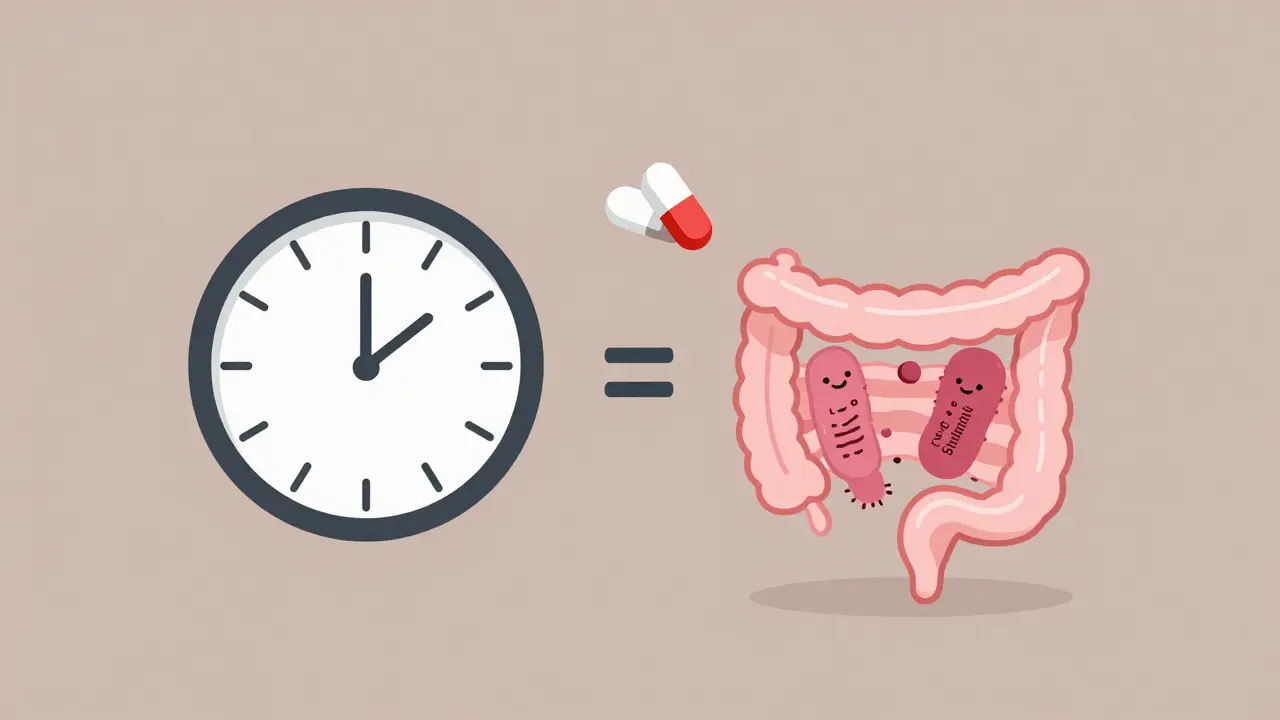
Dose matters. Most studies used between 5 and 10 billion CFUs (colony-forming units) per day. Some used up to 20 billion, but higher doesn’t always mean better. Start with 5-10 billion daily during your antibiotic course and keep going for at least a week after you finish.Timing is critical. Antibiotics can kill probiotics if taken at the same time. Most experts recommend taking your probiotic 2-3 hours after your antibiotic dose. This gives the antibiotic time to work before the probiotic enters your system. Some probiotics, like S. boulardii, are yeast-based and not affected by antibiotics, so timing is less crucial-but spacing them out is still a safe habit.
Take them with or without food? It depends. Acid-resistant strains like L. rhamnosus GG can survive stomach acid better when taken with food. Others, like S. boulardii, are often recommended on an empty stomach. Check the label-or ask your pharmacist.
What About Yogurt and Fermented Foods?
Yogurt, kefir, sauerkraut, and kimchi contain live cultures-but they’re not reliable for preventing antibiotic side effects. The strains in these foods aren’t always the ones proven to help, and the doses are too low. You’d need to eat several cups of yogurt daily to match the CFUs in a single supplement. For targeted protection during antibiotics, supplements are the better choice.Who Should Avoid Probiotics?
Probiotics are generally safe for healthy people. But they’re not risk-free. There have been documented cases of:- bloodstream infections from Lactobacillus in people with weakened immune systems
- fungemia (fungal infection) from S. boulardii in critically ill patients
- sepsis and endocarditis linked to probiotic use in hospitalized or post-surgery patients
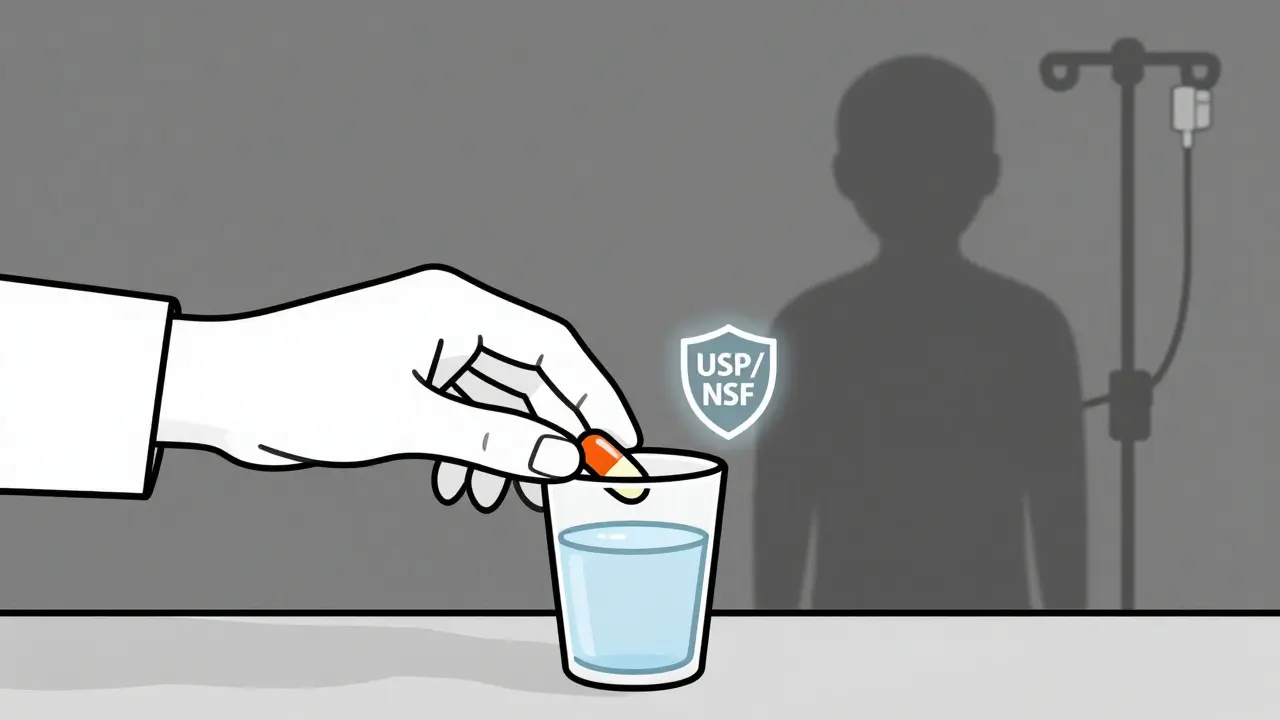
If you’re immunocompromised, have a central IV line, are recovering from major surgery, or are in the ICU-don’t take probiotics without talking to your doctor. Even if you feel fine, your immune system might be more vulnerable than you think.
What About Side Effects?
When you first start probiotics, you might feel worse before you feel better. Bloating, gas, and mild cramping are common in the first few days. That’s your gut adjusting. If it lasts longer than 5-7 days, or if you get severe pain, fever, or bloody stool, stop taking them and call your doctor. Some people with IBS or SIBO report that probiotics make their symptoms worse. If you’ve had digestive issues before, start low-maybe 1-2 billion CFUs-and see how you react.The Market Is a Wild West
Most probiotics in the U.S. are sold as dietary supplements. That means the FDA doesn’t test them for safety or effectiveness before they hit shelves. A 2022 ConsumerLab test found that 30% of products didn’t contain the number of live organisms listed on the label. Another 15% had strains not listed at all. Some even contained harmful contaminants.Look for brands that:
- Clearly list the strain (e.g., Lactobacillus rhamnosus GG ATCC 53103)
- Provide a CFU count at the time of expiration (not just at manufacture)
- Are third-party tested (look for USP, NSF, or ConsumerLab seals)
Brands like Culturelle (LGG), Florastor (S. boulardii), and Jarrow Formulas have consistent quality and published research backing them. Avoid bargain-bin probiotics with no transparency.
What the Experts Say
The International Scientific Association for Probiotics and Prebiotics (ISAPP) says probiotics "may help mitigate side effects like bloating and cramping" and could even improve antibiotic effectiveness by keeping your gut healthier. But they also warn: "Different strains have different effects-and different risks." Harvard Health and the Mayo Clinic support probiotic use for most people on antibiotics. But Henry Ford Health System cautions that "evidence is slim" for some claims. The truth? The science is strong for specific strains in specific situations. It’s not a blanket recommendation-it’s a targeted tool.Real People, Real Results
On Amazon, Culturelle’s LGG product has over 12,500 reviews with a 4.2-star rating. Common comments: "Didn’t get diarrhea like last time," "Saved me from missing work," "Only thing that worked." But 15% of negative reviews say "no effect," and 10% say it made their symptoms worse. People with IBS or prior gut issues are more likely to report problems. Reddit users swear by taking probiotics 2 hours after antibiotics-many say it’s the only thing that kept them from canceling plans or going to the ER.What Comes Next?
Researchers are now studying which probiotics work best with which antibiotics. One 2021 study in Nature found that some probiotics actually slowed the return of your natural gut bacteria after antibiotics. That’s a red flag-meaning the wrong probiotic might do more harm than good. The NIH is funding $12.5 million in new studies to figure this out. In 2026, the FDA plans to release new rules for live microbial products. Until then, choose wisely.Bottom Line
If you’re on antibiotics and worried about diarrhea:- Choose Saccharomyces boulardii or Lactobacillus rhamnosus GG
- Take 5-10 billion CFUs daily
- Take it 2-3 hours after your antibiotic
- Keep taking it for 1-2 weeks after finishing your antibiotics
- Check the label-no strain? Skip it
- Don’t take it if you’re immunocompromised or critically ill
- Stop if symptoms worsen after a week
It’s not a cure-all. But for most people, the right probiotic can mean the difference between pushing through antibiotics-and being sidelined by them.
Can I take probiotics while on antibiotics?
Yes, but timing matters. Take probiotics 2-3 hours after your antibiotic dose to avoid killing the beneficial bacteria. Some strains, like Saccharomyces boulardii, aren’t affected by antibiotics, but spacing them out is still the safest approach.
Which probiotic is best for antibiotic diarrhea?
The two most effective strains are Saccharomyces boulardii and Lactobacillus rhamnosus GG. Studies show these reduce the risk of antibiotic-associated diarrhea by up to 50%. Look for products that list these exact strains and provide a CFU count at expiration.
Do probiotics prevent C. diff infection?
Probiotics don’t prevent C. diff infection itself, but they significantly reduce the risk of developing the diarrhea caused by it. In high-risk patients, probiotics cut the chance of C. diff-associated diarrhea from 11.6% to 3.1%. That’s a major benefit, especially in hospitals.
Can probiotics make diarrhea worse?
Yes, especially at first. Bloating, gas, and mild cramping are common as your gut adjusts. If symptoms last more than a week or get worse-like severe pain, fever, or bloody stool-stop taking them. People with IBS or prior gut issues are more likely to react negatively.
Should I take probiotics after antibiotics?
Yes. Most studies recommend continuing probiotics for 1-2 weeks after finishing antibiotics. Your gut microbiome doesn’t recover overnight. Keeping probiotics going helps crowd out harmful bacteria and supports long-term balance.
Are probiotics safe for everyone?
No. People with weakened immune systems, those in the ICU, or those recovering from major surgery should avoid probiotics. There are documented cases of bloodstream infections linked to probiotic use in these groups. Always talk to your doctor before starting if you have any chronic illness or are on immunosuppressants.
Do yogurt and kefir work as well as supplements?
Not reliably. While fermented foods contain beneficial bacteria, the strains and doses aren’t consistent or strong enough to prevent antibiotic side effects. Supplements with proven strains like LGG or S. boulardii are far more effective for this purpose.
How do I know if a probiotic is high quality?
Look for: 1) Specific strain names (e.g., Lactobacillus rhamnosus GG), 2) CFU count guaranteed at expiration (not just manufacture), and 3) Third-party verification (USP, NSF, or ConsumerLab seal). Avoid products that just say "probiotic blend" without listing strains.
Kerry Howarth
Take probiotics 2 hours after your antibiotic. Simple. Works. No fluff.
Michael Burgess
Yo, I was skeptical until I started taking Florastor with my clindamycin. No more midnight races to the bathroom 🤝. My gut went from "oh god why" to "meh, fine". Also, don’t skip the post-antibiotic week - your microbiome’s still rebuilding, bro. 🧬
Liam Tanner
There’s a lot of good info here, especially about strain specificity. Most people just grab whatever’s on sale at the gas station. But if you’re going to do this, do it right. The science is clear on LGG and S. boulardii. Everything else is marketing.
Palesa Makuru
How is it that people still think probiotics are a magic bullet? I mean, really. You’re just dumping random microbes into a system you don’t understand. And you call that medicine? At least have the decency to do a fecal transplant if you’re going to play god with your gut.
Hank Pannell
The real question isn’t whether probiotics help - it’s whether we’re treating the symptom (diarrhea) while ignoring the deeper epistemic rupture: our relationship with microbial ecology as a whole. Antibiotics are a blunt instrument in a symphony of symbiosis. Probiotics are a band-aid on a severed artery. We need systems-level thinking, not strain-specific supplementation. The NIH’s $12.5M study? That’s the first step. But it’s still reductionist. We’re not just fixing gut flora - we’re negotiating a truce with an entire kingdom of life we barely comprehend.
Lori Jackson
Of course you’re going to get diarrhea - you’re poisoning your body with synthetic antibiotics and then expecting a $12 bottle from Walmart to fix it. If you had just eaten organic, fermented vegetables from a local farm and avoided pharmaceuticals entirely, none of this would’ve happened. But no, you want the quick fix. Pathetic.
Wren Hamley
So I took Culturelle with my amoxicillin, 2 hours after each dose. No diarrhea. Zero gas. Felt like my gut was actually happy for once. But then I tried some cheap generic brand with "probiotic blend" and got bloated for a week. Bottom line: if it doesn’t say L. rhamnosus GG on the label, it’s just sugar water with a fancy picture of a leaf.
Sarah Little
Actually, the Cochrane review they cited was retracted in 2023 due to undisclosed industry funding. You should really check your sources before giving medical advice. Also, probiotics are not FDA-approved for this use - which means you’re gambling with your health. Just sayin’.
innocent massawe
Back home in Nigeria, we use ginger and honey for stomach issues. But after reading this, I think I’ll try LGG next time I need antibiotics. Thanks for the clear info. 🙏
veronica guillen giles
Oh wow, a whole article about how to not get diarrhea from antibiotics. Next up: "How to Not Get Wet When It Rains". Truly groundbreaking science here. 🙄
Ian Ring
Just wanted to add - I’ve been taking S. boulardii for 3 years now, every time I’m on antibiotics. Never had C. diff. Also, I store mine in the fridge. The label says "keep refrigerated," but most people don’t. That’s probably why so many products fail. Just a heads-up. 🧊
erica yabut
It’s not just about strains - it’s about *bioavailability*. Most probiotics are destroyed by gastric acid before they even reach the small intestine. That’s why enteric-coated capsules are the only acceptable form. Anything else is just placebo with a fancy label. And if you’re taking it with food, you’re already doing it wrong. The gut isn’t a salad bar.