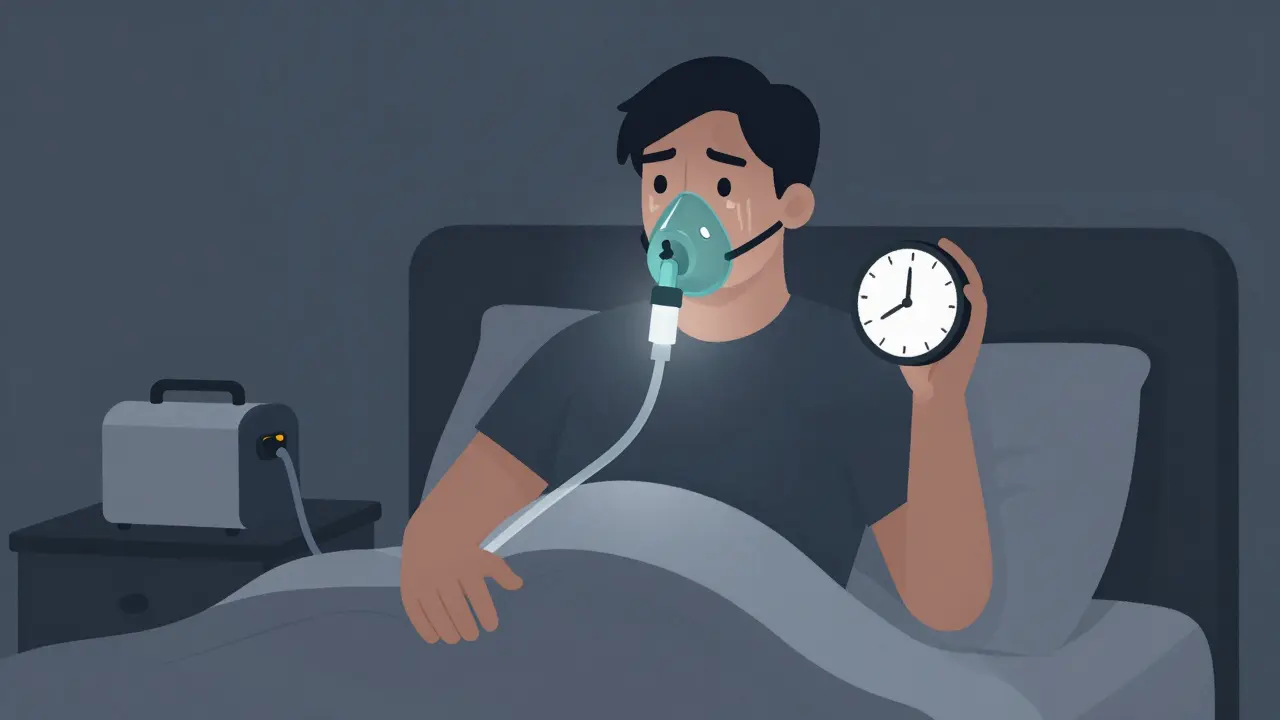
Cluster headaches aren’t just bad headaches-they’re among the most painful conditions known to medicine. People who experience them describe the pain as a burning, drilling, or stabbing sensation behind one eye or on one side of the head. It hits fast, hits hard, and often wakes you up in the middle of the night. Unlike migraines, which can last hours or days, cluster headache attacks are short but brutal, typically lasting between 15 and 180 minutes. And they don’t come alone-there’s usually a side effect parade: tearing eyes, a stuffy or runny nose, drooping eyelids, and even restlessness so intense that people pace or rock back and forth. This isn’t just discomfort. It’s a neurological storm that leaves sufferers desperate for relief.
Why Oxygen Therapy Works
Oxygen therapy is the gold standard for stopping a cluster headache attack in its tracks. It’s not a cure, but it’s the fastest, safest, and most reliable way to cut the pain short. How? Breathing 100% pure oxygen at high flow rates changes the chemistry in your brain. It constricts blood vessels around the trigeminal nerve-the main pain pathway involved-and calms the overactive brain regions that trigger these attacks. The science behind it isn’t new. Dr. Harold Wolff first noticed oxygen’s effect in the 1950s, but today’s protocols are precise and backed by decades of clinical data.
Here’s what actually works: you need to inhale 100% oxygen through a non-rebreather mask at a flow rate of 12 to 15 liters per minute. That’s not your average oxygen tank from the pharmacy-it’s medical-grade, high-flow oxygen. Most people start feeling relief within 10 to 15 minutes. In fact, studies show 78% of patients become pain-free within that window. Compare that to triptans (the most common drug treatment), which work in about 74% of cases but come with side effects like chest tightness, dizziness, and heart rhythm concerns. Oxygen? No known serious side effects. No drug interactions. No risk of dependency.
How to Use Oxygen Therapy Correctly
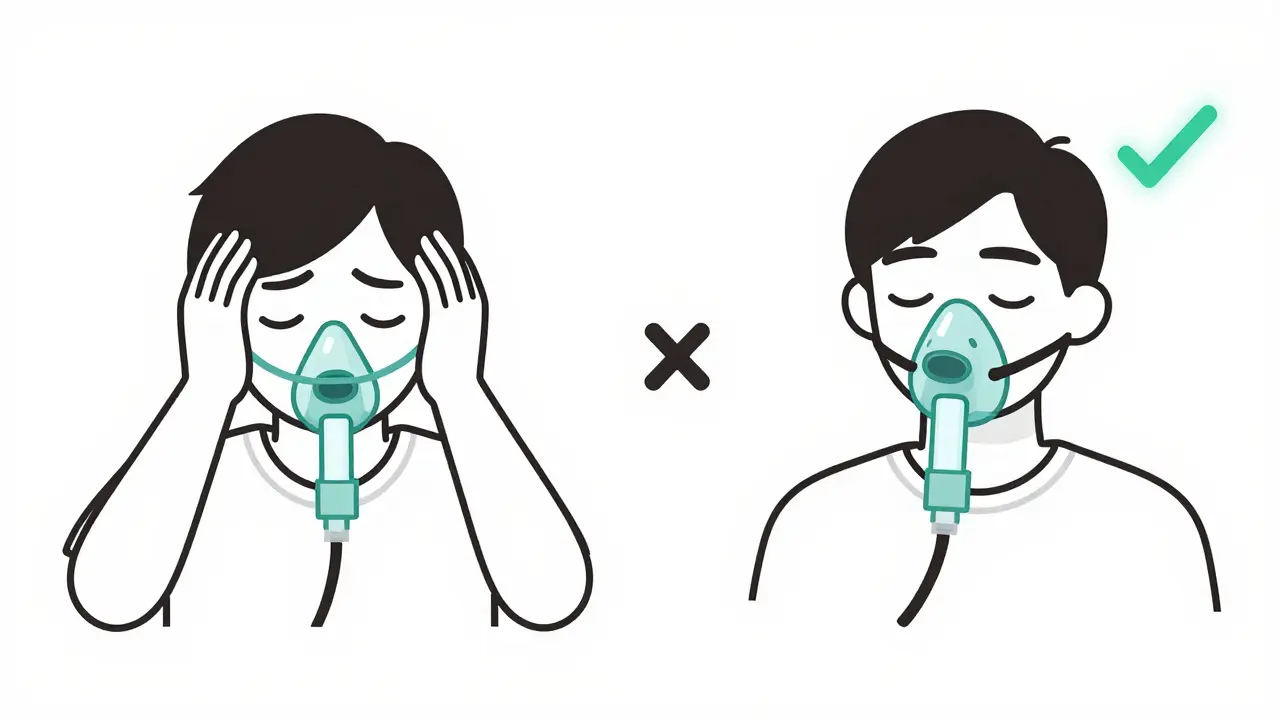
Using oxygen therapy isn’t as simple as grabbing a tank and breathing. If you do it wrong, it won’t work. Here’s the exact setup you need:
- Use a non-rebreather mask with a reservoir bag. Regular nasal cannulas won’t cut it-they deliver too little oxygen.
- Set your oxygen concentrator or tank to 12 to 15 liters per minute. Studies show 12 L/min gives 78% pain-free rates at 15 minutes. At 4 L/min? Only 20%.
- Start breathing immediately at the first sign of pain. Waiting even 10 minutes reduces effectiveness.
- Sit upright or lean forward. Don’t lie down. This helps oxygen reach your brain faster.
- Continue for 15 to 30 minutes, even if the pain fades early. Stopping too soon can let the attack return.
Many people make mistakes early on. A 2021 patient guide found 42% didn’t seal the mask properly, letting oxygen leak. Another 28% used the wrong flow rate. Practice with a caregiver or friend. Get comfortable with the mask. Keep it near your bed, your desk, your car. These attacks don’t wait for convenience.
Who Gets the Best Results?
Oxygen therapy works wonders-but not for everyone. Research shows certain people respond better than others. If you’re a current or former smoker, you’re more likely to get relief. That’s odd, but true. People who’ve never smoked have 2.3 times higher odds of not responding. Why? Scientists think smoking affects the brain’s oxygen-sensing pathways, making them more responsive to high-flow oxygen.
Other predictors of poor response:
- Headaches that last longer than 180 minutes
- Having pain between attacks (interictal headache)
- Having heart disease or other conditions that limit oxygen use
For those who don’t respond to oxygen, alternatives exist-like injectable sumatriptan or nasal zolmitriptan-but they’re not as safe or fast. And they’re not free from side effects. Oxygen remains the first choice for a reason: it’s effective for most, safe for nearly all, and doesn’t interfere with other medications.
The Real Problem: Access and Cost
Here’s the harsh truth: even though oxygen therapy is the most effective treatment, many people can’t get it. In the U.S., Medicare only covers oxygen for cluster headaches if you’ve tried two triptans and have at least one attack per week. Even then, 41% of initial claims are denied. Private insurers vary wildly-UnitedHealthcare approves 68% of requests, while Aetna approves just 42%.
Equipment costs add up. A medical-grade oxygen concentrator that delivers 15 L/min costs between $1,200 and $2,500 upfront. Monthly rentals run $150-$300. Masks cost $5-$10 each. Most people don’t realize they need a prescription (ICD-10 code G44.0) and a durable medical equipment (DME) provider to get coverage. The process can take 2 to 4 weeks. By then, the next attack cycle may have already started.
Patients are fighting back. Organizations like Clusterbusters have pushed for state laws in 22 U.S. states to mandate insurance coverage for oxygen therapy. Portable devices like the Inogen One G5 (4.8 lbs) and the new FDA-cleared O2VERA (5.2 lbs) are making it easier to carry treatment wherever you go. Still, rural patients are far less likely to have access-only 28% compared to 63% in cities.
What’s Next for Treatment?
Research is moving fast. In 2024, the European Medicines Agency approved a new nasal oxygen delivery system that delivers 15 L/min through a cannula instead of a mask. Early trials show 89% pain-free rates at 15 minutes. That’s huge-because masks are bulky, uncomfortable, and hard to use in public. If this becomes mainstream, it could change everything.
Other innovations include demand-valve masks that release oxygen only when you inhale (saving supply and reducing delay), and wearable neuromodulation devices like gammaCore that stimulate nerves to prevent attacks. These aren’t replacements for oxygen yet-they’re backups for the 20% who don’t respond.
But here’s the bottom line: oxygen therapy is still the frontline weapon. It’s been tested, proven, and trusted for over 70 years. No new drug or device has surpassed it in speed, safety, and reliability. The challenge now isn’t finding a better treatment-it’s making sure everyone who needs it can actually get it.
What Patients Are Saying
On Reddit’s r/ClusterHeadaches community, over 1,200 users shared their oxygen therapy experiences. Seventy-two percent reported significant or complete relief. One user wrote: "12 L/min non-rebreather mask gets me pain-free in 8-10 minutes if I catch it early-game changer from my previous 9/10 pain scores." Another said: "Oxygen cut my attack frequency from 8 to 2 per cycle within 3 months."
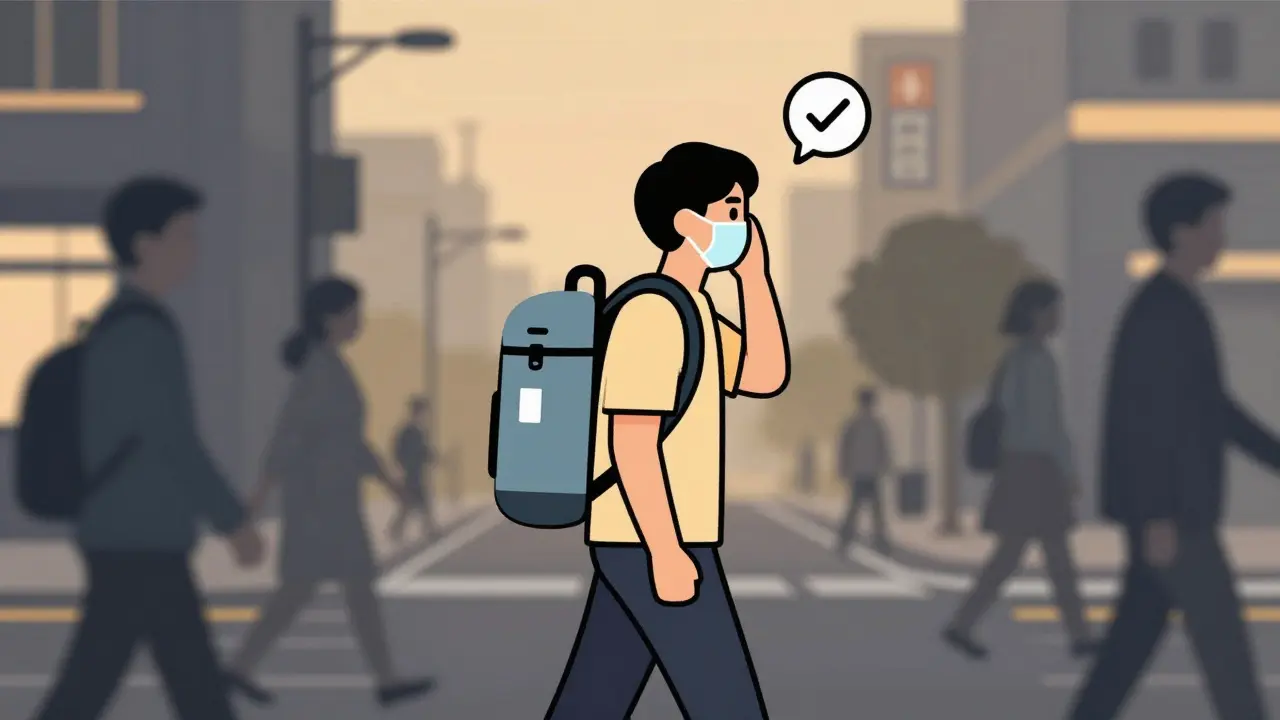
But the complaints are just as real. Sixty-three percent of negative reviews on Patient.info cite insurance denials. Many describe the frustration of buying equipment out-of-pocket, only to have their insurance refuse to cover it later. Mask fit issues, noisy machines, and the stigma of carrying oxygen in public are common hurdles.
Still, the overwhelming sentiment is clear: if you have access to oxygen therapy, it’s your best shot.
Can I use a regular oxygen tank from the pharmacy for cluster headaches?
No. Standard pharmacy oxygen tanks and nasal cannulas deliver too little oxygen (usually 2-6 L/min) and aren’t designed for high-flow therapy. You need a medical-grade oxygen concentrator or tank that delivers 12-15 L/min through a non-rebreather mask. Anything less won’t work reliably.
How long does oxygen therapy take to work?
Most people feel relief within 10 to 15 minutes. Some report feeling better in as little as 5 minutes if they start treatment immediately at the first sign of pain. The key is starting early and sticking with it for at least 15 minutes-even if the pain fades.
Is oxygen therapy safe if I have heart problems?
Yes. Unlike triptan medications, which can constrict blood vessels and pose risks for people with heart disease, oxygen therapy has no known cardiovascular side effects. It’s often the only safe acute treatment option for patients with hypertension, coronary artery disease, or a history of stroke.
Why doesn’t oxygen work for everyone?
About 20% of people don’t respond to oxygen therapy. Factors include never having smoked, having pain between attacks, or attacks lasting longer than 180 minutes. Researchers believe these traits suggest a different underlying brain mechanism that doesn’t respond to oxygen’s blood vessel effects.
Can I travel with my oxygen concentrator?
Yes. Portable oxygen concentrators like the Inogen One G5 and O2VERA are FAA-approved for air travel. Always notify your airline ahead of time and carry a prescription letter from your doctor. Keep extra batteries-most devices last 4-6 hours on a full charge.
What should I do if my insurance denies coverage?
Appeal the denial with supporting documentation: your diagnosis (ICD-10 G44.0), a letter from your neurologist stating oxygen is medically necessary, and copies of clinical guidelines from the American Academy of Neurology or European Headache Federation. Many patients succeed on appeal. Also check if your state has passed a cluster headache oxygen coverage law-22 have as of 2023.
Next Steps
If you or someone you know suffers from cluster headaches, start here:
- See a headache specialist or neurologist to confirm the diagnosis.
- Ask for a prescription for medical oxygen (ICD-10 G44.0).
- Work with a durable medical equipment (DME) provider to get a 15 L/min oxygen concentrator and non-rebreather mask.
- Practice using the mask daily-even when you’re not in pain-to build confidence.
- Keep a backup unit in your car, office, and bedroom.
- Join a support group like Clusterbusters or r/ClusterHeadaches for real-world tips.
Oxygen therapy won’t stop cluster headaches from coming back. But it gives you control. When the pain hits, you won’t have to wait. You’ll have the tool to stop it-and that’s worth more than any pill.
Cory L
Just got my oxygen setup last week after 3 years of suffering. 12 L/min non-rebreather? Game. Changer. First time I used it, I was on the floor crying and 8 minutes later I was making coffee like nothing happened. No drugs. No side effects. Just pure, silent, beautiful relief.
Stop overthinking it. Get the gear. Breathe. Survive.
Joanna Reyes
I’ve been managing cluster headaches for over a decade, and honestly, the biggest barrier isn’t the pain-it’s the bureaucracy. I spent six months fighting my insurance before they finally approved my oxygen concentrator. They wanted a letter from my neurologist, proof of failed triptans, a sleep study (seriously?), and then they denied it anyway. I had to pay $2,100 out of pocket. I’m not rich. I work two jobs. And now I have a machine that’s basically my lifeline sitting in my bedroom, and I still get panic attacks every time I hear the doorbell because I’m scared it’s another denial notice.
It’s not just medical-it’s a financial trap. The fact that something this effective is treated like a luxury item instead of a necessity is morally wrong. We need policy change, not just personal hacks.
lela izzani
Just want to clarify one thing for anyone reading: if you’re using a nasal cannula or a low-flow mask, you’re wasting your time. I tried that for months because I was scared of the mask. Then I switched to the non-rebreather, sealed it right, and boom-pain gone in 9 minutes. The difference isn’t subtle. It’s night and day. Also, sit up. Don’t lie down. I learned that the hard way after an attack came back because I was too tired to stay upright. You have to treat this like a race. Every second counts.
Vanessa Drummond
My husband’s been using oxygen for 2 years. He’s a smoker. And guess what? It works like a charm. Meanwhile, I tried it for a week because I was curious, and it did nothing for me. I’ve never smoked. So yeah, science is weird. But also kind of hilarious. You’d think smoking would make you more sensitive to pain, not less. Turns out your lungs are basically training your brain to respond to oxygen like a fire alarm. Wild.
Southern Indiana Paleontology Institute
Y’all are making this into some kind of miracle cure. But here’s the truth-oxygen therapy only works because Big Pharma doesn’t want you to use it. Why? Because it’s cheap. No patent. No profit. So they push triptans like they’re magic bullets. Insurance denies it? That’s not incompetence. That’s corporate strategy. They want you hooked on pills that cost $800 a month. Meanwhile, you can buy a decent oxygen concentrator for less than a grand and never pay another dime. Wake up. This isn’t medicine. It’s capitalism.
Joseph Cantu
I don’t believe in oxygen therapy. Not because it doesn’t work-I’ve seen it work-but because I think it’s part of a larger pattern. The government allows oxygen for cluster headaches but denies it for chronic fatigue, long COVID, even fibromyalgia. Why? Because they don’t understand those conditions. But cluster headaches? They’re visible. They’re dramatic. You can see the person pacing, screaming, clawing at their face. So they give in. But what about the rest of us? The invisible sufferers? We’re being erased. This isn’t progress. It’s selective compassion.
Nerina Devi
I’m from India and I’ve never seen someone with a home oxygen setup here. Not even in Delhi. We have doctors who know about cluster headaches, sure, but the equipment? Almost nonexistent. I had to order a concentrator from the US, pay customs, wait 6 weeks, and then my local pharmacy refused to refill the tanks because they ‘didn’t have the right license.’ I ended up buying a portable unit and carrying it in my bag to work. People stare. Some think I’m sick with TB. Others ask if I’m a firefighter. I just smile and say, ‘I’m surviving.’
It’s not just access-it’s awareness. If we can’t even name this pain, how do we expect to treat it?
Stephen Archbold
Just wanted to say-this thread saved my life. I thought I was going crazy. Every night, same time, same side, same agony. I Googled ‘headache like a drill’ and found this. Ordered the mask. Tried it. 11 minutes. Gone. I cried. Not because it hurt, but because I finally had control.
Also, side note: the mask smells weird at first. Like plastic and pressure. Just breathe through it. It gets better. And yeah, you’ll look like a sci-fi astronaut. Worth it.
tia novialiswati
You’re not alone. Seriously. I’ve been through 4 cycles. I’ve bought 3 masks. I’ve cried in parking lots because I couldn’t afford to refill the tank. But I keep going. Because every time I use it, I remember: this pain doesn’t define me. I’m not a patient. I’m a survivor. And if you’re reading this? You’re already one too. Keep breathing. Keep fighting. You’ve got this. 💪
Dinesh Dawn
Been using oxygen for 8 months. Started at 15 L/min. Now I do 12-same results, less noise. My machine’s so quiet I can watch Netflix while it’s running. Also, got a backup tank for the car. Had an attack on the highway last week. Pulled over, strapped on the mask, 12 minutes later, back on the road. No one knew. No drama. Just peace.
Pro tip: get a mask with soft silicone edges. Mine doesn’t leave red marks anymore. Small things matter.
Lisandra Lautert
Oxygen therapy is not a cure. It is a palliative intervention. It does not alter the underlying pathophysiology of cluster headache cycles. It modulates cerebral perfusion via vasoconstriction of the internal carotid arterial branches, specifically targeting the trigeminovascular system. Efficacy is dose-dependent and time-sensitive. Adherence to protocol-12–15 L/min via non-rebreather mask, initiated within 5 minutes of onset-is critical. Failure to comply results in therapeutic failure. Do not confuse anecdotal success with mechanistic equivalence.
Anil bhardwaj
My buddy in Indiana got his oxygen covered by Medicaid after they finally changed the policy last year. He’s been using it for 5 months now. Says he’s gone from 6 attacks a week to 1 or 2. Not cured. But functional. That’s enough. I’m gonna push my doc to get me one too. Don’t wait until you’re in hell to ask for help.