Medication Reformulation Checker
Check if Your Medication Has Been Reformulated
Enter your medication name to see if it might have undergone reformulation changes. This tool uses common reformulation patterns from FDA-approved drugs.
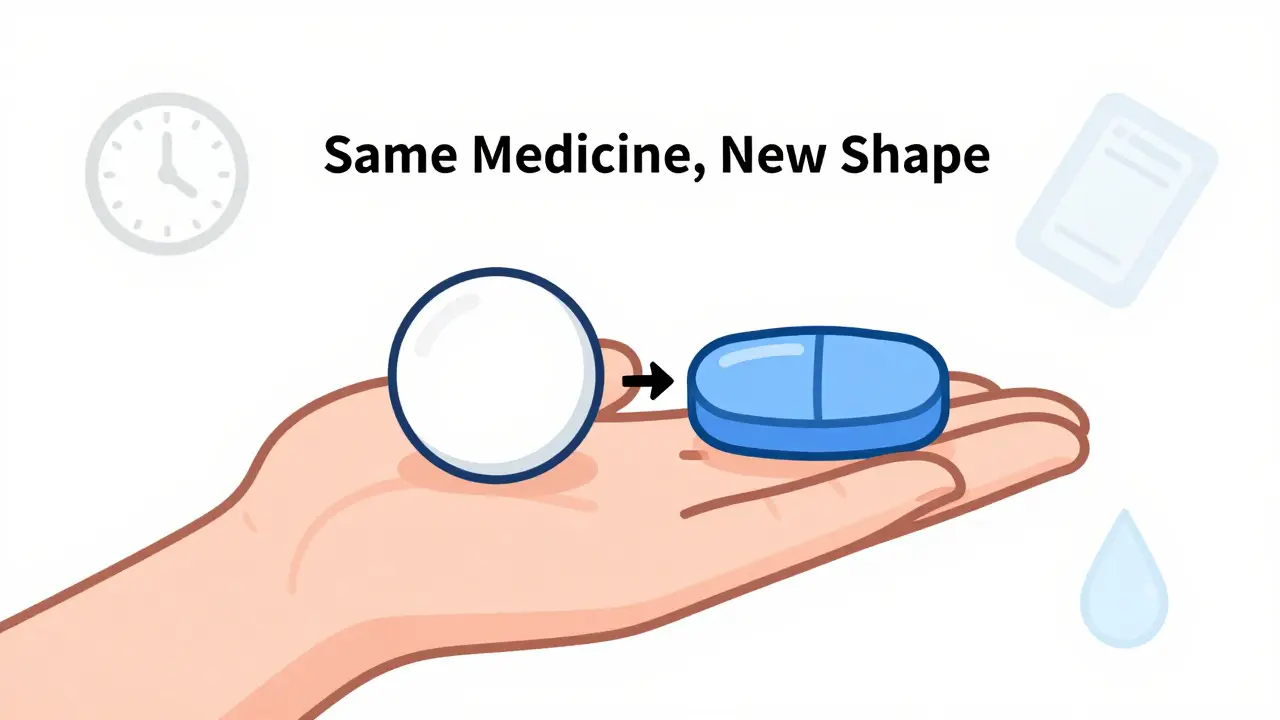
Have you ever picked up your prescription and noticed the pill looks different? Maybe it’s a different color, shape, or even comes as a liquid instead of a tablet. You might have wondered if it’s the same medicine-or if something’s been swapped out. You’re not alone. Every year, thousands of medications get reformulated-changed in their ingredients, how they’re made, or how they’re taken-without changing the active drug inside. This isn’t a mistake. It’s a deliberate, highly regulated move by drug companies, and it’s happening more than you think.
What Exactly Is a Medication Reformulation?
A medication reformulation means changing how a drug is put together-its shape, how fast it dissolves, what’s in it besides the active ingredient, or even how you take it-while keeping the same medicine that treats your condition. The active pharmaceutical ingredient (API) stays exactly the same. For example, a pill that used to be swallowed once a day might become a slow-release version you take just once every 24 hours. Or a shot you had to give yourself every week could turn into a patch you stick on your skin.
This isn’t about making a new drug. It’s about improving an old one. Think of it like upgrading your phone software. The core function-making calls, sending texts-doesn’t change. But the experience gets smoother, faster, or easier to use. The same idea applies here.
The U.S. Food and Drug Administration (FDA) has a special pathway called 505(b)(2) that makes this possible. It lets companies skip starting from scratch. They can use existing safety and effectiveness data from the original drug, cutting years off development time and millions off the cost. That’s why reformulations are becoming one of the most common ways new versions of medicines reach the market.
Why Do Companies Do This?
There are real reasons behind these changes-and not all of them are about profit.
First, patient compliance. If a drug is hard to take, people stop taking it. Studies show up to 50% of patients don’t stick to their medication schedules. Reformulations fix that. Turning a pill you have to take four times a day into one you take at bedtime? That’s a game-changer. A 2022 case study from Kymanox showed a reformulated orphan drug saw better adherence because it went from an injection to a daily tablet. Patients didn’t have to carry needles or deal with pain at injection sites.
Second, side effects. Some older drugs cause nausea, dizziness, or stomach upset because they release too fast. Reformulating them to release slowly can reduce those problems. A drug that used to spike blood levels and cause dizziness in the morning might now release steadily over 12 hours-making it far more tolerable.
Third, delivery methods. Some people can’t swallow pills. Kids, elderly patients, or those with swallowing disorders benefit when a tablet becomes a dissolvable strip, a liquid, or even an inhaler. ZIM Labs noted in 2023 that converting a pill to an inhalable form for asthma patients made treatment far more accessible.
And yes, companies also do it to extend patent life. Once a drug’s original patent expires, generics flood the market. But if a company reformulates it just right-adding a new delivery system, a unique coating, or a modified release profile-they can get a new patent. That delays generic competition. Critics call this “evergreening.” But many reformulations aren’t trivial. They’re meaningful improvements that help real people.
How Are Reformulated Drugs Different From Generics?
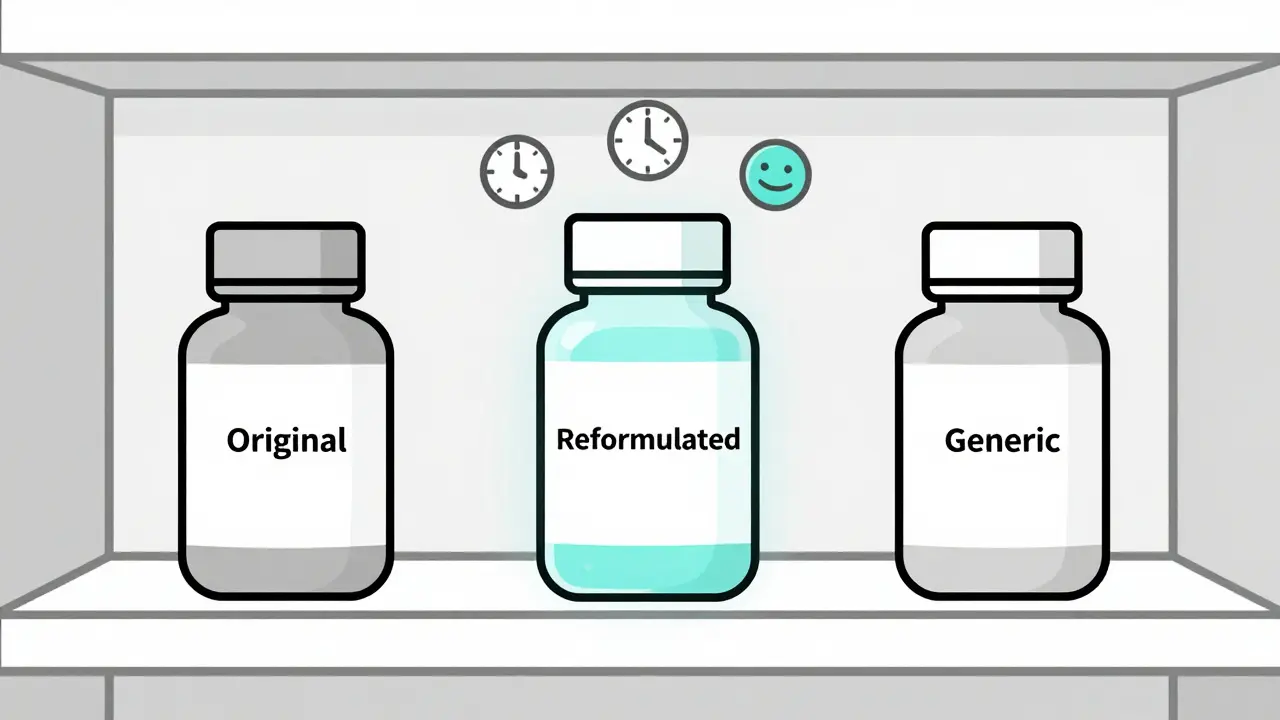
This is where things get confusing. Generics copy the original drug exactly. Same active ingredient. Same dose. Same shape. Same release. They’re cheaper because they don’t need to repeat clinical trials.
Reformulated drugs are different. They’re not copies. They’re upgrades. They might have the same active ingredient, but they change how it works in your body. That means they can’t be called generics. They’re considered “new drug applications” under the 505(b)(2) pathway.
Because of this, reformulated drugs often cost more than generics. But they’re usually cheaper than brand-new drugs. Developing a brand-new drug can cost over $2.6 billion and take 10-15 years. A reformulation? Around $50-100 million and 3-5 years. And success rates? About 30% for reformulations versus just 10% for entirely new drugs.
What Changes Are Actually Made?
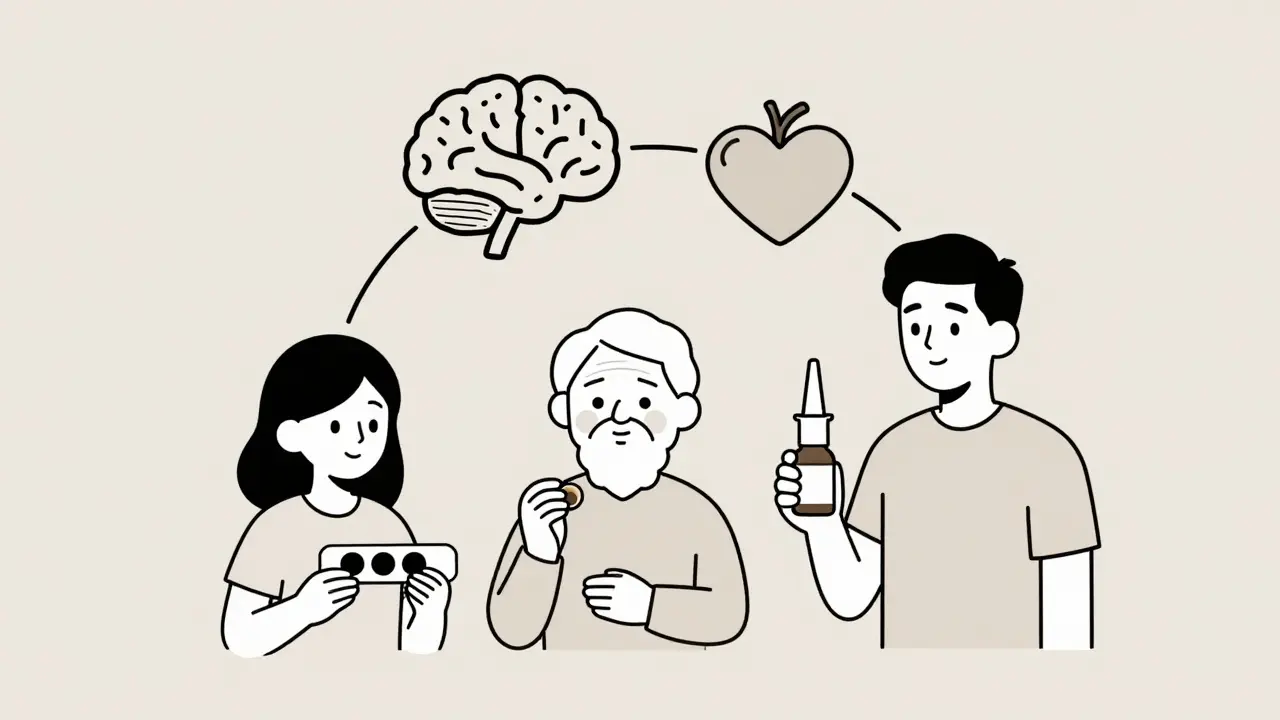
Reformulations can involve several technical tweaks:
- Release timing: Immediate-release to extended-release. For example, a painkiller that lasts 4 hours now lasts 12.
- Delivery method: Tablet to patch, injection to nasal spray, capsule to chewable.
- Excipients: Changing inactive ingredients like fillers, dyes, or preservatives to reduce allergies or improve shelf life.
- Strength: Adjusting the dose slightly-for example, making a 10 mg tablet instead of a 5 mg one to reduce pill burden.
- Solubility: Making the drug dissolve better in the body so more of it gets absorbed. This is especially important for older drugs that weren’t optimized for modern bioavailability standards.
Importantly, the chemical structure of the active ingredient stays unchanged. If they change that, it’s no longer a reformulation-it’s a new drug. A chiral switch (changing the mirror-image version of a molecule) is one of the few exceptions allowed under reformulation rules.
Are Reformulated Drugs Safe?
Yes-but they’re carefully tested.
Unless the reformulation changes how the drug works in the body (like switching from oral to inhaled), companies must prove the new version is bioequivalent to the original. That means it gets into your bloodstream at the same rate and to the same level. This is tested in small clinical trials with healthy volunteers.
If the reformulation creates a new effect-like a drug that now works in the brain instead of the liver-then full clinical trials are required. That’s rare, but it happens.
The FDA requires strict manufacturing standards. Every reformulated drug must meet Current Good Manufacturing Practices (CGMP). That means consistent quality, purity, and stability. Companies can’t just tweak a formula and slap a new label on it. They have to prove the change doesn’t compromise safety.
Still, problems can happen. Sometimes, changing excipients causes unexpected reactions. A dye added for color might trigger a rash in someone allergic. A new coating might make the pill harder to digest for people with gut conditions. These are rare, but they’re why you should always check with your pharmacist when your prescription looks different.
Who Benefits the Most?
Patients with chronic conditions see the biggest gains. Think diabetes, high blood pressure, epilepsy, or mental health disorders. Taking a drug once a day instead of three times makes life simpler. Fewer missed doses mean better control of the disease.
Children and older adults benefit too. A liquid form of an antibiotic is easier for a toddler. A dissolving tablet is better for someone with Parkinson’s who struggles to swallow.
And then there’s the orphan drug space. For rare diseases with few treatment options, reformulation is often the only way to make an old drug usable. A drug that used to require painful IV infusions might become an oral capsule. Suddenly, a patient who lived in a hospital for weeks can now manage at home.
Even caregivers benefit. Less frequent dosing means fewer reminders, fewer errors, less stress.
What Should You Do If Your Drug Changes?
Don’t panic. But do pay attention.
- Check with your pharmacist. Ask: “Is this the same medicine, just changed?” They can tell you if it’s bioequivalent or if it’s a new formulation with different rules.
- Watch for side effects. If you feel different-worse nausea, dizziness, or no effect-tell your doctor. It might be the reformulation.
- Don’t assume it’s interchangeable. Even if the name is the same, a reformulated version might not work the same if you switch back and forth. Stick with one version unless your doctor says otherwise.
- Ask about cost. Reformulated versions are often more expensive than generics. Ask if there’s a cheaper alternative that works just as well.
Some patients worry reformulations are just corporate tricks. And sometimes, they are. But many are life-changing. The key is knowing the difference-and staying informed.
The Bigger Picture
Medication reformulation isn’t going away. With advances in drug delivery-nanoparticles, smart patches, 3D-printed pills-it’s only going to grow. The FDA’s 2022 guidance on new dosage forms shows they’re actively encouraging smarter, patient-centered changes.
By 2026, nearly 30% of all new drug applications in the U.S. will be reformulations. That’s one in three new medicines you’ll see on the market. And for many, it’s the difference between managing a condition-and living with it.
It’s not magic. It’s science. And it’s meant to make your medicine work better-for you.
Poppy Newman
I just got my blood pressure med switched to a new pill and I thought I was going crazy 😵💫 Turns out it’s just a slow-release version. Took me 3 days to notice I wasn’t getting that 3pm head rush anymore. Thank you, science. 🙌
Mina Murray
Oh great. So now Big Pharma gets to extend their monopoly by changing the color of the pill and calling it a 'new formulation.' Classic evergreening. They don't care if you live or die-they care if you keep paying $120 a month for what used to be $5. I've seen the FDA documents. They're rubber-stamping this crap. Don't be fooled.
Alex Danner
Mina, you’re not wrong about the profit motive-but you’re ignoring the real wins. I work in clinical pharmacy. I’ve had patients with Parkinson’s who couldn’t swallow pills for years-until we switched them to a dissolvable form of their anticholinergic. They went from falling twice a week to going on walks. That’s not 'evergreening.' That’s dignity. And yes, the FDA requires bioequivalence testing. It’s not a loophole-it’s a lifeline.
And before you say 'they’re all scams,' ask yourself: why would a company spend $80 million to reformulate a drug just to delay generics when they could just wait and let generics hit? Because sometimes, the reformulation actually works better. And that’s not evil. That’s innovation.
Emma Addison Thomas
In the UK, we’ve seen this with epilepsy meds-small changes in excipients caused seizures in some patients. It’s rare, but it happens. That’s why pharmacists here are trained to flag any formulation change. The system isn’t perfect, but awareness helps. I’m glad the article mentions checking with your pharmacist. That’s the real safety net.
Christine Joy Chicano
Let’s be real-reformulations are the pharmaceutical equivalent of rebranding a soda with a new label and calling it 'Lighter, Fresher, More Alive!' Except here, the 'lighter' version might actually save your life. The science behind solubility enhancements and controlled release is *wild*. Nanoparticles that target brain tissue? 3D-printed pills that release meds in sequence? This isn’t just tweaking. It’s alchemy.
And yes, some are corporate shenanigans. But the ones that help kids take their meds without gagging? That’s not marketing. That’s magic.
Adam Gainski
Alex, you’re spot on. And Mina, I get your skepticism-trust is broken. But I’ve seen families who couldn’t afford to keep their kid on IV antibiotics switch to an oral reformulation and finally get them home from the hospital. That’s not greed. That’s progress. The system’s flawed, but the intent behind many of these changes? Pure. Let’s not throw the baby out with the bathwater.
Also, if your pharmacy gives you a different pill, ask for the FDA’s 'Orange Book' listing. It’ll tell you if it’s bioequivalent. No guesswork.
Anastasia Novak
Oh please. 'Patient-centered innovation'? More like 'profit-maximization disguised as compassion.' You think the FDA actually cares if your grandma can swallow a pill? No. They care that the company paid the right consultants to write the right 505(b)(2) application. The 'bioequivalence' studies? 40 healthy college kids. One pill. One day. That’s not medicine. That’s a casino.
And don’t even get me started on the 'dissolvable strips'-those are just sugar-coated placebo traps designed to make you feel like you’re getting something 'new' so you’ll pay $90 instead of $8.
Jonathan Larson
Every technological advancement in medicine carries the duality of human intention: altruism and ambition. Reformulations sit squarely in that tension. To dismiss them as mere corporate manipulation is to deny the quiet miracles they enable-the child who breathes easier, the elderly woman who no longer trembles at the sight of a syringe, the veteran who finally sleeps through the night because his PTSD medication no longer spikes at dawn.
Yes, patent extensions occur. Yes, profit motives exist. But to reduce the entire enterprise to cynicism is to abandon the very ethos of healing. The question is not whether reformulations are perfect-but whether, in their imperfect execution, they still lift burdens we once thought unmovable. They do. And that, in itself, is worth defending.