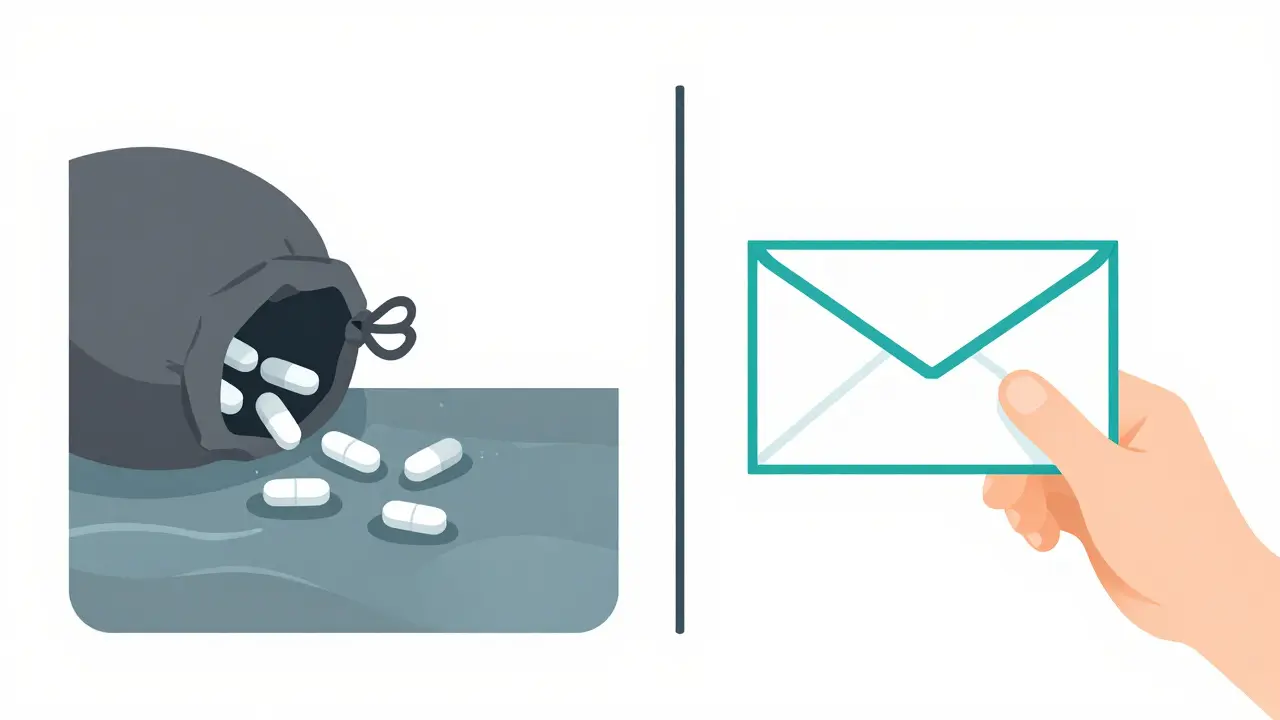
Tossing old pills in the trash or flushing them down the toilet might seem like the easiest way to clean out your medicine cabinet, but it is actually a recipe for disaster. When meds end up in the landfill or water system, they don't just disappear; they leak into the soil and contaminate local drinking water. Even worse, a stray bottle of painkillers in the trash is an open invitation for accidental poisoning or drug diversion. The safest way to handle this is by using prepaid drug mail-back envelopes is a secure, pre-addressed mailing system that allows individuals to anonymously return expired or unwanted medications to DEA-registered facilities for professional destruction.
Key Takeaways for Safe Disposal
- What it is: A prepaid, tamper-evident envelope used to send old meds to a high-heat incinerator.
- What fits: Most prescription drugs, OTC meds, and pet medications (up to 8oz).
- What's banned: Needles, sharps, inhalers, and illicit drugs.
- The Goal: To prevent environmental water pollution and stop prescription drug abuse.
- The Process: Fill, seal, and drop at any USPS office.
Why You Should Stop Flushing Your Meds
For years, some people were told to flush medications to keep them away from children. However, the U.S. Food and Drug Administration (FDA) now warns against this. Most wastewater treatment plants aren't built to filter out complex pharmaceutical chemicals. When you flush a pill, those chemicals flow directly into rivers and lakes, affecting fish and eventually creeping back into the human water supply.
Then there is the security risk. A trash bag sitting on a curb is an easy target. Whether it's a curious toddler or someone looking for diverted prescriptions, leaving medication in the household waste is a liability. Mail-back programs solve both problems by ensuring the drugs are destroyed via medical waste incineration, often at waste-to-energy facilities that turn the trash into electricity.
What Exactly Can You Put in the Envelope?
Not everything in your first-aid kit belongs in a mail-back envelope. Most providers follow a strict set of guidelines to ensure safety during transport. Generally, you can include Controlled Substances (Schedules II through V), standard prescription pills, over-the-counter (OTC) meds, and even medications prescribed for your pets.
If you have liquids or lotions, you can usually include them, but keep it under four ounces per envelope to avoid leaks. The total weight limit for most envelopes is 8 ounces. If you have more than that, you'll simply need a second envelope.
Crucial: Do NOT include the following:
- Needles or Sharps: These require puncture-resistant containers and separate disposal streams.
- Aerosols and Inhalers: Because they are pressurized, they can explode or leak in the mail.
- Schedule I Illicit Drugs: These are not accepted through standard consumer mail-back programs.
- Business-generated waste: These envelopes are for home users, not pharmacies or clinics.
| Feature | Mail Back Meds | Stericycle (Seal&Send) | American Rx Group |
|---|---|---|---|
| Primary Target | Individual Consumers | Organizations/Brands | Eco-conscious Users |
| Tracking | Secure User Portal | Serial Number Analytics | Standard Shipping |
| Key Value | Convenience/Packs | Corporate Reporting | Waste-to-Energy Focus |
Step-by-Step: How to Use Your Mail-Back Envelope
The process is designed to be dead simple, but there are a few security steps you shouldn't skip. Follow these steps to ensure your data and your meds are handled correctly.
- Order Your Envelope: You can get these from retail pharmacies, specific online providers, or through government-sponsored programs. For example, the Opioid Analgesic REMS Mail-Back Envelope Program launched in March 2025 to provide free options specifically for opioid disposal at participating pharmacies.
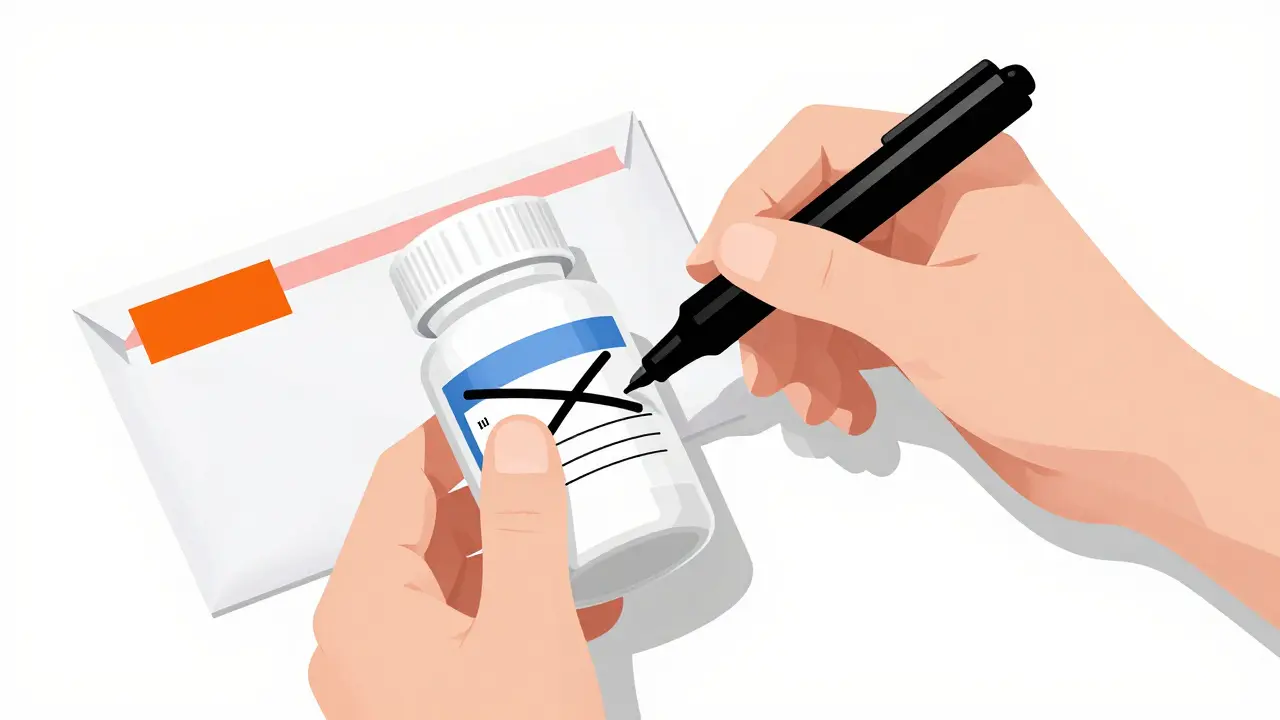
- Prepare Your Meds: This is the most important part for your privacy. Use a permanent marker to scratch out or black out all personal information on the pill bottle labels. Your name, address, and prescription number should be invisible before the bottle goes in the bag.
- Fill and Seal: Place the meds in the envelope. Ensure you don't exceed the 8oz weight limit. Use the provided tamper-evident seal (some providers use a specific orange "Keep Safe" tape) to lock the envelope. Once it's sealed, it's secured from the moment it leaves your hand until it hits the incinerator.
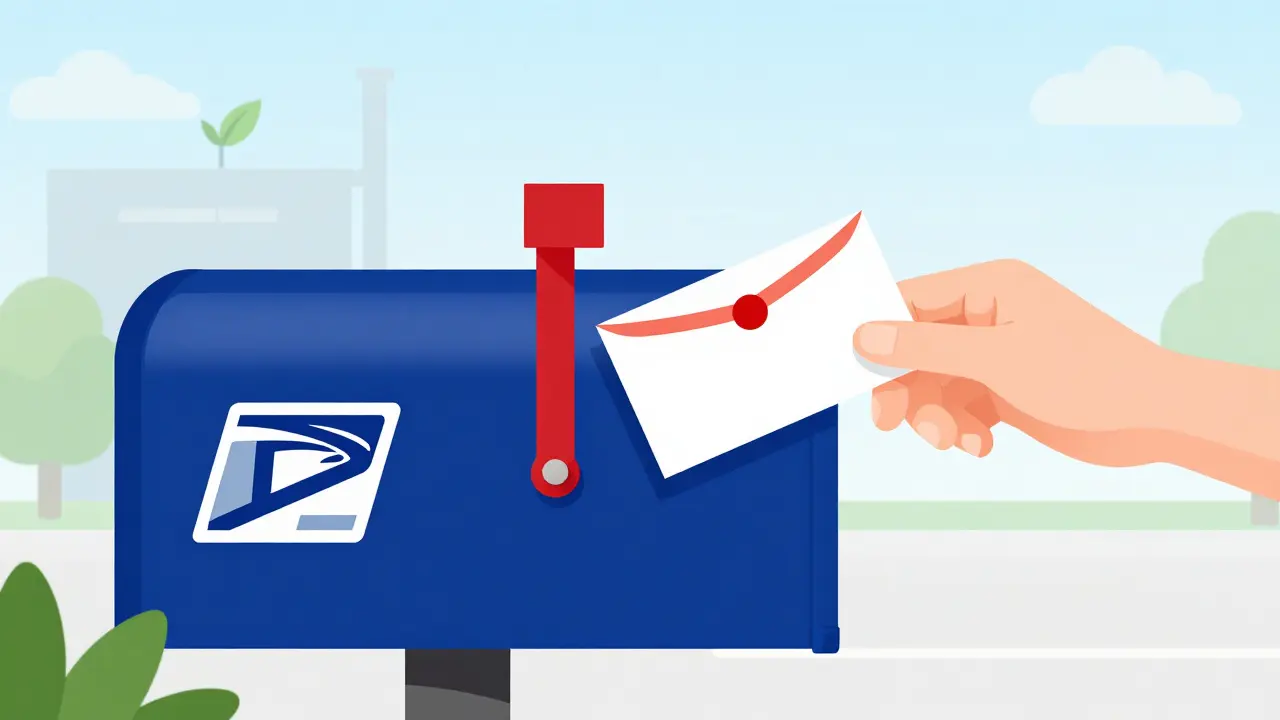
- Mail it Back: Take the sealed envelope to any United States Postal Service (USPS) office or drop it in a blue mailbox. Do not take the filled envelope back to your pharmacy or police station; those locations distribute the envelopes, but they are not the designated collection points for the mail-back system.
Common Pitfalls to Avoid
One of the biggest mistakes people make is confusing a "mail-back" program with a "drop-off" program. If you have a physical take-back kiosk (a big metal bin) at a pharmacy, you just drop the meds in. But with the envelopes, you are using the postal system. If you bring a filled mail-back envelope to a pharmacy counter, they likely cannot accept it because they aren't the ones processing the mail.
Another common error is including "sharps." I cannot stress this enough: never put a needle in a paper envelope. Not only is it illegal in many regions, but it's a massive safety hazard for the postal workers handling your mail. If you have needles, look for a dedicated sharps container program in your city.
The Big Picture: Environmental and Social Impact
Why go through the effort of buying an envelope when you could just throw the pills in the trash? Because of the cumulative effect. When millions of people dispose of drugs improperly, we see a rise in "environmental pharmaceuticals" in our water. This can lead to antibiotic-resistant bacteria and hormonal imbalances in aquatic wildlife.
Beyond the environment, these programs are a front-line defense against the opioid crisis. By making it easy and anonymous to get high-potency painkillers out of the house, we reduce the chance of them being stolen or misused by teenagers. When the Drug Enforcement Administration (DEA) hosts National Take Back Days, they collect millions of pounds of drugs, but mail-back envelopes provide a year-round solution for people who can't make it to a specific event on a specific Saturday.
Are these envelopes free?
It depends. Some commercial providers sell them in packs (like 3-packs or 50-packs). However, certain government-mandated programs, such as the Opioid Analgesic REMS program, provide them for free through participating pharmacies to encourage the safe disposal of high-risk medications.
Can I put liquid medicine in the envelope?
Yes, as long as the containers are sealed tightly to prevent leaking. Most providers limit liquids and lotions to no more than four ounces per envelope to ensure the package remains secure during transit.
How do I know my meds were actually destroyed?
Some high-end providers, like Mail Back Meds, offer a secure tracking portal. This allows you to see the date your envelope was mailed, the date it arrived at the secure facility, and the date it was officially incinerated.
What if I have a huge amount of medication?
Standard envelopes usually have an 8oz limit. If you are cleaning out a long-term care facility or a large family hoard, you should use multiple envelopes or contact a commercial provider for bulk orders and specialized disposal services.
Do I need to take pills out of their bottles?
You can leave them in the bottles for convenience, but you must black out all personal information on the label using a permanent marker. This prevents your private health data from being exposed if the package is tampered with.
Next Steps: Getting Your Home Organized
If you're feeling overwhelmed by a cluttered medicine cabinet, start by sorting your meds into three piles: "Current," "Expired," and "Unsure." For the "Unsure" pile, a quick check with your local pharmacist can tell you if a drug is still viable or needs to go. Once you've identified the waste, order a few mail-back envelopes and set a "disposal day" to clear everything out at once. If you're in a region where mail-back options aren't available, check the DEA's list of registered collection sites for the nearest physical drop-box.
Nathan Kreider
This is such a helpful guide! It's great to see ways we can all help the planet while keeping our homes safe for the kids. Thanks for sharing!
Grace Lottering
Government wants your data. Mailing things is just tracking. Total surveillance state. Don't trust the 'secure' portals.
Laurie Iten
the concept of waste as a cycle is interesting here... turning old meds into electricity feels like a small victory for the environment in a world that usually just consumes and forgets
Victoria Gregory
I love how this balances safety and eco-friendliness!!! 🌿✨ It's so important to be mindful of what we put back into the earth, don't you think??? 🌎💖
Darius Prorok
The weight limit is 8oz because of shipping costs. It's just basic logistics.
Benjamin cusden
While the utility of these programs is evident to the layman, one must acknowledge that the systemic failure of pharmaceutical waste management is a far more pressing intellectual concern than the mere act of purchasing a prepaid envelope.
GOPESH KUMAR
Typical corporate solution to a systemic problem. We are essentially paying for the privilege of not poisoning ourselves, which is the peak of modern absurdity. Why is the onus on the consumer to buy the envelope when the pharma companies created the chemical waste in the first place? It's a facade of responsibility that lets the actual polluters off the hook while we play 'save the fish' with a postage stamp. Truly a masterpiece of capitalist redirection.
jack hunter
why pay for an envelop when u can just bury it in the backyard lol. the water supply is probly already ruined anyway... we are just rearrangeing deck chairs on the titanic at this point. its all a game of pretend.
Kathleen Painter
I think it's really important that we guide people through this process gently because some folks might feel guilty about how they've disposed of things in the past, and instead of judging them, we should just provide these tools as a way to move forward together toward a cleaner community for everyone to enjoy regardless of where they start from in their journey of awareness.
Windy Phillips
It is truly exhausting to see how many people still struggle with basic hygiene and safety standards... honestly, one would think that scratching out a name on a bottle would be intuitive by now, yet here we are, explaining it as if it were rocket science...
Ruth Swansburg
Please prioritize your safety! Organizing your medicine cabinet today prevents emergencies tomorrow. Let's get this done!
Nikhil Bhatia
Too much reading. Just use the bin at Walgreens.