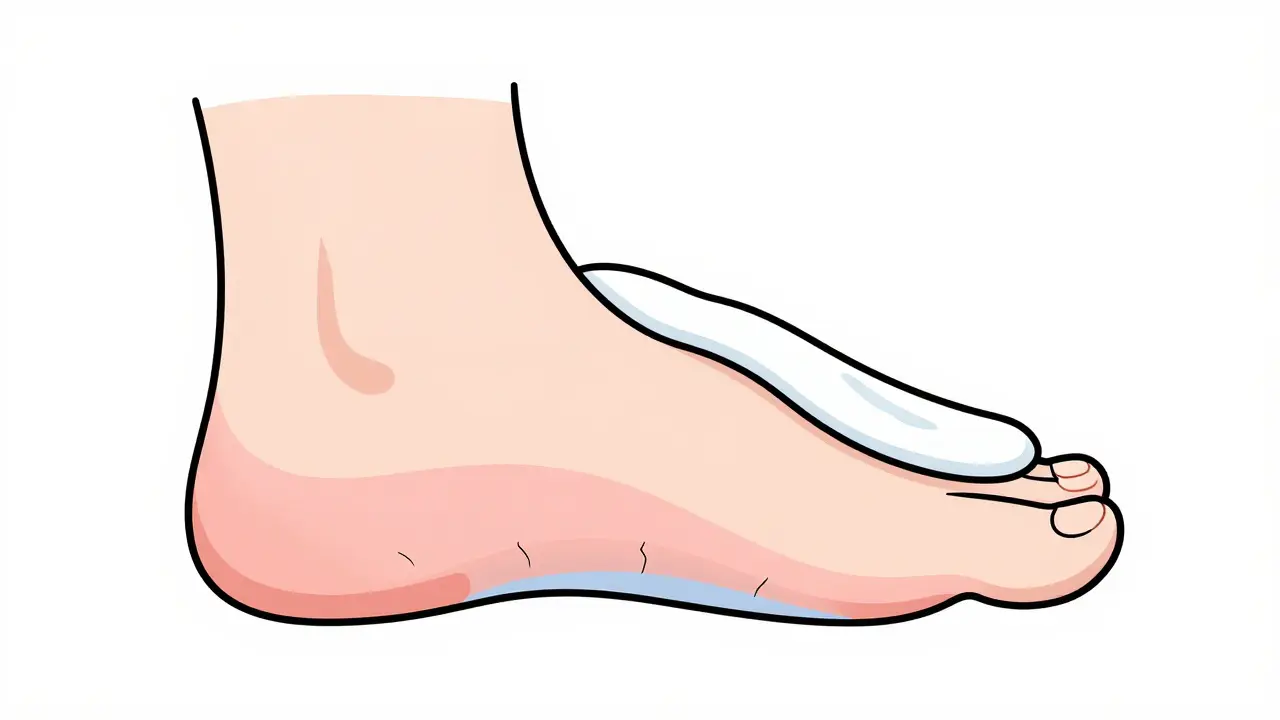
Heel pain that hits hardest when you first step out of bed? You’re not alone. Around 1 in 10 people will deal with plantar fasciitis at some point, and it’s one of the most common reasons people visit a doctor for foot problems. For years, it was called plantar fasciitis - implying inflammation. But we now know better. It’s not an inflamed tissue. It’s a degenerated one. The correct term is plantar fasciopathy. This isn’t just semantics - it changes how you treat it.
What’s Actually Going On in Your Foot?
The plantar fascia is a thick band of tissue that runs from your heel to your toes. It’s like a shock absorber and arch support rolled into one. When you walk, run, or stand for long periods, this tissue takes the brunt of the force. Over time, tiny tears build up. The body tries to repair them, but if the stress keeps coming, the tissue breaks down. That’s the degeneration - not swelling or irritation. You won’t see this on an X-ray. In fact, 80% of people with plantar fasciopathy have no heel spurs at all. And 15% of people with no pain at all show spurs on imaging. So if your doctor orders an X-ray and says, “You’ve got a heel spur - that’s your problem,” they’re missing the point. The real issue is the damaged fascia.Why You’re Feeling That Sharp Pain
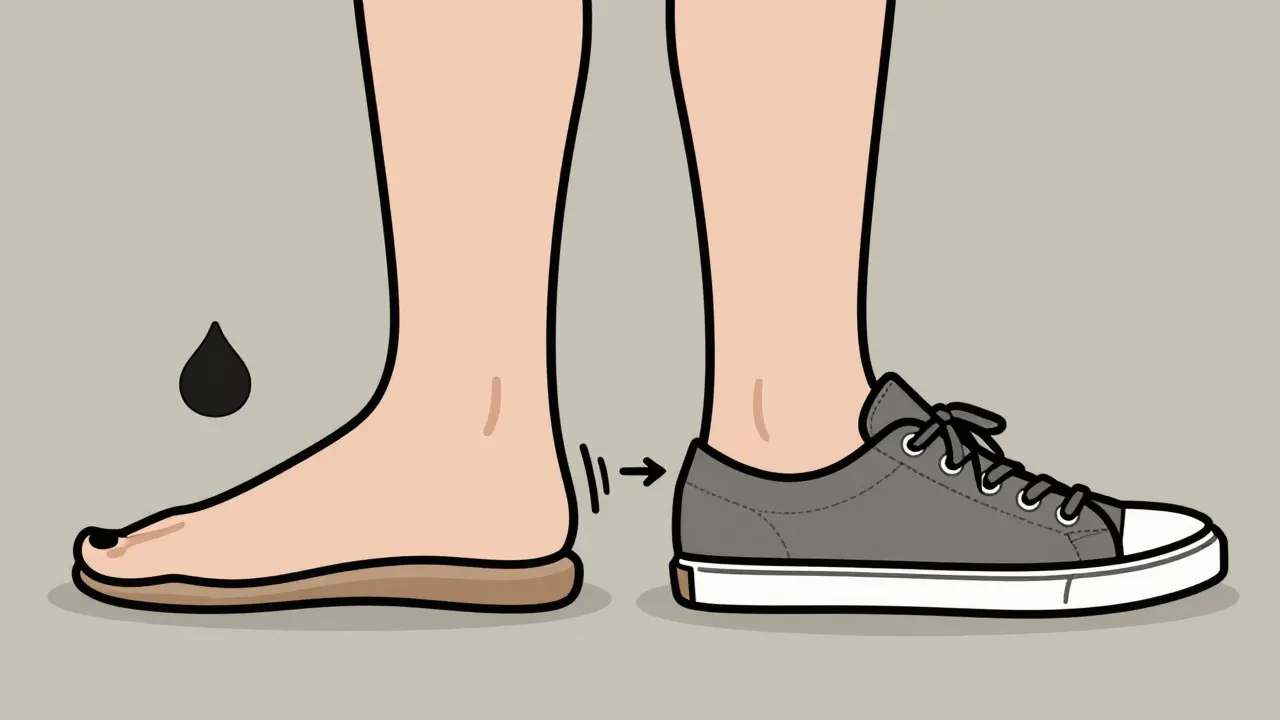
The hallmark symptom? Pain so bad you wince during your first few steps in the morning. It’s not just discomfort - it’s a stabbing, electric sensation right under your heel. That happens because overnight, the fascia tightens and shortens. When you stand up, it’s suddenly stretched to its limit. After a few minutes of walking, the tissue loosens up and the pain eases. But by the end of the day, after hours on your feet, it flares up again. Most people rate this pain between 6 and 8 out of 10 at its worst. It’s not constant, but it’s persistent. And it’s not just runners. While 37% of cases are in active people who run more than 10 miles a week, 63% occur in sedentary individuals with a BMI over 27. That’s the bigger risk factor. Extra weight means more pressure on your feet. Every pound adds stress - and research shows that losing just one point off your BMI reduces pain by 5.3% within six months. Other major risk factors:- Ankle dorsiflexion less than 10 degrees (tight calves)
- Flat feet (pes planus)
- Standing more than 4 hours a day at work
What It’s Not: Ruling Out Other Causes
Not every heel pain is plantar fasciopathy. Other conditions can mimic it:- Baxter’s neuritis: A pinched nerve that causes burning pain, often mistaken for plantar fasciitis. It’s more common on the inside of the heel.
- Tarsal tunnel syndrome: Numbness or tingling in the sole of the foot, not sharp heel pain.
- Stress fracture: Pain that gets worse with activity and doesn’t improve with rest.
- Tenderness 2-3 cm forward from the inner heel bone
- Severe pain with first steps in the morning
- Pain when you pull your toes up toward your shin
- Pain after standing for long periods
The Treatment That Actually Works (And the Ones That Don’t)
Here’s the truth: 85% of cases get better without surgery. But not all treatments are equal. Some are backed by science. Others are just noise.1. Plantar Fascia Stretching - The Gold Standard
The American Academy of Orthopaedic Surgeons gives this the strongest recommendation: Grade 1B. That means high-quality evidence. But here’s the catch - most people do it wrong. You’re not stretching your calf. You’re stretching the fascia itself. The right move:- Seat yourself in a chair.
- Loop a towel around the ball of your foot.
- Gently pull your toes toward your shin until you feel a stretch along the bottom of your foot.
- Hold for 10 seconds.
- Repeat 10 times.
- Do this 3 times a day.
2. Night Splints - Sleep Your Way to Relief
A night splint holds your foot at a 90-degree angle while you sleep. That keeps the fascia gently stretched all night. It’s uncomfortable. 44% of people quit because it messes with sleep. But those who stick with it? 72% see improvement in 6 weeks - way better than placebo. If you can’t handle a splint, try wearing socks with built-in toe stretchers. They’re less effective but easier to tolerate.3. Orthotics - Support, Not Just Cushion
Prefabricated inserts help. But custom orthotics? They’re 68% effective at reducing pain versus 52% for off-the-shelf ones. The key isn’t arch height - it’s medial support and a 10-15mm heel-to-toe drop. Shoes like the Brooks Adrenaline GTS and Hoka Clifton top patient satisfaction lists because they match this design. Don’t buy shoes just because they look good. If they flatten your arch or have no heel cushion, they’re making things worse.4. Shockwave Therapy - When Stretching Isn’t Enough
After 3 months of consistent stretching and orthotics, if pain persists, radial shockwave therapy is the next step. It uses pressure waves to stimulate healing. Success rate? 78% at 12 weeks. But it’s expensive - $2,500 to $3,500 out of pocket, and insurance rarely covers it.5. Corticosteroid Injections - The Trap
Doctors still give these. But they shouldn’t. They offer quick relief - maybe 4 weeks - but come with risks. One injection? 18% chance of fascia rupture. Multiple? The risk jumps. Plus, 22% cause fat pad atrophy - meaning your heel loses its natural cushion. You’re trading short-term relief for long-term damage.What Doesn’t Work (And Why You’re Wasting Time)
- Heel pads and gel inserts: They cushion, but don’t support. They won’t fix the degeneration.
- Massage guns: They feel good, but don’t target the fascia properly. They’re for muscle, not connective tissue.
- Ultrasound therapy: Studies show no significant benefit over placebo.
- Stretching through pain: If it hurts more than a 4/10, you’re overdoing it. Pain means tissue damage - not progress.
Real People, Real Results
On Reddit, users like u/RunningHealer shared: “Tennis ball rolling plus seated plantar stretches 3x a day cut my 8/10 morning pain to 2/10 in 6 weeks.” That’s not luck. That’s protocol. People who recover fully almost always combine two things: stretching and support (orthotics or night splints). 83% of those who fully healed used both. Those who only did one? Their recovery rate dropped to 50%.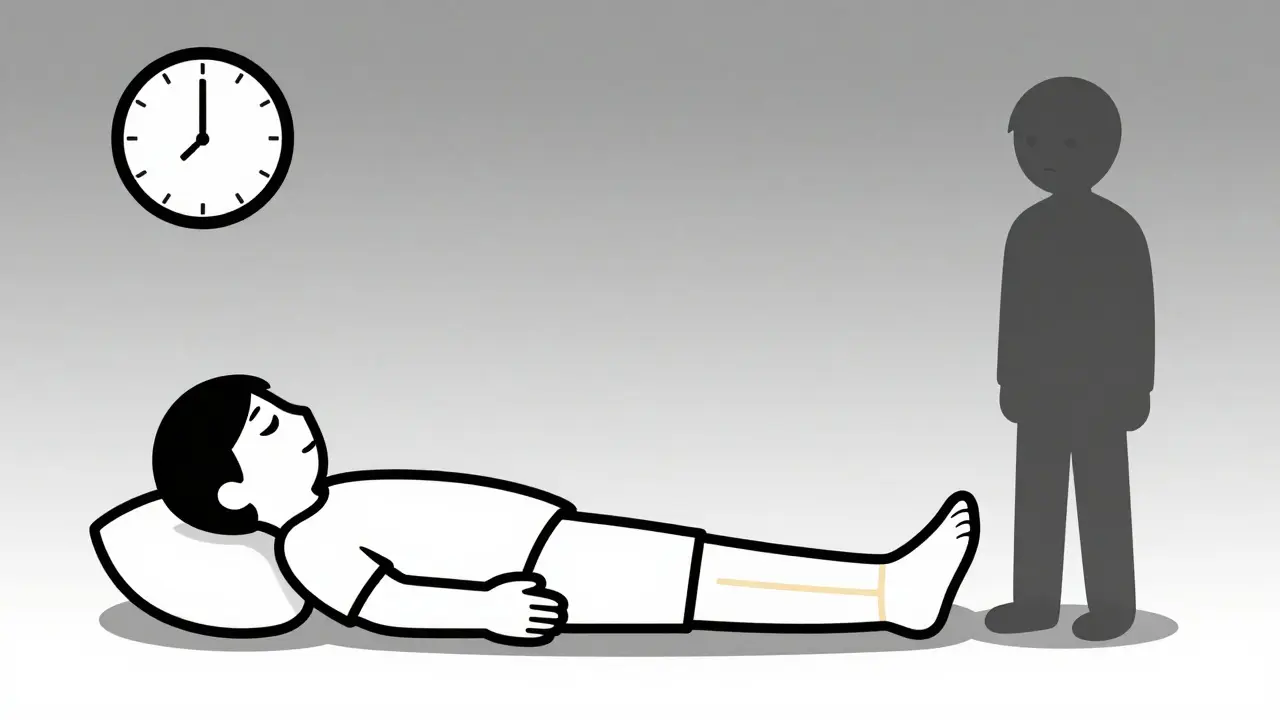
How Long Until You Feel Better?
Most people see improvement in 6-8 weeks. Full recovery? Usually within 10 months. But here’s the kicker: 25-30% of people get it back within a year. Why? They stop stretching. They gain weight. They go back to old shoes. Recovery isn’t a sprint. It’s a lifestyle shift. You need to stretch daily, even after the pain is gone. You need to wear supportive shoes. You need to manage your weight. If you don’t, the fascia will break down again.What to Do Right Now
Start today. No waiting. No expensive gear. Just these steps:- Do the towel stretch: 10 reps, 3 times a day. Set phone reminders.
- Replace your shoes. Look for heel-to-toe drop of 10-15mm and arch support.
- Roll a frozen water bottle under your foot for 5 minutes after work. Cold reduces irritation.
- Track your weight. Even a 5-pound loss can make a measurable difference.
- Stop standing still. If your job requires long hours on your feet, shift your weight often. Use a small footrest.
Final Thought: It’s Not a One-Time Fix
Plantar fasciopathy isn’t something you “get over.” It’s something you manage. Like high blood pressure or back pain, it’s tied to how you live. Your feet carry you. Treat them like they matter - because they do.Is plantar fasciitis the same as heel spurs?
No. Heel spurs are bony growths that sometimes form on the heel bone. But 80% of people with plantar fasciopathy have no spurs, and 15% of people with no pain have them. The spur isn’t the cause - it’s just a side effect of long-term tension on the fascia. Treating the spur won’t help. Treating the fascia will.
Can I still run with plantar fasciitis?
You can, but only if you’re doing the right rehab. Running through pain makes it worse. If you want to keep running, reduce your mileage, switch to low-impact days (cycling, swimming), and never run without supportive shoes. Most people return to running after 8-12 weeks of consistent stretching and orthotics. Don’t rush it.
Do I need an MRI or X-ray to diagnose plantar fasciitis?
No. Diagnosis is based on symptoms and physical exam. X-rays show spurs, which aren’t the problem. Ultrasound can confirm thickening of the fascia (over 4.0 mm), but it’s not always needed. If your doctor insists on imaging before starting treatment, get a second opinion.
How long should I stretch each day?
Just 10 minutes total. Three sessions of 10 reps (10 seconds each) - morning, afternoon, and evening. That’s it. Consistency matters more than duration. People who stretch every day for 6-8 weeks see 83% improvement. Those who skip days rarely improve.
Are custom orthotics worth the cost?
If you’ve tried prefabricated inserts and still have pain, yes. Custom orthotics reduce pain by 68% at 12 weeks versus 52% for off-the-shelf ones. But they’re not magic. They work best with stretching and proper shoes. If you’re on a budget, try a high-quality prefabricated insert with arch support first - many cost under $50.
Can plantar fasciitis go away on its own?
It can - but it takes 10-12 months on average. And you’re more likely to get it back if you don’t change what caused it. Active treatment cuts recovery time to 6-8 weeks and reduces recurrence. Waiting isn’t a strategy - it’s a risk.
Is PRP injection or shockwave therapy better?
Shockwave therapy is proven, FDA-approved, and has a 78% success rate after 12 weeks. PRP (platelet-rich plasma) shows promise - 65% pain reduction at 6 months - but it’s still experimental, expensive ($800-$1,200 per shot), and rarely covered by insurance. Start with shockwave only if stretching and orthotics have failed for 3 months.
Adewumi Gbotemi
Just started the towel stretch last week. My heel doesn’t feel like it’s being stabbed by a knitting needle anymore. Seriously, no magic here-just consistency.
Priscilla Kraft
THIS. I’ve been telling my coworkers for months: stop buying those gel inserts. They’re like putting a bandaid on a broken leg. The towel stretch + supportive shoes changed everything for me. Also, frozen water bottle = best $0 investment ever. 🙌
Jennifer Littler
As someone who’s had this for 14 months, I’ll say this: the degeneration vs inflammation distinction is critical. I spent two years chasing NSAIDs and ice packs while my fascia turned to wet cardboard. Once I stopped treating it like an acute injury and started treating it like tendonosis? Progress. Slow, but real.
Christian Basel
Let’s be real-83% improvement from stretching? That’s statistically significant but clinically irrelevant if you’re a 300-lb nurse working 12-hour shifts. The paper doesn’t address biomechanical load thresholds. You can’t stretch your way out of chronic compressive overload. The real solution is weight loss, reduced standing time, or quitting the job. Not a towel.
Matthew Miller
Wow. Another ‘stretching is the cure’ cultist. You know what’s worse than plantar fasciopathy? People who think a 10-second towel pull is a cure-all. You’re ignoring neurodynamics, hip mobility, and proximal drive. If your glutes are shut down, no amount of toe pulls will fix your foot. This is why physical therapy is a joke.
Sam Davies
Oh, so now we’re treating feet like they’re vintage BMWs? ‘Medial support and 10-15mm drop’-sure, Jan. Next you’ll be telling me to rotate my orthotics every 3,000 miles. I just bought $200 shoes and now I’m supposed to do yoga with a towel before coffee? I’ll take the cortisone shot, thanks.
Sean Feng
They say not to run through pain but never say how much is too much. Is 5/10 okay? What about 6? Who decides? No one ever gives you a fucking scale. Just ‘listen to your body’ like that’s a real instruction.
Jason Shriner
It’s not about the fascia. It’s about the soul. We walk on this earth, burdened by gravity and capitalism, and our feet pay the price. The pain? It’s not tissue. It’s the echo of all the times we stood still while the world moved. Stretching won’t fix that. Only stillness will. Or maybe just quitting.
Alfred Schmidt
STOP! STOP! STOP! You people are ignoring the real enemy: modern footwear. Barefoot running isn’t a fad-it’s a return to evolutionary design. The arch support? The heel cushion? That’s what’s crushing your fascia. Throw out your Brooks, go barefoot on grass, and you’ll be fine. I did it. I’m 52. No pain. No orthotics. No pity.
Vincent Clarizio
Look, I’ve tried everything: night splints, shockwave, custom orthotics, acupuncture, cupping, even a witch doctor in New Mexico who chanted over my foot with sage. The only thing that worked? A combination of stretching, weight loss, and accepting that I’m never going to wear flip-flops again. And honestly? I’m okay with that. My feet are finally quiet. And that’s more than I can say for my ex.
Alex Smith
Interesting how everyone’s obsessed with stretching but no one talks about dorsiflexion mobility. If your ankle can’t go past 10 degrees, you’re basically walking on stilts. Try wall ankle mobilizations with a resistance band. Do it daily. It’s 5 minutes. It’s free. And it actually changes the tension on the fascia. You’re not just stretching-you’re reprogramming movement. That’s the real hack.
Roshan Joy
I’m from India, and we’ve had a similar thing called ‘foot fatigue’ for generations. Our grandmas used to soak feet in warm water with neem leaves and massage with coconut oil. Didn’t cure it, but made it bearable. The towel stretch? Same principle. Just modernized. Keep it simple. Your feet don’t need a PhD to heal.
Michael Patterson
Wait… you’re telling me I’ve been doing the towel stretch wrong this whole time? I was pulling the towel toward my chest, not my shin? That’s why I’ve been in pain for 11 months? I’m literally crying right now. Also, my shoes are from Nike. I’m doomed.
Priya Patel
My mom had this for 3 years. She did nothing but ice and rest. Then one day she just… started walking more. No stretches. No orthotics. Just walked around the block every morning. Now she hikes. I think sometimes the body just needs permission to heal. Maybe we overthink it too much.
Madhav Malhotra
As a teacher who stands 8 hours a day-this article saved me. I started rolling a frozen water bottle under my foot after class. Cold + pressure = instant relief. Now I do the stretch every night before bed. No more 7/10 pain. Just a quiet 2/10. And I still wear my cute shoes. Progress, not perfection.