Hyponatremia Risk Calculator for Elderly SSRI Patients
Patient Assessment
When you start an SSRI for depression, you’re hoping for relief-not confusion, dizziness, or falling into a fog you can’t shake. But for some, especially older adults, these medications can quietly trigger a dangerous drop in sodium levels, leading to serious brain-related symptoms. It’s not rare. It’s not theoretical. And it’s often missed until it’s too late.
What Is Hyponatremia, Really?
Hyponatremia means your blood sodium is too low-below 135 mmol/L. Sodium isn’t just table salt. It’s critical for keeping your cells balanced, your nerves firing, and your brain functioning. When sodium drops, water floods into cells, including brain cells. That’s when you start feeling off: headaches, nausea, fatigue. Then it gets worse: confusion, trouble walking, seizures. In extreme cases, below 125 mmol/L, it can cause coma or death.
This isn’t just about drinking too much water. It’s about how SSRIs interfere with your body’s natural fluid control. These antidepressants boost serotonin, which in turn tricks your brain into releasing too much antidiuretic hormone (ADH). That hormone tells your kidneys to hold onto water instead of flushing it out. Result? More water in your blood. Less sodium per drop. Diluted. Dangerous.
Who’s Most at Risk?
You might think anyone on SSRIs could be affected. But the real danger is concentrated. The 2024 meta-analysis in European Psychiatry found that while overall risk is around 1.9-4.4%, it jumps to 13.9-18.6% in people over 65. That’s nearly 1 in 5. Why? Because aging kidneys don’t handle fluid shifts as well. Hormone regulation slows. Many older adults are already on diuretics for high blood pressure or heart issues-especially thiazides-which multiply the risk by over four times.
Women are more commonly affected-65.2% of cases, according to one study. People under 60 kg, with kidney problems (eGFR under 60), or taking multiple medications are also at higher risk. And here’s the kicker: symptoms often appear within two to four weeks of starting or increasing the dose. That’s when most doctors aren’t even checking.
Which SSRIs Carry the Highest Risk?
All SSRIs can do this, but some are worse than others. The data is clear:
- Citalopram has the highest risk-2.37 times more likely to cause hyponatremia than other antidepressants.
- Sertraline follows closely at 2.15 times higher risk.
- Fluoxetine and paroxetine are also significant offenders.
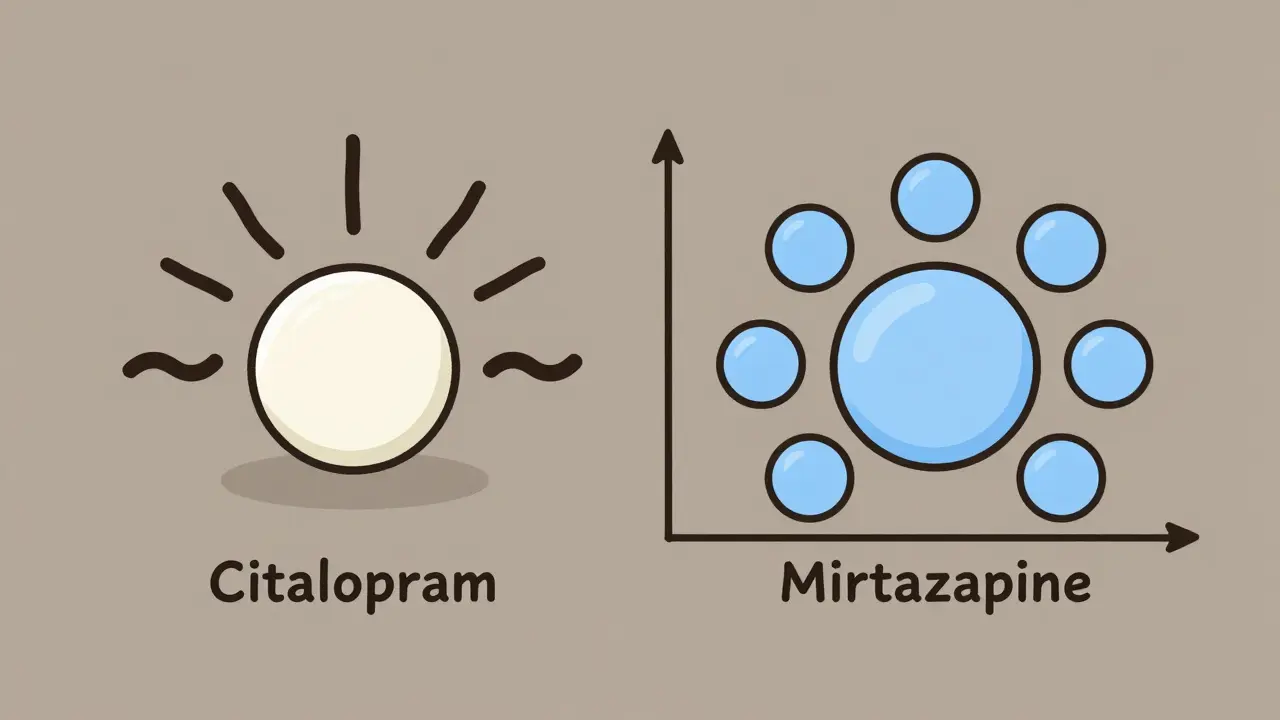
Why? It comes down to how tightly they bind to the serotonin transporter (SERT). The stronger the binding, the more serotonin gets released, the more ADH is triggered. Citalopram is the most potent at this. That’s why guidelines now warn against using it in older adults unless absolutely necessary.
The Safer Alternatives
If you’re over 65, or have kidney issues, or are on a diuretic-there are better choices than SSRIs.
Mirtazapine stands out. It’s not an SSRI. It doesn’t boost serotonin the same way. Instead, it blocks certain receptors that reduce anxiety and improve sleep. And critically-it doesn’t trigger ADH release. Studies show its hyponatremia risk is only 0.47 times that of SSRIs. That means for every 1,000 older adults started on mirtazapine, only about 6.5 develop low sodium. With SSRIs? Around 18.6. The difference is stark.
Bupropion (Wellbutrin) is another option. It works on dopamine and norepinephrine, not serotonin. Its risk is about 15% lower than SSRIs. It’s not perfect-seizure risk in some, but for many, it’s a safer bet.
Even among tricyclics, nortriptyline is safer than amitriptyline. But overall, mirtazapine is now the go-to for elderly patients, according to the American Geriatrics Society’s 2023 Beers Criteria.
How Is It Diagnosed?
Doctors don’t always look for it. Symptoms like confusion or dizziness in an older person are often written off as "just aging" or early dementia. But hyponatremia is reversible-if caught.
The diagnosis is simple: a blood test. Serum sodium below 135 mmol/L. But it’s not enough. You need to rule out other causes. That means checking:
- Urine sodium (should be over 30 mmol/L)
- Urine osmolality (over 100 mOsm/kg)
- Volume status (usually euvolemic-no swelling, no dehydration)
This pattern-low sodium, high urine sodium, normal volume-is the fingerprint of SIADH caused by SSRIs. No other condition looks like this.
What Happens When It’s Missed?
Real cases tell the story.
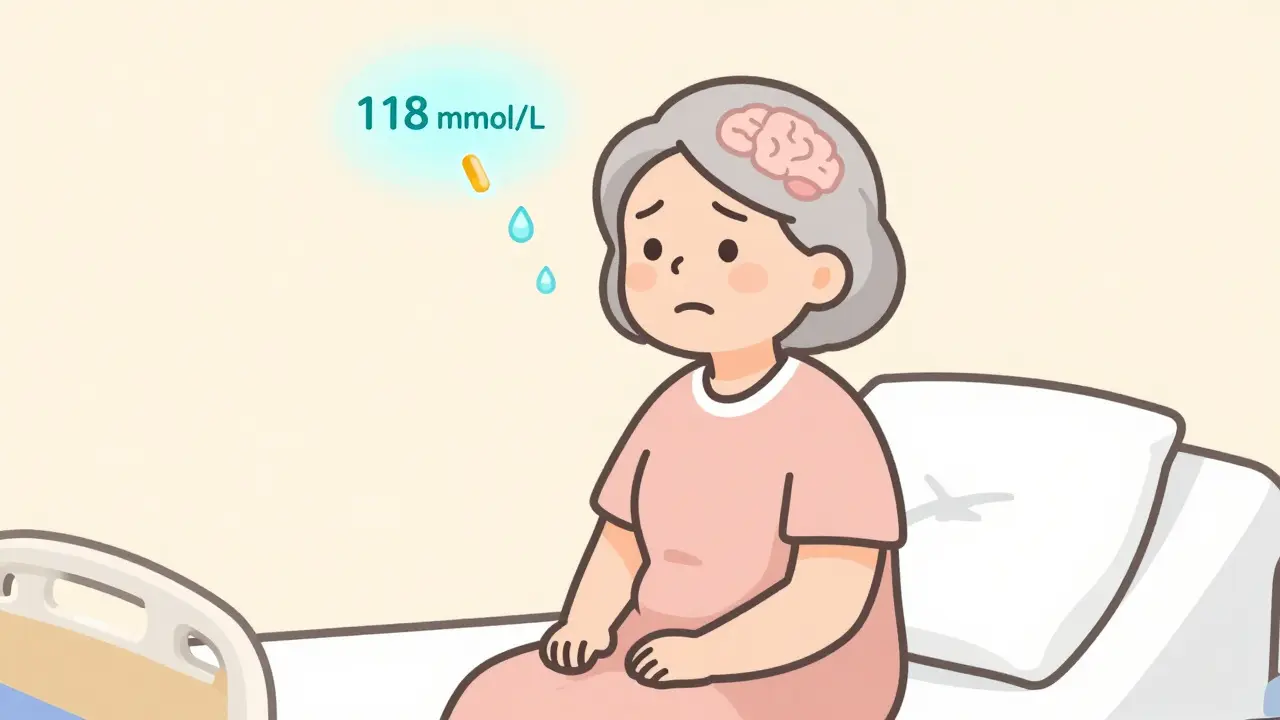
A 78-year-old woman started sertraline at 50 mg daily. Ten days later, she was confused, unsteady, and hospitalized. Her sodium was 118 mmol/L-critically low. She spent five days in the ICU. Another case: an 82-year-old woman on citalopram became so disoriented her family thought she had Alzheimer’s. Her sodium? 122 mmol/L. She was hospitalized. The medication was stopped. It took four days for her sodium to normalize. She never fully regained her mental sharpness.
Studies show it takes an average of 7.2 days from symptom onset to diagnosis. And only 28.7% of patients are warned about this risk before starting treatment. That’s unacceptable.
Prevention: What Should You Do?
If you’re over 65 and your doctor suggests an SSRI, ask these questions:
- "Have you checked my sodium level before?"
- "Can we test it again in two weeks?"
- "Is mirtazapine or bupropion an option for me?"
- "Am I on any diuretics? Could that be making this risk worse?"
The American Psychiatric Association now recommends:
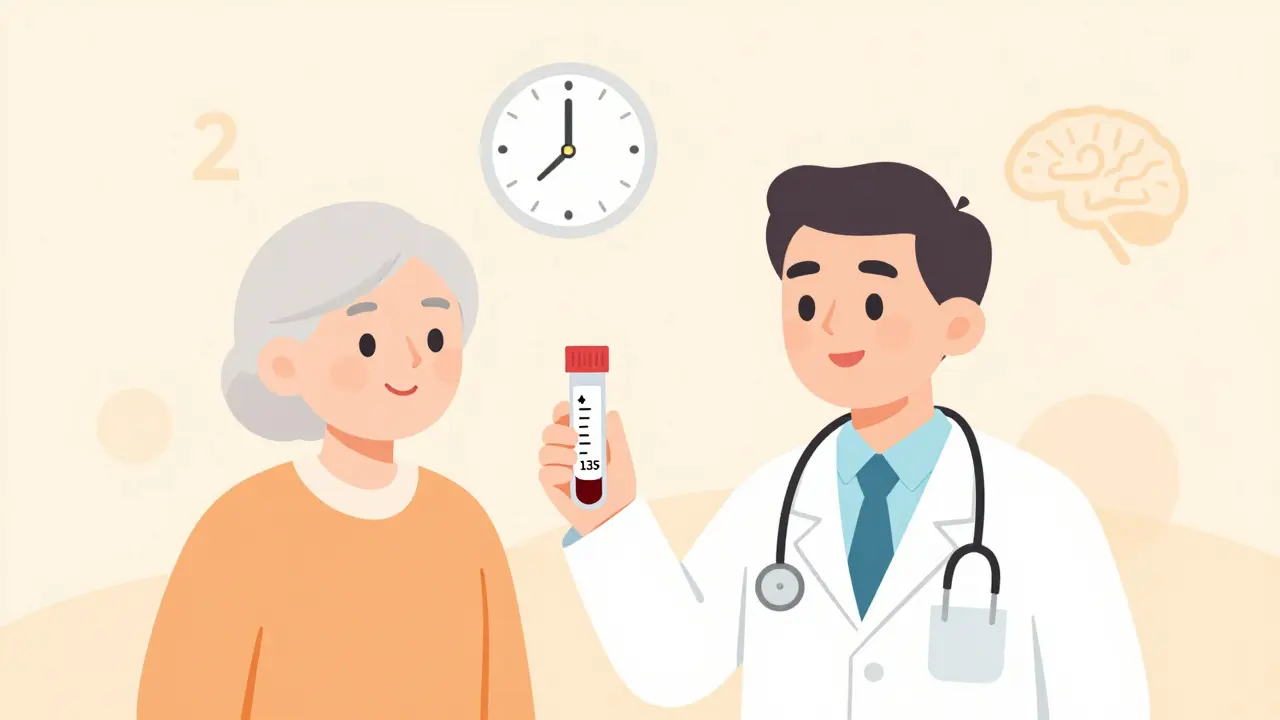
- Baseline sodium test within 7 days before starting an SSRI.
- Repeat test at 2 weeks after starting or increasing the dose.
- Monthly monitoring for the first 3 months if you’re over 65, on diuretics, or have kidney issues.
And if sodium drops below 134 mmol/L? Stop the SSRI. Restrict fluids to 800-1000 mL per day. Most people recover in 2-4 days. Severe cases (under 125 mmol/L) need hospital treatment with hypertonic saline-but only slowly. Too fast, and you risk permanent brain damage from osmotic demyelination.
The Bigger Picture
SSRIs are still the most prescribed antidepressants worldwide. In the U.S. alone, over 214 million prescriptions were filled in 2023. But something’s changing. Between 2018 and 2023, SSRI use in patients over 65 dropped by 22.3%. Meanwhile, mirtazapine prescriptions for that group rose by 34.7%. The evidence is shifting prescribing habits.
The cost of ignoring this? $1.27 billion annually in the U.S. from hospitalizations and ER visits. That’s not just money-it’s lives. People who fall, get confused, end up in nursing homes, or die from something that could’ve been caught with a simple blood test.
The FDA now requires SSRI labels to include hyponatremia warnings. The European Medicines Agency is reviewing the safety profile. And in March 2024, the first clinical algorithm for managing this condition was published-step-by-step guidance for doctors who want to do right by their patients.
But the biggest change isn’t in guidelines. It’s in awareness. If you’re caring for an older adult on antidepressants, and they start acting "off," don’t assume it’s dementia. Don’t wait. Ask for a sodium test. It takes five minutes. It could save their brain.
Can SSRIs cause confusion in elderly patients?
Yes. SSRIs can cause confusion in elderly patients through a condition called hyponatremia-low sodium in the blood. This happens because SSRIs trigger excess antidiuretic hormone (ADH), leading to water retention and diluted sodium. When sodium drops below 130 mmol/L, brain cells swell, causing disorientation, memory issues, dizziness, and sometimes seizures. Symptoms often appear within 2-4 weeks of starting or increasing the dose. These signs are frequently mistaken for dementia or normal aging, delaying diagnosis and treatment.
Which SSRI has the highest risk of causing low sodium?
Citalopram carries the highest risk among SSRIs, with an odds ratio of 2.37 compared to other antidepressants. Sertraline and fluoxetine follow closely, with odds ratios of 2.15 and 1.98, respectively. This is linked to how strongly these drugs bind to the serotonin transporter (SERT). The tighter the binding, the more serotonin is released, which overstimulates ADH production. For elderly patients, citalopram is generally discouraged due to this risk.
Is mirtazapine safer than SSRIs for older adults?
Yes, mirtazapine is significantly safer for older adults regarding sodium levels. It has only 0.47 times the risk of hyponatremia compared to SSRIs. Unlike SSRIs, it doesn’t strongly stimulate serotonin receptors that trigger antidiuretic hormone (ADH) release. Instead, it works on different brain receptors to improve sleep and appetite. The American Geriatrics Society recommends mirtazapine as a first-line alternative for elderly patients needing antidepressants. Studies show a 34.7% increase in its use among patients over 65 between 2018 and 2023.
How can hyponatremia from SSRIs be prevented?
Prevention starts with testing. Before starting an SSRI, get a baseline serum sodium test. Repeat it two weeks after starting or increasing the dose. For patients over 65, on diuretics, or with kidney disease, monthly checks for the first three months are advised. Avoid rapid dose increases. Limit fluid intake if sodium starts dropping. Consider switching to mirtazapine or bupropion if risk factors are present. Most importantly, ask your doctor if they’re monitoring for this side effect-it’s not automatic.
What should I do if my elderly relative becomes confused after starting an SSRI?
Don’t assume it’s dementia or aging. Request an urgent blood test for serum sodium. If it’s below 135 mmol/L, hyponatremia is likely. Stop the SSRI immediately and seek medical care. Mild cases often resolve within 72 hours with fluid restriction. Severe cases (below 125 mmol/L) need hospital treatment with slow IV saline. Recovery can take days to weeks. Document when symptoms started and what medication was started-this helps doctors connect the dots. Many cases are misdiagnosed because the link between SSRIs and confusion isn’t widely known outside psychiatry.