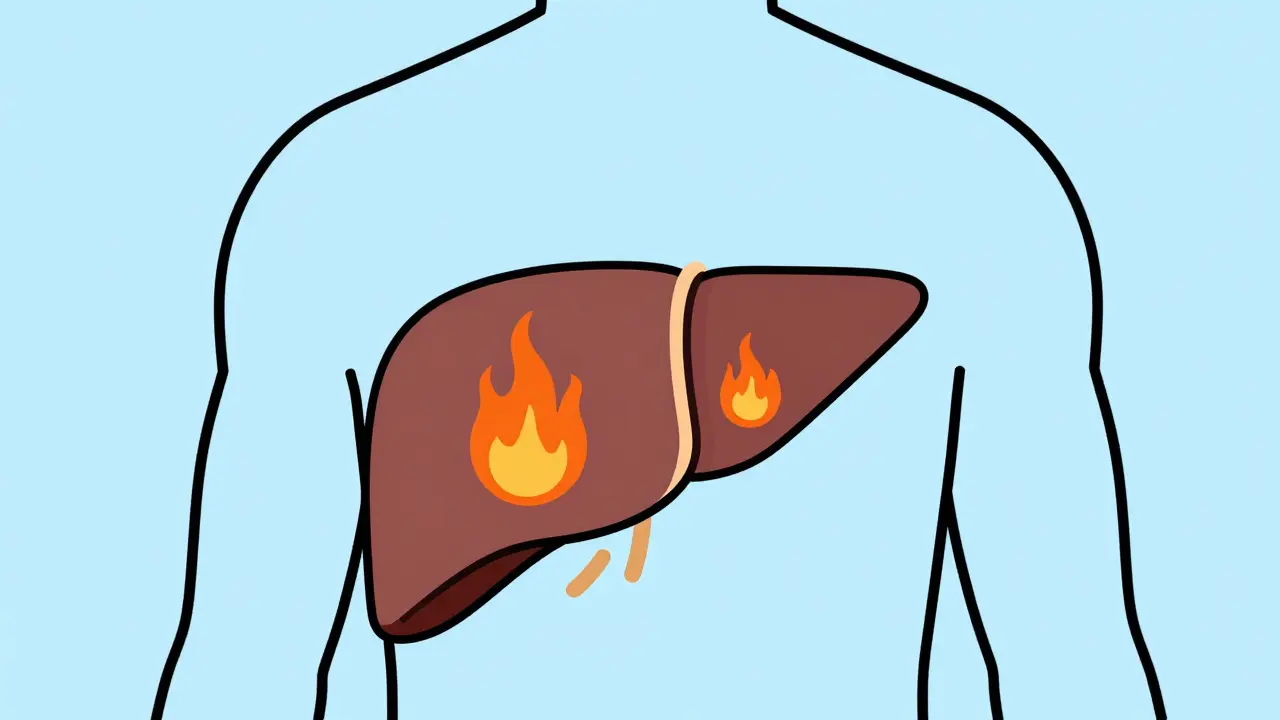
For most people, the goal isn't just to "fix" a blood test result, but to stop the progression toward cirrhosis and liver failure. The good news is that with modern protocols, many patients achieve complete biochemical remission, meaning their liver enzymes return to normal and the inflammation stops.
How Doctors Diagnose AIH
There is no single "magic test" for AIH. Instead, doctors use a combination of blood work, imaging, and tissue samples to build a case. If you are suspected of having AIH, your medical team will look for a specific set of markers.
First, they check your Immunoglobulin G (IgG) levels. In most AIH patients, these levels are at least 1.5 times higher than normal. They also look for autoantibodies. While older guidelines split these into Type 1 and Type 2, the European Association for the Study of the Liver (EASL) recently updated their 2025 guidelines to move away from these subclasses because they don't actually change how the disease is treated.
The gold standard for confirmation is a liver biopsy. A thin needle is used to take a small sample of liver tissue. Pathologists look for "interface hepatitis," which is inflammation concentrated where the portal tracts meet the liver cells. To be accurate, they typically examine at least 20 portal tracts per specimen.
To make things objective, clinicians often use the Revised International Autoimmune Hepatitis Group (IAIHG) scoring system. This assigns points based on your symptoms, antibodies, and biopsy results. A score over 20 usually confirms a definite diagnosis of AIH.
The Role of Steroids in Initial Treatment
When you first start treatment, the priority is to put out the "fire" of inflammation quickly. This is where Prednisone is a potent corticosteroid used to rapidly suppress the immune system and reduce liver inflammation comes in. Most patients start with a dose of 0.5 to 1 mg per kilogram of body weight daily.
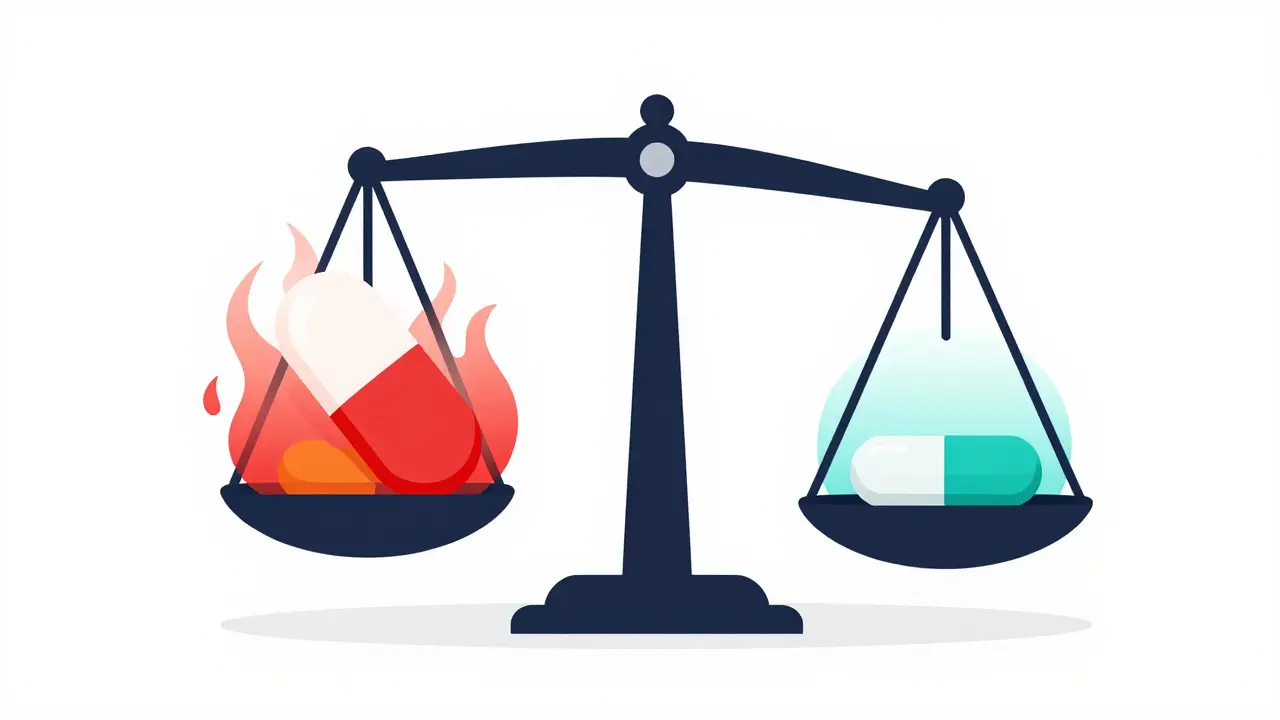
The response to steroids is often remarkably fast. About 80-90% of patients see their liver enzymes drop within just two weeks. However, steroids are a double-edged sword. While they save the liver, long-term use can lead to significant side effects. You might experience "moon face" (swelling of the face), rapid weight gain, insomnia, and an increased risk of developing type 2 diabetes or osteoporosis.
Because of these risks, the goal is always to taper the prednisone dose down-usually to around 10-15 mg per day-as soon as a second medication can take over the heavy lifting.
Using Azathioprine for Long-Term Stability
To reduce the reliance on steroids, doctors introduce Azathioprine is an immunosuppressant medication that helps maintain remission and allows for the reduction of corticosteroid doses . Often sold under brands like Imuran or Azasan, this drug acts as a "steroid-sparing" agent.
By combining azathioprine with a lower dose of prednisone, patients can often reduce their steroid intake by 70-80% within six months. This drastically cuts down the risk of steroid-induced cataracts or mood swings. The typical target dose is 1-2 mg per kg of body weight.
However, azathioprine isn't for everyone. A small percentage of people have a genetic deficiency in an enzyme called TPMT. If you lack this enzyme, azathioprine can cause severe bone marrow suppression, which is dangerous. Because of this, the 2025 EASL guidelines strongly recommend TPMT enzyme testing before the first dose is ever given.
| Feature | Prednisone (Steroids) | Azathioprine |
|---|---|---|
| Primary Goal | Rapidly reduce inflammation | Long-term maintenance & steroid sparing |
| Speed of Action | Very Fast (days/weeks) | Slow (months) |
| Common Side Effects | Weight gain, insomnia, diabetes | Nausea, fatigue, bone marrow issues |
| Required Screening | Blood glucose/pressure | TPMT Enzyme Testing |
Managing the Treatment Journey
Living with AIH is a marathon, not a sprint. Monitoring is constant. In the beginning, you'll likely have blood tests for ALT and AST every 2 to 4 weeks. Once you hit the maintenance phase, this usually drops to every three months.
One critical step before starting any immunosuppressant is screening for Hepatitis B. This is because drugs like azathioprine can cause a dormant Hepatitis B infection to reactivate, which could lead to sudden liver failure. Doctors will check for HBsAg and anti-HBc antibodies to ensure you are safe to proceed.
After 18 to 24 months of therapy, many doctors suggest a second biopsy. Why? Because blood tests can sometimes look "normal" even if the liver is still slightly inflamed. A biopsy confirms "histological remission," meaning the tissue itself has actually healed. About 50-70% of patients achieve this level of recovery after a few years of treatment.

What Happens if First-Line Therapy Fails?
Unfortunately, about 10-15% of people don't respond well to the prednisone/azathioprine combo. Some might develop pancreatitis or find the side effects unbearable. In these cases, doctors pivot to second-line therapies.
Mycophenolate Mofetil is a second-line immunosuppressant used when patients cannot tolerate or do not respond to azathioprine is a common alternative. It is often more effective for those who failed the first line of defense. More recently, research into JAK inhibitors and monoclonal antibodies is showing promise for refractory cases, though these are not yet standard for everyone.
The question of whether to stop medication entirely is a point of debate. While some patients try to taper off after years of remission, the relapse rate is staggeringly high-between 50% and 90%. Most experts suggest a very slow withdrawal over 6 to 12 months with incredibly close monitoring.
How long do I have to take AIH medication?
For the majority of patients (60-80%), treatment is long-term or even lifelong. Because the relapse rate is so high when medication is stopped, many stay on a low maintenance dose of azathioprine and a tiny amount of prednisone to keep the disease in check.
Is a liver biopsy always necessary?
Yes, according to the 2025 EASL guidelines, a biopsy remains mandatory for the initial diagnosis. It is the only way to confirm interface hepatitis and rule out other causes of liver damage that might look like AIH on a blood test.
What is the risk of the biopsy procedure?
The risk of major complications, such as severe bleeding, is very low-estimated between 0.1% and 0.3%. Most biopsies are performed under ultrasound guidance to maximize safety.
Can AIH cause permanent liver damage?
If left untreated, AIH can lead to cirrhosis and liver failure. However, if caught early and treated correctly, treatment can actually reverse some of the fibrosis (scarring), moving a patient from a more advanced stage (like F3) back to a healthier state (F0).
Why do I need a TPMT test before starting Azathioprine?
The TPMT test identifies if you have a genetic deficiency in the enzyme that breaks down azathioprine. People with this deficiency have a 30-fold higher risk of severe bone marrow suppression, which can be life-threatening if the dose isn't adjusted.
Next Steps and Support
If you have just been diagnosed, your first priority should be establishing a relationship with a hepatologist. Ensure you have a clear schedule for your blood tests and a plan for tapering your steroids to avoid the most severe side effects.
For those struggling with the emotional toll of "prednisone mood swings" or the physical changes of steroid use, joining a patient advocacy group can be a lifeline. Knowing that the "moon face" or insomnia is a temporary part of the initial phase makes the process much easier to handle.
If you find that your current medication isn't working after 12-18 months, don't panic. This is a known occurrence in about 10-15% of cases, and moving to a second-line therapy like mycophenolate mofetil often solves the problem and stabilizes liver function.
mimi clouet
Actually, the IgG levels are just one part of the puzzle! 🧩 I've seen cases where the antibodies are barely there but the biopsy is super clear. It's all about that holistic clinical picture! ✨
Clare Elizabeth
keep your heads up everyone!! you got this and the meds really do work wonders if you just stick with it
stay strong and stay positive
Mary Johnson
Convenient how these "guidelines" just happen to change every few years to keep us dependent on Big Pharma's latest chemicals. They want us on steroids and immunosuppressants for life because a cured patient isn't a paying customer. It's a scam to keep the medical-industrial complex funded while they ignore natural liver detoxes that actually work without destroying your bone marrow!
Billy Wood
Stay focused!! Keep fighting!! You can beat this!!
Princess Busaco
Honestly, the way people just blindly follow these medication schedules without questioning the existential dread of "moon face" is just typical of the modern medical sheep mentality. I mean, imagine handing your entire hormonal balance over to a synthetic steroid just because some textbook says so, while completely ignoring the spiritual misalignment that likely triggered the autoimmune response in the first place, which is something no amount of azathioprine can ever truly address if you're just treating the symptom and not the soul.
Rim Linda
The moon face is actually the worst part!! 😭 I felt like a balloon for months! :(((
Clint Humphreys
It is quite fascinating, in a truly sinister way, how the TPMT testing is framed as a "safety measure" when it's really just another layer of genetic profiling. If you look at the data, the risk of bone marrow suppression is practically a feature for those who want to maintain a certain level of systemic control over the population. I'm just saying, it's all very friendly and helpful on the surface, but if you analyze the trajectory of these "updated guidelines," it's clear they're steering us toward a future of permanent pharmaceutical reliance.
Olivia Lo
The juxtaposition of rapid corticosteroid induction and the gradual titration of steroid-sparing agents represents a classic pharmacological trade-off. It's an interesting dialectic between immediate symptomatic relief and the long-term preservation of systemic homeostasis. We must consider the ontological shift in a patient's identity when they move from a state of acute illness to a permanent pharmacological dependency.
john chiong
straight garbage that some folks think they can just stop the meds and be fine. that's a one way ticket to liver failure city my friends. keep taking the pills or enjoy the yellow skin
Anurag Moitra
It is imperative that patients adhere strictly to the monitoring schedule provided by their hepatologist. Consistent blood work is the only reliable method to ensure the medication is effective and safe.
Tabatha Pugh
I actually know someone who skipped the TPMT test and ended up in the ER. You really shouldn't trust your doctor to remember to order it; you have to demand the test yourself or you're risking your life. Most GPs are too lazy to check the latest 2025 EASL standards anyway.
Shaylia Helland
it's just so heavy to carry this kind of diagnosis and the way it changes your whole routine with the blood draws and the mood swings... i remember feeling so lost at first but just taking it one day at a time and leaning on the community really helps you realize you aren't alone in this strange journey
Sam Dyer
Listen up, this is basic science! 🙄 The US medical system is the only one that actually manages this stuff properly despite what the Europeans claim with their "guidelines." Get your biopsy and shut up about the side effects, it's better than a dead liver! 🇺🇸💪
Mark Dueben
If anyone is feeling overwhelmed by the second-line options, just know that mycophenolate often does the trick for many. It can be a bit scary to switch, but your medical team is there to support you.