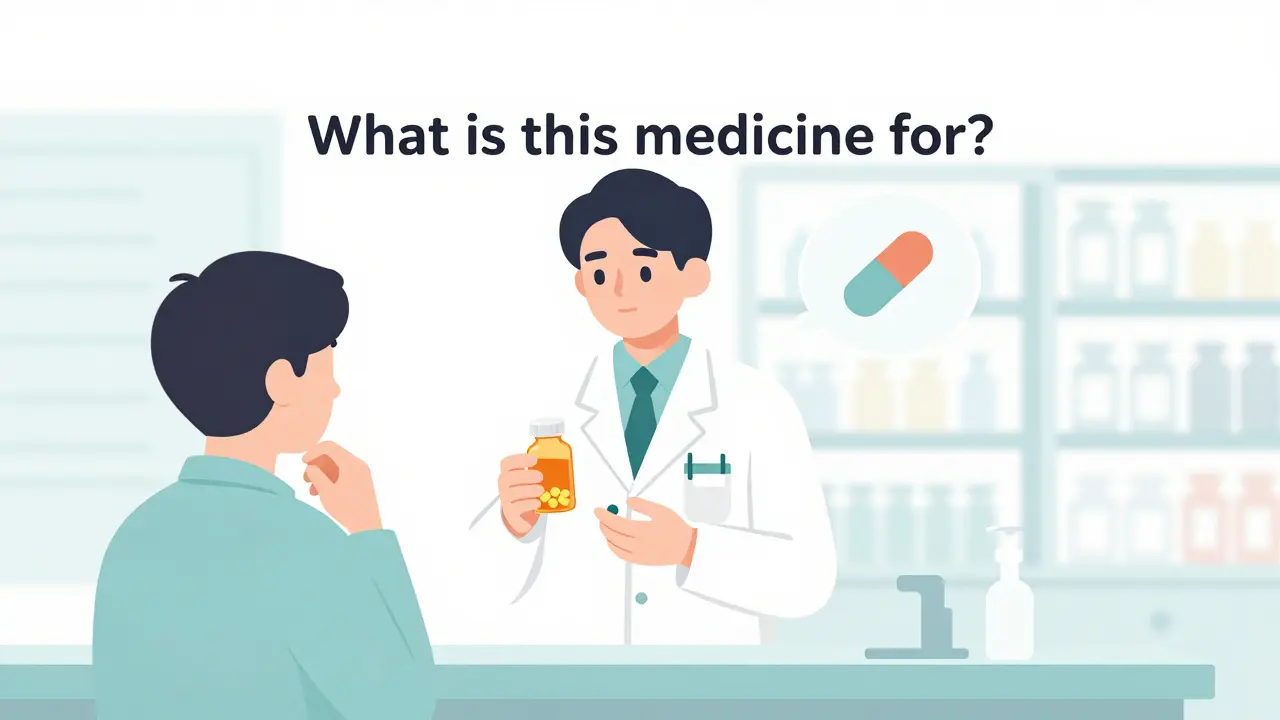
Every year, over 51 million medication errors happen in U.S. pharmacies. Most of them never reach patients-not because of machines, but because a pharmacist asked one simple question: "What is this medicine for?"
It sounds basic. But that question, asked at the right moment, catches 83% of dispensing mistakes before the patient walks out the door. That’s not luck. It’s a proven safety system built into every good pharmacy visit. And it’s the only one that checks not just the pill, but the person holding it.
Why Patient Counseling Is the Last Line of Defense
Barcode scanners catch about half of errors. Pharmacist double-checks catch two-thirds. But neither can tell if the patient thinks they’re getting blood pressure medicine when they’re actually holding insulin. That’s where counseling comes in.
The Omnibus Budget Reconciliation Act of 1990 made counseling mandatory for Medicare patients. Today, it’s standard practice everywhere-not because of regulation, but because it works. A 90-second conversation can cut error rates by nearly half. Why? Because patients notice things machines don’t. They recognize the wrong color pill. They remember their last prescription looked different. They know their body too well to accept a dose that feels off.
That’s why the Institute for Safe Medication Practices calls it a "human firewall." No algorithm can replace the moment a patient says, "This isn’t what I got last time."
The Four Critical Checks Every Pharmacist Must Do
Effective counseling isn’t just chatting. It’s a structured verification process. Experts agree on four non-negotiable steps:
- Confirm the purpose - Ask, "What condition are you taking this for?" Don’t assume. A patient might think they’re getting pain relief when it’s actually for nerve pain. Open-ended questions catch 3.2 times more errors than yes/no ones.
- Verify administration - Have the patient show you how they’ll take it. Do they think they’re supposed to crush the pill? Swallow it with grapefruit juice? A simple demonstration reveals 40% of dosing misunderstandings.
- Check the appearance - Show them the actual medication. Ask, "Does this look like what you’ve taken before?" This catches look-alike errors-like confusing levothyroxine with lisinopril-that make up 29% of all dispensing mistakes.
- Review interactions and allergies - Don’t just read the screen. Ask, "Have you had any reactions to similar drugs?" Patients often forget to mention herbal supplements or over-the-counter meds that could clash.
The American Pharmacists Association recommends using the "teach-back" method: let the patient explain the instructions in their own words. Studies show this boosts error detection by 68% compared to just giving directions.
When Counseling Works Best-and When It Doesn’t
Not all prescriptions are equal. Counseling is most powerful in high-risk situations:
- New prescriptions - Catches 91% of errors. Patients have no prior experience to compare against.
- High-alert medications - Insulin, opioids, blood thinners. One wrong dose can kill. ISMP reports 1 in 5 errors involve these drugs.
- Patients on 5+ medications - 87% of errors are caught here. Complex regimens are easy to mix up.
But counseling fails when patients are complacent:
- Refills - Only 33% of errors are caught. Patients assume everything’s the same. A change in pill shape or color goes unnoticed unless asked.
- Low health literacy - 42% of undetected errors happen here. Patients don’t know what to question.
- Time pressure - When pharmacists handle more than 14 prescriptions per hour, counseling accuracy drops from 83% to 41%.
That’s why the recommended session length is 2.3 minutes. Anything less cuts effectiveness. Yet many chain pharmacies average just 1.2 minutes-because corporate targets prioritize speed over safety.

Real Stories From the Pharmacy Floor
At CVS in 2022, a pilot program trained staff to ask, "Does this look like what you’ve taken before?" In three months, they caught 1,247 errors. One patient said their new blood thinner looked smaller than before. Turns out, the pharmacy dispensed the wrong strength. The patient was on warfarin-wrong dose could cause a stroke.
At Walgreens, their "Medication Checkpoint" protocol-showing the pill, confirming purpose, and asking teach-back questions-cut dispensing errors by 58% in one year.
But not every story ends well. On Reddit’s r/pharmacy, techs say they’re told not to "slow down the line." One pharmacist wrote: "I caught a mislabeled antibiotic yesterday. My manager said I took too long. Next time, just hand it over."
How to Make Counseling Work in Real Life
There’s no magic formula. But here’s what works:
- Use a checklist - The APhA’s 4-step model (identity, purpose, appearance, interactions) takes 2 minutes 40 seconds. Stick to it.
- Train technicians - In 42 states, pharmacy techs can do preliminary counseling under supervision. That frees pharmacists to focus on high-risk cases.
- Document everything - NABP’s 2022 standards require noting what was discussed. Pharmacies that document reduce liability claims by 44%.
- Speak plainly - No jargon. Say "take one pill every morning" instead of "QD." Avoid "anticoagulant"-say "blood thinner."
- Watch for hesitation - If a patient pauses, looks confused, or says "I’m not sure," dig deeper. That’s your red flag.
Independent pharmacies see the biggest gains. One owner told the NCPA that after implementing full counseling, their malpractice insurance dropped 19%. Patients noticed too. On Healthgrades and Yelp, 89% of reviews praised pharmacists who caught errors. One wrote: "She stopped me before I took the wrong dose. I didn’t even know I was at risk."
The Bigger Picture: Why This Matters Beyond the Counter
CMS now ties 8.5% of Medicare Part D reimbursements to counseling quality. The FDA says counseling is the best way to catch errors technology misses-especially for compounded meds, where error rates are nearly five times higher.
By 2025, ASHP aims to raise error detection through counseling from 83% to 90%. That’s possible-if pharmacies stop treating counseling as a formality and start treating it as a safety protocol.
Right now, chain pharmacies only hit 62% counseling compliance for new prescriptions. Independent pharmacies do better at 78%. But they serve fewer patients. The real win? When every pharmacy, big or small, treats the moment a patient walks up to the counter as the last, best chance to stop a mistake.
Frequently Asked Questions
How long should a patient counseling session last to catch dispensing errors?
Research shows a minimum of 2.3 minutes is needed to properly verify medication purpose, dosage, appearance, and interactions. Each additional 30 seconds reduces error rates by 12.7%. Sessions under 90 seconds cut detection rates in half.
Can pharmacy technicians help with patient counseling?
Yes. In 42 U.S. states, pharmacy technicians can perform preliminary counseling under pharmacist supervision. This allows pharmacists to focus on complex cases and high-risk medications. Technicians can confirm patient identity, ask about prior medications, and check pill appearance-but only pharmacists can review drug interactions and allergies.
Why is asking "What is this medicine for?" more effective than asking "Is this for your blood pressure?"
Closed questions like "Is this for your blood pressure?" lead to yes/no answers, even if the patient is wrong. Open-ended questions like "What is this medicine for?" force the patient to explain in their own words. This reveals misunderstandings 3.2 times more often. A patient might say "for my heart," when they’re actually supposed to take it for cholesterol.
Do patients really notice when a pill looks different?
Yes. Patients often notice changes in size, color, shape, or markings-even if they don’t know the drug’s name. This catches 29% of look-alike errors. For example, a patient might say, "My last pill was round and white, this one’s oval and blue." That could mean a generic substitution was mislabeled. Always show the patient the actual medication and ask if it matches what they expect.
Is patient counseling cost-effective for pharmacies?
Yes. Counseling costs about $0.87 per prescription. Barcode scanning costs $1.35. Pharmacist double-checking costs $2.10. Independent pharmacies that use structured counseling report 19% lower malpractice premiums. CMS now ties Medicare reimbursement to counseling quality, meaning pharmacies that do it right get paid more.
What’s the biggest barrier to effective patient counseling?
Time pressure. When pharmacists handle more than 14 prescriptions per hour, counseling accuracy drops from 83% to 41%. Corporate productivity targets often discourage thorough conversations. The solution? Use pharmacy technicians for initial checks, reduce non-essential tasks, and prioritize counseling for new prescriptions and high-risk meds.
What Comes Next
If you’re a pharmacist: Start using the 4-step checklist. Document every session. Push back on time limits that compromise safety. Your next patient might be the one who thanks you later for catching a mistake they didn’t even know was there.
If you’re a patient: Don’t be shy. Ask questions. Show the pill. Say if it looks different. If you’re unsure, say so. You’re not being difficult-you’re helping prevent a mistake.
Medication safety isn’t about technology. It’s about people talking to people. And that’s something no robot, scanner, or algorithm can replace.
Alexandra Enns
This is such a load of corporate propaganda. You think asking 'what is this for?' is magic? I worked in a pharmacy for 8 years and 90% of errors were caught by the barcode scanner. The 'human firewall' is just a distraction so pharmacists can feel important while the chain pharmacy cuts their hours to 1.2 minutes. They don't care about safety-they care about hitting KPIs. Don't buy the fairy tale.
Marie-Pier D.
I love this so much 💗 My grandma used to say 'if it doesn't look right, don't take it'-and she was right. I once watched my pharmacist pause, show her the pill, and say 'does this match what you got last month?' She said no, and it turned out they gave her a different generic. She cried. We all cried. This isn't just procedure-it's love in action. 🫂
Heather McCubbin
People think counseling is about safety but its really about control. Who gave pharmacists the right to interrogate patients like they're suspects? 'What is this for?' 'Show me how you take it?' 'Does this look right?' That's not healthcare thats surveillance with a white coat. The real problem is pharma companies changing pill colors to force brand loyalty. Stop blaming the pharmacist, blame the system
Tiffany Wagner
i just wanted to say thank you for writing this. i work in a small town pharmacy and we do the 4-step thing every time. its slow but worth it. last week a lady came in for her diabetes med and said 'this pill is yellow now?' we checked-she was right. they'd swapped her metformin for a different brand. she didn't know the difference but i did. we caught it. no scanner did. just a quiet moment and a question
venkatesh karumanchi
In India, we don't have time for 2.3 minutes. But I still ask the question. Even if I say it while handing the bottle: 'This is for your heart?' And if they nod, I say 'good'. If they hesitate, I stop. One man said 'I don't know what it's for' and I called his doctor. He had been given an antidepressant by mistake. He was 78. He hugged me. That's the real win.
lorraine england
I’ve seen this work so many times. One time a guy came in for his blood pressure med and said 'this looks different' and I said 'you’re right'-it was a different generic. He had no idea what it was supposed to do, but he knew the pill didn’t feel right. That’s intuition. That’s human. That’s what we’re missing in this automated world. Stop treating patients like robots.
Kevin Waters
This is exactly why I became a pharmacist. I used to work in a big chain where they told us to 'keep it under 90 seconds'. I quit. Now I work at a small independent where we have time. Last month we caught 14 errors in 3 weeks just by asking 'what is this for?' and showing the pill. It’s not hard. It’s not fancy. It’s just human. And it works.
Kat Peterson
OMG I CRIED READING THIS 😭 I used to be a pharmacy tech and they made us skip counseling if the line was long. One day a woman took her husband's blood thinner because she didn't ask. He had a stroke. I still think about it. We were told 'it's not our job to babysit'. But it IS. It's our job to be the last person who says 'wait'. This isn't a checklist-it's a lifeline.
Helen Leite
I think this is all a lie. The real reason they make you ask questions is so they can blame YOU if something goes wrong. Big Pharma and the government want you to think counseling saves lives so you don't ask why your meds cost $500. They're hiding the fact that 80% of errors are caused by bad labeling from manufacturers. They don't want you to know that.
blackbelt security
This is the real MVP of pharmacy. Not the robot. Not the barcode. The person who asks the question. I used to think it was just paperwork. Now I know-it’s the final checkpoint before disaster. I train my team: if they pause, you pause. If they look confused, you dig. One second of silence can save a life.
Patrick Gornik
The entire paradigm of pharmaceutical intervention is predicated on a neo-liberal myth of individual accountability. The 'human firewall' is a performative ritual that obscures systemic failure-corporate greed, algorithmic dehumanization, and the commodification of care. The question 'what is this for?' is not a safeguard, it’s a cathartic gesture masking the collapse of professional autonomy. We’ve turned healing into a compliance theater where the patient becomes the unwitting auditor of a broken system. The real error? Believing that a 2.3-minute dialogue can rectify a $1.3 trillion healthcare industrial complex.
Tommy Sandri
Thank you for this thoughtful and well-documented perspective. As someone who has worked in public health policy for over two decades, I can confirm that structured patient counseling remains one of the most cost-effective, evidence-based interventions in medication safety. The data is clear, the outcomes are measurable, and the human impact is profound. It is regrettable that operational pressures have eroded its implementation in high-volume settings. We must advocate for policy changes that prioritize patient safety over throughput metrics.