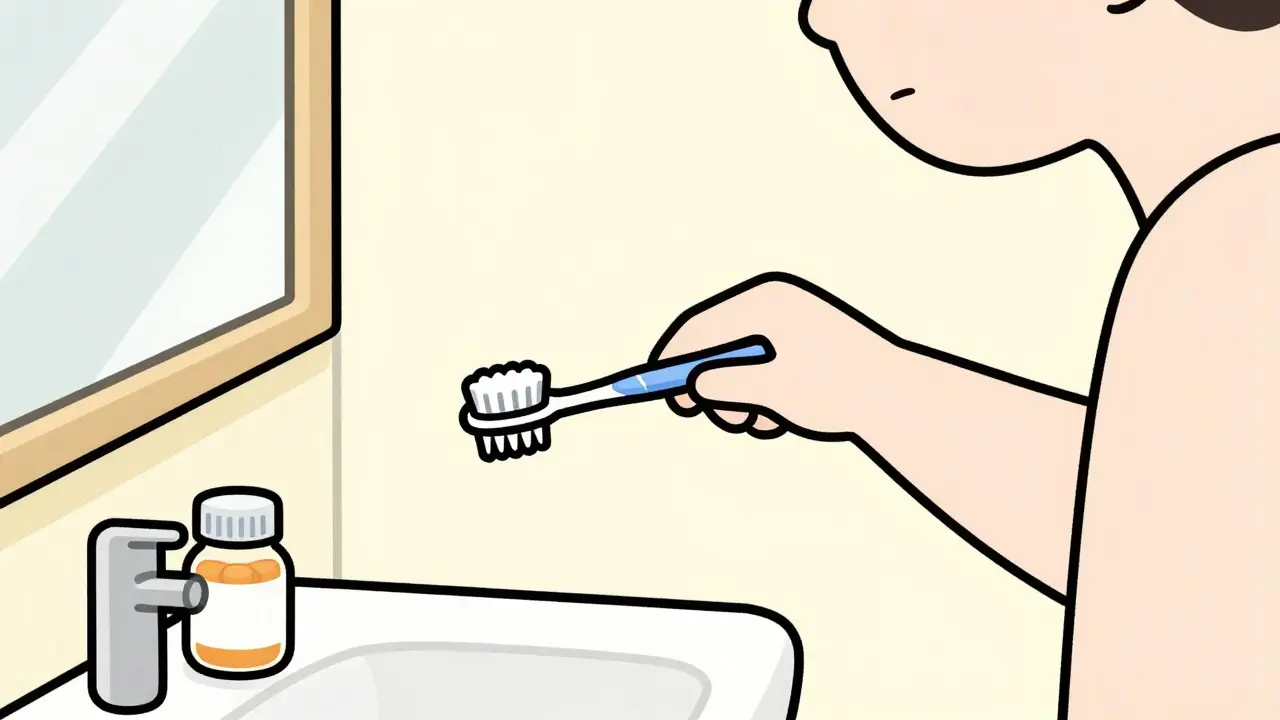
Getting your medications on time every day isn’t just about following a doctor’s order-it’s about staying healthy, avoiding hospital visits, and keeping your life running smoothly. Yet, medication adherence is one of the biggest challenges in chronic disease management. Half of all people taking meds for long-term conditions miss doses. Not because they’re careless, but because life gets messy. The good news? You don’t need to be perfect. You just need a routine that fits your life-not the other way around.
Start with what you already do
The most effective way to remember your meds is to tie them to something you already do every day without thinking. Brushing your teeth? Eating breakfast? Feeding your dog? These are your anchors. Stanford Medicine found that 78% of people who linked their meds to existing habits stuck with them longer than those who relied on alarms alone.Here’s how it works: If you take a pill in the morning, do it right after you spit out the toothpaste. If it’s an evening dose, take it right before you turn off the bedside lamp. The habit becomes automatic. Your brain doesn’t have to remember a new task-it just connects it to an old one.
Important: Not all meds can be taken with food. Some need an empty stomach. Always check with your pharmacist or doctor before pairing your pills with meals. But if it’s safe, eating breakfast with your morning meds is one of the most reliable tricks out there.
Use a pill organizer-no tech required
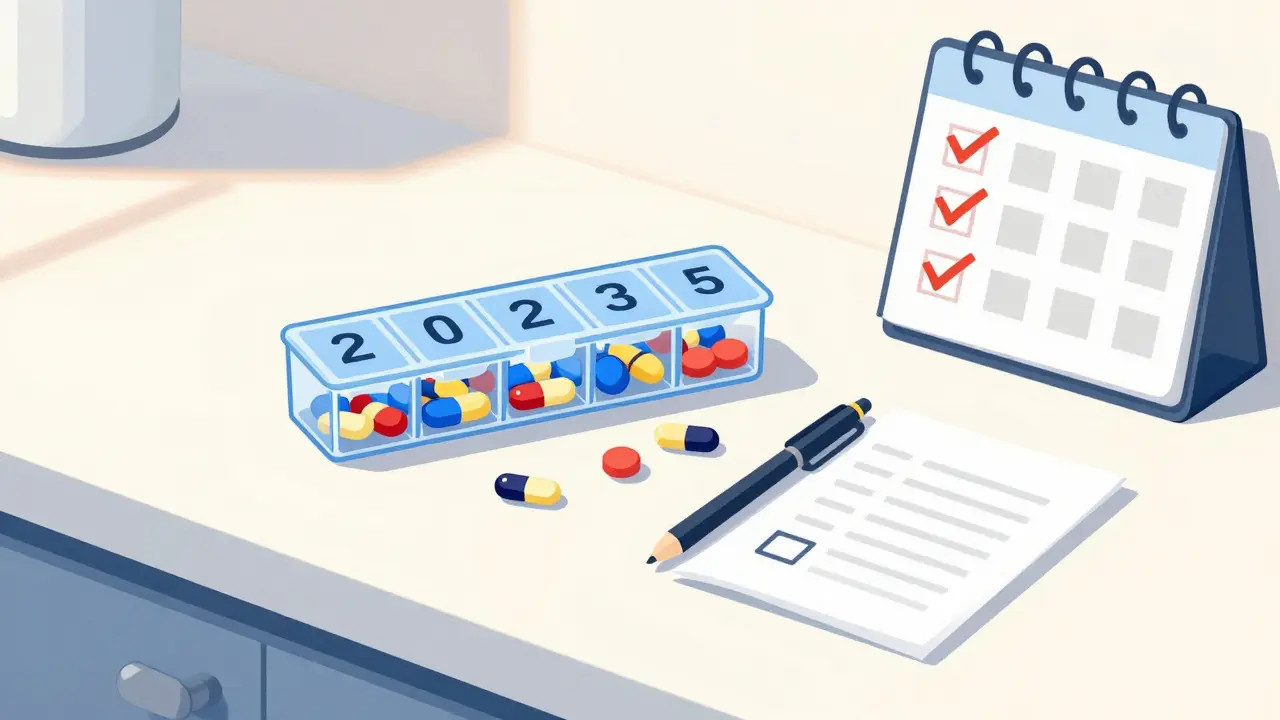
A simple weekly pill organizer with AM/PM compartments is one of the most powerful tools you can use. It’s cheap, reliable, and doesn’t need charging. American Heart Association data shows people who use these organizers reduce missed doses by up to 35% compared to keeping pills in their original bottles.Here’s the trick: Fill it every Friday night. Make it part of your weekly ritual-like doing laundry or planning meals. Put your morning pills in the top left, afternoon in the top right, bedtime in the bottom. Color-code if it helps: blue for morning, red for afternoon, yellow for night. Studies show this cuts confusion by 28%.
Don’t overcomplicate it. If you’re on four meds, get a 7-day organizer with four compartments per day. If you’re on more, talk to your doctor about simplifying your regimen. Sometimes, you can switch to once-daily versions or combine pills. Reducing the number of daily doses cuts adherence errors by 40%, according to Dr. Robert L. Page II.
Track it visually-no app needed
A paper calendar with checkmarks works better than most apps. Why? Because seeing a row of X’s builds momentum. A 2011 study in PMC found that people who marked off each dose reduced missed pills by 32%. It’s visual feedback that feels like progress.Stick it on your fridge or bathroom mirror. Every time you take your meds, grab a pen and put a big checkmark. If you miss one, don’t beat yourself up. Just mark it with a small dot and move on. The goal isn’t perfection-it’s awareness.
AdventHealth’s survey of 5,000 patients found that 76% who used this method maintained 90%+ adherence. Only 52% of those who relied on memory did the same. Your eyes remember what your brain forgets.
Set reminders-but choose the right kind
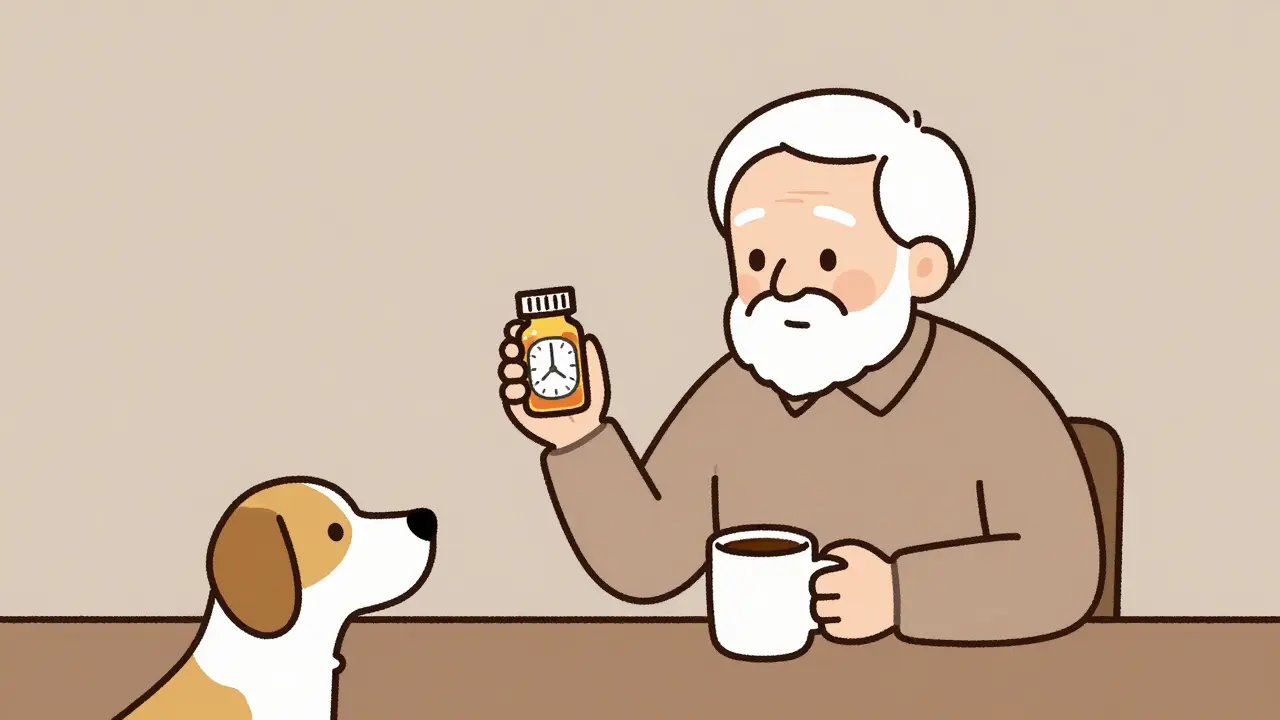
Smartphone alarms work great… if you can use your phone. For people under 65, 75% improved adherence with phone alerts. But for those over 75? That number drops to 45%. Why? Buttons get confusing. Notifications get silenced. Batteries die.Try a timer cap instead. These are bottle caps that beep when it’s time to take your meds. They work for everyone-no screen, no app, no Wi-Fi. ProMedica found they maintain 62% effectiveness across all ages. If you’re tech-savvy, use your phone. If you’re not, go low-tech. The best reminder is the one you’ll actually hear.
Some people use smart pill bottles that send alerts to family members if a dose is missed. These are helpful, but expensive and not always covered by insurance. Stick to what’s simple and repeatable.
Get help from someone else
You don’t have to do this alone. A buddy system-where you check in with a friend, partner, or neighbor-works surprisingly well. Research shows it boosts adherence by 58%. But only if the person is consistent. If your buddy moves, gets sick, or forgets, your routine can collapse.Instead of relying on someone else, try a family routine. If your partner takes meds too, do it together. Make it a shared moment-coffee and pills at 8 a.m. It turns a chore into a connection.
For those living alone, call a relative once a day just to say, “I took my meds.” No pressure. Just a quick check-in. It builds accountability without burdening anyone.
Plan for disruptions
Travel. Holidays. Power outages. Sick days. These are the moments routines break. That’s normal. The key isn’t avoiding disruptions-it’s preparing for them.When you travel, pack a 10-day pill organizer with extra doses. Keep a list of your meds and dosages in your phone and wallet. If you’re flying, keep meds in your carry-on-not checked luggage.
If you’re sick and can’t swallow pills, call your doctor. Don’t skip doses because you feel bad. Sometimes, you can crush them (if approved) or switch to liquid form.
ProMedica’s data shows 63% of patients miss doses during travel. A little prep cuts that risk in half.
Watch out for the hidden traps
Not all missed doses are accidents. Sometimes, people stop taking meds because they feel fine-or because they hate the side effects. That’s intentional non-adherence. And it’s dangerous.Feeling better doesn’t mean the medicine isn’t working. It means it is. Stopping your blood pressure pill because your head doesn’t hurt anymore? That’s how strokes happen.
Side effects like dizziness, nausea, or fatigue are common. But they’re not normal. Talk to your doctor. There’s almost always a way to adjust the dose, switch the drug, or add something to ease the side effects. Don’t suffer in silence.
And don’t ignore complex regimens. If you’re taking five pills at three different times a day, it’s no wonder you’re overwhelmed. Ask your doctor if you can consolidate. Many people can reduce their daily doses by 30-50% without losing effectiveness.
What works best-real data
Here’s what the numbers say about real-world success:| Strategy | Effectiveness | Best For |
|---|---|---|
| Pairing with toothbrushing | 72% | Morning/evening doses |
| Pairing with meals | 68% | When meds are food-safe |
| Weekly pill organizer | 35% improvement | Everyone, especially seniors |
| Medication calendar (checkmarks) | 32% fewer missed doses | Visual learners |
| Timer cap alarms | 62% | All ages, low-tech users |
| Medication journal | 78% | Those with strong memory and motivation |
| Smartphone alarms (under 65) | 75% | Tech-savvy users |
| Smartphone alarms (over 75) | 45% | Not recommended as primary tool |
The top performers? Pairing meds with habits, using pill organizers, and checking off doses. The ones that fail? Relying on memory or complex digital tools without support.
You don’t need to be perfect
The goal isn’t 100% adherence every single day. It’s 90%. Missing one dose a month? That’s still a win. Missing three? That’s a signal to tweak your system.People who stick with their routines aren’t superhumans. They’re just the ones who found a method that doesn’t feel like a chore. Maybe it’s filling your pill box while watching your favorite show. Maybe it’s your dog waiting by the kitchen door, reminding you it’s time.
Medication adherence isn’t about discipline. It’s about design. Build a routine that fits your life-and your life will stay healthier because of it.
What if I forget to take my medication?
Don’t panic. First, check the instructions on your pill bottle or ask your pharmacist. Some meds can be taken late, others shouldn’t be doubled up. If you miss a dose, take it as soon as you remember-unless it’s almost time for the next one. Then skip it and go back to your regular schedule. Never double up unless your doctor says to.
Can I use my phone’s alarm to remind me?
Yes-but only if it works for you. If you’re under 65 and comfortable with your phone, set multiple alarms with different labels: "Morning BP Pill," "Evening Cholesterol." If you’re older or easily confused by tech, a timer cap or pill organizer is more reliable. Don’t rely on alarms alone-they can be silenced, ignored, or forgotten.
How do I know if my meds can be taken with food?
Always check with your pharmacist or doctor. Some meds need an empty stomach to work properly (like antibiotics or thyroid pills). Others work better with food to avoid stomach upset (like aspirin or statins). Look for labels like "take on empty stomach" or "take with food." If you’re unsure, ask before assuming.
Is it okay to crush my pills if I have trouble swallowing?
Only if your doctor or pharmacist says yes. Some pills are designed to release slowly-crushing them can cause dangerous side effects. Others, like some blood pressure or pain meds, are safe to crush or mix into applesauce. Never guess. Always ask.
Why do I keep missing doses even though I know they’re important?
It’s rarely about forgetting. It’s about complexity, side effects, or feeling better. If you’re on five meds at three times a day, it’s overwhelming. If you get dizzy or nauseous, you might skip them to feel better. Talk to your doctor. There are often simpler regimens or alternatives. Your health isn’t worth sacrificing for a confusing routine.
Should I use a smart pill bottle?
They work-but they’re expensive and not always covered by insurance. For most people, a $10 pill organizer and a paper calendar are just as effective. Save smart bottles for when you’ve tried everything else and still struggle. They’re helpful for caregivers or if you’re at high risk for hospitalization.
Can I reduce the number of pills I take?
Yes-and you should ask. Many people take multiple pills because they’ve been added over years, not because they all still need to be taken. Ask your doctor or pharmacist to review your list. You might be able to switch to once-daily versions, combine pills, or stop one that’s no longer needed. Reducing daily doses cuts missed doses by 40%.
Next steps: Start small, stay consistent
Pick one thing. Just one. Maybe it’s filling your pill box every Friday. Maybe it’s taking your morning pill right after brushing your teeth. Do that for seven days. Then add the next habit. Don’t try to fix everything at once.Medication adherence isn’t about willpower. It’s about systems. Build a system that’s simple, visual, and tied to your life. The rest will follow.
Meenakshi Jaiswal
I started pairing my blood pressure pill with brushing my teeth after reading this and honestly? It’s been a game changer. No more guessing if I took it or not. My brain just links it now - spit, rinse, swallow pill. No alarms, no apps. Just life.
Also filled my pill organizer every Friday night like they said - turned it into a little ritual with my tea. Feels good to be on top of it.
bhushan telavane
Bro in India we just keep pills in a plastic bag in our pocket and hope for the best. No organizers, no calendars. My grandma takes 7 pills a day and she still remembers them all by smell. Maybe we don’t need all this tech. Sometimes old ways work better.
Mahammad Muradov
Most of this is common sense. If you can’t remember to take your meds, you’re not trying hard enough. No amount of pill boxes or checkmarks fixes laziness. I’ve seen people miss doses for months and then act shocked when they end up in the hospital. It’s not the system that’s broken - it’s the person.
Also, crushing pills? That’s how people end up in the ER. Don’t be an idiot.
Connie Zehner
OMG I LOVE THIS!! 😭 I’ve been using the checkmark calendar on my fridge and my husband started doing it too and now we have this whole little morning ritual where we both take our meds and hug and it’s just so emotional and healing?? 🥹 I didn’t know meds could be this bonding??
Also I got a smart pill bottle and now my daughter gets a text if I miss one and she calls me and it’s like a little love bomb 💖
Jedidiah Massey
While the behavioral anchoring framework presented here demonstrates heuristic utility, one must interrogate the epistemic validity of low-tech interventions in an era of precision medicine. The reliance on analog systems - paper calendars, mechanical timer caps - constitutes a regressive ontological stance vis-à-vis digital health ecosystems.
Furthermore, the conflation of adherence metrics with behavioral psychology lacks longitudinal granularity. A 35% improvement in pill organizer usage is statistically significant but clinically negligible without pharmacokinetic correlation. One must ask: are we optimizing for compliance or convenience?
Alex Curran
Really solid breakdown especially the part about pairing with existing habits. I’ve been using the timer cap for my statin and it’s been perfect. No phone, no battery anxiety. Just a little beep when it’s time.
Also the travel tip is gold. I always forget to pack extras until I’m halfway to the airport. Now I just throw a 10-day organizer in my toiletry bag every time I leave. Life saver.
Side note - crushing pills? Only if it’s not enteric coated. Always check the label. I learned that the hard way after my stomach screamed at me for a week.
Allison Pannabekcer
Thank you for writing this without shaming people who struggle. So many health articles make you feel like a failure if you miss a dose. But this? This feels like a hug.
I used to beat myself up for missing pills until I realized my brain was just overwhelmed. Now I take one small step - just one habit. Last week I started taking my vitamin D after my coffee. This week I’m adding the blood pressure pill after brushing. No pressure. Just progress.
And if you miss one? Put a dot. Not a guilt trip. Just a dot. You’re still trying. That’s enough.
Nicole Rutherford
Of course you're going to forget your meds if you're too lazy to set an alarm. And now you want to turn it into a 'ritual' with tea and checkmarks? Cute. Real progress is taking responsibility. Not turning your medicine into a Pinterest board.
And don't get me started on crushing pills. You think your grandma's way is better? She's lucky she's still alive.
Mark Able
Wait wait wait - I just tried the toothbrushing trick and it WORKED?! I’ve been missing my meds for years and now I take them right after I brush? I’m not even kidding - I didn’t even think about it today. It just happened.
Also I told my mom about the pill organizer and now she’s filling hers every Friday. We FaceTime while we do it. It’s weirdly sweet. Who knew meds could be this wholesome?? 😅