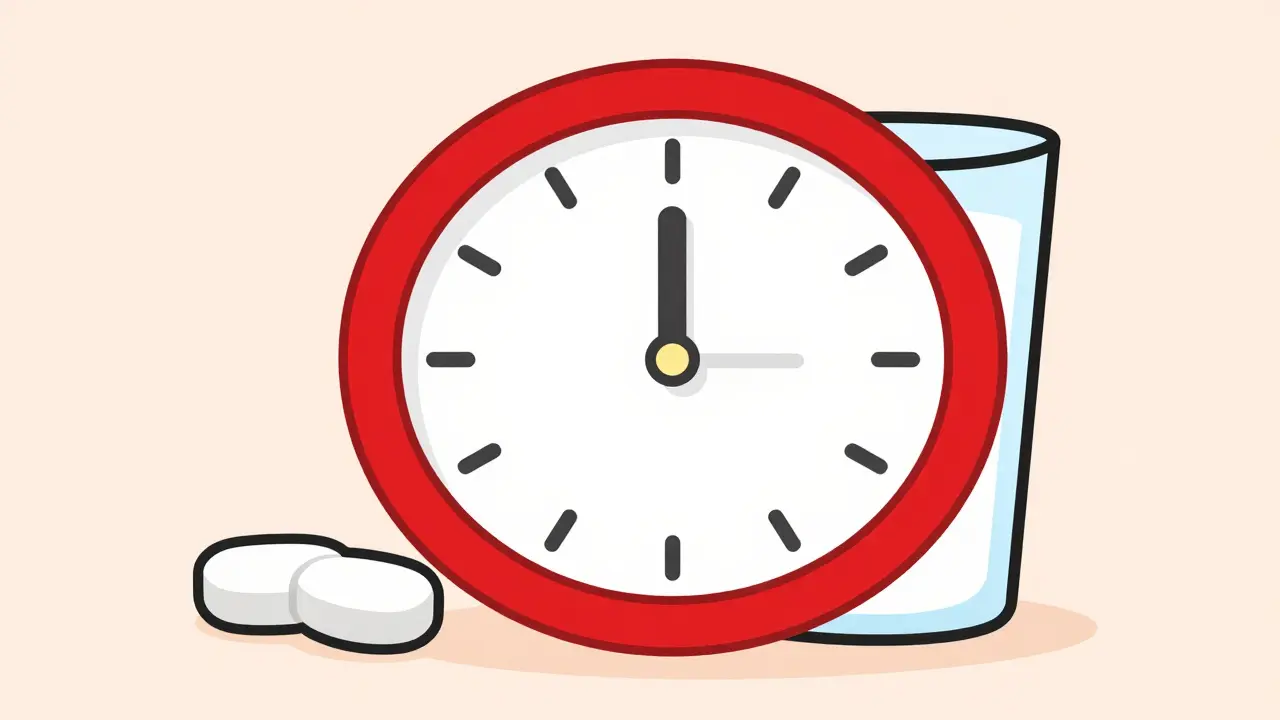
Ever taken your antibiotic with a glass of milk or a bowl of yogurt, only to wonder why your infection won’t go away? You’re not alone. For many people, this simple habit - combining dairy with antibiotics - quietly undermines treatment. The science is clear: calcium in dairy products can block your body from absorbing key antibiotics, turning what should be a cure into a frustrating, prolonged illness.
Why Dairy Stops Antibiotics from Working
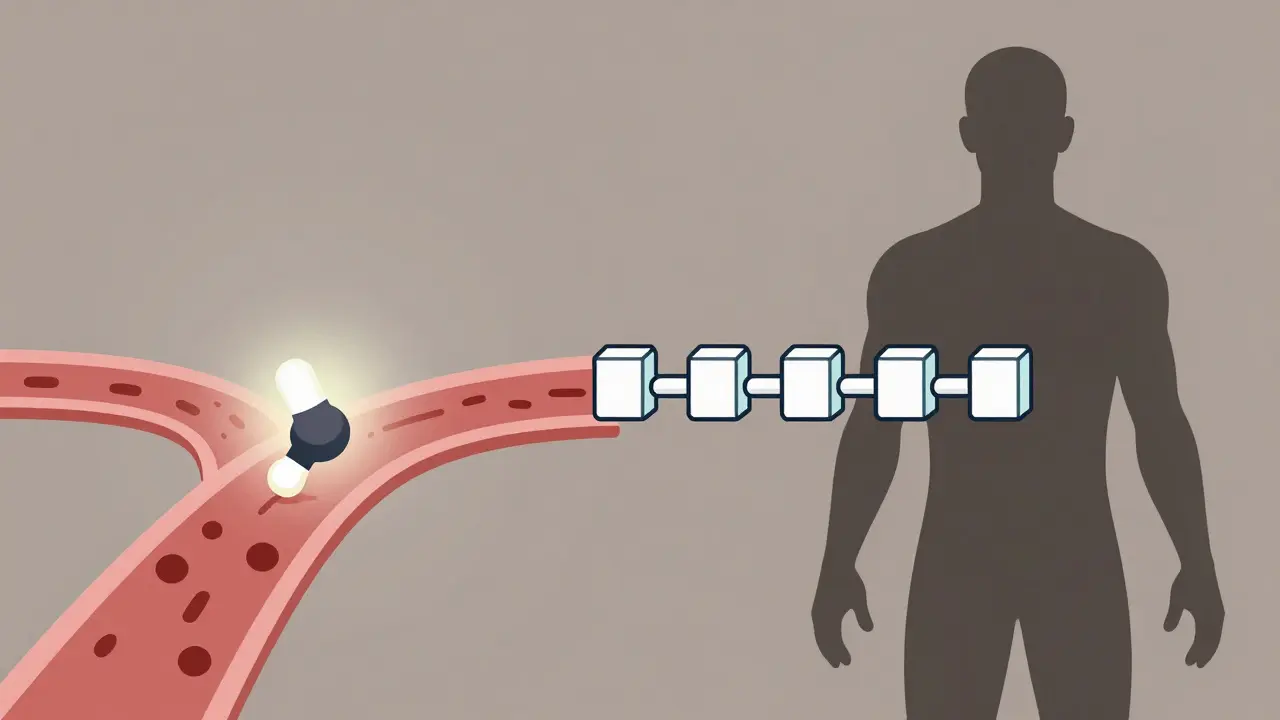
The problem isn’t about digestion or stomach upset. It’s chemistry. When you swallow a dairy product - milk, cheese, yogurt, or even calcium-fortified almond milk - the calcium ions in it bind tightly to certain antibiotics. This creates a hard, insoluble compound that your gut can’t absorb. Instead of entering your bloodstream to fight infection, the antibiotic gets stuck in your intestines and passes out of your body unused.
This isn’t a myth. It’s been documented since the 1960s. Studies show that when tetracycline is taken with milk, absorption can drop by up to 90%. Fluoroquinolones like ciprofloxacin aren’t far behind - yogurt can slash absorption by 92%. Even a single glass of milk can cut the drug’s effectiveness enough to leave bacteria alive and multiplying.
Which Antibiotics Are Most Affected?
Not all antibiotics react this way. Penicillin, amoxicillin, azithromycin, and most other common classes are unaffected by dairy. But two major groups are highly vulnerable:
- Tetracyclines: This includes tetracycline, doxycycline, and minocycline. These are often prescribed for acne, Lyme disease, and respiratory infections. Tetracycline is the most sensitive - even small amounts of calcium can ruin its absorption. Doxycycline is a bit more forgiving, but still needs space from dairy.
- Fluoroquinolones: Ciprofloxacin (Cipro), levofloxacin (Levaquin), and moxifloxacin (Avelox) fall here. These are commonly used for urinary tract infections, sinus infections, and pneumonia. Studies show milk reduces ciprofloxacin’s peak levels by 70%. Yogurt? That number jumps to 92%.
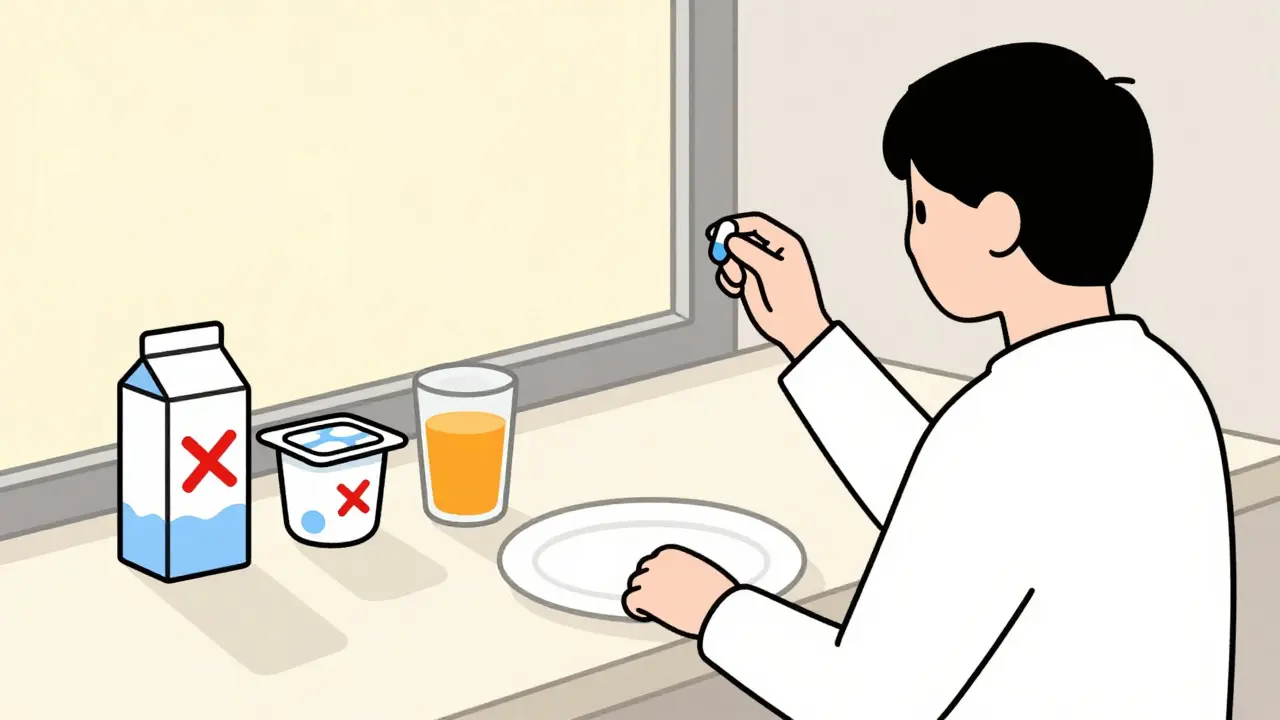
It’s not just dairy. Calcium-fortified orange juice, soy milk, almond milk, and even antacids or iron supplements can trigger the same reaction. If it has added calcium, treat it like milk.
How Much Time Should You Wait?
Timing isn’t just advice - it’s a medical requirement. The difference between 30 minutes and 2 hours can mean the difference between healing and relapse.
For tetracyclines (including doxycycline):
- Take the antibiotic at least 1 hour before eating dairy.
- Or wait at least 2 hours after consuming dairy before taking the pill.
For fluoroquinolones (like ciprofloxacin):
- Take the antibiotic 2 hours before any dairy or calcium product.
- Or wait 4 to 6 hours after eating dairy before taking the antibiotic.
Why the longer wait for fluoroquinolones? Because they bind to calcium even more stubbornly than tetracyclines. A 2022 study in the Journal of Rawal Academy of Sciences found that even with a 2-hour gap, ciprofloxacin absorption was still reduced by 30% when taken with yogurt. Four hours gives your body time to clear the calcium from your gut.
Real-Life Consequences
Patients don’t always realize what’s going wrong. A 2022 survey by the American Society of Health-System Pharmacists found that 43% of people prescribed tetracyclines or fluoroquinolones received no specific instructions about dairy. That’s alarming.
On Reddit, a nurse shared: “I had a patient on doxycycline for Lyme disease who drank milk with every dose. Her symptoms didn’t improve for weeks. We only figured it out when we asked about her morning routine.”
Another user on Drugs.com wrote: “My UTI kept coming back. My pharmacist said, ‘Stop eating yogurt 4 hours before and after your cipro.’ I did. The infection cleared in three days.”
Studies confirm this isn’t anecdotal. A 2023 study in the Journal of Patient Experience showed that when people followed the 2-hour rule for tetracyclines, treatment success jumped from 72% to 98%.
What About Breakfast? Lunch? Bedtime?
Most people take antibiotics twice a day - morning and night. That’s where timing gets tricky.
Imagine this: You take your doxycycline at 7 a.m. with a glass of water. You eat cereal with milk at 8 a.m. That’s too close. You’ve just sabotaged your dose.
Here’s how to fix it:
- Take antibiotics on an empty stomach. Best time? First thing in the morning, before breakfast. Wait 2 hours before eating anything with calcium.
- Evening dose? Take it at bedtime, but don’t have a snack with cheese or yogurt until the next morning.
- Can’t skip dairy? Move your antibiotic to mid-morning (after lunch) and take your dairy after dinner. Just keep them 2-6 hours apart.
Pharmacists recommend writing down your schedule. Put a sticky note on your fridge: “No dairy 2 hours before or after meds.” It sounds simple - but it’s the most effective tool you have.
What’s Being Done to Fix This?
Pharmaceutical companies know this is a problem. In 2023, the FDA required clearer warning labels on all tetracycline and fluoroquinolone packaging. Now, the instructions are printed right on the bottle.
Digital tools are helping too. Apps like Medisafe and MyMeds now send alerts: “Avoid dairy for 4 hours after taking Cipro.” A 2023 IQVIA analysis predicts that with better education and app reminders, non-compliance will drop from 38% to 25% by 2025.
Researchers are even testing new versions of tetracycline that resist calcium binding. But these are still in trials. For now, the old rule still holds: separation is the only reliable fix.
What If You Already Took Them Together?
If you accidentally took your antibiotic with milk or yogurt, don’t panic. Don’t double up on your next dose - that can cause side effects like nausea or dizziness.
Just skip the next dairy meal. Wait at least 2 hours (or 4 for fluoroquinolones), then take your next dose on an empty stomach. Your body will still get enough of the drug to work - especially if this was a one-time mistake.
But if you do this regularly? You’re not just risking treatment failure. You’re helping bacteria survive and adapt. That’s how antibiotic resistance starts.
Final Rule: Keep Them Apart
Antibiotics aren’t like vitamins. You can’t just take them with food and call it good. For some, dairy isn’t just a snack - it’s a barrier.
Here’s your cheat sheet:
- Take tetracyclines: 1 hour before or 2 hours after dairy.
- Take fluoroquinolones: 2 hours before or 4-6 hours after dairy.
- Avoid: Milk, cheese, yogurt, calcium-fortified juices, soy milk, almond milk, and antacids.
- Safe: Water, plain toast, eggs, fruit, meat - anything without added calcium.
If you’re unsure, ask your pharmacist. They see this every day. And if you’re prescribed one of these antibiotics, write down the timing rules. Stick them to your bathroom mirror. Make it a habit.
Because when it comes to antibiotics, timing isn’t just important - it’s everything.
Can I take doxycycline with milk?
No. While doxycycline is less affected by calcium than older tetracyclines, milk still reduces its absorption by up to 50%. Always take it at least 1 hour before or 2 hours after dairy products.
Does yogurt affect ciprofloxacin more than milk?
Yes. Yogurt can reduce ciprofloxacin absorption by up to 92%, compared to 70% with milk. This is likely due to higher concentrations of calcium and other minerals in yogurt. Always wait 4-6 hours after eating yogurt before taking ciprofloxacin.
What if I forgot and took my antibiotic with dairy?
Don’t take an extra dose. Instead, wait until your next scheduled time and take it on an empty stomach with water. Avoid dairy for the next 2-6 hours depending on your antibiotic. One mistake won’t ruin treatment - but repeated mistakes can.
Are all plant-based milks safe?
No. Many almond, soy, and oat milks are fortified with calcium - sometimes as much as dairy milk. Always check the label. If it says “calcium-enriched” or lists calcium carbonate, treat it like dairy.
Can I take calcium supplements with antibiotics?
No. Calcium supplements, antacids, and iron pills all interfere with tetracyclines and fluoroquinolones. Take them at least 2 hours before or 4-6 hours after your antibiotic. If you take calcium daily, ask your doctor if you can adjust the timing.
LiV Beau
I used to take my doxycycline with my morning oatmeal and almond milk-thought it was fine since it was 'plant-based.' Turns out that stuff was fortified with calcium. My acne got worse for months. Finally asked my pharmacist and she laughed and said, 'Honey, it’s still calcium.' Now I take it at noon with water and save the oatmeal for after dinner. Game changer. 🙌
Gene Forte
This is one of those things that should be taught in high school biology. Not just to patients, but to doctors too. So many people get prescribed these antibiotics and walk out with no clear instructions. It’s not just about adherence-it’s about systemic communication failure.
Kenneth Zieden-Weber
So let me get this straight… we’ve known since the 60s that calcium blocks absorption, but the FDA only mandated labels in 2023? And we’re still relying on sticky notes and Reddit posts to educate people? I’m not mad… I’m just disappointed. Someone’s gotta get fired over this.
Chris Bird
this is why americans are always sick. too much dairy. too much sugar. too much meds. you dont need antibiotics for a cold. just stop eating cheese.
David L. Thomas
The pharmacokinetic interaction between divalent cations and fluoroquinolones is well-documented in the literature. The chelation complex formed with calcium significantly reduces oral bioavailability. That said, the clinical significance varies by individual GI transit time and gastric pH. Still-best to err on the side of caution.
Randall Walker
I took cipro with yogurt once… then my UTI came back… then my cat got sick… then my plants died… I swear it was all connected. I now take my meds at 11pm, no food, no light, no pets, no music. Just me, the pill, and the silence. It’s not medicine… it’s a ritual.
Miranda Varn-Harper
I find it deeply concerning that this level of medical ignorance is being normalized. The fact that 43% of patients receive no guidance is not an oversight-it is negligence. We are not entitled to convenience when our actions directly contribute to antimicrobial resistance. Please, for the love of science, read the label.
Alexander Erb
I work in a pharmacy and this is hands-down the #1 question we get. 'Can I have my coffee with cream?' 'What about my protein shake?' 'Is it okay if I took it with my morning smoothie?' We keep a laminated cheat sheet by the register. Seriously. Just take your pill with water. It’s not that hard.
Donnie DeMarco
yo i took my doxy with a grilled cheese and now my face is on fire and i feel like a zombie. why is this not on the bottle? they should just put a big ol' picture of a cow with a red x over it. i’m not smart enough to read paragraphs. give me memes.
Tom Bolt
The fact that this issue persists in 2025 is nothing short of a public health scandal. Every time someone takes an antibiotic with dairy, they are not just compromising their own health-they are accelerating the collapse of modern medicine. We are on the brink of a post-antibiotic era, and it’s being fueled by breakfast routines.
Shourya Tanay
In my clinical experience, patients from cultures with high dairy consumption (e.g., North American, European) struggle most with adherence. Meanwhile, patients from regions where dairy is traditionally avoided (e.g., East Asia) show significantly higher treatment success rates. Cultural context matters as much as pharmacology.
Adam Kleinberg
I’ve been saying this for years: Big Pharma doesn’t want you to know that dairy ruins antibiotics because they’d lose billions in repeat prescriptions. Also, the calcium in milk is fake. It’s made in labs by the same people who put fluoride in water. You think this is coincidence?
Denise Jordan
I just took my cipro with a cheese sandwich. So what? I’m not gonna reorganize my whole life for a pill. I’ve had UTIs since I was 12. I’m used to it.
Bridgette Pulliam
I’m a nurse, and I’ve seen this too many times. One patient on doxycycline for Lyme kept drinking almond milk at breakfast. We finally asked if she knew it had calcium. She said, 'It says 'unsweetened' on the label.' I didn’t know whether to laugh or cry.
Mike Winter
I appreciate the clarity of this post. However, I must note that the 'Journal of Rawal Academy of Sciences' referenced does not appear to be a peer-reviewed publication. While the general advice is sound, citing non-existent journals undermines credibility. Let’s keep the science honest.