Every year, hundreds of thousands of older adults are hospitalized because of mistakes in how their medications are taken. Not because of bad doctors or faulty drugs, but because of simple, preventable errors made at home. If you’re caring for a parent, spouse, or loved one who takes multiple pills each day, you’re not alone-and you’re also the most important line of defense against these errors. The truth is, medication safety isn’t just about remembering to give the right pill at the right time. It’s about building systems, asking tough questions, and staying one step ahead of confusion, clutter, and change.
Why Medication Errors Happen (And Why You’re the Key)
Most people think medication errors happen in hospitals. But the real danger zone is the home. According to the National Alliance for Caregiving, 80% of patients taking medications at home rely entirely on family members to manage them. And the numbers are alarming: 44% of older adults take five or more medications daily. That’s a lot of pills, a lot of schedules, and a lot of room for something to go wrong. The biggest risks? Polypharmacy-taking five or more drugs at once-increases the chance of a bad reaction by 88%. Look-alike drug names like hydroxyzine and hydrocortisone cause 15% of errors. And 22% of mistakes come from mixing up units-like confusing milligrams with milliliters. Even worse, nearly half of older adults are taking at least one medication that does more harm than good, especially things like long-term proton pump inhibitors or benzodiazepines. The good news? You can stop most of these errors before they happen. Caregivers who use simple, consistent systems reduce medication mistakes by more than half.Your Medication List: The Foundation of Safety
Start here: write down every single medication your loved one takes. Not just the prescriptions. Include vitamins, herbal supplements, and over-the-counter pain relievers. For each one, write:- Brand name and generic name
- Exact dosage (e.g., 500mg tablet, 10mL liquid)
- Time of day it’s taken (e.g., 8:00 AM and 8:00 PM)
- Why it’s prescribed (e.g., "for blood pressure," "for heartburn")
- Any known side effects (e.g., "drowsy," "dry mouth")
Storage, Expiration, and the Hidden Dangers
Medications aren’t like canned food. They don’t last forever, and they don’t like heat or moisture. The FDA reports that 90% of caregivers don’t check expiration dates regularly. That’s dangerous. Expired antibiotics can fail to work. Old insulin can lose potency. And storing pills in the bathroom? That’s a recipe for mold and degradation. Store all medications in a cool, dry place-ideally between 68°F and 77°F (20-25°C). A locked cabinet in a bedroom or kitchen drawer works best. Keep them away from sunlight and humidity. Never leave pills in a car, even for a few hours. Heat can break down the active ingredients. And always check expiration dates. Set a reminder on your phone every three months. If you’re unsure whether a pill is still good, don’t guess. Call the pharmacy. It’s better to be safe than sorry.Measuring Liquid Medications Correctly
If your loved one takes liquid medicine-like antibiotics, pain relievers, or seizure meds-never use a kitchen spoon. Not even the "tablespoon" one. A 2021 study in JAMA Pediatrics found that household spoons vary in volume by 20% to 40%. That means one spoon could deliver a full dose, and the next could be dangerously under- or over-dosed. Always use a calibrated oral syringe or dosing cup that comes with the medicine. These tools are marked in milliliters (mL) and are accurate. If the syringe isn’t included, ask the pharmacist for one. They’re usually free. Keep it with the medicine. Make it part of the routine.
Pill Organizers: Your Best Friend for Memory
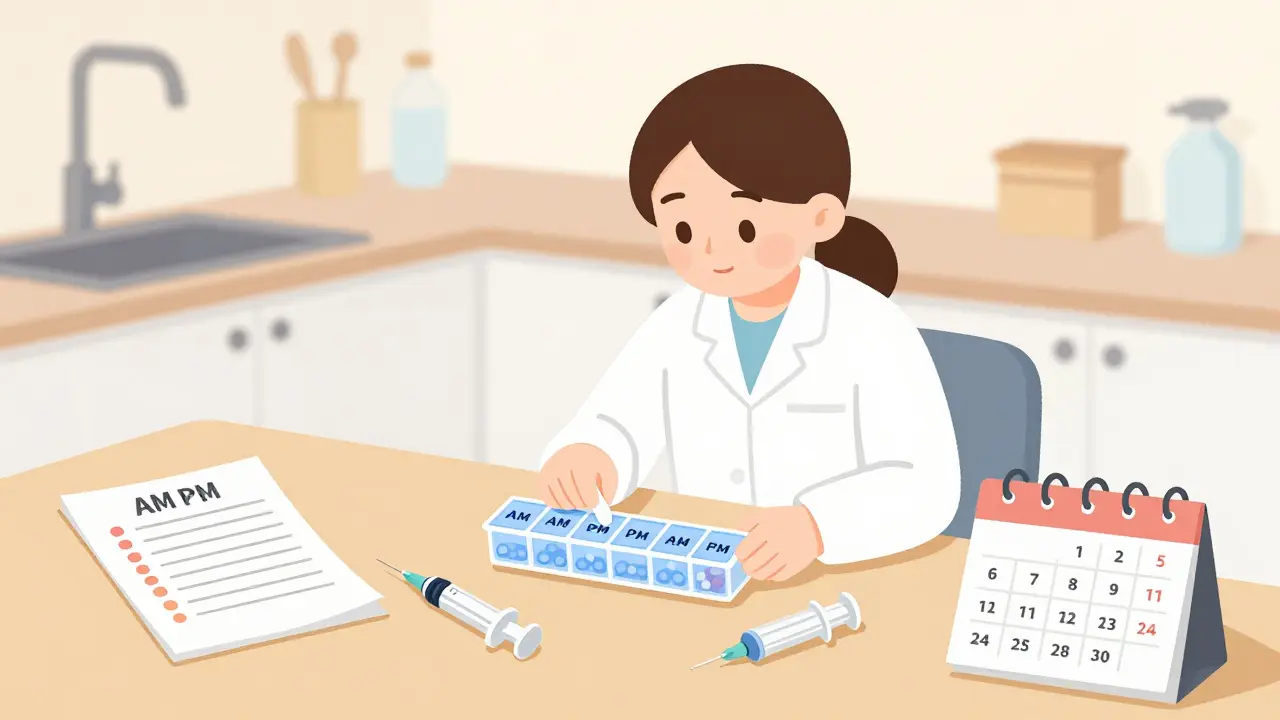
For anyone with memory issues-especially those with dementia or Alzheimer’s-a seven-day pill organizer with AM/PM compartments isn’t a luxury. It’s essential. The Alzheimer’s Association recommends them as a standard tool. And caregivers on ALZConnected say 63% of those using organizers with alarms saw better adherence. Choose one with clear labels, big print, and separate sections for morning and night. Some even have locks to prevent accidental overdose. Fill it once a week. Do it on the same day each week-like Sunday afternoons. Double-check each pill against your medication list before you put it in. If your loved one has trouble opening bottles, ask the pharmacy for easy-open caps or blister packs. Many pharmacies now offer pre-filled, single-dose packaging at no extra cost.Pharmacists Are Your Secret Weapon
Most caregivers treat pharmacists like people who hand out pills. But they’re trained medication experts. They know drug interactions, outdated prescriptions, and dangerous combinations. And they’re often the first to catch mistakes. Schedule a medication review every six months. Ask for a Medication Therapy Management (MTM) session. It’s free for Medicare Part D beneficiaries and takes about 45 minutes. During this visit, the pharmacist will:- Check for duplicate drugs
- Spot interactions you didn’t know about
- Identify medications that are no longer needed
- Explain how each drug works in plain language
Technology Can Help-But Not Always
Digital tools like Medisafe and CareZone can send reminders, track doses, and alert you when refills are due. A 2023 Caregiver Action Network survey found users reported 32% fewer missed doses than those using paper logs. But tech isn’t for everyone. Nearly 27% of caregivers over 65 said apps felt confusing or frustrating. If your loved one or you struggle with smartphones, don’t force it. Stick with paper lists, pill organizers, and phone alarms. The goal isn’t to use the fanciest tool-it’s to use the one that works.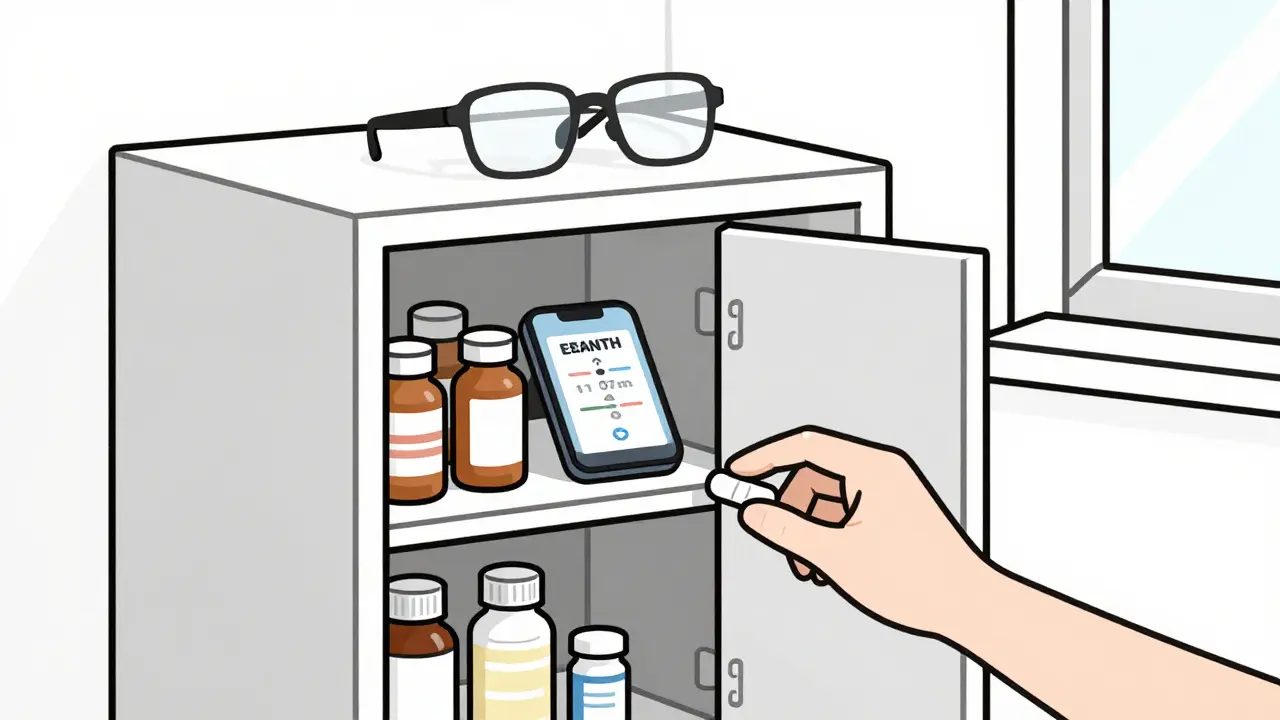
Watch for Changes During Transitions
The riskiest time for medication errors is when someone moves between settings-like leaving the hospital or going into a nursing home. Dr. Joanne Lynn’s 2022 study found that 62% of errors happen during these transitions. If your loved one is being discharged from the hospital, insist on a full medication reconciliation. That means:- Getting a written list of all medications they’re going home with
- Comparing it to their home list
- Asking: "What changed? Why? What should we watch for?"
What to Do When Something Feels Off
You know your loved one better than anyone. If they suddenly seem more tired, confused, dizzy, or nauseous-don’t assume it’s just aging. It could be a drug reaction. Keep a journal. Note:- When symptoms started
- Which medications were taken that day
- Any new pills or dose changes
Final Checklist: Your Daily Safety Routine
Make these habits part of your week:- Weekly: Check expiration dates and refill levels. Spend 10 minutes. Prevents 18% of errors.
- Every 6 months: Schedule a pharmacist review. Reduces adverse events by 28%.
- After every doctor visit: Update your medication list. Ask: "Did anything change?"
- Always: Use an oral syringe for liquids. Never guess doses.
- Always: Keep a printed, up-to-date list with you at all times.
What’s Changing in 2026?
The field is moving fast. By 2026, AI-powered smart dispensers will be more common, verifying the right person, right pill, right dose before releasing medication. Pharmacy chains like CVS and Walgreens now offer free medication synchronization-so all prescriptions refill on the same day each week, cutting missed doses by 39%. The World Health Organization’s global "Medication Without Harm" campaign is on track to reduce severe errors by 50% by 2025. And in November 2024, the Caregiver Action Network will launch the first-ever Caregiver Medication Safety Certification program-training 53 million family caregivers across the U.S. You don’t need to wait for technology or policy changes. Start today. Your list. Your organizer. Your pharmacist. Your questions. These are the tools that save lives.How many medications are too many for an older adult?
Taking five or more medications daily is considered polypharmacy and increases the risk of adverse drug events by 88% in adults over 65. The Beers Criteria identifies 30 specific drugs that are often inappropriate for older adults due to higher risks than benefits. The goal isn’t to take fewer pills at all costs, but to ensure every medication is still necessary, effective, and safe. Regular reviews with a pharmacist can help identify drugs that can be stopped or replaced.
Can I use a kitchen spoon to measure liquid medicine?
No. Household spoons vary in size by 20% to 40%, which can lead to dangerous under- or overdosing. Always use the oral syringe or dosing cup that comes with the medication. These are calibrated in milliliters (mL) and are accurate. If you don’t have one, ask your pharmacist for a free one. It’s a simple step that prevents a lot of harm.
What should I do if my loved one misses a dose?
Don’t double the next dose unless the doctor says so. Check the medication’s instructions or call the pharmacist. For some drugs, like antibiotics, missing a dose can reduce effectiveness. For others, like blood pressure pills, it might not matter much. Keep a log of missed doses and bring it up at your next pharmacist review. Using a pill organizer with alarms can help prevent future misses.
Are over-the-counter meds safe for seniors?
Not always. Many OTC drugs, like ibuprofen, antihistamines, or sleep aids, can interact with prescription meds or worsen conditions like kidney disease, high blood pressure, or dementia. Even common things like melatonin or herbal supplements can be risky. Always include OTC drugs on your medication list and ask the pharmacist to review them during every visit.
How often should I update the medication list?
Update it every time a doctor changes a prescription, adds a new drug, or stops one. Also update it after every hospital visit or pharmacy refill. Keep the list current-it’s your most important safety tool. A 2021 Mayo Clinic study showed caregivers who kept an up-to-date list reduced medication errors by 52%.
What’s the best way to store medications at home?
Store medications in a cool, dry place between 68°F and 77°F (20-25°C). A locked cabinet in a bedroom or kitchen drawer is ideal. Avoid bathrooms, cars, or windowsills, where heat and moisture can damage pills. Keep them out of reach of children and pets. Check expiration dates every three months and dispose of expired or unused meds properly-many pharmacies offer take-back programs.
Kevin Siewe
Just wanted to say this post saved my dad's life. He was on six meds, including a benzo I didn't even know he was still taking. Took the list to his pharmacist and they caught two duplicates and one interaction that was making him dizzy. We cut back to three essentials. He's sleeping better, walking steadier, and actually remembers his own name now. Simple system, huge payoff.
Jesse Hall
YES. Pill organizers are game-changers. Got my mom one with alarms and now she actually takes her meds on time. Used to hide them under the couch cushion. Now she says the beeps remind her she’s still in charge. Small wins matter.
rebecca klady
My grandma used to keep all her pills in a Tupperware in the bathroom. I found expired hydrocodone from 2018. I cried. Now everything’s locked in a drawer. Don’t let ‘it’s just a pill’ fool you. This stuff kills.
Anil Arekar
As someone who manages medication for elderly relatives in India, I can confirm that the lack of access to calibrated syringes and pharmacist consultations is a massive barrier. Many families rely on local vendors who don’t understand dosage. We’ve started printing laminated charts with pictures of pills and times. It’s crude, but it works. We need more low-cost, culturally adapted tools like this.
Donna Fogelsong
They’re selling you a checklist while the pharmaceutical industry quietly pushes more drugs on seniors. You think a pill organizer fixes the real problem? Nah. It’s Big Pharma pushing useless meds, then selling you tools to manage the mess they created. The system is rigged. Don’t be fooled by ‘safe’ labels. Your mom’s ‘heartburn’ pill? Could be making her bones brittle. Read the fine print. They don’t want you to.
Sean Bechtelheimer
AI dispensers? Yeah, right. That’s just the government’s way of tracking us. They’ll know when we take our meds, when we skip them, who we’re giving them to. Next thing you know, they’ll deny care if you ‘don’t comply.’ I’ve seen the documents. This isn’t safety. It’s control. And don’t even get me started on CVS syncing refills - they’re tracking your habits. Wake up.
Seth Eugenne
This is so well done. I’m a nurse and I wish every family had this guide. One thing I’d add - don’t just update the list. Read it out loud to your loved one. Sometimes they’ll say, ‘Oh, I stopped that last year’ or ‘That one makes me feel weird.’ You’d be shocked how often they don’t tell you. Your ears matter more than your pen.
Elaine Parra
This post is textbook liberal caregiving propaganda. You’re telling people to trust pharmacists? They’re just corporate drones pushing pills for profit. And ‘Medication Therapy Management’? That’s just a fancy term for ‘we’re gonna cut your meds so we can save money.’ My uncle’s blood pressure meds were stopped because ‘he didn’t need them’ - he had a stroke three weeks later. You’re not helping. You’re endangering people with your naive trust in systems.
Brandon Shatley
lol i just started helping my aunt with her meds and wow this is so much harder than i thought. i used a spoon once and now i feel like a monster. got a syringe now. also i had no idea you could get free pill organizers. my local walgreens gave me one for free. also i write everything down on a napkin now because i forget everything. thanks for this.
James Moreau
Just want to echo what Kevin said - reading the list out loud matters. My mom’s doctor assumed she was taking lisinopril daily. She hadn’t taken it in six months. Said she forgot. But when I asked her to explain why she took it, she looked confused. We caught it because I read the list aloud. Sometimes the body remembers what the mind forgets. Don’t skip the verbal check.