Switching to generic medications can save you hundreds - even thousands - of dollars a year. But you’re not alone if you’re worried: generic drugs sound too good to be true. Are they really the same? Could cutting costs mean risking your health?
The short answer? For most people, yes, generics are just as safe and effective as brand-name drugs. And the data backs it up. In the U.S., about 90% of all prescriptions filled in 2023 were for generics. That’s not because people are desperate - it’s because they’ve learned generics work.
What Exactly Is a Generic Drug?
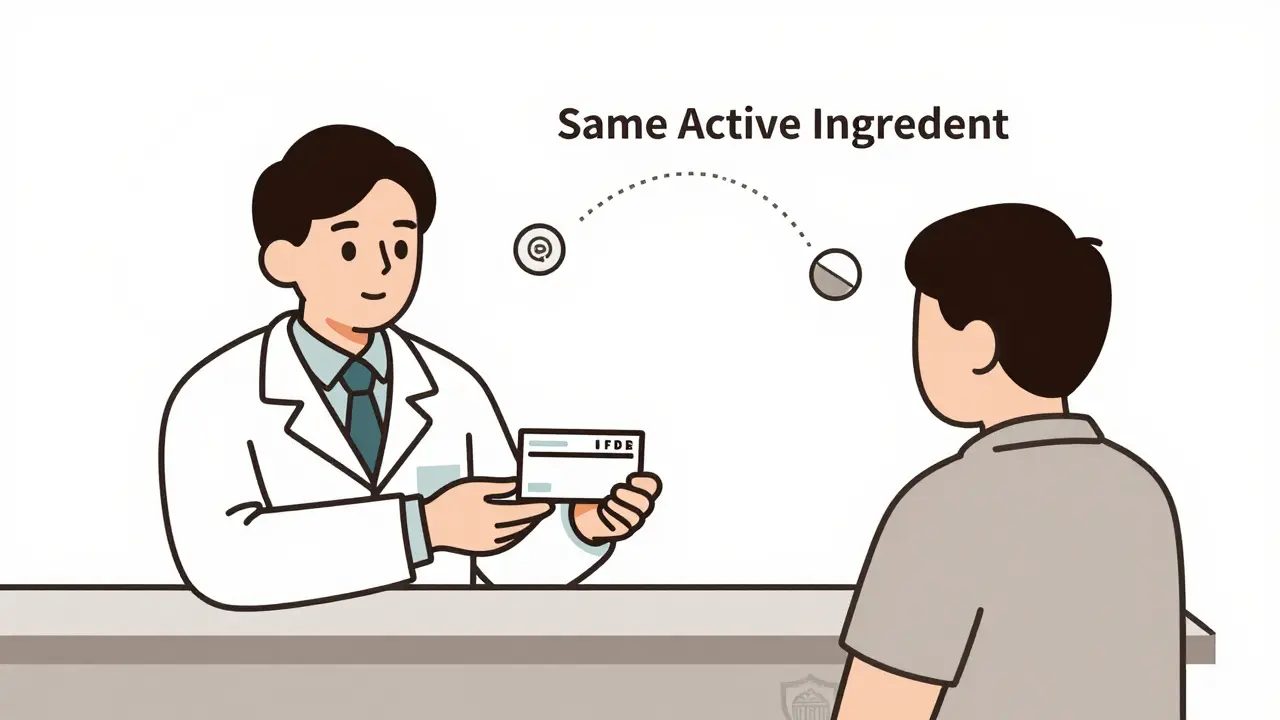
A generic drug isn’t a copy. It’s not a knockoff. It’s the exact same medicine, down to the active ingredient. If your brand-name pill contains 20 mg of atorvastatin, so does the generic. Same strength. Same dosage form. Same way it’s taken - by mouth, injection, patch, whatever.
The only differences? The color, shape, flavor, or inactive ingredients like fillers or dyes. These don’t affect how the drug works in your body. The FDA requires generics to deliver the same amount of medicine into your bloodstream at the same rate as the brand-name version. That’s called bioequivalence. For most drugs, that means the generic’s absorption must fall within 80% to 125% of the brand’s. For high-risk drugs like warfarin or levothyroxine, the range is tighter - 90% to 111% - because even small changes can matter.
And here’s the kicker: every factory making generics has to meet the same strict standards as brand-name makers. The FDA inspects over 1,800 facilities a year - domestic and overseas - and holds them to the same Current Good Manufacturing Practices (cGMP). If a brand-name plant fails an inspection, it’s shut down. So does a generic plant. No exceptions.
How Much Can You Really Save?
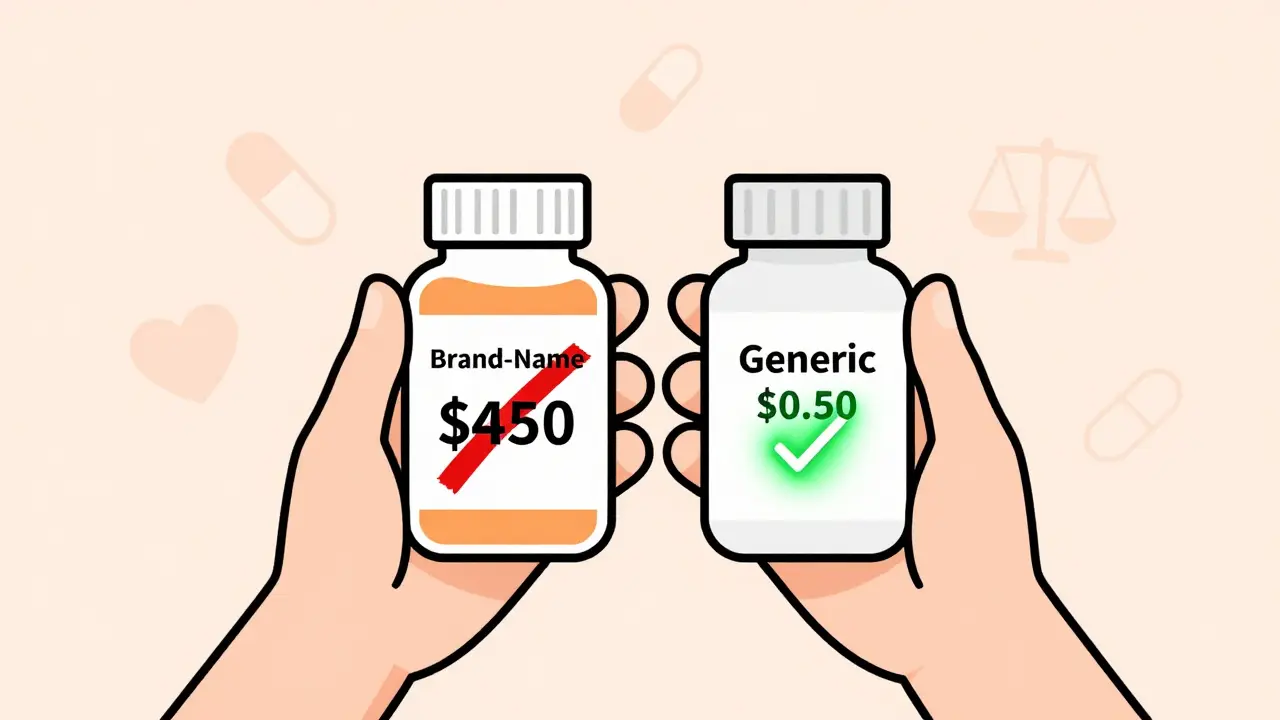
Let’s get real about the numbers. A 30-day supply of brand-name Lipitor (atorvastatin) can cost around $450. The generic? As low as $0.50 at major U.S. pharmacies. That’s not a typo. Same drug. Same effect. 99.9% cheaper.
Plavix (clopidogrel)? $380 for the brand. $1.20 for the generic. Zoloft? $400 vs. $4. Even expensive drugs like insulin and biologics are seeing cheaper generic versions - called biosimilars - now approved and rolling out.
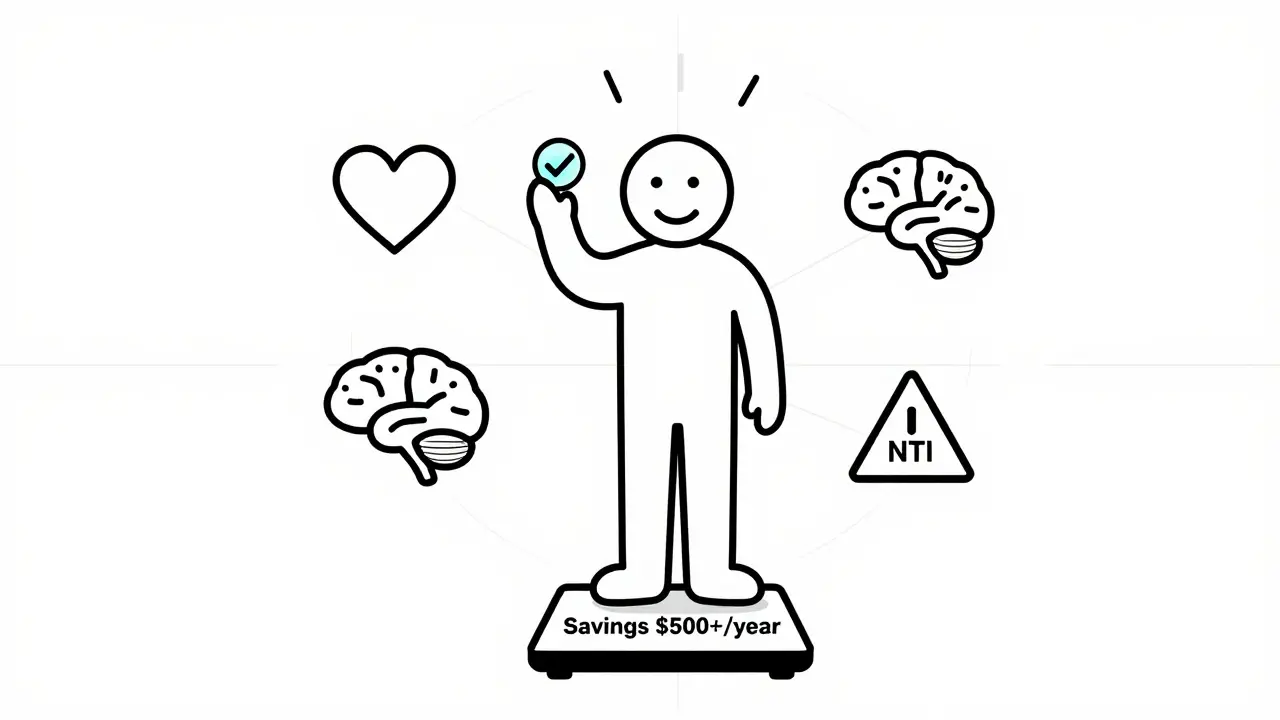
According to the Association for Accessible Medicines, generics saved the U.S. healthcare system $370 billion in 2023 alone. That’s not just corporate profit - that’s money staying in your pocket. A 2024 survey found 72% of patients saved $500 or more annually just by switching to generics. For people on fixed incomes, chronic conditions, or multiple prescriptions, that’s life-changing.
Are Generics Really as Safe?
Here’s where doubts creep in. You’ve heard stories. Someone switched to a generic and felt off. Another person had a seizure after a switch. It’s scary. But context matters.
A 2020 study in Nature Communications looked at 17 heart medications. Guess what? Generic versions were linked to fewer deaths in 10 of the 17 drugs. Fewer heart attacks and strokes too.
But there are exceptions. A 2023 meta-analysis found a slightly higher risk of major cardiac events with some generic statins - though newer 2024 research from UC San Francisco, tracking over 2 million patients, found no difference when the same generic manufacturer was used consistently.
The real issue isn’t the generic itself - it’s switching back and forth between different manufacturers. If you’re on a narrow therapeutic index drug - like warfarin, levothyroxine, or phenytoin - changing manufacturers can cause tiny variations in how your body absorbs the drug. That’s enough to throw off your INR levels or thyroid numbers. That’s why doctors often recommend sticking with one generic brand once you’ve found one that works.
For 95% of medications - blood pressure pills, antibiotics, antidepressants, diabetes drugs - generics are as safe as the brand. The FDA has reviewed over 12,000 generic applications since 2022. Every single one had to prove it works the same way. No shortcuts.
When to Be Cautious
Not all drugs are created equal. Some need extra care.
- Narrow Therapeutic Index (NTI) drugs: Warfarin, levothyroxine, phenytoin, cyclosporine, lithium. These have a tiny window between effective and toxic. Stick with one manufacturer. Don’t switch unless your doctor says so.
- Anti-seizure medications: Some studies show a small rise in seizure frequency after switching generics. If you’re stable, don’t change unless necessary.
- Thyroid meds: A Drugs.com analysis of 1,842 reviews found 23% of users reported inconsistent symptoms on generic levothyroxine vs. 8% on Synthroid. If you feel off after switching, tell your doctor. Don’t assume it’s all in your head.
That doesn’t mean avoid generics. It means be smart. If you’re on one of these drugs, ask your pharmacist: “Is this the same manufacturer as last time?” If it’s not, ask if you can stick with the one that worked.
How to Switch Smartly
Here’s how to save money without risking your health:
- Ask your pharmacist: When you pick up your prescription, ask: “Is this a generic? Is it FDA-approved? Is it from an inspected facility?” You can check that yourself on the FDA’s Drugs@FDA database.
- Check the pill: If your pill looks different - new color, shape, or imprint - look it up. The FDA’s Orange Book lists every approved generic and its manufacturer. If you see a change you didn’t expect, call your pharmacist.
- Don’t switch manufacturers often: Especially for NTI drugs. Find one generic that works, and stick with it.
- Ask your doctor: If you’re on multiple prescriptions, ask if any can be switched to generics. Many doctors assume you know to ask - but they’re happy to help.
- Use price checkers: Apps like GoodRx show you the lowest price for generics at nearby pharmacies. Sometimes the cash price is lower than your insurance copay.
A 2023 University of Michigan study found patients who got clear, simple counseling about generics from their pharmacist had 32% higher adherence and 27% fewer problems like missed doses or side effects. Knowledge is power - and savings.
What About Brand-Name Loyalty?
Some people swear by their brand. “I’ve been on Lipitor for 10 years. Why change?” Fair point. But if your brand costs $450 and the generic costs $0.50, and you’ve been fine on the generic for six months - why pay extra?
And here’s something most don’t realize: brand-name companies don’t make their drugs cheaper just because generics are around. They keep the price high. Generics force competition. That’s how prices drop.
Also, many brand-name drugs are made in the same factories as generics. The only difference? The label. Same machines. Same quality control. Same inspectors.
What’s Changing in 2026?
The FDA is pushing harder than ever to make generics more reliable. Their 2026 goal? 95% of generic applications must include data from continuous manufacturing - a modern production method that reduces batch-to-batch variation. Why? Because in 2022, 287 generic drugs had shortages, mostly due to manufacturing problems in overseas plants.
And new laws like the 2023 PRESCRIPTION Act are pushing states to require pharmacists to substitute generics unless the doctor says no. That means more access, more savings, more consistency.
Biosimilars - generic versions of complex biologic drugs like Humira or Enbrel - are now approved for cancer, arthritis, and autoimmune diseases. They’re not cheap yet, but they’re coming down in price. By 2030, they could save $300 billion.
Bottom Line
Generics aren’t a compromise. They’re a smarter choice. For the vast majority of medications, they’re identical in safety and effectiveness. The savings are massive. The risks are minimal - if you know what to watch for.
Don’t fear generics. Use them wisely. Ask questions. Stick with one manufacturer if you’re on a high-risk drug. Monitor how you feel. And never pay full price for a drug that has a generic version - unless your doctor tells you it’s medically necessary.
Millions of people use generics every day. They’re not taking risks. They’re taking control - of their health, and their wallet.
Are generic drugs as effective as brand-name drugs?
Yes, for most medications. The FDA requires generics to have the same active ingredients, strength, dosage form, and route of administration as the brand-name version. They must also prove bioequivalence - meaning they deliver the same amount of medicine into your bloodstream at the same rate. Studies show generics work just as well for blood pressure, cholesterol, depression, antibiotics, and more. The only exceptions are narrow therapeutic index drugs like warfarin or levothyroxine, where small changes can matter - and even then, switching to a consistent generic brand is usually safe.
Can generic drugs cause more side effects?
Not because they’re less safe - but sometimes because of inactive ingredients. A different dye or filler might cause a mild reaction in someone with a rare sensitivity. That’s why some people report feeling off after switching. But these reactions are uncommon and usually mild. In most cases, side effects are the same as the brand-name drug. If you notice new symptoms after switching, talk to your doctor or pharmacist. Don’t assume it’s the generic - it might be something else.
Why do generic pills look different?
By law, generic drugs can’t look exactly like the brand-name version - that’s to avoid trademark infringement. So they change the color, shape, or imprint. But the active ingredient is identical. If you notice a sudden change in appearance - say, your pill went from white oval to blue capsule - check with your pharmacist. It might be a different manufacturer. For high-risk drugs, sticking with the same manufacturer helps avoid absorption changes.
Is it safe to switch between different generic manufacturers?
For most drugs, yes. But for narrow therapeutic index drugs like warfarin, levothyroxine, or anti-seizure meds, switching between manufacturers can cause small changes in how your body absorbs the drug. That’s why experts recommend staying with one generic brand once you’ve found one that works. If your pharmacy switches your generic without telling you, ask them to stick with the same one. Consistency matters more than cost in these cases.
How do I know if my generic is FDA-approved?
All FDA-approved generics are listed in the agency’s Drugs@FDA database. You can search by drug name or manufacturer. Your pharmacist can also confirm if the generic you’re getting is approved. Look for the word “generic” on the label, and check the manufacturer name. If you’re unsure, ask your pharmacist to show you the FDA listing. Every approved generic has gone through the same rigorous review as the brand-name drug.
Do insurance plans favor generics?
Yes. Most insurance plans require you to try the generic first before covering the brand-name version. Sometimes, the brand isn’t covered at all unless your doctor files an exception. Even with insurance, the copay for a generic is often much lower - sometimes as low as $0 to $5. In many cases, paying cash for a generic is cheaper than using your insurance. Always check prices with apps like GoodRx before filling your prescription.
Are generics made in the same factories as brand-name drugs?
Often, yes. Many brand-name companies also make generic versions of their own drugs after the patent expires. Even when they don’t, the same contract manufacturers produce both. The FDA inspects all of them under the same rules. The only difference is the label on the bottle. You’re not getting a lesser product - just a less expensive one.
What should I do if I think my generic isn’t working?
Don’t stop taking it. Contact your doctor or pharmacist right away. Keep track of your symptoms - when they started, how they compare to before the switch. Your doctor might check your blood levels (like INR for warfarin or TSH for thyroid meds) to confirm the drug is working. If needed, they can request the brand-name version or a specific generic manufacturer. But don’t assume it’s the generic - sometimes other factors like diet, stress, or other medications are the real cause.
franklin hillary
Generics saved me $600 last year on my blood pressure meds. Same pill. Same results. I used to feel guilty switching until I saw the FDA data. Now I tell everyone: if your doctor doesn't mention generics, ask them why. You're literally throwing money away.
And no, your grandma's 'I felt weird after switching' story isn't science. It's confirmation bias. We're not talking placebos here.
June Richards
I switched to generic levothyroxine and my heart started racing. Like, panic attack levels. My doctor said it was 'just anxiety.' Bullshit. I went back to Synthroid and instantly felt human again. Don't let them gaslight you into thinking your body is wrong.
Lilliana Lowe
The fact that you're even asking this question reveals a profound misunderstanding of pharmaceutical regulation. The FDA doesn't 'approve' generics-they validate bioequivalence under cGMP. The real scandal is that brand-name companies pay for patent extensions while consumers pay the price. Also, 'Lipitor' is a trademark. Please use 'atorvastatin.'
vivian papadatu
I'm from India and generics are how my family survives. My mom takes three daily meds-all generic. No issues. No hospital visits. I wish more Americans realized this isn't some risky gamble-it's basic math. $0.50 vs $450? That’s not a choice. That’s survival.
Naresh L
There’s a deeper layer here. We treat medicine like a consumer product-buy low, buy fast. But the body isn’t a smartphone. There’s a quiet dignity in consistency. If a pill works, why shuffle? The system pushes change for cost, not care. I don’t trust the algorithm that picks my meds.
Lu Gao
I switched to generic Zoloft and my anxiety spiked. I didn’t realize it until I tracked my mood for 3 weeks. Turned out the new generic had a different filler. My pharmacist had no idea. Now I only take the one with the imprint 'S 20'. Don't assume all generics are equal. Research the manufacturer.
Angel Fitzpatrick
You think this is about savings? Nah. Big Pharma owns the FDA. The same people who made Lipitor now make the 'generic.' Same factory. Same employees. Same CEO. The only thing that changed? The label. You're not saving money-you're funding the same cartel. And they're laughing all the way to the bank.
Bryan Coleman
I'm a pharmacy tech. I see this every day. People panic when the pill looks different. But 99% of the time, it's fine. Just check the NDC code on the bottle. If it matches last month, you're good. If it changed? Ask. No shame in asking. We're here to help.
Sami Sahil
Bro just switch already 😎 I was paying $300 for my diabetes med. Generic? $5. Same thing. I even asked my doc. He said 'go for it.' Now I got extra cash for tacos and video games. Win win 🤝
Ishmael brown
I switched to generic and got a rash. Then my dog got sick. Then my car broke down. Coincidence? Maybe. Or maybe the generic was cursed. I'm going back to brand. And I'm buying a crystal for my medicine cabinet. Just in case. 🌟
Chris & Kara Cutler
Generics = freedom. 💸 Stop overpaying. Your health isn't a luxury brand. Go get that $0.50 pill. You earned it.
Rachel Liew
i switched to generic and felt weird at first but then i talked to my pharmacist and she said its normal for your body to adjust. now i feel better than ever. just give it time ❤️
Melissa Melville
Oh wow, so now we're supposed to be grateful for corporate greed disguised as savings? 🙄 Next they'll tell us tap water is just as good as bottled because it's 'FDA-approved.'
Deep Rank
I’ve been on generics for 12 years. 3 different manufacturers. 4 different side effects. My liver enzymes went up. My thyroid went haywire. My mood crashed. I’ve been to 5 doctors. No one listens. You think this is about money? No. It’s about control. They don’t care if you’re okay. They care if you’re quiet. And you’re being manipulated. I’m going back to brand. Even if I have to sell my car.