Imagine a constant, maddening itch that makes you scratch until your skin bleeds, especially at night. Or picture feeling so nauseous that food tastes metallic, leading to rapid weight loss because eating feels like swallowing sand. These are not just minor annoyances; they are hallmark signs of uremia, the toxic buildup of waste products in your blood due to kidney failure. For the nearly 800,000 Americans living with end-stage kidney disease (ESKD), recognizing these specific symptoms early can mean the difference between managing discomfort and facing life-threatening complications.
You might wonder why these symptoms happen suddenly or how severe they need to be before medical intervention is required. The answer lies in understanding what your kidneys are supposed to do-and what happens when they stop. This guide breaks down the two most distressing uremic symptoms: nausea and itching (pruritus). We will also clarify the confusing debate around when to start dialysis, moving beyond outdated rules to look at current clinical guidelines and real-world patient experiences.
What Causes Uremic Symptoms?
To understand the symptoms, we first need to look at the machinery behind them. Your kidneys act as your body’s filtration plant. They remove excess fluid and nitrogenous waste products like urea and creatinine. When kidney function drops significantly-specifically when the estimated glomerular filtration rate (eGFR) falls below 15 mL/min/1.73m²-these toxins accumulate in the bloodstream. This condition is formally known as uremia.
Historically, uremia was a terminal diagnosis until the invention of hemodialysis by Willem Kolff in 1943. Today, while we have treatments, the underlying mechanism remains the same: the kidneys fail to excrete metabolic waste. According to the 2023 National Kidney Foundation Kidney Disease Outcomes Quality Initiative (KDOQI) guidelines, this isn't just about one toxin. It involves a multisystem syndrome where middle molecules, such as p-cresyl sulfate and indoxyl sulfate, build up. Research from the University of California, San Francisco, published in *Kidney International Reports* (2021), shows a direct correlation (r=0.78) between elevated levels of these specific toxins and the severity of nausea.
It is crucial to distinguish between chronic kidney disease (CKD) stages. You can have advanced CKD without immediate uremic symptoms. However, once those symptoms appear, it signals that conservative management may no longer be sufficient. The presence of uremia indicates that the body’s internal environment has become toxic enough to disrupt normal organ function.
Nausea: More Than Just an Upset Stomach
Nausea is often the first red flag that many patients notice. It is not the typical stomach flu nausea. In uremia, this sensation is persistent and directly linked to blood chemistry. Data from the Chronic Renal Insufficiency Cohort (CRIC) study (2019) indicates that 92% of patients experiencing uremic nausea report its onset between 6 to 12 weeks before starting dialysis.
Why does this happen? The accumulated uremic toxins stimulate the chemoreceptor trigger zone in the brain's area postrema. This area controls vomiting. As blood urea nitrogen (BUN) levels exceed 80 mg/dL, the stimulation becomes intense. Patients frequently describe a metallic taste in their mouth, making even water unappealing. This leads to poor nutritional intake. If you lose more than 5% of your body weight over three months due to inability to eat, this is a critical clinical trigger for action.
- Common Triggers: High BUN levels (>80 mg/dL), elevated p-cresyl sulfate.
- Associated Symptoms: Metallic taste, aversion to meat/protein, bloating.
- Risk: Severe malnutrition and muscle wasting.
Ignoring this nausea can lead to a vicious cycle. Poor nutrition weakens the body, making it harder to tolerate future treatments. Therefore, managing nausea is not just about comfort; it is about preserving physical strength for the transition to dialysis if needed.
Uremic Pruritus: The Itch That Won’t Quit
If nausea affects your appetite, uremic pruritus (itching) destroys your quality of life. Also known as CKD-associated pruritus (CKD-aP), this symptom is incredibly prevalent. A 2022 meta-analysis in the *Clinical Journal of the American Society of Nephrology* (CJASN) found that between 20% and 70% of hemodialysis patients suffer from it. Among non-dialysis CKD patients, the DOPPS Phase 5 data (2022) shows a prevalence of 37.3%.
This itch is distinct from dry skin or allergies. It typically appears on large, bilateral areas of the body, such as the back, arms, and legs. Crucially, it worsens at night. StatPearls (2023) notes that 76% of affected patients experience nocturnal exacerbation, leading to severe sleep deprivation. One patient on the American Kidney Fund forum described their Fitbit sleep score dropping from 85 to 42 for six months prior to dialysis.
The cause is multifactorial but heavily linked to inflammation. Studies show that patients with uremic pruritus have significantly higher serum C-reactive protein (CRP) levels (averaging 12.7 mg/L vs. 4.2 mg/L in non-pruritic patients). Additionally, mineral bone disorder plays a role. Elevated serum phosphate (>5.5 mg/dL) and high parathyroid hormone (PTH >600 pg/mL) correlate strongly with itch severity. The International Forum for the Study of Itch (IFSI) requires that this itching persists for more than six weeks with no primary skin lesions to be diagnosed as uremic pruritus.
| Feature | Uremic Nausea | Uremic Pruritus (Itch) |
|---|---|---|
| Primary Cause | Stimulation of chemoreceptor trigger zone by toxins (PCS, IS) | Inflammation (high CRP), mineral imbalance (Phosphate, PTH) |
| Prevalence in ESKD | ~68% (Stage 5 CKD) | ~69% (Hemodialysis patients) |
| Key Lab Marker | BUN > 80 mg/dL | Phosphate > 5.5 mg/dL, PTH > 600 pg/mL |
| Impact on Daily Life | Poor nutrition, weight loss | Sleep disruption, skin damage, depression |
| First-Line Treatment | Ondansetron, dietary adjustment | Optimize dialysis adequacy, Gabapentin |

When Should You Start Dialysis?
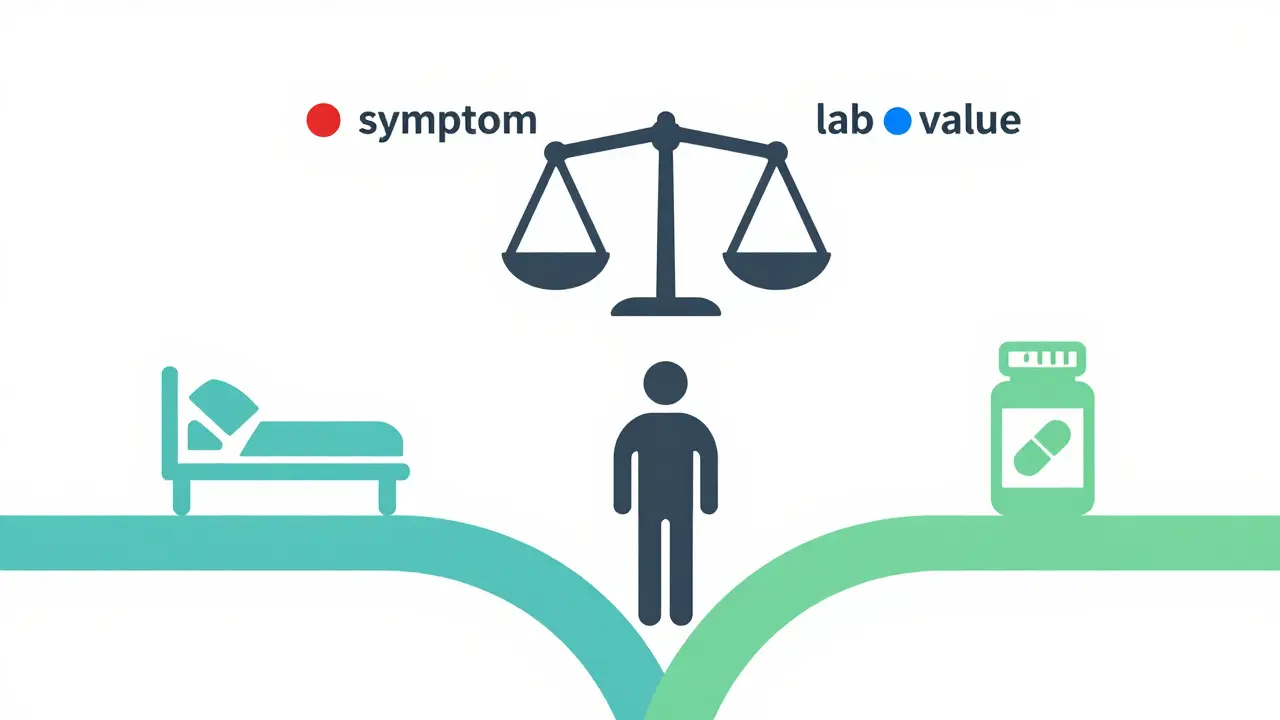
This is perhaps the most debated question in nephrology. Historically, doctors waited until symptoms were severe and life-threatening. Today, the approach is more nuanced. The decision is no longer based solely on a number like eGFR, but on the burden of symptoms.
The landmark IDEAL trial (Initiation of Dialysis Early Versus Late), followed up in the *New England Journal of Medicine* (2020), compared starting dialysis early (eGFR 10-14 mL/min) versus late (eGFR 5-7 mL/min). Surprisingly, there was no mortality benefit to starting early. In fact, quality-of-life metrics were sometimes better in the late initiation group, provided symptoms were managed conservatively.
However, "late" does not mean "waiting until you collapse." The 2023 KDOQI Controversies Conference established clear triggers for initiating dialysis. Dr. Mark Unruh, Chair of the KDOQI Workgroup, states that dialysis should begin when uremic symptoms become refractory to conservative management. Specific indicators include:
- Refractory Nausea/Vomiting: Persistent symptoms causing significant weight loss (>5% in 3 months) despite medication.
- Uremic Pericarditis: Inflammation of the heart lining, detected via echocardiography.
- Encephalopathy: Confusion, difficulty concentrating, or seizures caused by toxin buildup.
- Refractory Pruritus: Severe itching scoring >15 on the 5-D Itch Scale, unresponsive to topical and oral treatments.
- Laboratory Thresholds: Typically considered when eGFR is below 10.5 mL/min/1.73m² combined with BUN >70 mg/dL and Creatinine >8 mg/dL, though individual variation exists.
Dr. Adeera Levin emphasizes that the decision must be individualized. Some patients tolerate low eGFR well; others deteriorate rapidly. The goal is to prevent irreversible damage while avoiding unnecessary treatment burdens.
Managing Symptoms Before and During Dialysis
You do not have to wait for dialysis to find relief. There are structured protocols for managing these symptoms, outlined in the 2023 KDOQI guidelines and ERA-EDTA recommendations.
Treating Uremic Itch
The approach is tiered. First, ensure your dialysis is adequate. For hemodialysis, the target Kt/V should be ≥1.4. If you are not yet on dialysis, controlling phosphate through diet and binders is essential. If itching persists, medications come into play.
- Gabapentin: Often the first-line prescription. Starting at 100mg nightly, it can be titrated up. However, caution is needed as 39% of prescriptions exceed safe renal dosing thresholds, risking sedation.
- Difelikefalin (Korsuva): Approved by the FDA in 2021 specifically for CKD-aP. Administered intravenously during dialysis, it reduces itch scores by ~33% within 48 hours.
- Nalfurafine: Available in some regions, this kappa-opioid receptor agonist has shown significant reduction in itch severity in clinical trials.
Treating Nausea
For nausea, anti-emetics are key. Ondansetron (4mg orally three times daily) is recommended as first-line therapy. For refractory cases, domperidone may be used, but patients must be monitored for cardiac risks, specifically QTc prolongation. Dietary changes also help; smaller, frequent meals and avoiding strong odors can reduce the gag reflex triggered by uremic toxins.
Real-World Impact and Patient Voices
Statistics tell one story, but patient experiences reveal the human cost. On Reddit’s r/kidneydisease community, a user named 'DialysisDad' shared how the metallic taste made him lose 18 pounds in two months. He described eating as "swallowing sand." This level of suffering is common. The 2022 DOPPS survey found that 64% of hemodialysis patients with pruritus reported moderate-to-severe interference with daily activities, and 28% changed careers due to symptom severity.
Conversely, effective management brings hope. A case study in the *Clinical Journal of Pain* highlighted a patient whose 5-D Itch Scale score dropped from 18 to 6 within four weeks of using nalfurafine. They reported "finally sleeping through the night after 3 years." These stories underscore the importance of advocating for symptom management. Do not accept suffering as inevitable. Ask your nephrologist about newer therapies like difelikefalin or adjusted gabapentin dosing.
Healthcare disparities also play a role. A 2023 Health Affairs analysis found that Black patients experienced uremic symptoms for 3.2 months longer before starting dialysis compared to White patients, leading to higher hospitalization rates. Awareness and proactive communication with healthcare providers are vital for all patients to ensure timely care.
Frequently Asked Questions
What are the earliest signs of uremia?
The earliest signs often include persistent fatigue, mild nausea, and a metallic taste in the mouth. As toxins build up, you may notice decreased appetite and subtle changes in mental clarity. These symptoms typically appear when eGFR drops below 15 mL/min/1.73m².
Does itching always mean I need dialysis?
Not necessarily. Itching (pruritus) is a common symptom of advanced CKD but can often be managed with medications like gabapentin or phosphate binders. Dialysis is usually initiated if the itching is severe, refractory to treatment, and accompanied by other uremic symptoms like nausea or pericarditis.
Is it better to start dialysis early or late?
Current evidence from the IDEAL trial suggests no survival benefit to starting dialysis early (eGFR 10-14) versus late (eGFR 5-7). The decision should be based on symptom burden. Starting too early may expose you to unnecessary risks, while starting too late can lead to severe complications. Individualized assessment is key.
How can I manage uremic nausea at home?
Try eating small, frequent meals rather than large ones. Avoid foods with strong odors. Ginger tea or candies may help soothe the stomach. If nausea persists and causes weight loss, consult your doctor for anti-emetic medications like ondansetron.
What lab values indicate severe uremia?
While symptoms matter most, lab values provide context. Concerning levels include Blood Urea Nitrogen (BUN) >70-80 mg/dL, Creatinine >8-10 mg/dL, Phosphate >5.5 mg/dL, and Parathyroid Hormone (PTH) >600 pg/mL. These markers often correlate with severe symptoms like nausea and itching.