BP Medication Timing Advisor
How to Use This Tool
Answer these questions based on your experience with blood pressure medication to see if bedtime dosing might help reduce your side effects. Results are based on clinical research from the BedMed, OMAN, and TIME trials.
Your Symptoms
Your Medication Type
Your Health Factors
Many people with high blood pressure wake up feeling dizzy, lightheaded, or exhausted-not because their condition is worsening, but because of when they take their medication. If you’ve ever missed work because you couldn’t stand up without spinning, or avoided drinking water after lunch to dodge a bathroom run, you’re not alone. The timing of your blood pressure pill might be the hidden cause.
Why Timing Matters More Than You Think
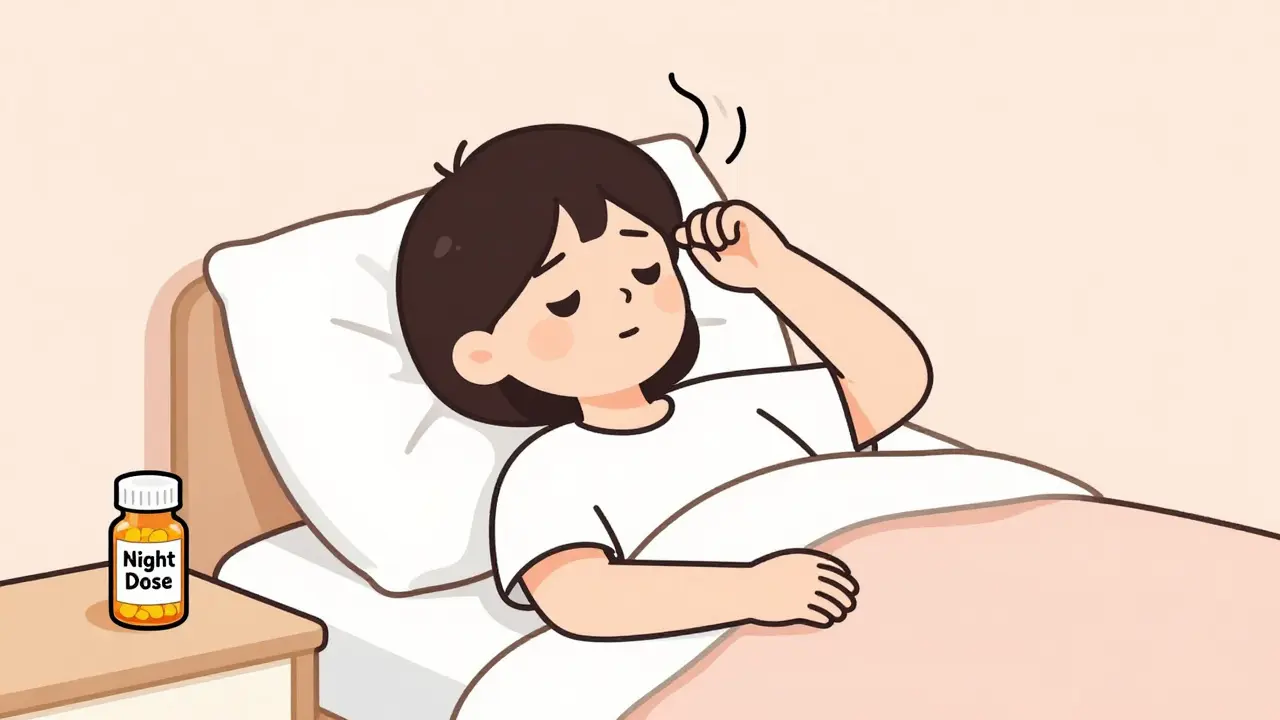
Your blood pressure doesn’t stay flat all day. It naturally dips at night while you sleep and rises in the morning as your body wakes up. That’s why some people feel fine taking their pill in the morning-until they start feeling dizzy around 10 a.m. or have to rush to the bathroom every hour. The problem isn’t the drug. It’s the timing. Studies show that taking certain blood pressure medications at night can shift when side effects happen. Instead of hitting you during your workday, dizziness, frequent urination, or fatigue might show up while you’re already in bed. That’s not ideal, but it’s often easier to manage than being dizzy at the office or while driving.The Big Studies: What the Science Actually Says
In 2024, the BedMed trial followed over 3,300 adults in Canada for nearly five years. Researchers compared morning and bedtime dosing for common blood pressure drugs like ACE inhibitors, ARBs, and calcium channel blockers. They looked at falls, fractures, cognitive decline, and dizziness. The results? No big difference in heart attacks or strokes between groups. But here’s what stood out: the morning-dosing group reported more dizziness and lightheadedness during the day. Another study, the OMAN trial in China, gave patients a combo pill (olmesartan-amlodipine) either at night or in the morning. No extra nighttime low blood pressure. No more falls. But again-morning takers had more daytime dizziness. Even the TIME study, which many thought would settle the debate, found something subtle: 22.8% of bedtime takers had falls versus 24.7% of morning takers. That difference wasn’t statistically significant, but the dizziness numbers were. And in real life, that matters.What Side Effects Actually Shift With Timing?
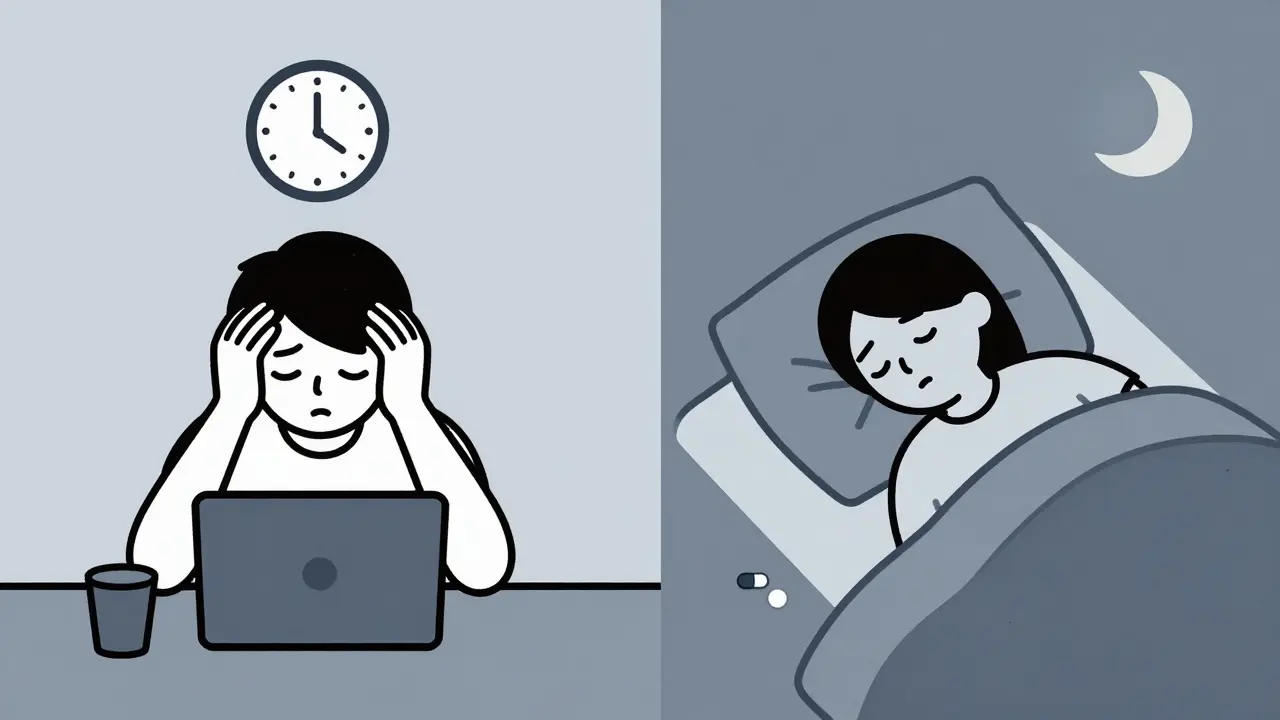
Not all side effects change with timing. But these three do, often dramatically:- Dizziness or lightheadedness: A 2023 analysis of 1,247 patient comments found that 78% of those who felt dizzy after taking their pill said it happened 2-4 hours after a morning dose. Switching to bedtime eliminated this for many.
- Frequent urination: About 36% of people on bedtime dosing reported needing to pee at night, compared to 40% on morning dosing. That sounds like a wash-but for people who work night shifts or have young kids, avoiding daytime bathroom trips is a win.
- Leg swelling (edema): This one’s tricky. Some people taking amlodipine at night reported worse swelling in their ankles, forcing them to switch back to morning. It’s not universal, but it’s real enough that your doctor should ask about it.
Who Benefits Most From Bedtime Dosing?
Bedtime dosing isn’t for everyone. But it’s a smart move if:- You get dizzy within hours of taking your pill in the morning
- You’ve been told you have nocturnal hypertension (high BP at night)-this is common in people with sleep apnea or diabetes
- You’re on an ACE inhibitor, ARB, or long-acting calcium channel blocker (like amlodipine or lisinopril)
- You’ve tried other fixes-like lowering your dose-and still feel off during the day
When Bedtime Dosing Might Backfire
There are cases where nighttime dosing makes things worse:- If you already wake up multiple times at night to pee, adding more nighttime urination can wreck your sleep
- If you have low blood pressure at night already (systolic under 110 mmHg), dropping it further can reduce blood flow to your brain
- If you’re on a diuretic (like hydrochlorothiazide), taking it at night can mean sleeping with a full bladder
What Doctors Are Doing Now
In 2022, only 28% of U.S. primary care doctors talked to patients about dosing timing. By mid-2024, that jumped to 43%. And of those who do, 67% now suggest bedtime dosing specifically to cut daytime side effects. Electronic health records show a 15% rise in bedtime dosing prescriptions since 2022, especially among people aged 45-64 who report dizziness. That’s not because the guidelines changed. It’s because doctors are listening to patients. The American Heart Association still says there’s no clear winner for heart protection. But they also say this: “Individualizing timing based on side effect profiles may improve adherence.” Translation: if you’re more likely to take your pill consistently because you’re not dizzy at work, that’s a win.What You Should Do Right Now
You don’t need a clinical trial to figure this out. Here’s your simple plan:- Check your side effect timing. Do you feel dizzy, tired, or need to pee right after taking your pill in the morning? Write it down.
- If yes, talk to your doctor about trying bedtime dosing. Don’t change it yourself.
- If you’re on a diuretic, ask if switching to morning might help avoid nighttime bathroom trips.
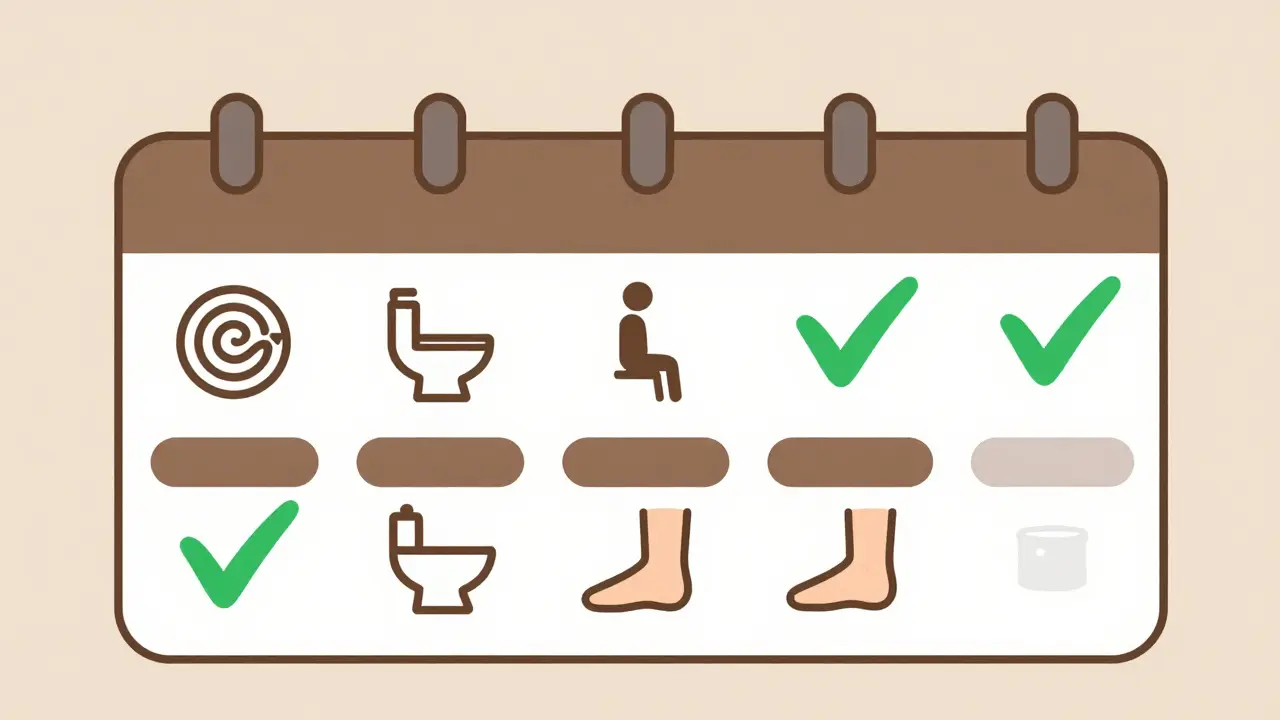
- Track your symptoms for two weeks after switching. Use a notes app or a paper log.
- Don’t give up if it doesn’t work right away. Some side effects fade as your body adjusts.
Final Thought: It’s Not About Perfect Timing. It’s About Consistent Taking.
The European Society of Cardiology summed it up best: take your pill when you’re least likely to forget. That’s the real key. If taking it at night means you don’t miss a dose because you’re not dizzy at breakfast, then bedtime wins. If you’re a morning person who forgets pills after dinner, then morning is better. Your goal isn’t to chase the perfect time. It’s to take your medicine every day without feeling awful while you do it.Should I take my blood pressure medication at night if I feel dizzy in the morning?
Yes, if your dizziness happens 2-4 hours after your morning dose, switching to bedtime may help. Studies show morning-dosing groups report more daytime dizziness. Try it under your doctor’s guidance-start with your first dose at night to see how you feel. Many people find their morning symptoms disappear.
Will taking blood pressure meds at night cause low blood pressure while I sleep?
Not usually. Research from the OMAN trial and BedMed-Frail study found no increase in dangerously low nighttime blood pressure with bedtime dosing. In fact, for people with nocturnal hypertension (high BP at night), bedtime dosing can help normalize it. But if you already have low nighttime BP (systolic under 110 mmHg), your doctor should check this before switching.
Does bedtime dosing reduce the risk of heart attacks or strokes?
The evidence is mixed. Some older studies suggested a big drop in heart events with nighttime dosing, but the largest recent trials (like BedMed and TIME) found no significant difference in heart attacks or strokes between morning and bedtime groups. The American Heart Association says timing doesn’t change cardiovascular risk. But if you feel better and take your meds more consistently, you’re indirectly lowering your risk.
I take a diuretic. Should I still try bedtime dosing?
Probably not. Diuretics like hydrochlorothiazide increase urine production. Taking them at night can lead to frequent bathroom trips, which can disrupt sleep and raise fall risk in older adults. For these meds, morning dosing is usually better unless your doctor recommends otherwise.
How long should I wait to see if bedtime dosing works?
Give it at least 7-14 days. Some side effects fade as your body adjusts. Track your symptoms daily: note dizziness, sleep quality, bathroom visits, and energy levels. If you feel better after two weeks, stick with it. If you get worse-like worse swelling or sleep disruption-go back to morning and talk to your doctor.
Kacey Yates
Finally someone gets it. Took my lisinopril at night after 6 months of dizziness at work and holy hell it's like a new life. No more 10am panic spirals. My boss thought I was drunk. Now I just nap if I'm tired. Easy fix. Why don't doctors tell you this?
Keith Oliver
Look I respect the science but this is just another corporate pharma ploy to sell more meds. You know who benefits from bedtime dosing? The guys who make those fancy pill dispensers. Also, who even takes BP meds at night? I take mine with my coffee. It's ritual. Ritual matters more than data.
DHARMAN CHELLANI
Bedtime dosing? Lmao. You're just lazy. If you can't handle a little dizziness you shouldn't be on meds at all. Just quit. Or get a better job. Not everyone can afford to nap at 10am.
Laura Arnal
This changed my life 😭 I used to dread mornings. Now I sleep through the night and actually enjoy coffee. Thank you for sharing this. Seriously. 💙
ryan Sifontes
Why are we even discussing this? The real issue is the system. Doctors don't care. They just write scripts. You think they read studies? Nah. They watch ads. I took my meds at midnight for a week. Woke up with my leg swollen like a balloon. Now I'm back to morning. And I'm mad.
Sheryl Dhlamini
My mom tried this. Switched to bedtime. Started hallucinating at 3am because she thought the cat was talking to her. She's 78. She went back to morning. I'm not saying it doesn't work. I'm saying... maybe don't try it alone. Like, at all.
Pawan Kumar
It is imperative to note that the BedMed trial, while statistically robust, suffers from significant selection bias. The cohort was disproportionately composed of urban, middle-class individuals with access to consistent healthcare-thereby rendering the findings inapplicable to the global majority. Furthermore, the omission of socioeconomic confounders such as sleep hygiene, dietary sodium intake, and ambient temperature regulation undermines the validity of any causal inference. One must approach such studies with epistemological humility.
Alex Flores Gomez
Ugh I hate when people treat this like its a magic switch. I tried bedtime. Got dizzy at 2am. Then I got mad. Then I took my pill at 8pm. Then I took it at 10pm. Then I just started skipping it on weekends. Who cares? I'm alive. That's the only metric that matters.
Frank Declemij
Consistency is king. I take mine at 8pm every day. No variation. No guesswork. My BP log shows zero variability since I started. If you're having side effects, it's not the time. It's the dose. Talk to your doctor about adjusting the milligrams. Not the clock.
Jasneet Minhas
India: 120 million people with hypertension. USA: 110 million. But only Americans get to have bedtime dosing debates. Meanwhile, my uncle takes his pill with chai at 6am and says ‘God will decide’. He’s 84. Still walks 10km daily. Maybe we’re overcomplicating this?
Eli In
As someone from a culture where elders take meds whenever they remember (usually after lunch), this whole conversation feels so Western. But honestly? I get it. I had a friend who got dizzy every time she stood up after her morning pill. She switched to night. Now she dances at her granddaughter's birthday parties. So… if it helps, why not? 🌙✨
rajaneesh s rajan
So we’re all just doing a collective optimization of our dizziness? Like a wellness algorithm? We’re not treating hypertension. We’re curating a symptom-free experience. Welcome to the age of pharmaceutical UX design. I’m just here for the memes and the nap schedules.
kabir das
But what if... what if... the real reason people feel better at night is because they're not taking their meds at all? What if they're just forgetting? What if the whole study is just a placebo effect wrapped in a lab coat? I've seen people take their pills... then throw them in the toilet. And then say they 'feel better'. What if the real cure is... not taking them?!