What Type 1 Diabetes Really Is
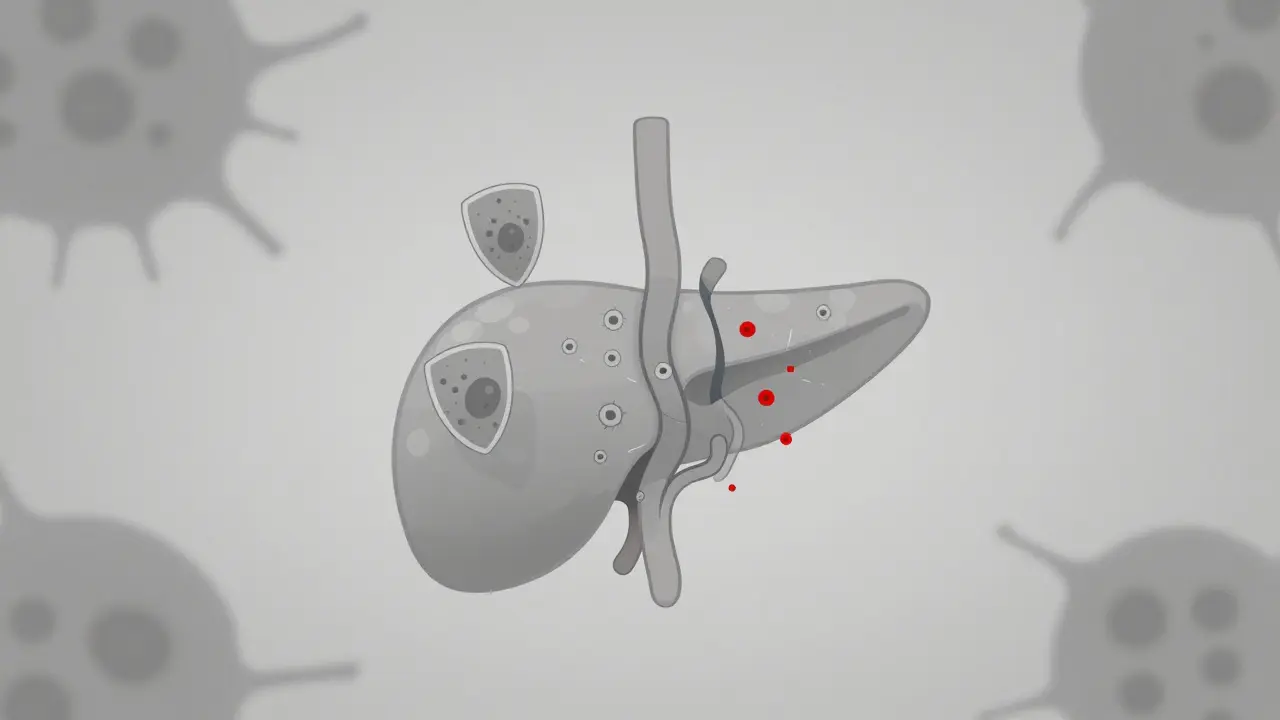
Type 1 diabetes isn’t just about high blood sugar. It’s an autoimmune war inside your pancreas. Your immune system, which normally fights off viruses and bacteria, turns on the insulin-producing beta cells in your islets. These cells are destroyed-sometimes over months, sometimes over years-until your body can’t make enough insulin to survive. At diagnosis, most people are producing less than 5% of the insulin they once did. That’s why insulin shots or a pump aren’t optional-they’re life support.
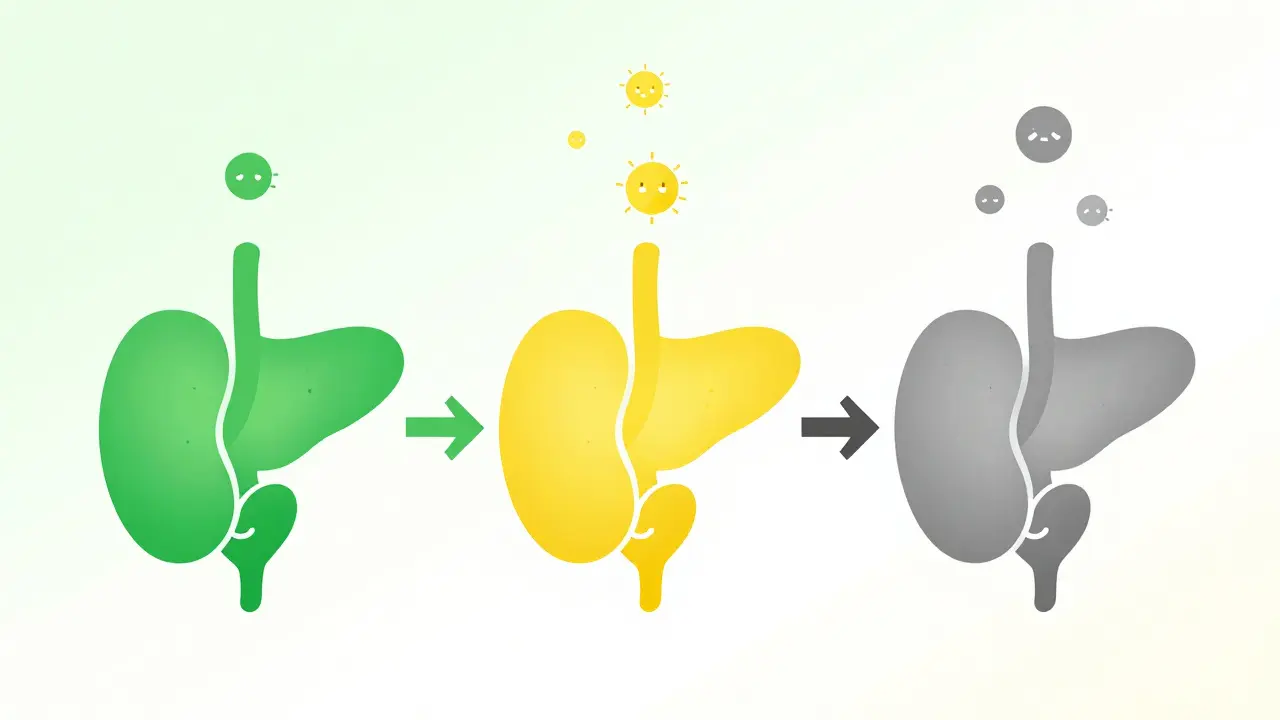
The process doesn’t start with symptoms. It begins silently. Two or more autoantibodies-targets like GAD65, IA-2, or ZnT8-show up in the blood years before anyone feels sick. This is Stage 1. Then comes Stage 2: blood sugar starts to climb, but you still feel fine. By Stage 3, you’re thirsty, losing weight, and dizzy. That’s when insulin becomes urgent.
Why It’s Not Just ‘Juvenile Diabetes’ Anymore
People used to call it juvenile diabetes because it often showed up in kids. But today, nearly half of new Type 1 diagnoses happen in adults. Some are misdiagnosed as Type 2 for months-or even years-because doctors assume obesity and age mean insulin resistance, not immune destruction.
That’s dangerous. Type 2 diabetes is managed with diet, metformin, and sometimes weight loss. Type 1? It’s a total insulin shutdown. If you’re an adult with unexplained weight loss, frequent urination, and fatigue-and you’re not overweight-you could be one of the 12% of adults with Type 1 who were wrongly labeled as Type 2. A simple C-peptide test can tell you if your body is still making insulin. Levels below 0.2 nmol/L mean you’re in the Type 1 camp.
There’s also LADA-Latent Autoimmune Diabetes in Adults. It’s slower. You might go months without insulin. But it’s still Type 1. The immune system is still killing your beta cells. The only difference? The pace. And that matters because treatment needs to match the reality, not the stereotype.
The Pancreas Isn’t Just a Sugar Regulator
Your pancreas does two things: makes insulin (endocrine) and digestive enzymes (exocrine). Type 1 diabetes attacks the endocrine side. But in rare cases-about 1 in 300-it also hits the exocrine side. That’s autoimmune pancreatitis (AIP). It’s not common, but when it happens, you might have belly pain, bloating, or trouble digesting food.
AIP is diagnosed with imaging, IgG4 blood levels, and sometimes a biopsy. If you have both Type 1 and AIP, you need steroids to calm the immune attack on your pancreas. But steroids raise blood sugar. So your insulin dose might need a big jump. This isn’t theoretical. It’s documented in case reports and registries. If you’ve had Type 1 for years and suddenly start having digestive issues, ask your doctor about pancreatic enzyme testing. About 5-10% of long-term Type 1 patients develop exocrine insufficiency.
How Management Has Changed in the Last Five Years
For decades, managing Type 1 meant finger pricks, carb counting, and guessing insulin doses. Now, it’s tech-driven. Continuous glucose monitors (CGMs) like the Dexcom G7 give real-time readings and alerts. They don’t just track sugar-they predict drops before they happen.
Insulin pumps have gotten smarter. Tandem’s Control-IQ and Medtronic’s 780G are closed-loop systems. They read your glucose, calculate insulin needs, and deliver it automatically. In the 2022 JAMA study, users spent 71-74% of the day in target range (70-180 mg/dL). That’s up from 51-55% with older pumps. For parents of kids with Type 1, this isn’t a luxury-it’s peace of mind.
And the data backs it up. The 2023 T1D Exchange Registry found that 78.5% of kids using automated systems hit over 70% time-in-range. Only 29.3% of those on multiple daily injections did. The gap isn’t small. It’s life-changing.
Breaking the Insulin Cost Crisis
Insulin isn’t just medicine. It’s a financial burden. In the U.S., the average Type 1 patient spends $9,601 a year on insulin alone. That’s 33% of their total diabetes costs. Many people ration insulin. Some die because they can’t afford it.
There’s a reason: insulin analogs (like insulin glargine or aspart) cost 3-5 times more than human insulin. But human insulin still works. It’s just not marketed as aggressively. Some patients on Medicaid or in Canada use human insulin successfully. It’s not glamorous, but it saves lives.
And the global insulin market hit $27.3 billion in 2022. That’s billions in profits. But for people living with Type 1, the cost isn’t abstract. It’s a choice between food and insulin. That’s why insulin affordability is now a core part of diabetes advocacy-not just a side issue.
The New Frontier: Stopping the Autoimmune Attack
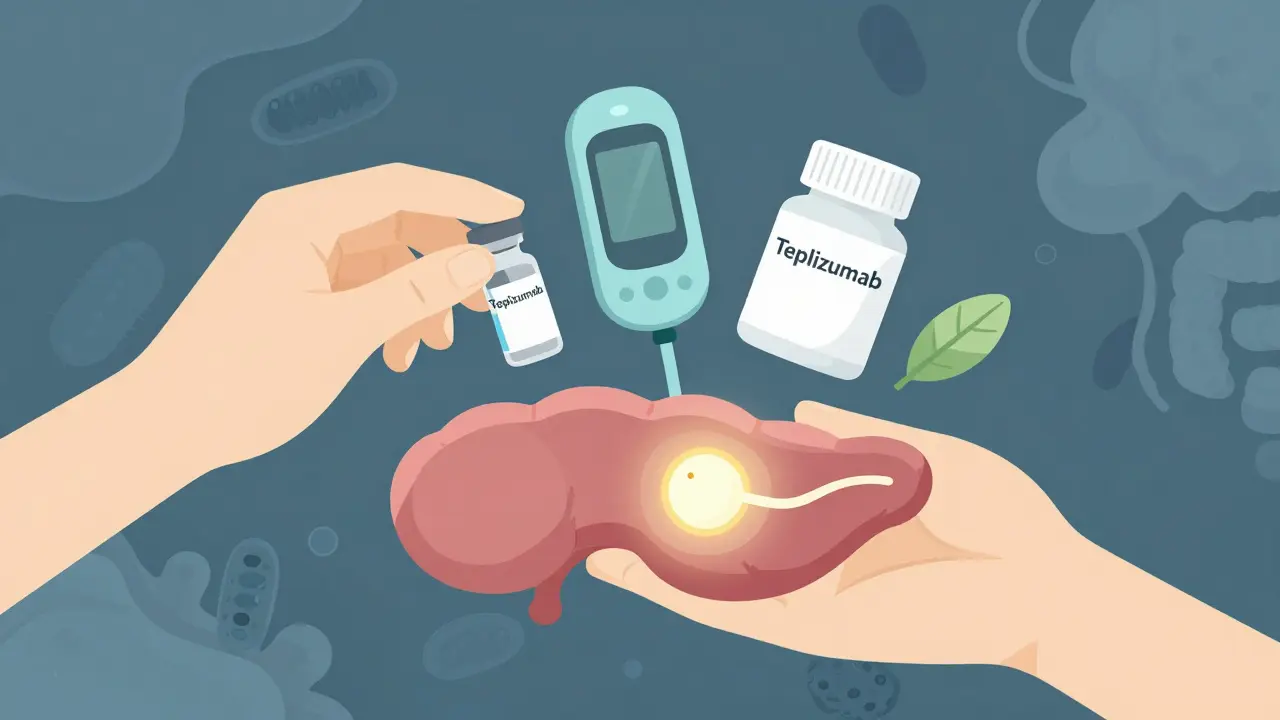
For years, doctors thought Type 1 was untreatable beyond insulin. Then came teplizumab (Tzield). In 2022, the FDA approved it as the first drug to delay Type 1 diabetes onset. It’s not a cure. But in the PROTECT trial, it pushed diagnosis back by nearly 2.5 years in people with Stage 2 disease.
Teplizumab works by calming the immune cells that attack beta cells. It’s given as a 14-day IV infusion. It’s not for everyone-it’s only for those with two or more autoantibodies and abnormal glucose levels but no symptoms yet. But for families with a genetic risk, it’s a game-changer.
Other drugs are coming. Abatacept, which blocks T-cell activation, slowed beta-cell decline by 59% in recent-onset patients. Verapamil, a blood pressure drug, preserved more insulin production in a 2022 trial. And Vertex’s VX-880 stem cell therapy gave insulin independence to 89% of 12 patients in a 2023 trial. These aren’t sci-fi. They’re real, and they’re happening now.
What’s Next: Combination Therapy
The future isn’t just insulin or one drug. It’s combo therapy. The 2024 ADA/EASD guidelines say the next step is hitting the autoimmune attack and helping surviving beta cells recover.
Imagine a drug that stops the immune system from killing beta cells, plus a pill that helps those cells work better. That’s the goal. Research into the gut-pancreas axis is showing that people with Type 1 often have less of a gut bacteria called Faecalibacterium prausnitzii. This bug makes butyrate, which helps reduce inflammation. Could probiotics or fiber-rich diets help? Early studies say maybe.
And the NIH’s TrialNet is running 15 active trials right now-testing everything from oral insulin to vaccines. The message is clear: Type 1 diabetes is no longer a sentence. It’s a condition we’re learning to prevent, delay, and eventually reverse.
What You Need to Know Today
If you or someone you love has Type 1 diabetes:
- Get a C-peptide test if you’re unsure of your type-especially if you’re an adult.
- Ask about CGMs and automated insulin delivery. They’re not just for tech lovers-they’re for safety and stability.
- Know your insulin costs. Talk to your doctor about human insulin if you’re struggling to afford analogs.
- If you have unexplained digestive issues, ask about exocrine pancreatic function.
- If you’re at risk (family history, autoantibodies), ask about teplizumab. It’s not for everyone, but it’s an option now.
Type 1 diabetes is an autoimmune disease of the pancreas. It’s not your fault. It’s not your lifestyle. But with the right tools, knowledge, and support, you can live fully-without fear.
Can Type 1 diabetes be reversed?
Currently, there’s no cure for Type 1 diabetes. But in rare cases, people experience a "honeymoon phase" after diagnosis where the pancreas still makes a little insulin. With careful management, this can last months or even years. Emerging therapies like teplizumab can delay progression, and stem cell transplants (like Vertex’s VX-880) have restored insulin production in early trials. But these are not yet widely available. The goal today is to preserve function and prevent complications-not reverse the disease entirely.
Is Type 1 diabetes caused by diet or lifestyle?
No. Type 1 diabetes is an autoimmune disease triggered by genetics and environmental factors like viral infections-not by eating too much sugar or being inactive. While diet affects blood sugar control, it doesn’t cause the immune system to destroy beta cells. This is a common myth that causes guilt and misunderstanding. People with Type 1 didn’t do anything wrong.
Can you outgrow Type 1 diabetes?
No. Type 1 diabetes is lifelong. Even if you’re in a honeymoon phase and don’t need much insulin, your immune system is still attacking beta cells. Stopping insulin can lead to diabetic ketoacidosis, a life-threatening condition. Some people may need less insulin over time, but they still require it to survive. Claims of "outgrowing" Type 1 are misleading and dangerous.
What’s the difference between Type 1 and Type 2 diabetes?
Type 1 is autoimmune: the body destroys insulin-making cells, leading to zero insulin production. Type 2 is metabolic: the body resists insulin and may not make enough over time. Type 1 usually starts young (but can happen at any age) and always needs insulin. Type 2 often develops later, is linked to weight and inactivity, and may be managed with pills or diet. C-peptide levels help tell them apart-Type 1 has very low levels, Type 2 usually has normal or high levels.
Why do some people with Type 1 diabetes still make a little insulin?
Even after diagnosis, some beta cells survive. These are called "residual beta cells." Studies show they can still produce small amounts of insulin, especially in the first year after diagnosis. This is why C-peptide levels are measured-it shows if your body is still making any insulin. Preserving these cells is a major focus of new treatments. Drugs like teplizumab and verapamil aim to protect them.
Can you get Type 1 diabetes if no one in your family has it?
Yes. While having a parent or sibling with Type 1 increases your risk, over 85% of people diagnosed have no close family history. Genetics play a role-especially HLA-DR3/DR4 genes-but most cases occur in people without a known family link. Environmental triggers like viruses, gut bacteria changes, or early diet may be the real drivers. You don’t need a family history to develop Type 1.
Laia Freeman
I swear I thought I had type 2 until I lost 20lbs in 3 weeks and kept peeing every 20 mins... turns out my pancreas is just done. 😭 C-peptide test saved my life. Now I’m on a pump and actually sleeping at night. 💪
kabir das
I can't believe people still think it's from eating too much sugar... I mean, seriously??!!! It's autoimmune!!! It's not a lifestyle choice!!! Why do we keep having this conversation???!!!
rajaneesh s rajan
Funny how the medical industry calls it 'juvenile diabetes' until it hits adults and then suddenly it's 'LADA'... like the disease changed its name to avoid blame. We're just now catching up to the fact that autoimmune doesn't care about your age or BMI.
paul walker
The part about insulin costs broke me. My sister rationed for 6 months. She’s fine now but... man. That’s not healthcare. That’s a gamble with someone’s life.
Alex Flores Gomez
Honestly, if you’re still using MDI in 2024, you’re just doing it the hard way. Closed-loop systems aren’t ‘luxuries’-they’re the baseline. If your doctor isn’t pushing CGM + automated delivery, find a new one. This isn’t 1998.
Frank Declemij
The data on time-in-range is unequivocal. Automated systems improve outcomes across age groups, reduce hypoglycemia, and lower HbA1c without increasing ketoacidosis risk. The evidence is robust and replicated. Advocacy must center on access, not just awareness.
Pawan Kumar
Teplizumab? Stem cells? Don’t be fooled. Big Pharma is just buying time until they can patent the next $20,000/year drug. They don’t want a cure-they want lifelong customers. The real solution? Stop treating diabetes like a profit center.
DHARMAN CHELLANI
LADA? More like LAME-DA. If you're not on insulin within a year, you're not Type 1. Stop making excuses. Just take the shot.
Keith Oliver
Everyone’s hyped about teplizumab but nobody talks about the side effects. You get lymphopenia, fever, headaches... and it costs $200k. Meanwhile, my cousin in India takes human insulin for $5 a vial. Who’s really getting helped?
Kacey Yates
If you have digestive issues with T1D, get your fecal elastase checked. I had chronic bloating for 3 years. Turned out I was exocrine insufficient. Enzymes changed my life. Ask your doc. Don’t wait.
ryan Sifontes
They say 'it's not your fault'... but then why do all the studies focus on blaming viruses and gut bugs? If it's not lifestyle, why are we always looking for environmental triggers? Sounds like they're just trying to find someone else to blame.
Laura Arnal
I just found out my 8-year-old has autoantibodies. We’re in Stage 2. We’re enrolling in TrialNet. I’m so scared... but also so hopeful. 💙 Thank you for sharing this. I’m not alone. 😊