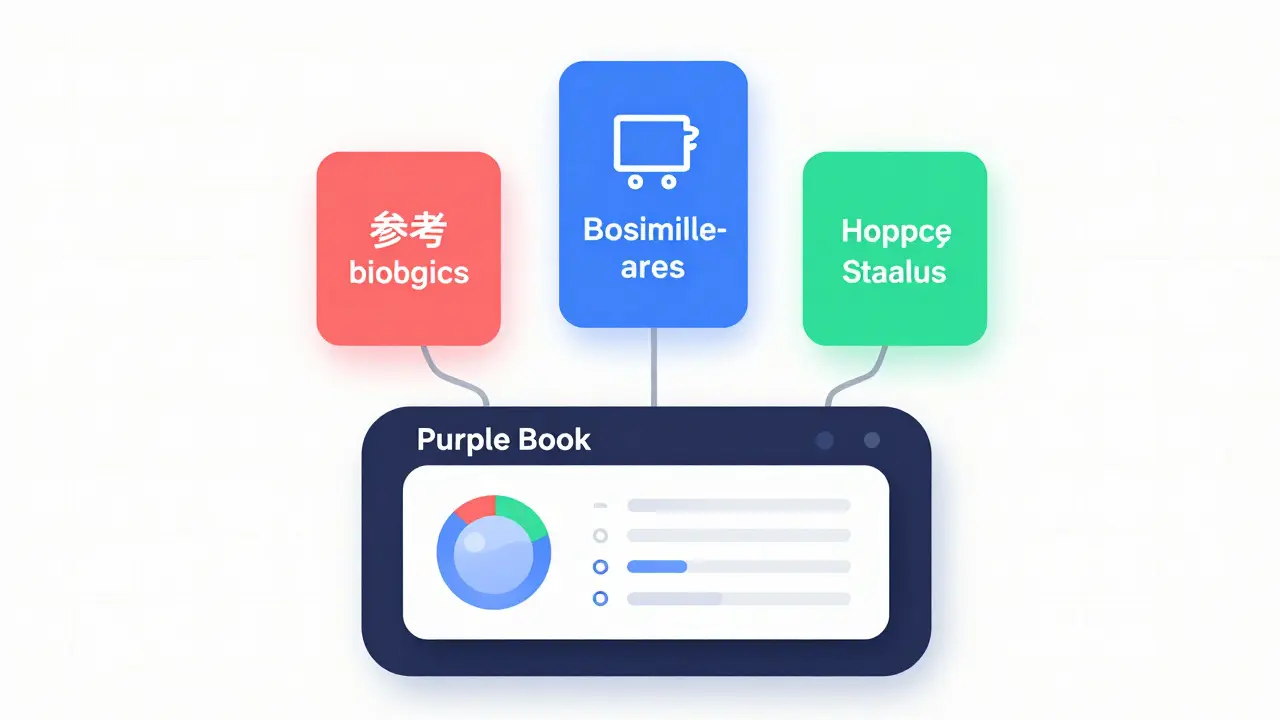
The Purple Book isn’t a novel you read for fun-it’s the FDA’s official, searchable database that tells you which biological drugs are biosimilars, which are interchangeable, and how they connect to the original brand-name products. If you’re a pharmacist, a prescriber, or even a patient trying to understand your treatment options, this tool is essential. It’s not marketing material. It’s not a brochure. It’s the real-time, government-backed record of what’s approved, what’s been proven equivalent, and what can be swapped at the pharmacy counter.
What Exactly Is the Purple Book?
The Purple Book is a living database run by the U.S. Food and Drug Administration. It started in 2010 after Congress passed the Biologics Price Competition and Innovation Act (BPCIA), which created a new pathway for generic-like versions of complex biological drugs. Before this, there was no clear way to approve follow-on biologics. Now, the Purple Book lists every FDA-licensed biological product-whether it’s the original reference product or a biosimilar or interchangeable version. In 2020, the FDA merged two separate lists-one for drugs handled by CDER and another for biologics managed by CBER-into one unified, searchable system. That made it easier for pharmacists to find what they needed without jumping between documents. Today, it includes everything from insulin and rheumatoid arthritis treatments to vaccines, gene therapies, and blood products. Each product card shows the brand name, the generic name, the date it was approved, and its status: 351(a) for the original reference product, 351(k) Biosimilar, or 351(k) Interchangeable. The color-coding is simple: if two products have the same color card, they’re linked. One is the reference; the other is its biosimilar or interchangeable copy.Biosimilar vs. Interchangeable: What’s the Difference?
All interchangeable products are biosimilars, but not all biosimilars are interchangeable. That’s the key point most people miss. A biosimilar is a biological product that’s highly similar to the reference product-no clinically meaningful differences in safety, purity, or potency. That means it works the same way. It’s not a copycat. It’s a scientifically validated twin. The FDA requires extensive lab tests, animal studies, and clinical trials to prove this. An interchangeable product goes further. It must prove that switching back and forth between the biosimilar and the original reference product won’t increase risk or reduce effectiveness. This isn’t just about one dose. It’s about multiple switches over time. The FDA requires specific clinical studies where patients alternate between the two drugs, and outcomes stay consistent. No drop in response. No rise in side effects. Think of it this way: a biosimilar is like a reliable substitute. An interchangeable product is like a direct replacement you can swap without asking your doctor.Why Does Interchangeability Matter?
Interchangeability isn’t just a technical label-it changes what happens in the pharmacy. In most states, pharmacists can substitute a reference product with a biosimilar only if it’s been designated as interchangeable. Even then, state laws vary. As of 2023, 47 states and Puerto Rico allow pharmacists to make the swap without calling the prescriber. But in those states, they still might have to notify the doctor, document the switch, or inform the patient. Some states require the prescriber to specifically say “do not substitute.” Others let the pharmacist decide. This patchwork of rules creates confusion. A drug approved as interchangeable in Washington might be treated differently in New York. The FDA is clear: interchangeability doesn’t mean the product is better. It just means you can switch safely. The science behind both biosimilars and interchangeable products is rigorous. But the legal path to substitution is still being worked out.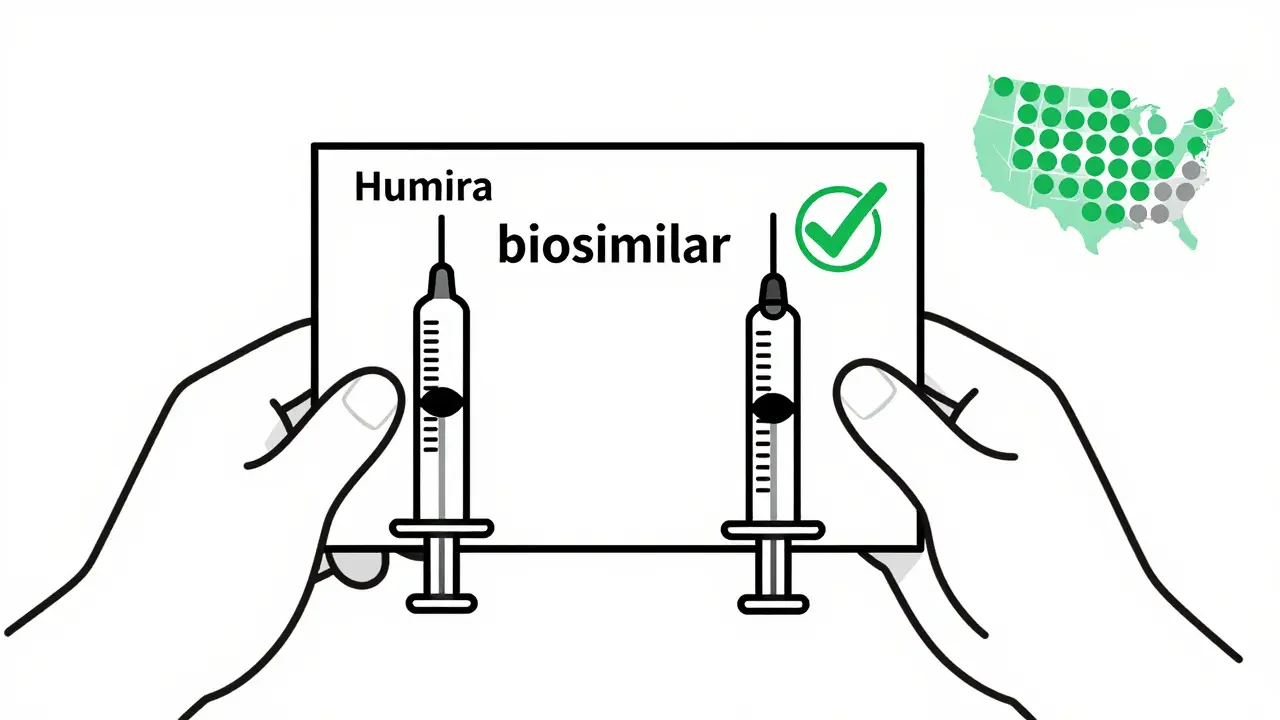
How Many Interchangeable Products Are There?
As of late 2023, the FDA had approved seven interchangeable biosimilars. These include:- Two insulin products (used for diabetes)
- Three treatments for inflammatory diseases like rheumatoid arthritis and Crohn’s disease
- Two therapies for eye conditions affecting the retina
What the Purple Book Doesn’t Tell You
The Purple Book is a regulatory tool, not a clinical guide. It won’t tell you which drug is best for your condition. It won’t explain side effects or dosing. It won’t tell you how insurance covers it. It also doesn’t list “unbranded biologics.” These are products that are functionally equivalent to brand-name drugs but were approved under older pathways. They’re not biosimilars. They’re not interchangeable. They’re just older versions that the FDA considers equivalent. Confusing them with interchangeable biosimilars can lead to errors in substitution. The FDA also publishes draft guidance on labeling for these products to ensure prescribers and pharmacists aren’t misled by packaging or marketing. Clear labeling helps avoid mix-ups.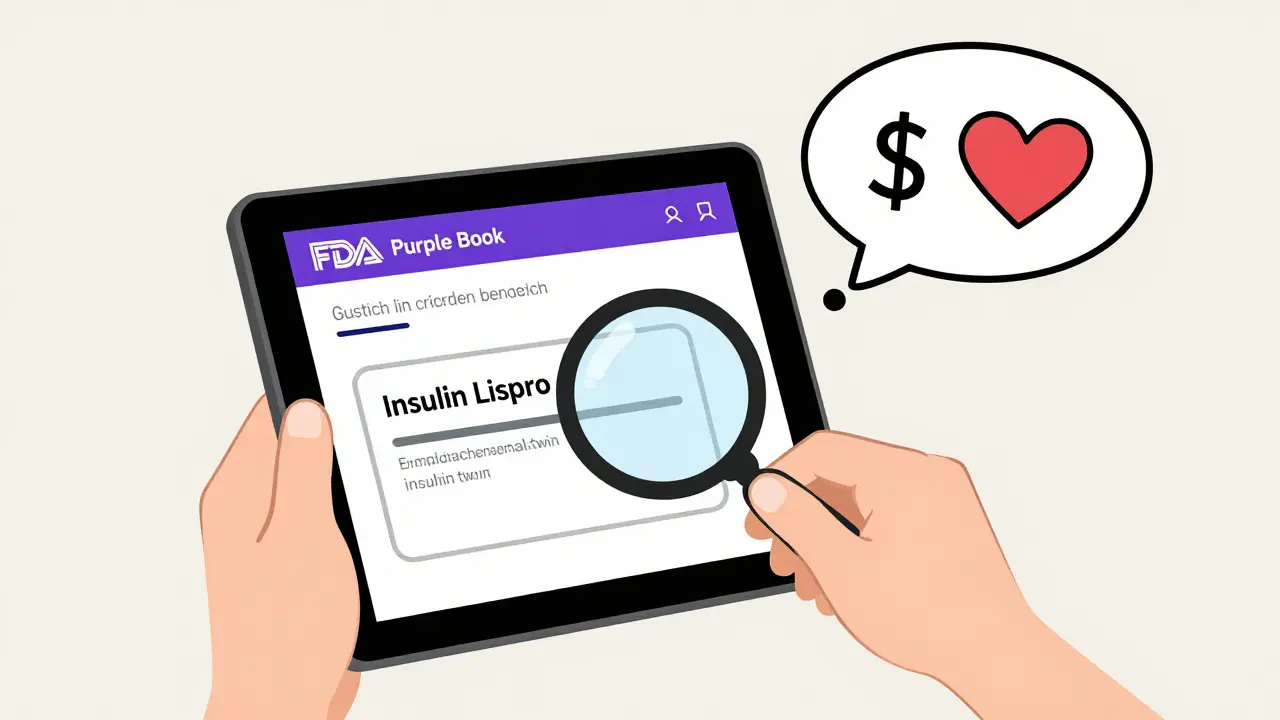
How to Use the Purple Book
If you’re a pharmacist, you can search by the brand name of a reference product-say, “Enbrel.” The results will show you every biosimilar and interchangeable version approved to match it. Each entry links to the original, so you know exactly what you’re substituting. If you’re a doctor, you can check whether a prescribed biosimilar has interchangeability status. That tells you if your patient can get a switch without your approval. If you’re a patient, you can look up your medication and see if a lower-cost version is available-and whether it’s approved for automatic substitution. The database is free, searchable, and updated in real time. You don’t need special access. Just go to fda.gov and search for “Purple Book.”What’s Next for Biosimilars?
More approvals are coming. The FDA is working on clearer guidelines for switching studies and labeling. Companies are investing heavily in interchangeability applications because the real savings happen when pharmacists can swap drugs without calling the doctor. But progress isn’t just about science. It’s about policy. Until state laws align, the full potential of biosimilars won’t be realized. The Purple Book gives the federal green light. But pharmacies still need state permission to act. The goal is simple: more affordable treatments without compromising safety. The Purple Book is the foundation. The rest is up to lawmakers, pharmacists, and providers to make it work.Is the Purple Book the same as the Orange Book?
No. The Orange Book lists approved generic drugs-small-molecule medications like pills and injections. The Purple Book lists biological products-larger, more complex drugs made from living cells, like insulin or monoclonal antibodies. They serve the same purpose: showing alternatives to brand-name drugs-but for entirely different types of medicines.
Can any pharmacist substitute an interchangeable biosimilar?
Only if state law allows it. The FDA approves a product as interchangeable, but state pharmacy boards control whether substitution can happen without a doctor’s permission. In 47 states and Puerto Rico, pharmacists can substitute without contacting the prescriber. In the remaining states, they may need permission or must notify the prescriber first.
Do interchangeable biosimilars work better than regular biosimilars?
No. Both are equally safe and effective. The only difference is that interchangeable products have passed extra studies proving you can switch back and forth between them and the original drug without increased risk. It’s about predictability over multiple doses, not better performance.
How often does the FDA update the Purple Book?
The Purple Book is updated daily as new products are approved or status changes occur. You can always check the latest version on the FDA’s website. It’s the most current source for official biosimilar and interchangeable product information.
Why aren’t more biosimilars designated as interchangeable?
Because the approval process is longer and more expensive. Companies must run additional clinical studies to prove switching doesn’t affect safety or effectiveness. Many choose to market their biosimilars without interchangeability to save time and money. Interchangeability is a strategic decision, not a scientific necessity.
Melissa Taylor
The Purple Book is one of those quiet heroes of the healthcare system. No fanfare, no ads, just cold hard facts that save lives and money. I’ve shown my patients how to use it, and suddenly they understand why their insulin cost dropped by 60%. It’s empowering when people can look up their own meds and see the science behind the swap.
It’s not flashy, but it’s the reason we’re finally getting real competition in biologics. The FDA didn’t just create a database-they created a tool for transparency.
And yes, interchangeable doesn’t mean better. It means predictable. That’s huge when you’re managing chronic conditions and need consistency across refills.
John Brown
Big props to the FDA for finally making this public and searchable. I work in a rural clinic and half my patients are on biologics. Before this, we were guessing which biosimilars we could swap. Now? I pull up the Purple Book on my phone during appointments. Patient gets it. Pharmacist gets it. Everyone wins.
Also, the fact that they merged CDER and CBER into one list? Long overdue. Used to be like trying to find a needle in two haystacks.
Benjamin Glover
Pathetic. The U.S. still lags behind Europe in biosimilar adoption. We’ve had interchangeable products for years in the UK and Germany. Here, we’re still debating whether pharmacists can swap insulin. It’s bureaucratic inertia dressed up as ‘safety.’
Raj Kumar
so the purple book is like the orange book but for biologics? got it. i work in a pharmacy and honestly most docs dont even know this exists. we get calls all the time like ‘can we substitute this?’ and we’re like ‘check the purple book’ and they’re like ‘what?’
also, the 7 interchangeable ones? that’s it? after 13 years? c’mon. companies are dragging their feet. they dont wanna lose the brand premium. its not about science, its about profit.
also, unbranded biologics? yeah those are the old ones that got grandfathered in. dont confuse em with biosimilars. i’ve seen mixups. bad stuff happens.
Jocelyn Lachapelle
Just found out my rheumatologist prescribed a biosimilar I didn’t know was interchangeable. Looked it up in the Purple Book. Turns out I’ve been saving $1,200 a month without even realizing it.
Why isn’t this more widely taught in med school? This should be in every pharmacy and clinic orientation.
Also, the color coding? Genius. So simple. Why didn’t we do this sooner?
RONALD Randolph
Incorrect. The FDA’s Purple Book does not, under any circumstances, authorize substitution. It merely lists status. Substitution is governed entirely by state pharmacy laws. The FDA does not regulate pharmacy practice. This is a critical distinction. Misunderstanding this leads to liability, malpractice, and patient harm. The FDA is not a state board. Do not conflate federal approval with state authority. This is basic regulatory law. Anyone who says otherwise is misinformed-or worse, negligent.
Christina Bischof
I’ve been using the Purple Book for a year now. It’s not perfect, but it’s the best thing we’ve got. I used to spend hours on phone calls with insurers and prescribers just to confirm if a switch was allowed.
Now I check it in 30 seconds. Even my elderly patients ask me to show them the page when I explain why their co-pay dropped.
It’s not flashy, but it’s real change.
And yeah, the fact that only 7 are interchangeable? That’s depressing. But it’s growing. Slowly. And that’s something.
Cassie Henriques
Okay so I just dug into the Purple Book and found 3 biosimilars for my Humira. One’s interchangeable. But why does the FDA label them with 351(a) and 351(k)? Like what’s the actual legal difference? I’m a patient, not a lawyer. Also, why are the unbranded biologics still floating around? Are those even safe? Should I be worried?
Also-can someone explain the switching studies? Like, how many patients? How long? Is it just one trial or multiple? I want to know the science, not just the label. 🤔