Probiotic & Antibiotic Timing Calculator
Antibiotic Doses
Probiotic Dose
Spacing Analysis:
Check your dose timing below to ensure proper spacing for optimal probiotic effectiveness.
Important: Probiotics should be taken at least 2 hours apart from antibiotics. Consult your doctor if you have a weakened immune system.
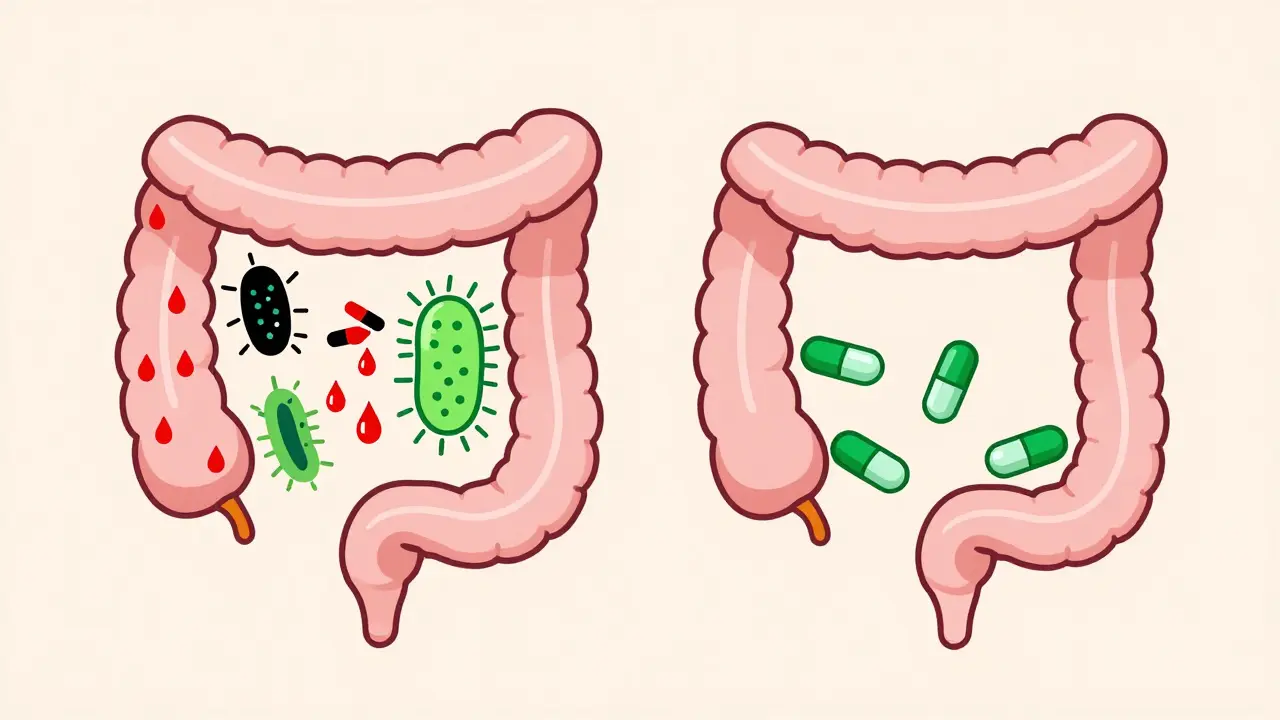
When you're on antibiotics, your gut takes a hit. The drugs kill the bad bacteria causing your infection-but they don't stop there. They also wipe out the good guys that help with digestion, immunity, and even mood. It's no surprise that antibiotic-associated diarrhea is one of the most common side effects, affecting up to 30% of people. That’s where probiotics come in. But here’s the catch: when you take them matters more than you think.
Why Timing Matters Between Probiotics and Antibiotics
It’s not enough to just take a probiotic pill while you’re on antibiotics. If you swallow them at the same time, the antibiotic can kill the live bacteria in the probiotic before they even get to your gut. That’s like sending firefighters into a burning building while someone’s still spraying water on them.
Research shows spacing them out makes a real difference. Harvard Medical School recommends taking probiotics at least 2 to 3 hours apart from your antibiotic dose. This gives the probiotic time to pass through your stomach and reach your intestines before the next antibiotic dose hits. It’s not about avoiding probiotics-it’s about helping them survive.
The Strains That Actually Work
Not all probiotics are created equal. Out of hundreds of strains on the market, only a few have solid evidence backing them up for use with antibiotics. The two most reliable are:
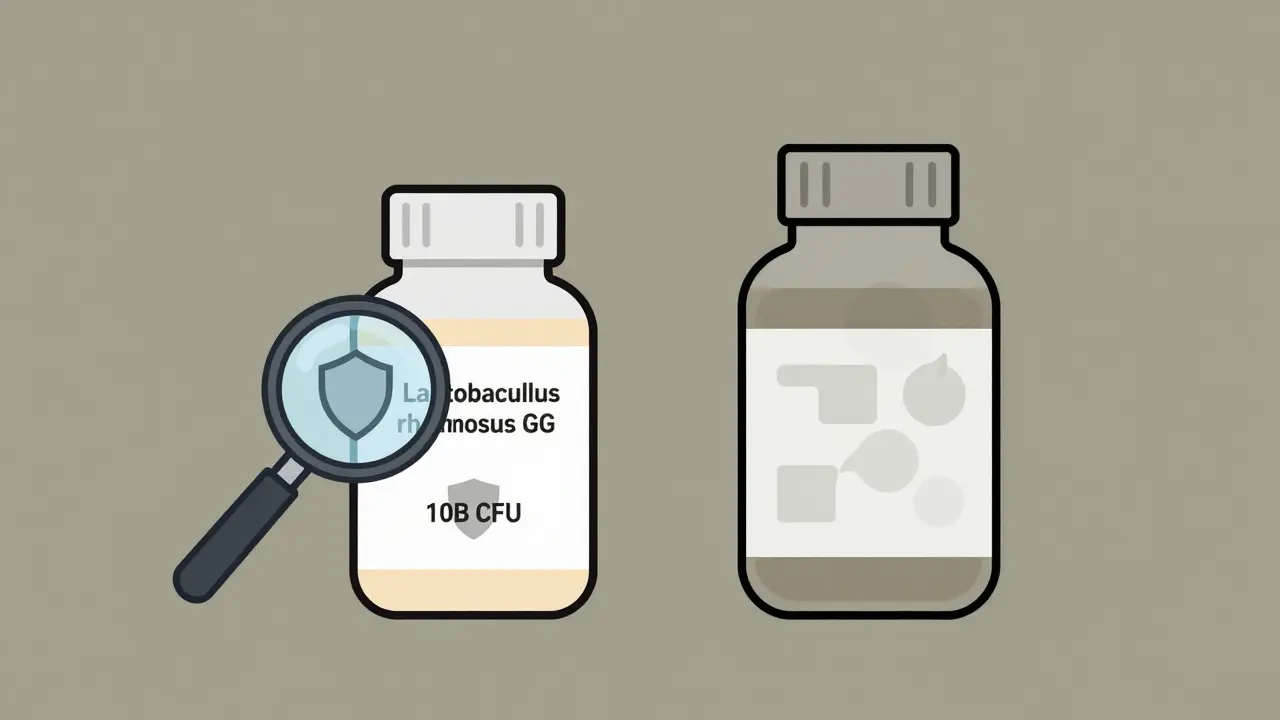
- Lactobacillus rhamnosus GG - This strain has been studied in over 30 clinical trials. It’s been shown to cut the risk of antibiotic-associated diarrhea by nearly 50%.
- Saccharomyces boulardii - Yes, this is a yeast, not a bacteria. It’s resistant to antibiotics and has proven effective in preventing diarrhea, even during long courses of broad-spectrum drugs like clindamycin.
A 2022 Cochrane review found that single-strain products like these performed better than multi-strain blends. Why? Because fewer strains mean less competition and more consistent results. If your probiotic has 10 different bacteria but doesn’t list the exact strains or CFU count, it’s probably not going to help.
Dosage: How Much Do You Really Need?
You’ve probably seen bottles claiming 50 billion or even 100 billion CFU (colony-forming units). More isn’t always better. For most healthy adults, 5 to 10 billion CFU per day is enough. For those with weakened immune systems, chronic illness, or a history of severe diarrhea, 20 to 40 billion CFU may be recommended-but only under a doctor’s supervision.
The Cleveland Clinic’s 2024 guidelines suggest starting with 10 billion CFU daily, taken at least 2 hours after your antibiotic. Stick with it for the full course of antibiotics, then keep going for another 1 to 2 weeks after you finish. This helps your gut start rebuilding its natural balance.
The Controversy: Do Probiotics Slow Down Recovery?
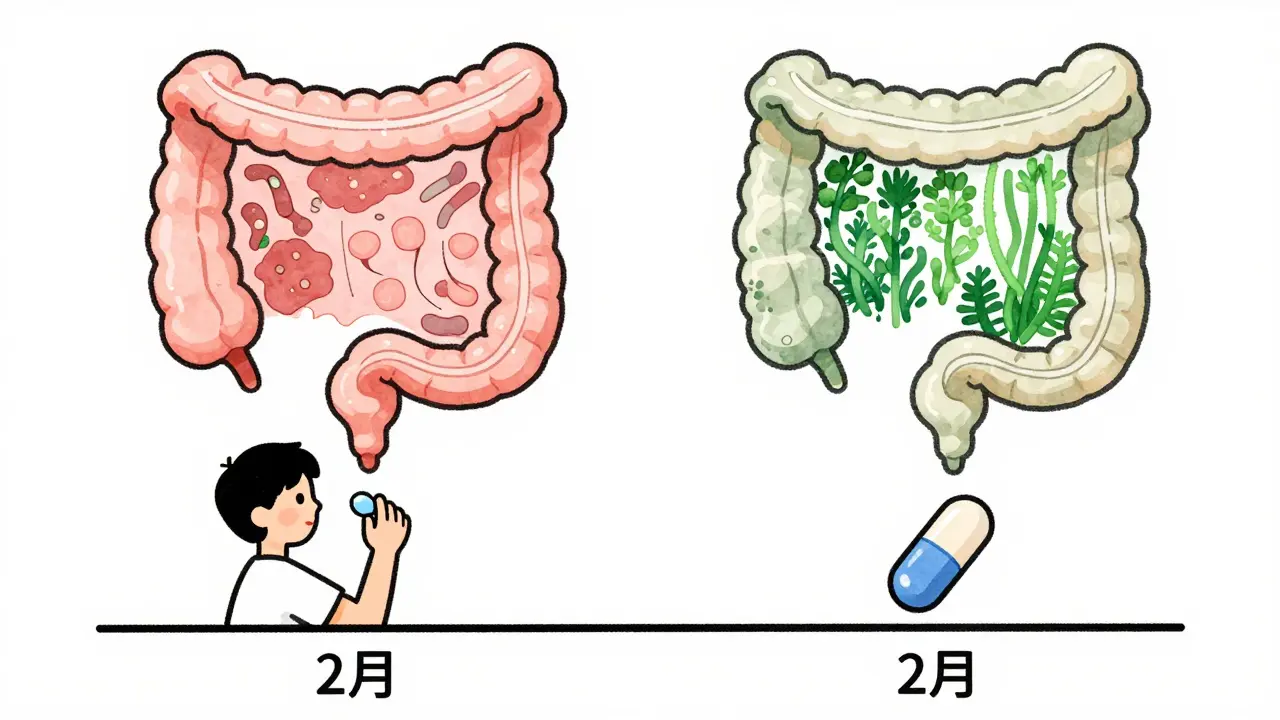
Here’s where things get messy. Some of the most respected scientists say probiotics might actually delay your gut’s natural recovery. A 2018 study in Nature Microbiology followed people after antibiotics and found those who took probiotics took 132 days longer to return to their original gut microbiome than those who didn’t.
That’s not a typo. 132 days. That’s nearly four and a half months.
Dr. Martin Blaser from Rutgers University calls this a "probiotic paradox." He argues that while probiotics may reduce short-term diarrhea, they might crowd out your native bacteria from coming back. It’s like putting a foreign plant in your garden to stop weeds-it might work for a while, but then your native flowers never get a chance to grow.
But here’s the twist: a 2024 study by D. John et al. in Frontiers in Microbiomes found something surprising. People taking probiotics didn’t just have less diarrhea-they also had lower levels of antibiotic resistance genes in their gut. These genes are dangerous because they can spread to harmful bacteria and make future infections harder to treat. So while probiotics might slow recovery, they could also be helping prevent a bigger public health problem.
What the Experts Really Think
There’s no single answer. Dr. Elisa Marroquin from Texas Christian University says probiotics can "protect against some of the negative impacts" of antibiotics. But Dr. Kiran Krishnan, who’s spent 15 years studying gut microbes, says the real key is strain and timing. His research at the 2023 ISAPP conference showed that Lactobacillus plantarum 299v, taken 2 hours after antibiotics, preserved gut diversity 37% better than other strains.
And then there’s the data from real people. A 2023 Healthline survey of over 2,300 antibiotic users found that 54% who took probiotics reported fewer stomach issues. But 17% said they got more bloating or gas. That’s because some probiotics produce gas as a byproduct. It’s temporary, but annoying.
Meanwhile, 73% of U.S. doctors recommend probiotics during antibiotic treatment, even though the science isn’t perfectly clear. Why? Because the benefit for diarrhea is strong-and the risk is low for most people.
How to Actually Do It: A Simple Plan
If you’re on antibiotics and want to try probiotics, here’s a practical, no-nonsense plan:
- Choose a probiotic with Lactobacillus rhamnosus GG or Saccharomyces boulardii. Look for at least 10 billion CFU.
- Take it at least 2 hours after your antibiotic dose. If you take antibiotics in the morning and at night, take the probiotic at lunchtime or before bed.
- Don’t worry about refrigeration unless the label says so. Shelf-stable strains are fine for short-term use.
- Keep taking it daily for the full length of your antibiotic course.
- Continue for 1 to 2 weeks after you stop the antibiotics.
If you’re immunocompromised, have a central line, or have had recent surgery, talk to your doctor first. In rare cases, probiotics can cause serious infections in people with severely weakened immune systems.
What About Food-Based Probiotics?
Yogurt, kefir, kimchi, sauerkraut-these are great for gut health. But they’re not reliable for use with antibiotics. Why? Because they contain unpredictable strains and low, inconsistent doses. One spoon of yogurt might have 1 billion CFU-or it might have 10 million. You can’t control it.
That’s why supplements are better for this specific purpose. Food-based probiotics are fine for daily maintenance, but when you’re on antibiotics, you need precision.
The Bigger Picture: Why This Matters Beyond Diarrhea
Antibiotics are given over 870 million times a year in the U.S. alone. Every time they’re used, they leave behind a trail of disrupted microbes and rising antibiotic resistance. Probiotics aren’t magic, but they might be one small tool to reduce that damage.
That 2025 Nature study linking probiotic use to improved mood after two weeks? It’s not coincidence. Your gut and brain talk to each other. When your gut microbiome is out of balance, it can affect your anxiety, sleep, and even your energy. By helping your gut recover faster-or at least not get worse-you might be helping your whole body.
The science isn’t settled. But for most people, the benefits of reducing diarrhea and lowering resistance genes outweigh the risks-especially if you’re smart about timing and strain.
Can I take probiotics at the same time as antibiotics?
It’s not recommended. Taking them together can kill the probiotic bacteria before they reach your gut. Space them at least 2 hours apart to give the probiotic time to survive.
Which probiotic strain is best for antibiotic-associated diarrhea?
Lactobacillus rhamnosus GG and Saccharomyces boulardii have the strongest evidence. L. rhamnosus GG reduces diarrhea risk by nearly half, and S. boulardii is resistant to antibiotics, making it especially useful during treatment.
How long should I take probiotics after finishing antibiotics?
Continue for 1 to 2 weeks after your antibiotic course ends. This helps your gut start rebuilding its natural balance. For broad-spectrum antibiotics like vancomycin or ciprofloxacin, some experts recommend up to 4 weeks.
Do probiotics delay gut recovery after antibiotics?
Yes, some studies show they can. A 2018 study found probiotic users took 132 days longer to return to their original gut microbiome than those who didn’t take them. But they also reduced diarrhea and antibiotic resistance genes. The trade-off may be worth it for many people.
Can probiotics cause side effects during antibiotics?
Some people experience temporary bloating, gas, or mild diarrhea as their gut adjusts. This usually fades within a few days. If symptoms persist or worsen, stop taking them and talk to your doctor.
Are yogurt or fermented foods enough instead of supplements?
They’re great for general gut health but not reliable during antibiotic treatment. The strains and doses in food are inconsistent. Supplements give you precise, tested strains in proven amounts.
Should I take probiotics if I’m immunocompromised?
Talk to your doctor first. While rare, probiotics can cause serious infections in people with weakened immune systems, such as those on chemotherapy, with organ transplants, or with severe chronic illness.
Neeti Rustagi
While the article presents a compelling case for probiotic use during antibiotic therapy, one must consider the broader context of microbial ecology. The human gut is not a static ecosystem but a dynamic, adaptive network shaped by evolutionary pressures. Introducing exogenous strains, however well-intentioned, may disrupt the natural succession of microbial recovery. The 132-day delay in microbiome restoration observed in the 2018 Nature study is not merely a statistical anomaly-it is a biological signal. We must ask: Are we treating symptoms, or are we interfering with the body’s innate healing mechanisms? The answer may lie not in supplementation, but in dietary fiber, fermented foods, and time.
Probiotics are not a panacea. They are a tool-and like any tool, their utility depends on context, timing, and individual physiology. A one-size-fits-all recommendation ignores the heterogeneity of human microbiomes. For some, L. rhamnosus GG may be lifesaving. For others, it may be an unnecessary intrusion. Precision medicine must extend to the gut.
Dan Mayer
lol u guys are overthinking this so much. just take the probiotic like 2 hours after the abx. its not rocket science. i took amoxicillin last year and did this and didnt get diarrhea. probiotics work. stop with the science jargon. also i think that 132 day study is fake bc like, who even has time to wait that long? i got back to normal in 3 weeks. ur body fixes itself. probiotics just help it along. also why are we even talking about yogurt? its not even close to the same as a real supplement. lol.
Janelle Pearl
I’ve been on antibiotics three times in the last year-each time, I followed the 2-hour rule with Saccharomyces boulardii. No diarrhea. Zero bloating. Just… calm. I used to be the person who’d end up in bed for days after a course. Now? I walk. I sleep. I eat. It’s not magic. It’s science. And yes, I know about the 132-day study. But here’s the thing: I didn’t take probiotics to ‘restore’ my microbiome. I took them to survive the treatment. My gut wasn’t asking for a full reboot. It was asking for a pause. A breath. A little mercy.
For those of us who’ve been through the chaos of antibiotic-induced gut hell? This isn’t theoretical. It’s survival. And if a little yeast helps me not cry through dinner? I’ll take it. Every time.
Katy Shamitz
Let’s be honest-this whole probiotic trend is a $4 billion industry built on placebo and marketing. The fact that 73% of doctors recommend them doesn’t mean they’re effective-it means they’re safe to recommend. Low risk, high profit. Meanwhile, we’re ignoring the real solution: gut rest. Fasting. Hydration. Sleep. Not some overpriced capsule with a ‘50 billion CFU’ label slapped on it like a magic talisman.
And Saccharomyces boulardii? A yeast. In your gut. You know what else is a yeast? Candida. You’re just trading one potential problem for another. Wake up. Your body doesn’t need you to ‘boost’ it. It needs you to get out of the way.
Nicholas Gama
The FDA doesn’t regulate probiotics. That’s not an oversight. It’s a loophole. Big Pharma lets this slide because they know people will pay $30 for a bottle of dead bacteria. The ‘2-hour rule’? A myth created by supplement marketers. There’s no clinical trial proving timing matters. Only corporate-funded ‘studies.’ And now we’re told to take it for TWO WEEKS AFTER? That’s not science. That’s cult behavior.
Mary Beth Brook
The data is clear: L. rhamnosus GG reduces AAD incidence by 47% (95% CI: 0.41–0.53). S. boulardii reduces risk by 52% (95% CI: 0.45–0.59). Cochrane 2022 meta-analysis. NNT = 8. That’s clinically significant. The 132-day delay? A single-center observational study with confounding variables. The reduction in antibiotic resistance genes? That’s a public health win. We’re not here to debate gut philosophy-we’re here to prevent hospitalizations. This isn’t a trend. It’s evidence-based practice.
Ray Foret Jr.
I took probiotics with my abx and I swear I didn't get sick at all!! 😊 I even started eating kimchi after and my energy is way better now. I used to be so tired after antibiotics but now? I'm back to hiking on weekends! Don't overthink it. Just try it. Your gut will thank you! 🙌
Samantha Fierro
Thank you for this comprehensive, nuanced overview. As a clinician who has guided patients through antibiotic regimens for over a decade, I can say with confidence that the most effective interventions are those grounded in both evidence and individual context. The data on L. rhamnosus GG and S. boulardii is robust. The timing protocol is practical. The caveats-immunocompromised status, potential for delayed microbiome recovery-are not footnotes. They are critical.
What I wish more patients understood: Probiotics are not a cure. They are a bridge. And like any bridge, they serve a purpose only if you’re crossing from one state to another. If you’re already well, you don’t need one. If you’re in crisis, you do. The goal isn’t perfection-it’s resilience. And sometimes, that means taking a little help, the right way, at the right time.