Migraine with Aura Birth Control Risk Calculator
Risk Assessment Tool
Answer these questions to understand your personal stroke risk factors when using estrogen-based birth control with migraine with aura
Your Personal Risk Assessment
If you get migraines with aura and are thinking about birth control, you’re not alone. But you’re also facing a decision that could affect your long-term health. The question isn’t just migraine with aura and birth control-it’s whether the combination might raise your risk of stroke. And the answer isn’t simple.
What Exactly Is Migraine with Aura?
Migraine with aura isn’t just a bad headache. It’s a neurological event. Before the pain hits, you might see flashing lights, blind spots, or zigzag lines. Some people feel tingling in their hands or face. Others have trouble speaking. These symptoms last 5 to 60 minutes and are followed by a pounding headache, nausea, or extreme sensitivity to light.
Crucially, aura means focal neurological symptoms. That’s the key. Nausea, fatigue, or mood changes before a migraine? Those are warning signs, not aura. Only visual, sensory, or speech disturbances count. If you’ve had these symptoms even once, you’re in a higher-risk group when it comes to estrogen-based birth control.
Why Estrogen Is the Problem
Estrogen in birth control pills, patches, or rings increases blood clotting. That’s how it prevents pregnancy-it stops ovulation and thickens cervical mucus. But in some women, that same effect can lead to clots in the brain, causing ischemic stroke.
The numbers are startling. Healthy young women without migraines have about a 6 in 100,000 chance of having an ischemic stroke each year. For women with migraine with aura who take estrogen-containing birth control, that jumps to about 30 in 100,000. That’s a fivefold increase. The CDC says the combined risk-migraine with aura plus estrogen-is six times higher than having neither.
It’s not just about the pill. Any estrogen-containing method-patch, ring, or combination pill-carries this risk. The World Health Organization (WHO) has said since 2015: Do not use estrogen-containing contraceptives if you have migraine with aura. That’s a Category 4 recommendation-the highest level of risk. It’s not a suggestion. It’s a hard stop.
But New Research Says It Might Be Safer
Here’s where things get messy. A 2022 study by Dr. Pinar Batur at the American Migraine Foundation looked at women with migraine with aura using modern low-dose birth control. The results? Stroke risk didn’t spike as much as older studies suggested-especially with pills containing less than 30 micrograms of ethinyl estradiol.
Modern birth control pills now come in ultra-low doses: 10 to 15 micrograms of estrogen. That’s a fraction of what was used in the 1970s, when early studies first linked estrogen to stroke. Dr. Anne Calhoun, writing in Headache in 2017, argues that today’s pills may not raise stroke risk at all-and might even reduce aura frequency by stabilizing hormone swings.
But here’s the catch: Batur’s study included only 127 women who had strokes. That’s too small to draw firm conclusions. And while her findings are promising, they haven’t changed official guidelines. The WHO, CDC, and American College of Obstetricians and Gynecologists (ACOG) still say: avoid estrogen if you have aura.
Frequency Matters More Than You Think
Not all migraines are equal. How often you get them changes the risk.
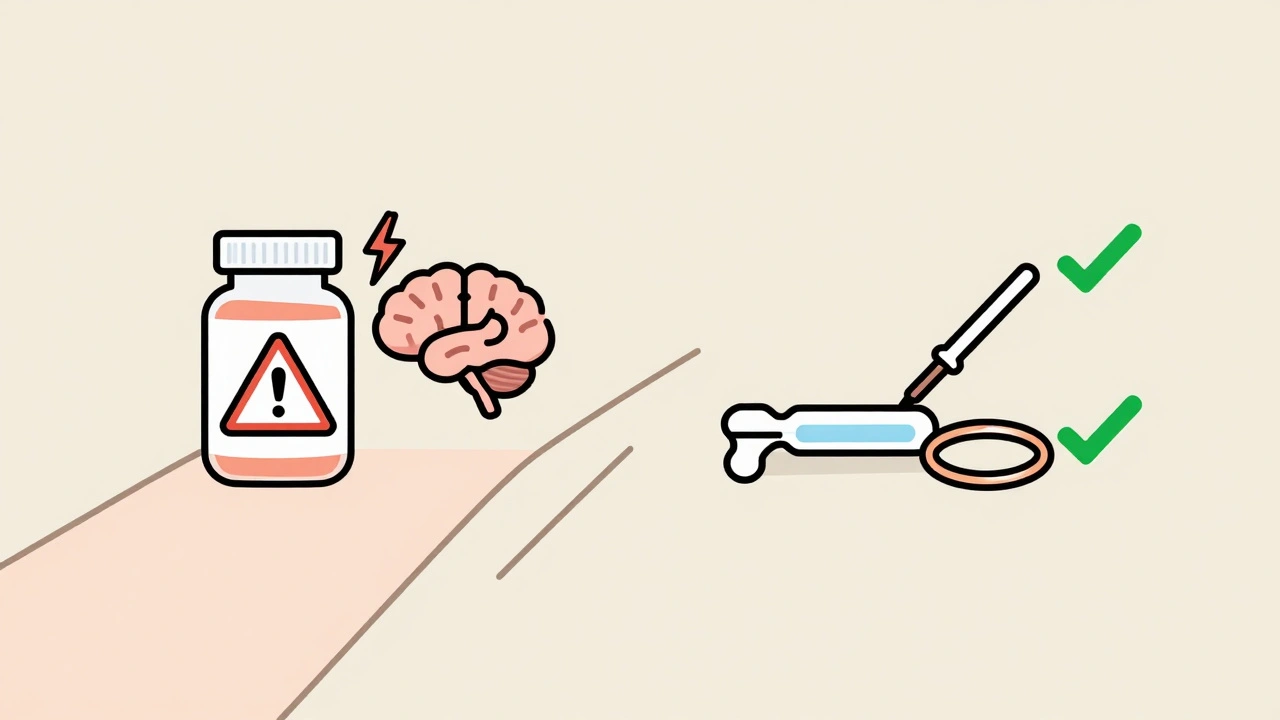
Studies show women who have migraine with aura more than 12 times a year face a much higher stroke risk-up to 10 times higher-than those with fewer attacks. Even monthly attacks carry a 1.9 times higher risk. But here’s the surprising part: women who get migraines less than once a month also showed increased risk. The pattern isn’t linear. It’s J-shaped: both very frequent and very infrequent attacks carry danger.
And if you’ve had an aura attack in the past year? You’re still at elevated risk. But if your last aura was two years ago? The risk drops back toward baseline. That’s why doctors ask: When was your last aura? It’s not just history-it’s a current risk factor.
Other Risk Factors Make It Worse
Estrogen plus migraine with aura is dangerous. But add smoking, high blood pressure, diabetes, or a family history of stroke-and the risk skyrockets.
If you’re over 35 and smoke? Estrogen birth control is absolutely off-limits, even without migraines. Add migraine with aura? That’s a red flag you can’t ignore.
That’s why doctors don’t just look at your headache history. They check your blood pressure. They ask if you smoke. They want to know about your parents’ health. One risk factor alone might be manageable. Two or three? That’s when the danger becomes real.
What Are Your Safe Alternatives?
You don’t have to go without birth control. There are plenty of options that don’t raise your stroke risk.
- Progestin-only pill (POP): Also called the mini-pill. Takes daily. No estrogen. Safe for migraine with aura.
- Implant (etonogestrel): A small rod placed under the skin of your arm. Works for up to 3 years. Over 99% effective.
- Levonorgestrel IUD: A T-shaped device inserted in the uterus. Lasts 3 to 8 years. Reduces or stops periods. No estrogen.
- Depo-Provera shot: Given every 3 months. Progestin only.
- Copper IUD: Hormone-free. Works for up to 12 years. Just as effective as hormonal IUDs.
- Barrier methods: Condoms, diaphragms, cervical caps. Lower effectiveness but zero hormonal risk.
These methods don’t increase stroke risk. They don’t interfere with your migraines. And many-like the IUD or implant-are long-lasting and forgettable. You don’t have to remember a pill every day.
What If You’re Already on Estrogen Birth Control?
If you’ve been on the pill and just found out you have migraine with aura, don’t panic. But don’t ignore it either.
Stop the estrogen-based method. Talk to your provider. Switch to a progestin-only option. Most women transition smoothly. Some report fewer migraines once they’re off estrogen. Others notice no change.
Keep track of your symptoms. If you start getting new or worse auras after switching, tell your doctor. It might be a coincidence. Or it might mean you need a different method.
The Bottom Line
There’s no perfect answer. The science isn’t settled. But the safest path is clear: if you have migraine with aura, avoid estrogen-containing birth control. The risk of stroke, while still rare overall, is real and avoidable.
Progestin-only methods are effective, safe, and widely available. They don’t carry the same risks. And for many women, they work better than they expected.
Don’t let fear stop you from using birth control. But don’t let outdated assumptions or conflicting studies lead you into danger. Get your migraine type confirmed. Know your attack frequency. Check your blood pressure. Talk to your doctor. And choose a method that protects your brain as much as your fertility.
When to See a Specialist
See a neurologist or headache specialist if:
- Your aura lasts longer than an hour
- You have aura without a headache
- You have weakness or numbness on one side of your body
- You’ve had more than 12 aura attacks in a year
- You’re over 35 and smoke
These aren’t normal migraines. They need expert evaluation. And your birth control plan should be part of that plan.
Shubham Pandey
Too much text. Just tell me if it’s safe or not.
alaa ismail
I’ve had aura for years and switched to the implant last year. No more migraines, no stroke anxiety. Best decision ever.
Also, the copper IUD is wild-it’s like a free, forever, hormone-free backup plan.
Chris Wallace
I read this whole thing twice because I’ve been on the pill for six years and just started getting auras last month. I didn’t realize it was a red flag until now.
My doctor just shrugged and said, ‘You’re young, you’ll be fine.’ But reading this-especially the part about frequency and the J-shaped curve-it hit me. I’ve had 15 aura episodes this year. That’s not ‘fine.’
I’m switching to the progestin-only pill next week. Feels weird to be scared of something I’ve been taking for so long, but honestly? I’d rather be safe than sorry. My brain is worth more than convenience.
Sandi Allen
THEY’RE LYING TO YOU!!
Estrogen isn’t the problem-BIG PHARMA is! They want you on the pill so you’ll keep coming back for more drugs, more visits, more $$$!
And now they’ve invented ‘migraine with aura’ to scare you into switching to their new ‘safe’ progestin products-which are just as toxic, but patented differently!
They don’t want you to know that low-dose estrogen actually reduces aura frequency by stabilizing hormones! It’s all a cover-up! Check the 2022 Batur study again-THEY’RE HIDING THE DATA!
Also, your doctor is probably on their payroll. Don’t trust anyone.
Go vegan. Sleep on copper mats. And take magnesium. That’s the real cure. Not their pills. Not their guidelines. Not their lies.
John Webber
so like… if you got aura and on birth control… you might get stroke? wow. i didnt know that.
my cousin had a stroke at 28. she was on the pill. maybe it was this?
anyway i switched to condoms. cheaper. no side effects. and my gf likes it. lol.
also dont smoke. duh.
Sheryl Lynn
How quaint that we still treat hormonal contraception as a binary choice between ‘catastrophic stroke risk’ and ‘medical salvation.’
The real tragedy isn’t estrogen-it’s the reductionist, fear-driven, clinical paternalism that frames a woman’s autonomy as a risk calculus. We quantify aura frequency like it’s a weather report, then weaponize it against her agency.
Meanwhile, the WHO’s Category 4 recommendation reads less like medical guidance and more like a bureaucratic footnote in a patriarchal playbook: ‘We know you want control over your body, but here’s a list of things you’re not allowed to touch.’
Let’s stop pathologizing hormonal variation and start trusting women to make informed, nuanced decisions-without being talked down to by algorithmic risk charts.
Paul Santos
Interesting how the discourse around estrogen and migraine has evolved from ‘demonize’ to ‘nuance’-but still lacks ontological depth.
Is the stroke risk a biological phenomenon, or a socio-medical construct? Are we measuring clotting factors-or the weight of expectation placed upon female physiology?
Also, the copper IUD is a beautiful metaphor: non-hormonal, enduring, silently revolutionary. 🌱
And yet, even here, we’re still framing choice through medical gatekeeping. What if the real solution isn’t ‘better contraception’… but a reimagining of reproductive autonomy beyond the pill paradigm?
Kristen Yates
I’m from a country where birth control is hard to get and even harder to talk about. This post helped me understand why my sister stopped taking the pill after her migraines got worse.
She didn’t know it was the estrogen. She thought it was stress. Now she’s on the implant and says she feels like herself again.
Thank you for explaining this so clearly. I’m sharing it with my family.
Saurabh Tiwari
So if you have aura and take estrogen = higher stroke risk
But if you have aura and don’t take estrogen = still some risk
And if you smoke + aura + estrogen = bad news
So… just use the copper IUD and chill? 😎
Also, why is everyone so scared of progestin? It’s just a hormone. We make it. Our bodies know it.
Michael Campbell
They want you to panic so you’ll take their ‘safe’ pills that cost $80 a month.
Meanwhile, in Russia, women just use condoms and no one’s dying.
Also, the CDC? Don’t trust them. They’re part of the globalist agenda.
Just say no to estrogen. And no to the system.
Victoria Graci
It’s fascinating how medicine treats hormonal fluctuations as pathology rather than variation.
Migraine with aura isn’t a defect-it’s a signal. A neurological whisper that says, ‘Something’s off.’ And estrogen? It’s not the villain-it’s the catalyst that reveals the underlying fragility.
Maybe the real question isn’t ‘Should I take estrogen?’
But ‘Why is my nervous system so sensitive?’
And why are we so quick to suppress symptoms instead of listening to them?
Saravanan Sathyanandha
As someone from India where access to healthcare is uneven, this information is invaluable. Many women here are unaware that migraine with aura carries such a risk.
Progestin-only methods are not only safer-they’re more accessible in rural areas. The IUD and implant can be placed in basic clinics, and the mini-pill costs less than a cup of chai.
Education is the real missing link. Not fear. Not stigma. Just clear, culturally competent information.
Thank you for writing this. I’ve shared it with three women in my community already.
ruiqing Jane
If you’re reading this and you have migraine with aura-you’re not broken. You’re not overreacting. You’re not being dramatic.
You’re paying attention to your body when so many are told to ignore it.
Switching birth control is a big step, but you’re doing the right thing. You’re protecting your future self. And that’s brave.
There’s no shame in choosing safety. No shame in listening to your nervous system. You’re not alone.
Fern Marder
So… like… if you’re under 35, don’t smoke, and have aura once a year… is it really that risky? 🤔
My friend’s mom took the pill for 20 years and had aura. She’s fine. 🤷♀️
Also, I’m switching to the shot. It’s just easier. 😊
Chris Wallace
Just saw your comment about your friend’s mom. That’s the thing-some people get lucky. But medicine isn’t built on luck.
My neurologist said it like this: ‘If you play Russian roulette once, you might survive. Doesn’t mean it’s smart to keep pulling the trigger.’
That stuck with me. I used to think ‘I’m young, I’m healthy’ meant invincible. Turns out, my brain doesn’t care about my age. It just cares about the estrogen.