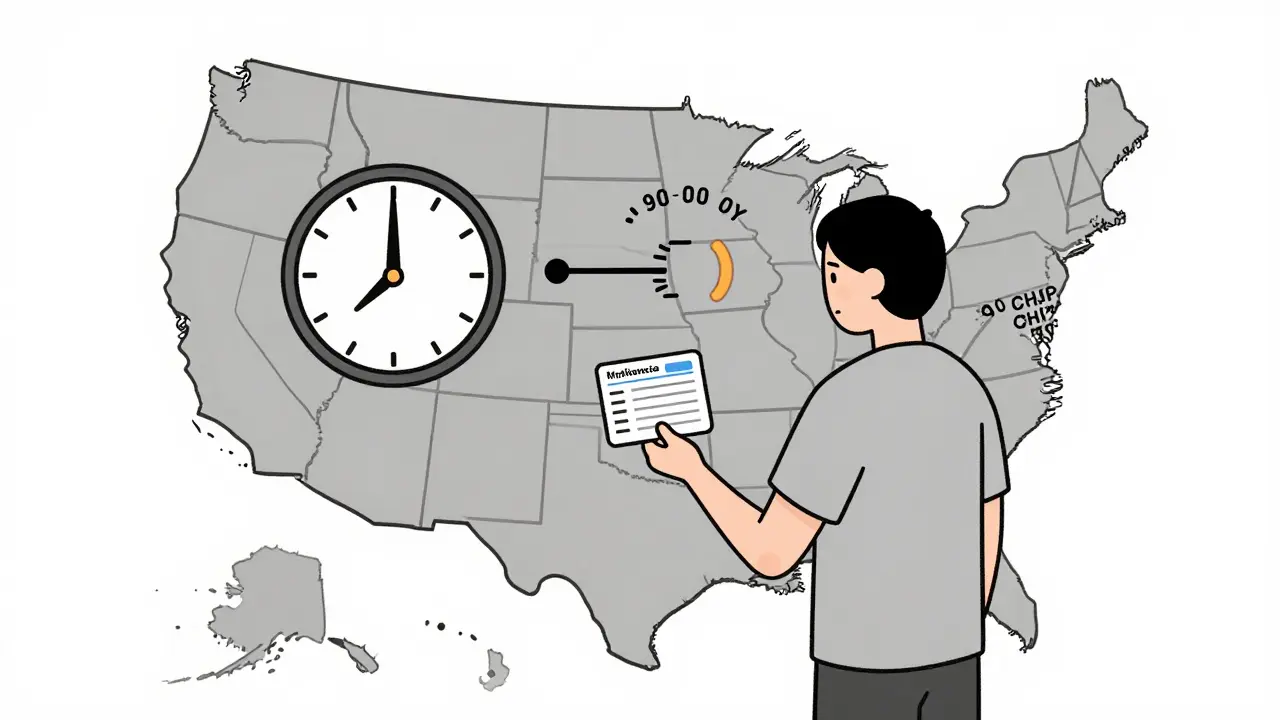
Every year, thousands of children in the U.S. lose their private health insurance because a parent changes jobs, hours are cut, or an employer drops coverage. When that happens, many families turn to Medicaid or CHIP - but they don’t always get it right away. Why? Because of Medicaid substitution rules. These aren’t just bureaucratic hurdles. They’re federal laws designed to stop public insurance from stepping in when private coverage is still available. And how they’re applied? It varies wildly from state to state.
What Exactly Are Medicaid Substitution Rules?
Medicaid substitution rules come from Section 2102(b)(3)(C) of the Social Security Act, updated in 1997 and again in 2010 under the Affordable Care Act. Their goal is simple: don’t let Medicaid or CHIP replace private insurance that a family could reasonably afford. The idea is to protect the private insurance market and make sure public funds go to those who truly have no other options. It sounds fair - until you’re the parent who just lost your job on Friday and needs coverage for your kid by Monday. Under these rules, states can delay CHIP enrollment for up to 90 days if they believe private coverage is still available. That’s not a suggestion. It’s a requirement in most states.Mandatory Rules: What All States Must Do
Every state, plus Washington, D.C., must follow the same federal baseline. That means:- CHIP cannot be used to replace group health coverage from an employer or union plan
- States must have a system to check if private insurance is available
- They must allow smooth transitions between Medicaid and CHIP when eligibility changes
Optional Tools: How States Choose to Enforce the Rules
Here’s where things get messy. Beyond the federal minimum, states have a menu of optional tools they can use - or not use - to enforce substitution rules. Waiting periods are the most common. Thirty-four states use a waiting period of up to 90 days before allowing a child to enroll in CHIP if private coverage is available. California, Texas, and New York are among the biggest users. The logic? Prevent families from dropping expensive employer plans to get free CHIP. But 16 states don’t use waiting periods at all. Instead, they rely on real-time database checks - pulling data from private insurers to confirm whether coverage is active. These states include Minnesota, Massachusetts, and Oregon. Their systems automatically flag when someone has employer insurance and deny CHIP enrollment immediately - no waiting period needed. Another optional move? Adding more exemptions. Fifteen states go beyond the federal minimum and allow faster CHIP access if a parent loses a job, has reduced hours, or experiences a family emergency. Florida, Illinois, and Pennsylvania are examples. These states recognize that job loss doesn’t wait for paperwork.How States Verify Private Coverage - And Why It’s a Mess
The biggest headache for state workers? Proving whether private insurance is actually available. Twenty-eight states use private insurance databases - often through the National Association of Insurance Commissioners’ Health Insurance Resource Database. These systems can check in real time if a parent’s employer offers coverage and if the child is enrolled. But 22 states still rely on paper forms, phone calls, or self-reported surveys. That means a parent has to submit proof of employer coverage, which can take weeks. One Ohio eligibility worker told a Reddit thread: “We get families who lose coverage on Friday and need CHIP Monday. The 90-day rule forces us to deny them for 12 weeks. They often end up uninsured.” And even when states have good systems, they struggle with affordability. Federal rules say private coverage is “available” only if premiums are less than 9.12% of household income (2024 IRS threshold). But verifying that? It’s complicated. Employers don’t always report premium costs accurately. Some workers decline coverage because they think it’s too expensive - even if it’s technically affordable.
States Doing It Right - And Why
The best-performing states share three things: automation, integration, and speed. Minnesota’s “Bridge Program” cuts substitution-related coverage gaps by 63%. How? It connects private insurer data directly to Medicaid and CHIP systems. When a parent’s job ends, the system sees the coverage drop and automatically enrolls the child in CHIP - no application, no waiting. Massachusetts and Oregon use similar models. Their uninsured rates for children transitioning between programs are under 8%. Compare that to the national average of 21% coverage gaps - a number from CMS’s 2022 evaluation of pre-2024 rules. The difference? These states treat eligibility as a continuous process, not a series of checkmarks. They don’t wait for families to ask for help. They act before the gap opens.The Cost of Rules - To Families and States
Substitution rules save money - but not always for the right reasons. The Congressional Budget Office estimates these rules prevent $1.3 billion in unnecessary CHIP spending each year. That’s money that would’ve gone to kids who could’ve stayed on private plans. But here’s the flip side: when families can’t get CHIP fast enough, they go uninsured. Louisiana’s strict 2021 enforcement caused a 4.7 percentage point spike in uninsured children. That’s not just a statistic - it’s kids skipping doctor visits, missing vaccines, and delaying care. Families pay too. A 2023 Families USA survey found 42% of parents cited “bureaucratic delays” as their biggest frustration during transitions. Meanwhile, employers benefit. Some companies quietly rely on these rules to avoid offering affordable coverage, knowing families can fall back on Medicaid if needed.What Changed in 2024 - And What’s Coming
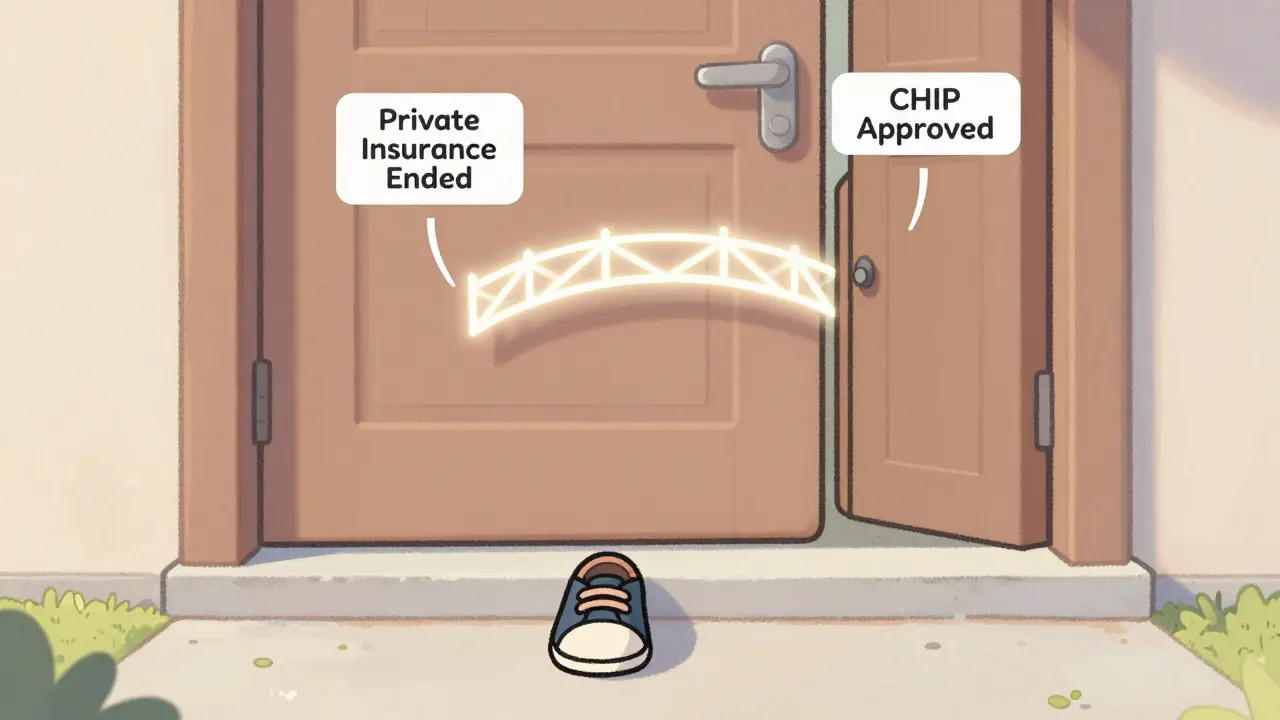
On April 29, 2024, a new CMS rule took effect. It’s the biggest update to substitution rules in over a decade. Key changes:- States must now create automatic transitions between Medicaid and CHIP when eligibility shifts
- They must accept eligibility decisions from other affordability programs (like ACA marketplace plans)
- By October 1, 2025, all states must upgrade systems to share data between Medicaid and CHIP
- Starting January 1, 2025, states must report quarterly on coverage gaps and waiting period use
Where the System Still Fails
The biggest flaw? The rules were designed for a 1997 economy - full-time jobs with steady benefits. Today, gig work, seasonal labor, and short-term insurance plans are common. In states with large agricultural or seasonal workforces, substitution rules often backfire. Families lose coverage during off-seasons, but the 90-day wait keeps them locked out of CHIP. The Kaiser Family Foundation found these families are more likely to become completely uninsured - not switch to CHIP. And then there’s the human cost. Joan Alker from Georgetown University says the rules “disproportionately impact working-class families who experience frequent job changes.” In other words, the system punishes people for doing the right thing - working.What Families Should Do
If you’re losing private insurance:- Apply for CHIP immediately - don’t wait for the 90 days to end
- Ask if your state has exemptions for job loss or reduced hours
- Request a copy of your state’s substitution policy - many are online
- If denied, appeal. Many denials are based on outdated or incorrect data
- Ask your state’s Medicaid office if they use real-time verification. If they do, your case may be faster
What’s Next?
CMS plans to review the 2024 rule’s impact by late 2026. If data shows coverage gaps are still high, more changes are likely - possibly eliminating waiting periods entirely. For now, the system remains a patchwork. Some states are modernizing. Others are stuck in the past. The rules haven’t changed - but the world around them has.Are Medicaid substitution rules the same in every state?
No. All states must prevent Medicaid or CHIP from replacing private coverage, but how they do it varies. Thirty-four states use a 90-day waiting period. Sixteen states rely on real-time data checks instead. Fifteen states offer extra exemptions for job loss or reduced hours. The federal rules set a floor - not a ceiling.
Can a family be denied CHIP just because they have access to private insurance?
Yes - but only if that private insurance is considered affordable (premiums under 9.12% of household income in 2024). If the employer’s plan is too expensive, the family qualifies for CHIP regardless. States must verify affordability, not just availability.
What happens if a parent declines employer coverage?
It doesn’t automatically qualify them for CHIP. States still check if the coverage was affordable. If it was, the child may be denied CHIP for up to 90 days - even if the parent chose not to enroll. This is a major point of confusion for families.
Do substitution rules apply to adults on Medicaid?
No. Substitution rules only apply to children enrolled in CHIP. Adults on Medicaid can qualify regardless of private coverage. The rules were written specifically to protect children’s access to public insurance while preserving private group plans.
How can I find out my state’s substitution policy?
Visit your state’s Medicaid or CHIP website and search for “substitution rules,” “CHIP eligibility,” or “private insurance verification.” Many states publish detailed handbooks. You can also call your local Medicaid office and ask for their official policy document - they’re required to provide it.
Is there help if I’m denied CHIP due to substitution rules?
Yes. You can appeal the decision. Many denials happen because of outdated data or miscommunication. Ask for a written explanation and request a review. In states like Minnesota and Oregon, appeals are often resolved quickly due to automated systems. In others, persistence matters - keep following up.
Kitty Price
Ugh, I just went through this with my kid last year. Got denied CHIP for 3 months because Dad's old job 'still had coverage'... even though he got laid off. 😩 We ended up paying out of pocket for a month. States need to fix this.
Colleen Bigelow
This is why we need to BAN federal overreach. Who the hell gave some bureaucrat in D.C. the right to tell states how to run their own healthcare? It's socialism by another name. And now they want to force states to share data? That's just the first step to a national database tracking every child's insurance. Next thing you know, they'll be forcing vaccines through the system. 🚩🇺🇸
Arun ana
I work in healthcare IT in India, but this resonates. We have similar gaps in our public systems. Automation helps, but only if the data is clean. Real-time checks are great, but if employers don't update enrollment, it's just noise. Still, Minnesota's model? Solid. 👍
Dave Alponvyr
So let me get this straight... you lose your job, and the state says 'nah, you still have insurance'... even if you didn't sign up for it? 🤡 Classic government logic. Just give me the form. I'll fill it out. I'll even mail it. But nope. 90 days. Cool. Cool cool cool.
Kim Hines
I read the whole thing. Took me three sittings. I didn't comment because I didn't know what to say. Just... wow.
Cassandra Collins
This is all part of the big insurance lobby plan. They pay off politicians to keep these rules so working families stay uninsured and the private plans keep raking in cash. I heard a guy on TikTok say the CDC is in on it too. And the 90-day wait? That's when they start tracking your kid's medical records for the next phase. They're building a database. I'm not paranoid. I'm PREPARED.
Billy Poling
It is imperative to acknowledge, with a high degree of structural fidelity, that the federal regulatory architecture governing Medicaid substitution mechanisms-particularly as codified under 42 CFR 457.805 and subsequently amended by the Affordable Care Act-is predicated upon a foundational presumption of market efficiency, which, in contemporary socioeconomic contexts, has demonstrably proven to be an empirically unsound heuristic. The persistence of manual verification protocols in twenty-two states represents not merely administrative inertia, but a systemic failure of policy implementation fidelity.
Randolph Rickman
Hey, if you're stuck in this mess-don't give up. Call your state Medicaid office every day. Ask for the policy handbook. If they say no, ask again. And if they still say no, escalate to the state ombudsman. I've helped over 30 families get through this. It’s slow, but it works. You’re not alone. And yes, Minnesota’s system? It’s the future. We can get there. 💪
sue spark
I wonder if anyone's studied how many parents decline coverage because they think it's too expensive even when it's not. Like... maybe they just don't understand the math. Should we be teaching financial literacy in school instead of making them jump through 90-day hoops?
anthony epps
So if I quit my job on purpose to get CHIP, would they still deny me?
Andrew Sychev
I lost my daughter's coverage for 117 days because of this. She got sick. We went to the ER. The bill was $8,400. The state said 'sorry, you had access.' Access? Access to what? A plan I couldn't afford? I cried in the hospital parking lot. Now I'm on food stamps. And they wonder why people hate the system. This isn't policy. This is cruelty dressed up as fiscal responsibility.