
You see the headline. It’s bold, urgent, and terrifying. "New Study Shows Popular Blood Pressure Med Could Be Deadly." Your heart skips a beat. You reach for your pill bottle, ready to throw it in the trash. But wait. Before you make a drastic change to your health routine, take a breath. That headline might be missing half the story.
We live in an age of information overload, especially when it comes to our health. Every day, news outlets publish stories about drug recalls, side effects, and new risks. But not all these reports are created equal. Some are based on rigorous science; others are sensationalized clicks-bait that distort the facts. The difference between a useful warning and unnecessary panic often lies in how the data is presented-and whether the reporter understood the methodology behind the study.
Evaluating media reports about medication safety doesn’t require a medical degree. It does, however, require a few simple checks. By understanding how drug safety is studied and reported, you can separate signal from noise. This guide will walk you through exactly what to look for, helping you protect your health without falling prey to fear-mongering.
The Critical Difference Between Errors and Events
The first step in decoding any medication safety report is understanding the language used. In the world of pharmacovigilance-the science of monitoring drug safety-there is a massive distinction between two terms that media outlets often swap interchangeably: Medication Error and Adverse Drug Event (ADE).
A Medication error is a preventable incident where something goes wrong in the prescribing, dispensing, or administration of a drug. Think of a pharmacist handing you the wrong pill, or a doctor typing a decimal point in the wrong place on a prescription. These are human mistakes. They should not happen.
An Adverse drug event is harm caused by the medication itself, even if it was prescribed and taken correctly. This includes allergic reactions, unexpected side effects, or toxicity. Some ADEs are inevitable; they are part of the risk-benefit profile of every drug.
Why does this matter? Because a media report claiming a drug causes "errors" suggests negligence or system failure. A report claiming it causes "adverse events" discusses inherent biological risks. A 2018 analysis by Dr. Lucian Leape found that 57% of media coverage failed to make this distinction. If a news story says a drug is "dangerous" because of errors, ask yourself: Is it the drug’s fault, or did someone mess up?
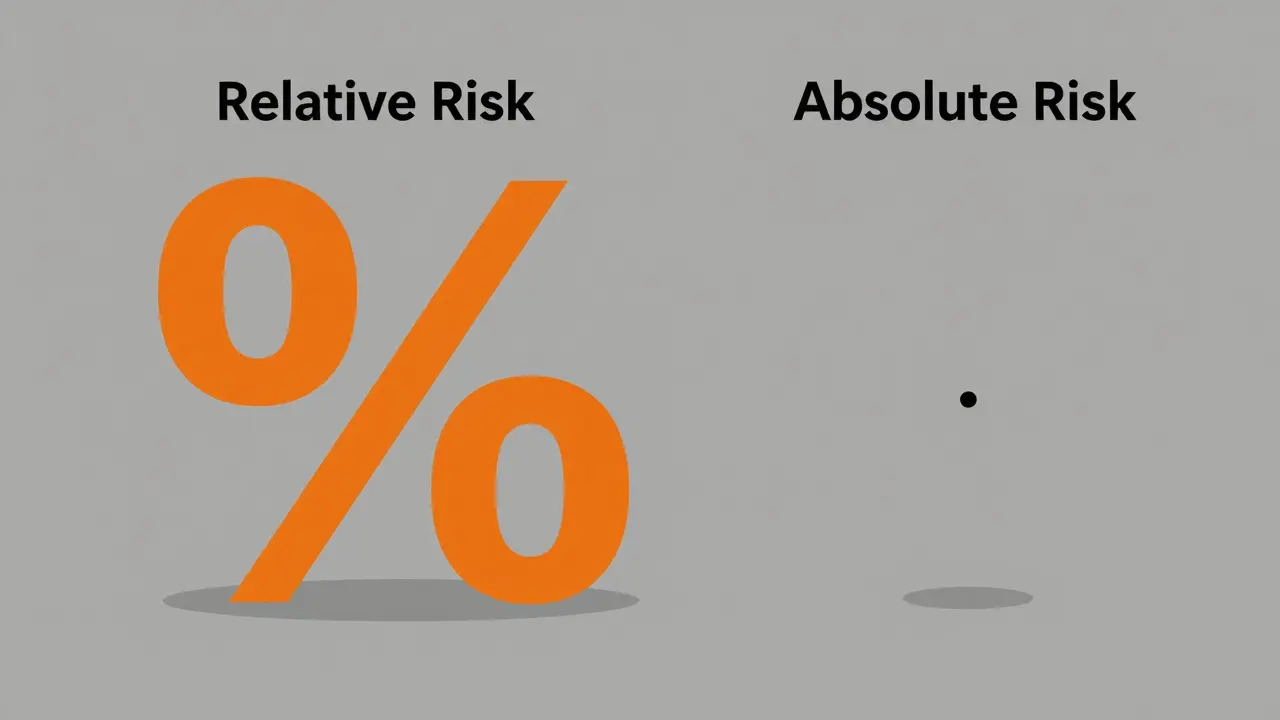
Absolute Risk vs. Relative Risk: The Math Trick
If there is one statistical trick that journalists love to use, it is relative risk. It makes small dangers sound huge. Let’s break down why this matters with a concrete example.
Imagine a study finds that taking a certain painkiller increases the risk of a rare stomach bleed by 100%. Sounds scary, right? Your risk doubled! But here is what the headline won’t tell you: the baseline risk was 1 in 10,000 people. A 100% increase means the new risk is 2 in 10,000. That is still a very low probability.
This is the difference between Relative Risk and Absolute Risk. Relative risk compares two groups (those who took the drug vs. those who didn’t). Absolute risk tells you the actual chance of something happening to you.
A 2020 study published in the BMJ analyzed 347 news articles about medication risks. It found that major newspapers correctly explained absolute versus relative risk in only 62% of cases. Cable news dropped to 38%, and digital-native platforms were at just 22%. When you read a scary statistic, always ask: "What is the absolute risk?" If the article doesn’t say, it is likely hiding a small number behind a big percentage.
| Metric Type | Definition | Example Scenario | Media Appeal |
|---|---|---|---|
| Relative Risk | Comparison of risk between two groups | Risk increased by 100% | High (Sounds dramatic) |
| Absolute Risk | Actual probability of an event occurring | Risk went from 1 in 10,000 to 2 in 10,000 | Low (Sounds manageable) |
| Confidence Interval | Range within which the true effect likely lies | 95% CI: 1.2 to 1.8 | N/A (Rarely reported) |
Checking the Methodology: How Was the Data Collected?
Not all studies are created equal. The way researchers gather data on drug safety determines how reliable the findings are. When evaluating a media report, try to identify the method used. There are four primary techniques, each with strengths and weaknesses.
- Incident Report Review: Hospitals review reports filed after an accident happens. This is passive. It catches severe events but misses minor ones. It has high specificity but low sensitivity.
- Chart Review: Researchers go back and look at patient records. This is more thorough but labor-intensive. It often captures only 5-10% of actual errors because subtle issues don’t show up in charts.
- Direct Observation: Staff watch doctors and nurses in real-time. This identifies the most problems but requires significant resources and can change behavior (the Hawthorne Effect).
- Trigger Tool Methodology: Developed by Dr. David Bates, this uses specific indicators (like a sudden drop in blood pressure) to flag potential errors in records. A 2011 systematic review found this offers the best balance of effectiveness and efficiency.
If a news article claims a hospital has a "high error rate" based on incident reports alone, be skeptical. They are likely missing the vast majority of minor issues. Conversely, if a study uses trigger tools, the data is likely more robust. Always check if the article mentions the study’s limitations. A 2021 JAMA Network Open study found that 79% of medication safety news articles failed to explain their study’s limitations, leaving readers with an incomplete picture.
Source Verification: Who Says So?
Where did the information come from? Credible medication safety reporting relies on authoritative databases and regulatory bodies. Look for references to these key entities:
- FDA Adverse Event Reporting System (FAERS): The U.S. database for voluntary reports of adverse events. Remember: a report is not proof of causation. Just because someone took Drug A and got sick doesn’t mean Drug A made them sick. Spontaneous reporting systems suffer from underreporting (estimated at 90-95%) and bias.
- WHO Uppsala Monitoring Centre: The global hub for international drug safety monitoring. Their data provides a broader context than national reports alone.
- ClinicalTrials.gov: For new drugs, check if the trial results are publicly available. The EU requires reporting within 12 months; the U.S. allows up to 24 months.
- Sentinel Analytics Platform: Launched by the FDA in 2023, this provides real-world evidence on medication safety. Only 18% of reporters currently reference this resource, so seeing it cited is a good sign of quality journalism.
If a report cites "anonymous sources" or "industry insiders" without linking to primary data, treat it with caution. A 2021 study in Drug Safety found that only 44% of media reports citing FAERS properly contextualized the difference between reported incidents and proven causal links.
Red Flags in Health Journalism
How can you spot a bad report quickly? Here are five red flags that suggest a story is more hype than help:
- Lack of Comparator Group: Did the study compare patients taking the drug to those who weren’t? Without a control group, you can’t know if the side effects are unique to the drug or just common in the general population. A 2021 audit found appropriate comparators were missing in 52% of media-described studies.
- No Mention of Confounding Factors: Did the study account for other variables? For example, if a study links a drug to weight gain, did it control for diet changes or exercise levels? Controlling for confounding was present in only 35% of media-covered studies.
- Sensationalized Language: Words like "miracle," "deadly," "toxic," or "scandal" are emotional triggers, not scientific descriptors. Science is nuanced; clickbait is not.
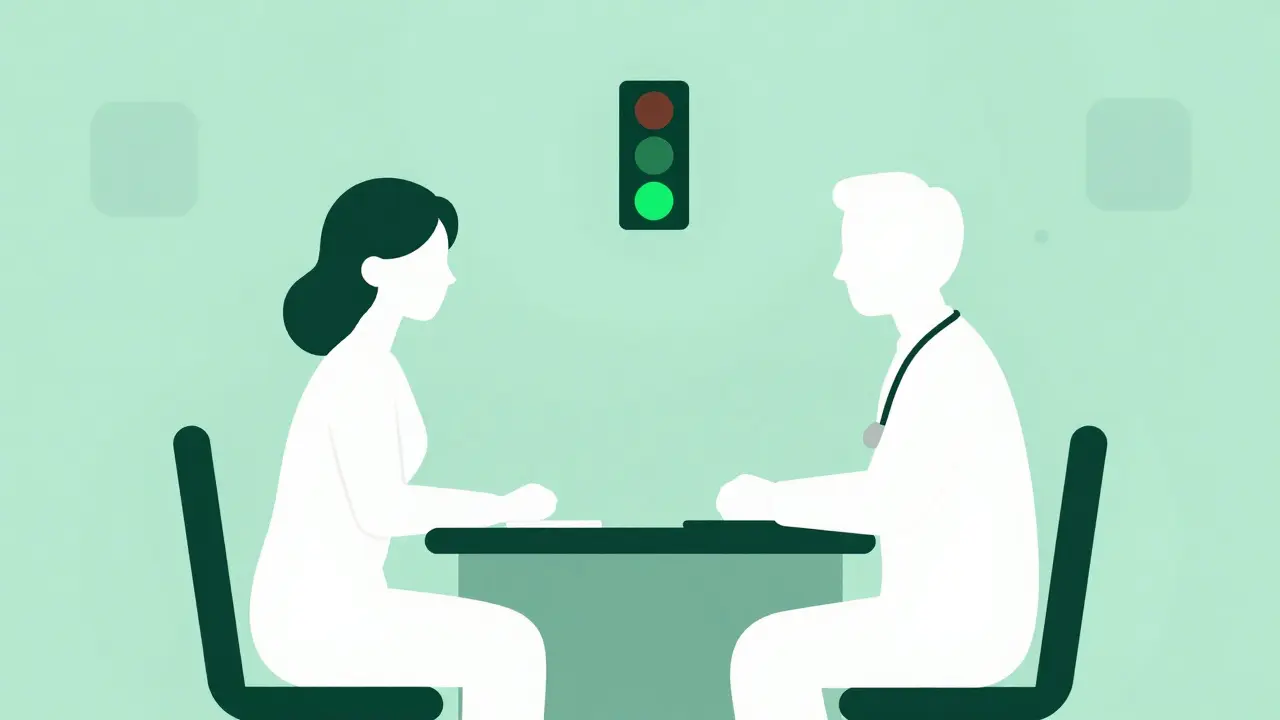
- Ignoring the "Traffic Light" System: The International Society of Pharmacovigilance recommends a traffic light system for risk communication (Red for critical, Amber for moderate, Green for minimal). Only 27% of media reports use this clear framework. If a report doesn’t categorize the severity of the risk, it is harder to assess importance.
- Social Media Origins: Be extra cautious with content from Instagram or TikTok. A 2023 analysis by the National Patient Safety Foundation found that 68% of medication safety claims on these platforms contained incorrect information, compared to 41% on traditional media.
Practical Steps for Patients
So, what do you do when you encounter a worrying report? Follow this simple protocol:
- Pause and Verify: Don’t stop your medication immediately. Abruptly stopping certain drugs (like blood pressure meds or antidepressants) can be dangerous. Check the source. Is it a reputable health organization or a tabloid?
- Check the Absolute Risk: Look for the actual numbers. Is the risk 1 in 10 or 1 in 10,000? If the article doesn’t provide it, search for the original study or a summary from a trusted site like PubMed or the FDA website.
- Consult Your Pharmacist or Doctor: They have access to professional guidelines from organizations like the American Society of Health-System Pharmacists (ASHP) and the Institute for Safe Medication Practices (ISMP). They can put the risk in the context of your personal health history.
- Look for Consensus: Is this one isolated study, or do multiple agencies agree? Regulatory bodies rarely act on a single paper. They look for consistent signals across multiple datasets.
In a world where AI-generated health content is rising-with a 2023 Stanford study finding 65% of such articles contain factual errors-your skepticism is your best defense. By asking the right questions and understanding the basics of drug safety methodology, you empower yourself to make informed decisions rather than reactive ones. Stay curious, stay critical, and always talk to your healthcare provider before making changes.
Should I stop taking my medication if I see a negative news report?
No, never stop taking prescribed medication abruptly based solely on a news report. Many drugs, such as beta-blockers or antidepressants, require tapering off to avoid withdrawal symptoms or rebound effects. Always consult your doctor or pharmacist first. They can evaluate whether the risk mentioned in the report applies to your specific situation and discuss alternatives if necessary.
What is the difference between a side effect and an adverse drug reaction?
A side effect is a known, often predictable, secondary effect of a drug (e.g., drowsiness from antihistamines). An adverse drug reaction (ADR) is a harmful and unintended response to a medication at normal doses. While all ADRs are side effects, not all side effects are considered adverse reactions if they are mild and expected. Media reports often conflate these terms, causing unnecessary alarm.
How reliable are online drug review sites like WebMD or Drugs.com?
These sites can be helpful for general information, but they vary in quality. Look for sites that cite primary sources like the FDA label or peer-reviewed journals. User reviews on these platforms are anecdotal and subject to selection bias (people with extreme experiences are more likely to post). Use them as a starting point for discussion with your doctor, not as a definitive diagnostic tool.
Why do some media reports claim a drug is 'banned' when it isn't?
Regulatory actions are nuanced. A drug might receive a "black box warning" (the strongest FDA warning) or be restricted for certain populations, but not banned entirely. Sensational headlines often simplify these complex regulatory steps into "banned" to grab attention. Always check the official FDA or EMA (European Medicines Agency) website for the actual status of a medication.
Can social media posts about drug safety be trusted?
Generally, no. Social media platforms lack editorial oversight and fact-checking mechanisms. A 2023 study found that 68% of medication safety claims on Instagram and TikTok contained incorrect information. Algorithms prioritize engagement over accuracy, meaning sensational or false claims spread faster than nuanced, correct information. Treat social media health advice with extreme skepticism.