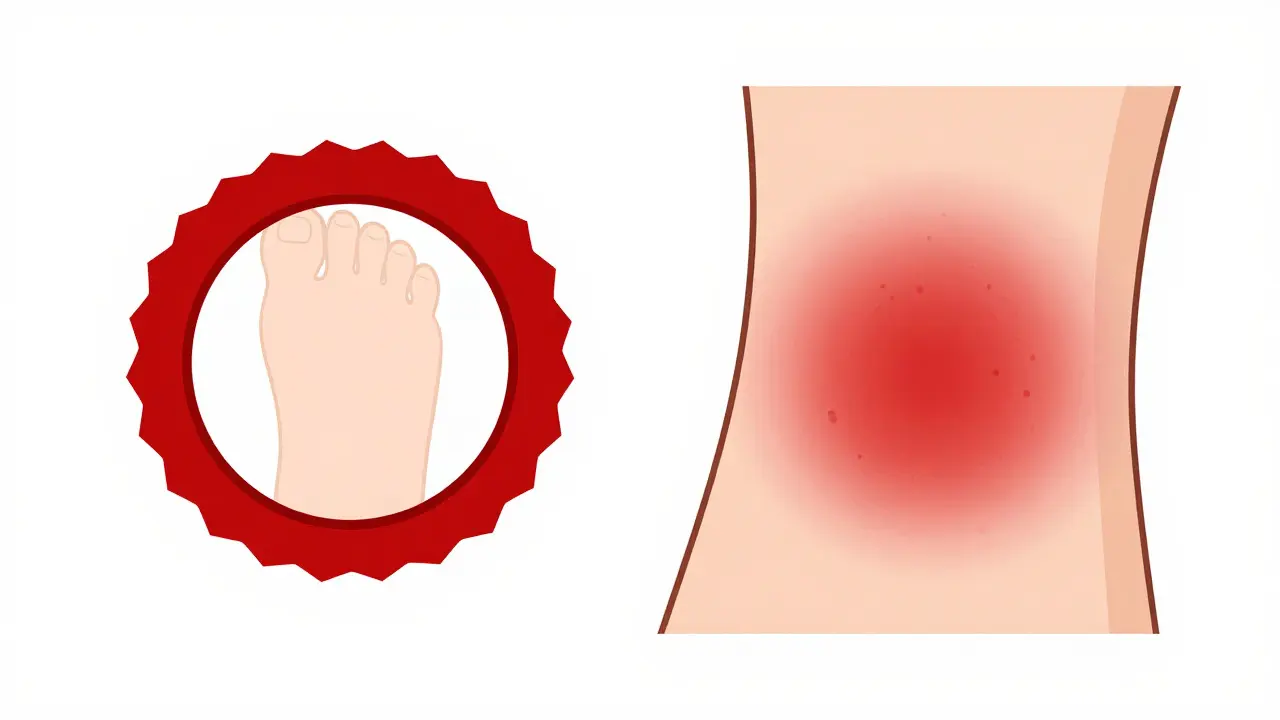
That itchy, red rash on your foot or groin isn't just a random irritation. It's likely a fungal skin infection, a condition affecting roughly one in four people globally at any given time. You might be scratching away with hydrocortisone cream, thinking it's eczema, only to watch the spot get worse. That happens because steroids feed fungi. The difference between a quick fix and a months-long battle lies in identifying whether you're dealing with Candida, a yeast that loves moisture, or ringworm, a mold that eats keratin. Getting the diagnosis right means picking the right antifungal medication, stopping the spread, and preventing that annoying recurrence.
Spotting the Difference: Ringworm vs. Candida
You can't treat what you don't recognize. While both cause redness and itching, their appearances are distinct enough that a careful look often reveals the culprit. Misdiagnosis is common; studies show primary care doctors miss about half of tinea cases, confusing them for psoriasis or dermatitis. Here is how to tell them apart without a lab coat.
Ringworm (technically known as tinea) is caused by dermatophytes, molds that need keratin-the protein in your skin, hair, and nails-to survive. Despite the name, there are no worms involved. The term dates back to the 19th century because the lesions form a circular, worm-like pattern. Classic ringworm presents as an annular plaque: a red, scaly ring with a raised, active border and clearer skin in the center. It looks like a target. If it’s on your scalp (tinea capitis), you’ll see patchy hair loss. On your feet (tinea pedis, or athlete’s foot), it causes peeling between the toes or blisters on the soles.
In contrast, Candida is a yeast, not a mold. It thrives in warm, moist environments like skin folds, under breasts, in the groin, or in diaper areas. A Candida infection doesn’t form a clean ring. Instead, it creates beefy red, moist, macerated patches. The giveaway sign is "satellite lesions"-small red pustules or spots scattered around the main rash area. If the rash is shiny, weeping, and surrounded by tiny outlying dots, you’re likely looking at yeast, not ringworm.
| Feature | Ringworm (Tinea) | Candida (Yeast) |
|---|---|---|
| Pathogen Type | Dermatophyte Mold (e.g., Trichophyton) | Yeast (e.g., Candida albicans) |
| Appearance | Red ring with clear center, scaly border | Beefy red, moist, satellite pustules |
| Common Locations | Feet, groin, scalp, body surface | Skin folds, diaper area, mucous membranes |
| Primary Risk Factor | Contact with infected persons/animals, sweat | Moisture, antibiotics, diabetes, immunosuppression |
| Diagnostic Test | KOH prep shows hyphae | KOH prep shows budding yeast/pseudohyphae |
Why You Got Infected: Risk Factors and Transmission
Fungi are everywhere. They live in soil, on animals, and on human skin. An infection occurs when the fungus overgrows due to favorable conditions. Understanding transmission helps you stop the cycle.
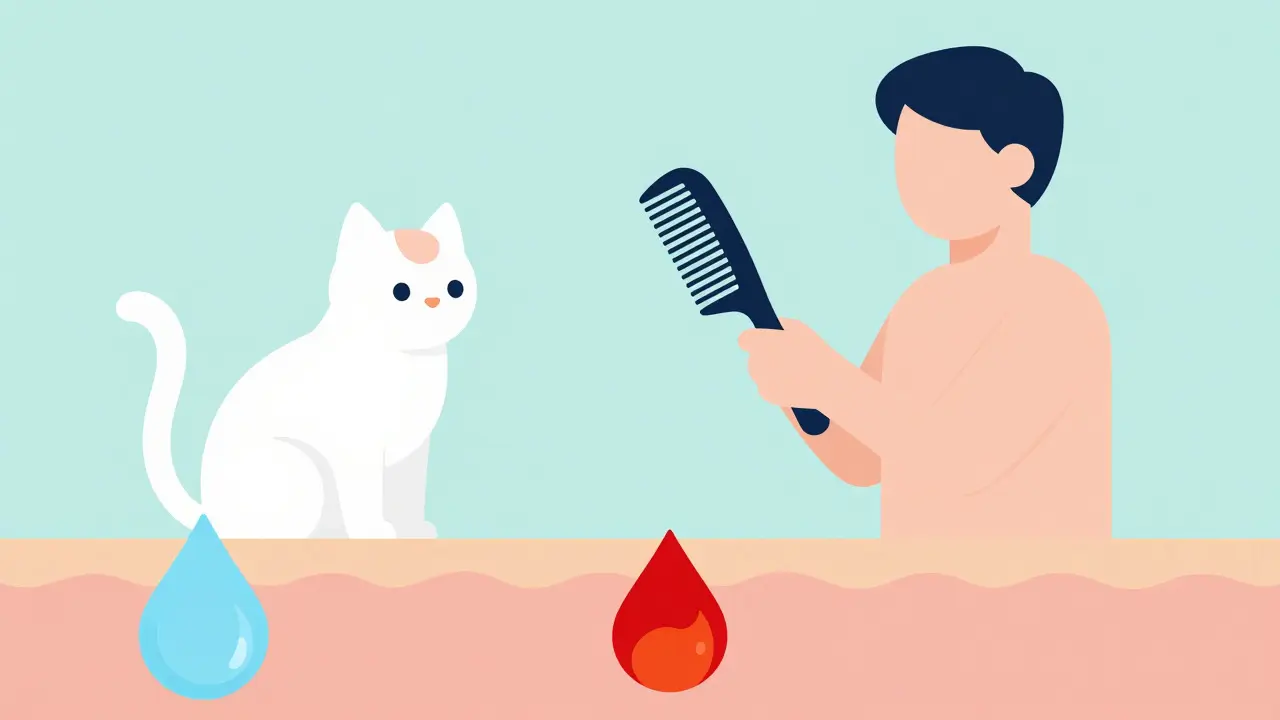
Ringworm is highly contagious through direct contact. About 85-90% of adult foot infections come from person-to-person contact or shared surfaces like locker room floors. In children, 20-30% of body ringworm cases come from pets-specifically cats and dogs carrying zoophilic strains. If your dog has a bald patch, check yourself. Tinea capitis (scalp ringworm) is also common in schools, spreading via combs and hats.
Candida behaves differently. Most adults carry Candida on their skin or in their gut without issues. It turns pathogenic when the environment changes. Antibiotics kill good bacteria that keep yeast in check, leading to overgrowth. Diabetes is a major risk factor; high blood sugar feeds yeast, increasing susceptibility by 2.5 times. Immunocompromised individuals face a 3-5 times higher risk of severe, recurrent infections. Even simple friction and sweat can trigger Candida intertrigo in skin folds.
Diagnosis: When to See a Doctor
You can often self-diagnose classic cases, but uncertainty is dangerous. Using steroid creams on a fungal infection suppresses local immunity, allowing the fungus to grow deeper and change its appearance-a phenomenon called tinea incognito. This makes later diagnosis much harder.
If the rash doesn’t improve after two weeks of OTC antifungal treatment, or if it spreads rapidly, see a dermatologist. Diagnosis typically involves a potassium hydroxide (KOH) preparation. The doctor scrapes a bit of skin, adds KOH to dissolve human cells, and looks for fungal structures under a microscope. This test is positive in 70-80% of cases and gives immediate results. Fungal cultures take 2-4 weeks but identify the specific species, which matters if resistance is suspected. Molecular testing is becoming more available for complex cases.
Treatment Protocols: Topical vs. Oral Antifungals
Treatment depends entirely on the type of fungus and the location. The American Academy of Dermatology guidelines emphasize using the mildest effective therapy first. For most limited skin infections, topical creams work well. For nail infections or widespread disease, oral medication is necessary.
For Ringworm (Tinea):
- Topical Allylamines: Terbinafine (Lamisil) is often preferred. Apply twice daily for 1-2 weeks. It kills the fungus directly (fungicidal). Cure rates reach 70-90% for body ringworm.
- Topical Azoles: Clotrimazole or miconazole. Apply twice daily for 2-4 weeks. These inhibit fungal growth (fungistatic) and require longer use to prevent relapse.
- Oral Terbinafine: Required for nail infections (tinea unguium) or extensive scalp/body cases. Dose is 250mg daily for 2-6 weeks. Liver function tests are recommended before starting due to a small risk of liver enzyme elevation.
For Candida:
- Topical Nystatin or Azoles: Apply to affected skin folds 1-2 times daily for 1-2 weeks. Keep the area dry. Powdering with antifungal powder can help absorb moisture.
- Oral Fluconazole: Used for severe cutaneous candidiasis or mucosal infections. A single dose or weekly doses may be prescribed depending on severity.
A critical note on adherence: only 45% of patients complete full topical courses. Stopping early because the itch stops leaves surviving fungi that mutate and regrow. Finish the entire course, even if the skin looks normal.
Emerging Challenges: Resistance and New Drugs
Antifungal resistance is no longer just a hospital problem. Dr. Boni Elewski notes that 5-7% of Trichophyton rubrum isolates in North America now show reduced susceptibility to terbinafine. This means standard treatments fail more often. Additionally, Candida auris, a multidrug-resistant yeast, is spreading in healthcare settings, though community skin infections remain mostly sensitive to standard drugs.
New options are entering the market. Ibrexafungerp (Brexafemme), approved in 2023, targets recurrent vaginal candidiasis with a novel mechanism, reducing recurrence by 50% compared to placebo. Ciclopirox is now recommended as first-line for tinea versicolor due to superior efficacy. As resistance grows, expect stricter guidelines on oral antifungal use and more focus on microbiome health.
Prevention and Daily Management
Treating the infection is only half the battle. Preventing reinfection requires changing your habits. Fungi love warmth and moisture. Your goal is to create a hostile environment for them.
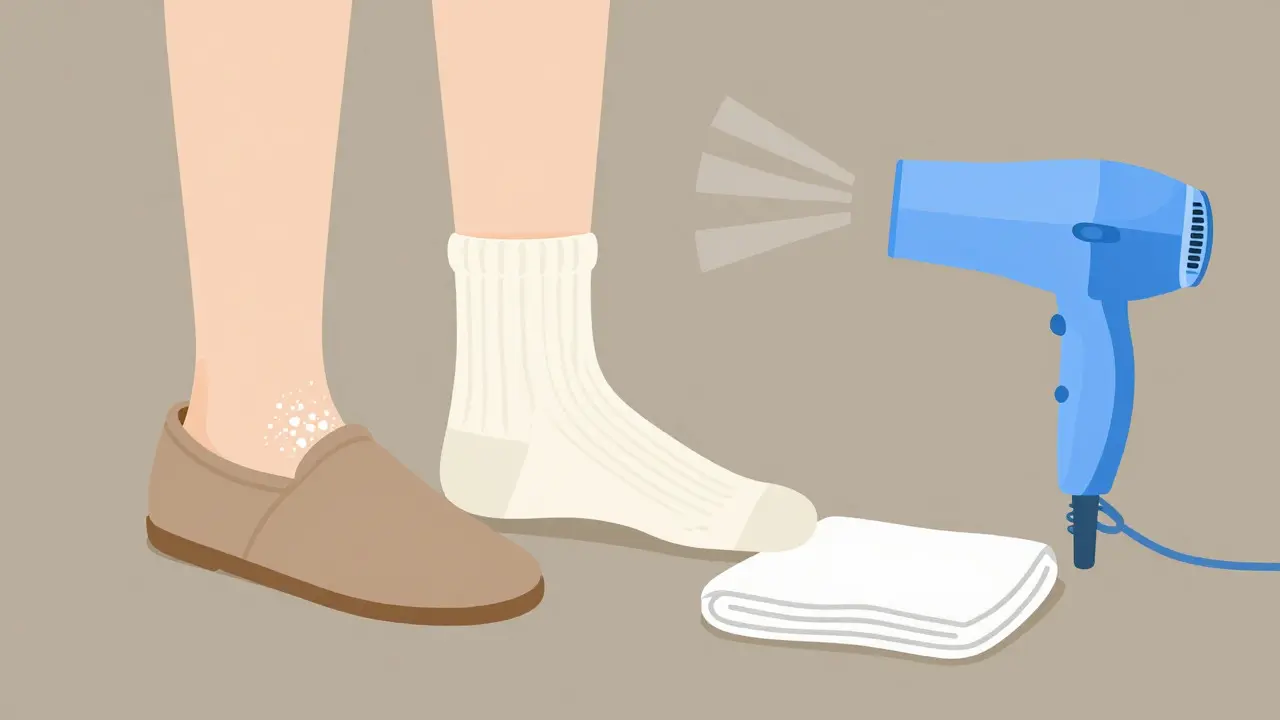
- Keep it Dry: After showering, dry skin folds thoroughly. Use a hairdryer on cool setting for hard-to-reach areas.
- Change Clothes: Wear breathable cotton underwear and socks. Change out of sweaty gym clothes immediately.
- Disinfect: Wash towels, bedding, and clothes in hot water. Disinfect shared surfaces like bathroom floors.
- Pet Care: If you have ringworm, check your pets. Treat them simultaneously to avoid ping-pong infections.
- Foot Hygiene: Use antifungal powder in shoes. Rotate shoes to allow them to dry completely between uses.
Probiotics may also play a role. Some users report fewer recurrences when combining antifungals with Lactobacillus supplements, particularly for Candida. While evidence is mixed, maintaining a healthy gut and skin microbiome supports natural defense mechanisms.
How long does it take for ringworm to go away?
With proper topical antifungal treatment, visible symptoms of ringworm (tinea corporis) usually improve within 1-2 weeks. However, you must continue applying the cream for the full prescribed duration (often 2-4 weeks) to kill all fungal spores and prevent recurrence. Nail infections take 3-6 months to resolve as the healthy nail grows out.
Can you get ringworm from a pet?
Yes. Zoophilic ringworm from cats and dogs accounts for 20-30% of childhood body infections. Look for circular, scaly bald patches on your pet. If diagnosed, treat both the animal and the human household members simultaneously to prevent cross-infection.
Is Candida yeast infection contagious?
Candida is less contagious than ringworm. It primarily overgrows from your own flora due to moisture, antibiotics, or immune changes. However, skin-to-skin contact in moist areas can transfer it, especially to immunocompromised individuals. Good hygiene reduces this risk.
What is the best OTC antifungal for athlete's foot?
Terbinafine (Lamisil) is generally considered the most effective OTC option for tinea pedis. Apply it once or twice daily for 1-2 weeks. Clotrimazole is also effective but requires a longer treatment course of 2-4 weeks. Ensure your feet are completely dry before application.
When should I see a doctor for a fungal rash?
See a doctor if the rash doesn't improve after 2 weeks of OTC treatment, spreads rapidly, involves the scalp or nails, or if you have diabetes or a weakened immune system. Also seek care if you suspect a misdiagnosis, such as if steroid creams made the rash worse.