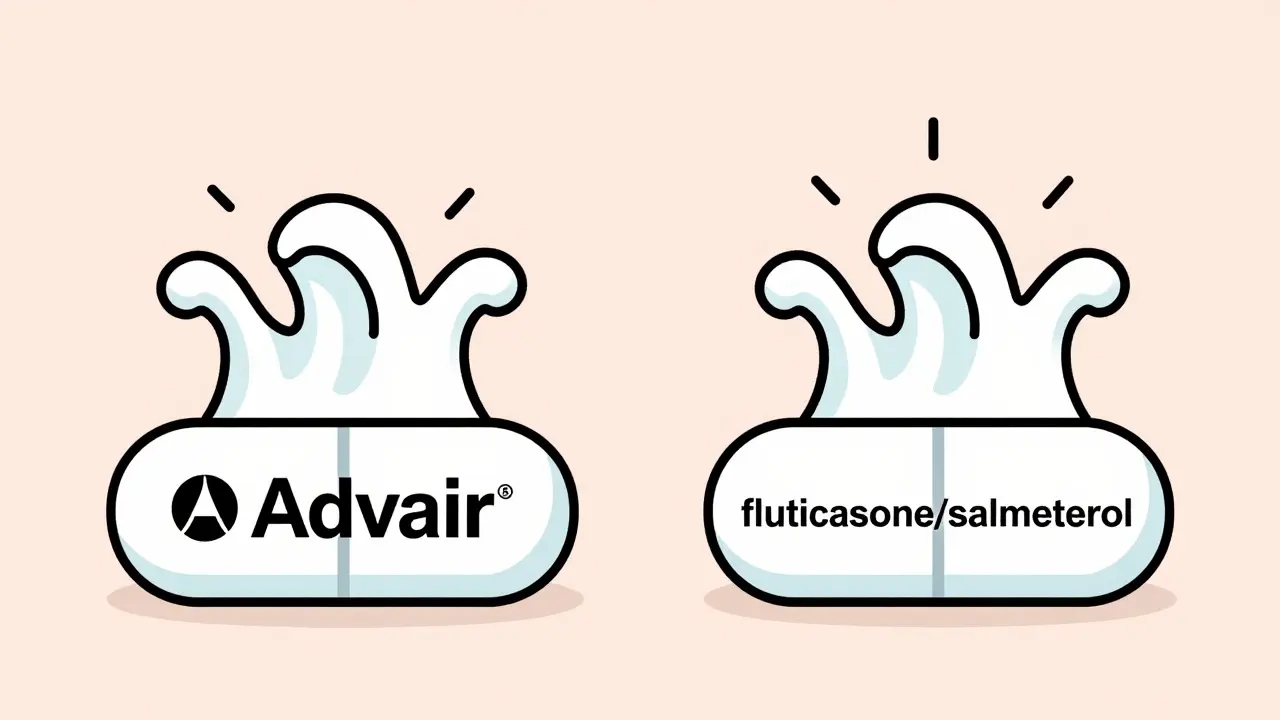
When you pick up a prescription, you might see two names on the bottle: one you recognize, like Advair or Lipitor, and another that looks unfamiliar, like fluticasone/salmeterol or atorvastatin. The second one is the generic version. And here’s the truth: it’s not a cheaper knockoff. It’s the same medicine, approved by the FDA, and it works just as well. But why does it cost so much less? And should you always choose it?
What Exactly Makes a Drug "Generic"?
A generic drug isn’t a copy. It’s an exact match in active ingredients, strength, dosage form, and how it works in your body. The FDA requires that generics deliver the same amount of medicine into your bloodstream at the same rate as the brand-name version. This is called bioequivalence - and it’s not a suggestion. It’s a strict rule. For most drugs, the amount of active ingredient absorbed must be within 80% to 125% of the brand-name drug. For drugs with a narrow therapeutic index - like warfarin or levothyroxine - the range is even tighter: 90% to 111%. That means your body gets the same effect, whether you take the brand or the generic.Why Are Generic Drugs So Much Cheaper?
Brand-name drugs cost a lot because their makers spent years and hundreds of millions of dollars on research, clinical trials, and marketing before they could sell them. Once the patent runs out - usually after 20 years, though the effective exclusivity is often 12-14 years - other companies can make the same drug. They don’t need to repeat those expensive trials. All they have to prove is that their version behaves the same way in your body. That cuts costs dramatically. The result? Generic drugs cost 80-85% less on average. In 2022, the average out-of-pocket cost for a generic prescription was $12.50. The same drug as a brand name? Around $68.30 with insurance. That’s not a small difference. For someone taking a daily medication for high blood pressure or diabetes, switching to generic can save hundreds - even thousands - of dollars a year. The U.S. healthcare system saved over $1.67 trillion from 2007 to 2016 thanks to generics. Every year since 2017, those savings have averaged $253 billion.Do Generics Look Different? Why?
Yes, they often look different. A generic version of a blue oval pill might be white and round. That’s not because it’s weaker. It’s because U.S. trademark laws say generics can’t look exactly like the brand-name drug. So manufacturers change the color, shape, size, or even the flavor. These differences are only in the inactive ingredients - things like dyes, fillers, or binders. Those don’t affect how the medicine works. But they can matter if you’re allergic to a specific dye or have trouble swallowing a certain shape.Are Generics as Safe and Effective?
Yes. The FDA holds generic drugs to the same standards as brand-name drugs for safety, purity, strength, and quality. Every generic manufacturer must meet the same inspection rules. The FDA monitors both types equally. In fact, many brand-name companies actually make their own generic versions after the patent expires. So the same factory that made your brand-name drug might now be making the generic version - just under a different label. A 2022 Consumer Reports survey of over 1,200 people found that 89% believed generics were just as effective. On Reddit’s r/Pharmacy community, 86% of users reported no difference between brand and generic versions of common meds like lisinopril, metformin, and atorvastatin. One person saved $400 a month switching from brand Advair to its generic without any change in asthma control.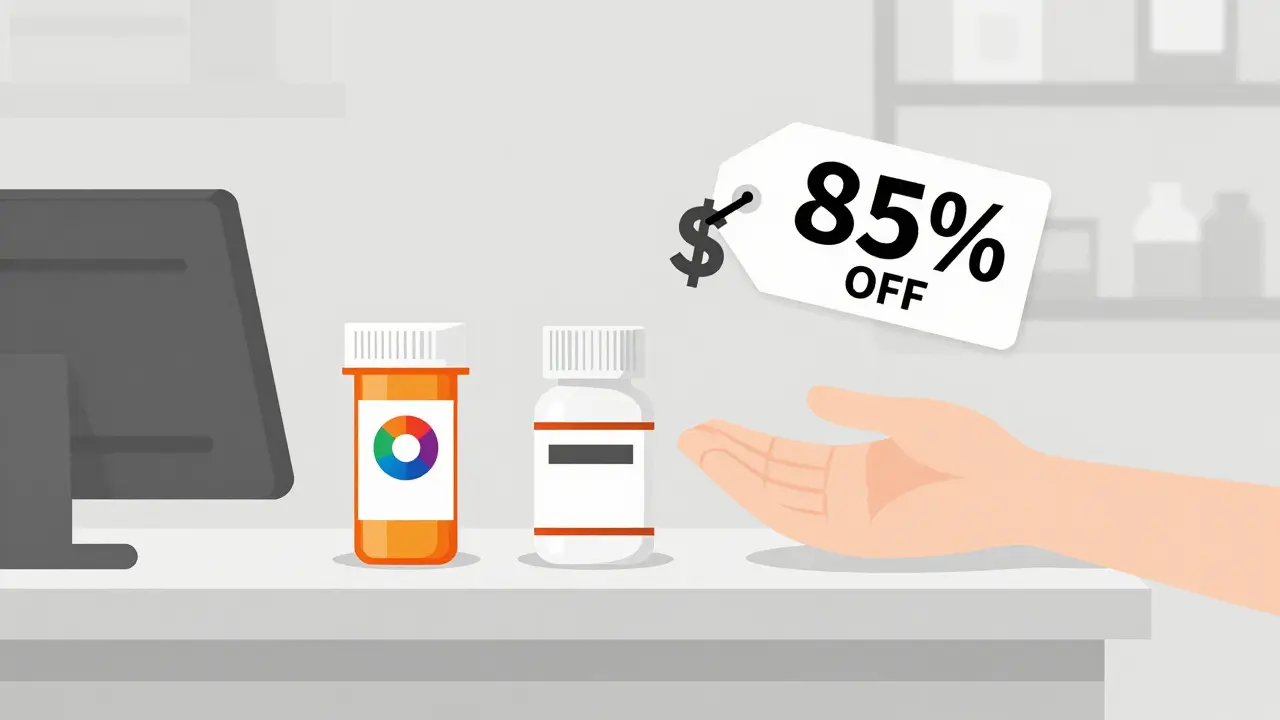
When Might You Still Want the Brand Name?
There are a few cases where doctors or patients stick with brand-name drugs - not because generics are worse, but because of small, real-world variations. For drugs with a narrow therapeutic index - where even tiny changes in blood levels can cause side effects or make the drug stop working - some providers prefer consistency. Levothyroxine (for thyroid issues) and warfarin (a blood thinner) fall into this category. While a 2019 JAMA study of 38,000 patients found no clinical difference between brand and generic levothyroxine, some patients report feeling off after switching. In those cases, staying on one version - brand or generic - is recommended. Another situation: if you’ve been on a brand-name drug for years and it works perfectly, there’s no rush to switch. But if cost is a burden, talk to your doctor. Often, the generic will work just as well.What About Complex Drugs?
Not all drugs can be easily copied. Inhalers, injectables, creams, and complex biologics (like insulin or rheumatoid arthritis drugs) are harder to replicate. These are called “complex generics.” The FDA has identified over 150 such drugs where generic versions could save billions - but manufacturing them is technically challenging. That’s why only about 30% of brand-name drugs currently have generic alternatives. But that’s changing. Over 450 brand-name drugs are expected to lose patent protection by 2028, opening the door for new generics.Can Pharmacists Switch Your Prescription?
In 49 out of 50 U.S. states, pharmacists are legally required to substitute a generic if one is available - unless your doctor writes “dispense as written” on the prescription. This isn’t a trick. It’s a cost-saving rule built into the system. If you prefer the brand name, you need to ask your doctor to block the substitution. Otherwise, you’ll get the generic unless you pay the extra cost out of pocket.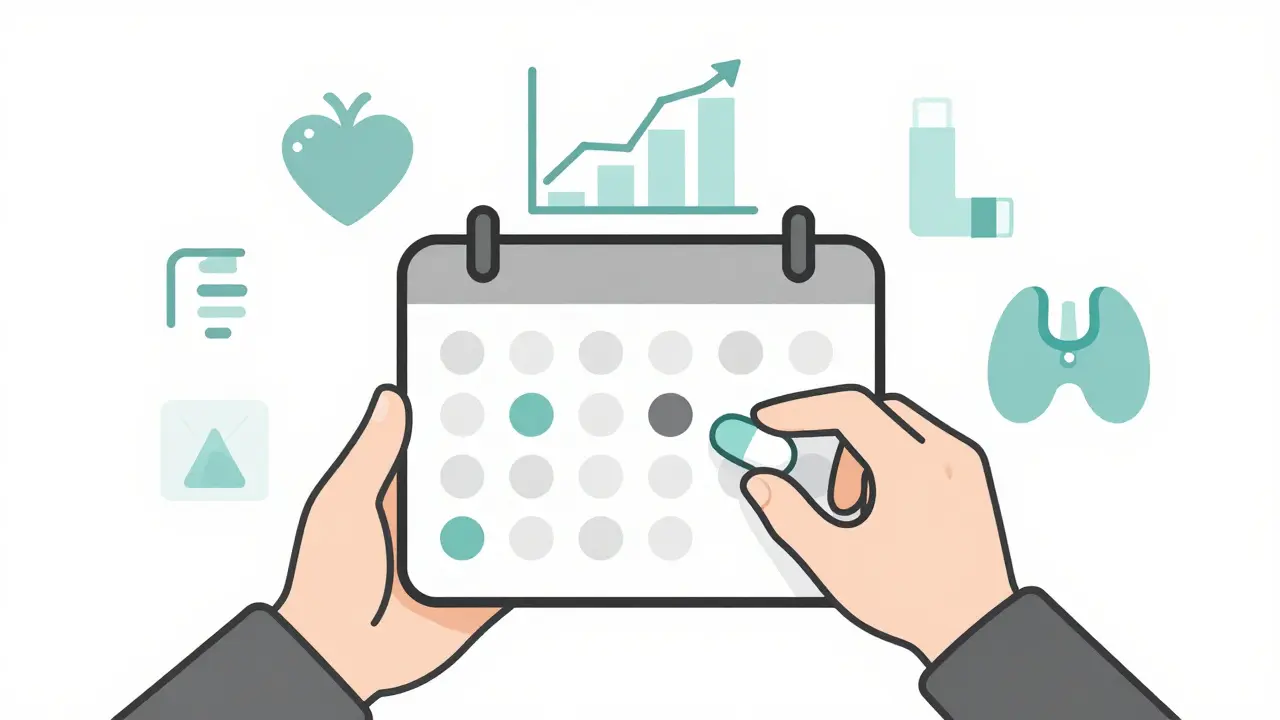
How to Stay in Control
If you’re switching from brand to generic - or back and forth - keep a simple record. Write down the name of the drug you’re taking, whether it’s brand or generic, and how you feel. If you notice changes - like new side effects or reduced effectiveness - talk to your doctor or pharmacist. Don’t assume it’s the generic’s fault. Sometimes it’s just your body adjusting. Also, use tools like GoodRx or your pharmacy’s price checker. Sometimes the brand-name drug is cheaper than the generic if you’re paying cash - especially if you have a coupon. Always compare.What’s Next for Generic Drugs?
The FDA is working to speed up approval times for generics. Under its GDUFA III program, they aim to review applications in just 10 months by 2027. The 2022 Inflation Reduction Act also includes measures to encourage faster generic competition for high-cost drugs. And with over 80% of active ingredients for generics made in India and China, supply chain issues during the pandemic highlighted vulnerabilities. New laws like the CREATES Act are trying to prevent brand manufacturers from blocking generic access. The bottom line? Generics are safe, effective, and save billions every year. For most people, they’re the smart choice. The only exceptions are rare cases where consistency matters more than cost - and even then, switching back is always an option.Why Don’t More People Use Generics?
Many people still think “generic” means “lower quality.” That’s a myth. The FDA doesn’t approve generics unless they match the brand exactly. But marketing and brand loyalty run deep. People remember the name on the box. They trust the logo. And sometimes, doctors don’t push generics because they’re not aware of the cost difference or assume patients prefer the brand. The truth? Generics make healthcare affordable. Without them, millions would skip doses or skip treatment entirely. Choosing a generic isn’t settling. It’s choosing smart.Are generic drugs as safe as brand-name drugs?
Yes. The FDA requires generic drugs to meet the same strict standards as brand-name drugs for safety, strength, quality, purity, and effectiveness. Every generic must prove it delivers the same active ingredient at the same rate and amount as the brand. The same manufacturing facilities and inspections apply to both.
Why do generic drugs look different?
U.S. trademark laws prevent generics from looking identical to brand-name drugs. So manufacturers change the color, shape, size, or flavor. These differences are only in inactive ingredients - like dyes or fillers - which don’t affect how the drug works. The active ingredient is identical.
Can I trust a generic drug for chronic conditions like high blood pressure or diabetes?
Absolutely. Generics are widely used and proven effective for chronic conditions. Over 90% of prescriptions for medications like lisinopril, metformin, and atorvastatin are filled with generics. Studies show no meaningful difference in outcomes between brand and generic versions for these drugs. The cost savings can be life-changing for long-term use.
Are there any drugs where generics don’t work as well?
For most drugs, no. But for medications with a narrow therapeutic index - like warfarin, levothyroxine, or certain seizure drugs - even small changes in blood levels can matter. While studies show generics are safe and effective, some patients or doctors prefer sticking with one version - brand or generic - to avoid any possible variation. If you feel different after switching, talk to your doctor.
Why do pharmacies automatically switch to generics?
In 49 states, pharmacy laws require pharmacists to substitute a generic if one is available - unless the doctor writes "dispense as written." This is designed to reduce costs for patients and the healthcare system. Generics save billions each year. You can always ask for the brand name, but you’ll likely pay more.
Do generic drugs take longer to work?
No. The FDA requires generics to be bioequivalent - meaning they’re absorbed into your bloodstream at the same rate and to the same extent as the brand-name drug. If the brand works in 30 minutes, the generic does too. There’s no delay.
How can I find out if a generic is available for my medication?
Ask your pharmacist or doctor. You can also check the FDA’s Orange Book online, which lists all approved generic equivalents. Many pharmacy apps and websites like GoodRx also show whether a generic is available and how much it costs compared to the brand.
Kathy McDaniel
just switched my blood pressure med to generic and saved $300 a year 🙌 no side effects, no weird vibes, just cheaper same stuff. why do people still pay extra??
Kirstin Santiago
it’s wild how much misinformation exists around generics. i’ve worked in pharmacies for 15 years and the science is rock solid. same active ingredient, same FDA oversight, same results. the only time i’ve seen issues is when patients switch back and forth between brands and generics too often - consistency matters more than the label.
also, fun fact: 70% of the generics you’re taking were made in the same factory as the brand-name version. just different packaging.
Anjula Jyala
bioequivalence 80-125% range is a joke. that’s a 45% variance. for drugs with narrow therapeutic index like levothyroxine that’s clinically significant. the FDA is lazy and the pharmaceutical industry is laughing all the way to the bank. you think you’re saving money but you’re risking your health with inconsistent absorption profiles. read the actual studies not the marketing brochures
Andrew Clausen
the claim that generics are 80-85% cheaper is misleading. it’s only true when comparing retail prices with insurance subsidies. without insurance, some generics cost more than brand-name drugs due to market monopolies. also, the FDA’s bioequivalence standard allows for up to 25% variation in absorption - that’s not identical. calling it the same medicine is scientifically inaccurate.
and no, the same factory doesn’t always make both. many brand-name companies outsource production to third-party manufacturers that don’t produce generics.
Murphy Game
they’re not just cheaper - they’re part of a corporate scheme to control your health. did you know the same companies that make brand-name drugs also own the generic versions? the FDA is complicit. your ‘generic’ levothyroxine might be made by the same lab that made Synthroid - but now they charge you $5 instead of $70 and call it a ‘savings.’ it’s psychological manipulation wrapped in a white pill.
they want you to believe you’re saving money so you stop asking questions. wake up.
John O'Brien
bro this is the dumbest thing i’ve read all week. generics are literally the same damn thing. i’ve been on atorvastatin for 8 years, switched to generic when my insurance forced it, and my cholesterol hasn’t budged. same bottle, same effect, same me. stop overthinking it. you’re not getting weaker pills, you’re getting the same pills with a cheaper label. if you’re paranoid about it, pay more. but don’t act like you’re some medical genius because you read one reddit thread.
Kegan Powell
the real win here isn’t just the money - it’s the peace of mind that more people can afford to stay healthy 🌱
we live in a system where people skip meds because they cost too much. generics fix that. not perfectly, not always - but enough to save lives. i’ve seen grandparents choose between insulin and groceries. generics? they make that choice disappear.
it’s not about the pill color or the factory. it’s about dignity. and yeah i cried the first time my mom told me her blood sugar stabilized after switching to generic metformin. no emojis needed - just truth.
April Williams
you think this is about savings? it’s about control. the government and big pharma want you dependent on cheap meds so you never question why your insulin costs $300 or why your asthma inhaler is $500. generics are a trap - they make you feel smart for choosing ‘the cheaper option’ while they quietly raise prices on everything else. you think you’re winning? you’re being groomed.
and don’t even get me started on the fact that 80% of generic ingredients come from China. do you know what’s in those pills? do you trust a country that doesn’t even follow FDA rules? you’re not saving money - you’re gambling with your immune system.
Harry Henderson
GENERIC IS THE FUTURE. STOP WASTING MONEY. IF YOU’RE STILL ON BRAND-NAMES BECAUSE YOU’RE AFRAID OF THE WORD ‘GENERIC’ - YOU’RE PART OF THE PROBLEM. GET OVER IT. YOUR BANK ACCOUNT WILL THANK YOU. YOUR BODY WON’T EVEN NOTICE. DO THE RIGHT THING. DO THE SMART THING. SWITCH.
suhail ahmed
in india we call them ‘copy drugs’ - and yes they work. my uncle took generic warfarin for 10 years. his INR stayed stable. the only difference? he could afford to eat meat every week. generics aren’t inferior - they’re justice. the real crime is how long it took us to accept that medicine isn’t a luxury. shame on us for making people feel guilty for saving money
Candice Hartley
i switched to generic Advair and my asthma didn’t change - but my wallet did 😊
astrid cook
you’re all so naive. did you know the FDA only inspects 1% of overseas generic factories each year? and the bioequivalence studies? they’re done on healthy young men - not elderly diabetics or people with liver disease. you think your grandma’s generic metformin works the same? think again. this isn’t science - it’s corporate theater. and you’re all just playing along.