
When you pick up a prescription, do you know if you’re getting the brand-name drug or the generic? Most people don’t. And that’s not because they’re careless-it’s because the media doesn’t tell them clearly.
Eighty-four percent of prescriptions in the U.S. are filled with generic drugs. They’re cheaper, just as safe, and approved by the FDA to work exactly like the brand-name versions. Yet, many patients still hesitate. They worry the generic won’t work as well. They fear it’s made in a shoddy factory. Some even think it’s counterfeit. And all of it? Often starts with a headline.
News Stories That Scare People Away From Generic Drugs
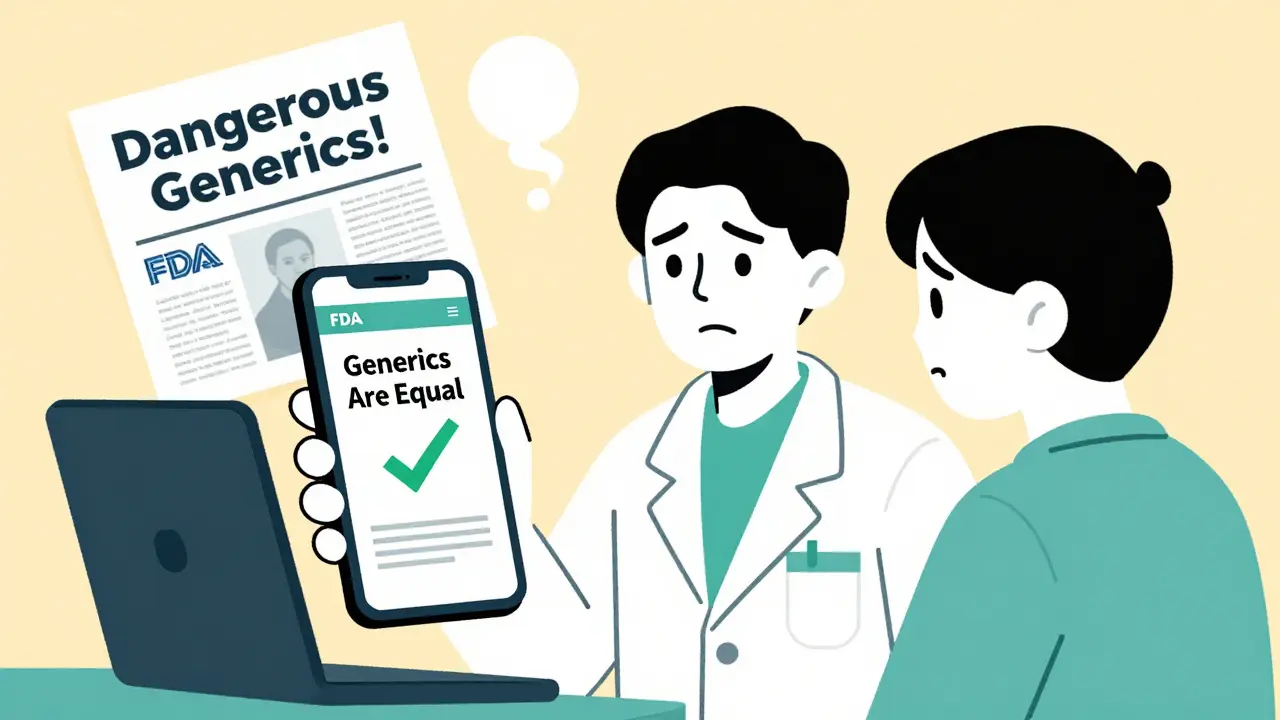
Media coverage doesn’t just report on drug safety-it shapes how people feel about it. Headlines like “Contaminated Generic Drugs Reveal an Urgent Public Health Crisis” or “How Some Generic Drugs Could Do More Harm Than Good” make headlines. They get shared. They stick in people’s minds.
But here’s what those stories rarely say: the FDA requires generics to meet the same strict standards as brand-name drugs. The active ingredient is identical. The dose is the same. The way it works in your body? Identical. The only differences are in the fillers, the color, or the shape-things that don’t affect how the medicine works.
Yet, news articles often use brand names instead of generic names. A study from JAMA Network found that only 2% of newspapers had policies requiring reporters to use generic names. That means when you read “Lipitor caused liver damage,” you don’t realize it’s talking about atorvastatin-the generic version millions take every day. Using brand names makes it feel like the problem is with the medicine itself, not just one manufacturer.
And then there’s the funding. Most studies on drug safety are paid for by pharmaceutical companies. But news reports rarely say that. A 2014 study showed that nearly all news stories about drug research failed to mention who paid for the study. That omission makes it seem like the findings are neutral, when they might be influenced by corporate interests. When people find out later-maybe through social media-that the study was funded by Pfizer or Novartis-they feel misled. And they start doubting everything.
Why People Trust Brand Names More, Even When It Costs More
It’s not just about misinformation. It’s about emotion.
When someone gets bad news-say, a cancer diagnosis or a heart condition-they’re vulnerable. That’s when they’re most likely to choose the more expensive brand-name drug, even if their insurance won’t cover it. A 2023 study from the University of Texas at Dallas found that within 90 days of receiving a serious health diagnosis, patients were significantly more likely to refuse generics. They weren’t thinking about cost. They were thinking about control. About safety. About not risking anything.
That’s when the media’s influence becomes dangerous. A story about a recalled generic blood pressure pill? It doesn’t matter if it affected one batch from one factory in India. The headline makes it sound like all generics are unsafe. And for someone already scared, that’s enough to switch to a brand they’ve heard of-even if it costs five times more.
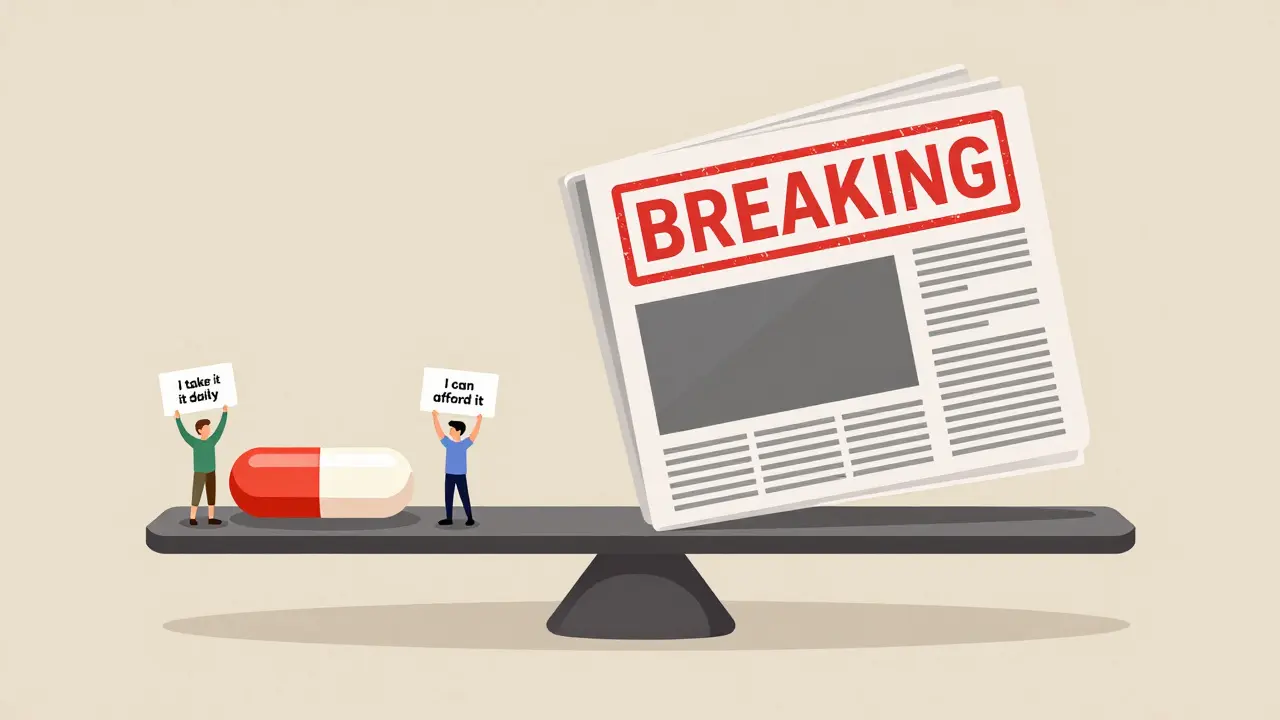
And here’s the irony: research shows people who take generics are actually more likely to stick to their treatment. Why? Because they can afford it. Skipping doses because of cost is a real problem. But when people avoid generics out of fear, they end up skipping doses anyway-because they can’t pay for the brand version.
Doctors and Pharmacists Are the Missing Link
Here’s the good news: when a doctor or pharmacist takes five minutes to explain the difference, patients change their minds.
A systematic review found that patient trust in their doctor overrides their personal doubts about generics. If your doctor says, “This generic is just as effective and safe,” you’re far more likely to accept it. But too often, providers don’t bring it up. They assume patients know. Or they’re too rushed. Or they share the same doubts themselves.
Pharmacists are even more powerful. A 2023 study in US Pharmacist showed that when pharmacists explain why generics are safe-pointing to FDA approval, showing the packaging, answering questions about differences in fillers-patients’ confidence jumps. One pharmacist in Ohio told me, “I show them the FDA’s website on my phone. I say, ‘This is the same pill, just without the fancy label.’ And they get it.”
But that kind of conversation doesn’t happen unless the system supports it. Most insurance plans don’t pay pharmacists for counseling. Most doctors don’t have time. And patients? They’re not asking. Because they’ve been conditioned to believe generics are second-rate.
What the Media Gets Wrong About Drug Prices
Another big problem? The way media talks about price.
Headlines scream: “Generic Drug Prices Skyrocket!” But that’s misleading. The HHS ASPE report in 2023 showed that when three or more companies make the same generic drug, prices drop by 20%. That’s the norm. It’s how the market works.
But when one company raises the price of a niche generic-say, a 60-year-old antibiotic used for rare infections-the media treats it like a national crisis. They don’t mention that 99% of other generics are falling in price. They don’t explain that competition drives costs down. They just show a single price spike and call it a trend.
That fuels the myth that generics are unreliable or exploitative. But the real story? It’s the opposite. Generic competition is what keeps drug prices low for everyone.
How to Tell Real Risk From Media Hype
So what should you believe?
First, check the source. If a news story talks about a “generic drug” but never names the active ingredient, it’s not helping you understand. Look for the generic name-like metformin, not Glucophage. If they don’t use it, they’re not trying to inform you.
Second, ask: “Who paid for this study?” If the article doesn’t say, it’s a red flag. You can often find this info by searching the study’s title on PubMed. If it’s funded by a drugmaker, that doesn’t mean it’s wrong-but you should know.
Third, look at the FDA’s website. They have clear guides on generic drugs. They state: “All approved generics must be the same as the brand in dosage, safety, strength, how it’s taken, quality, and performance.” That’s not marketing. That’s regulation.
And fourth-talk to your pharmacist. They’re not trying to sell you something. They’re trained to know the difference between real risks and media noise.
It’s Not About the Pills. It’s About Trust.
Generic drugs aren’t failing. The system is working. The science is solid. The FDA inspects every factory, whether it’s in the U.S., India, or China. The data shows generics are just as effective. And they save patients billions every year.
The problem isn’t the pills. It’s the story we’ve been told.
Media coverage, whether by accident or design, has created a gap between what we know scientifically and what we believe emotionally. And that gap costs lives-through skipped doses, delayed treatment, and higher out-of-pocket spending.
Fixing it won’t take new laws. It won’t take more ads. It will take journalists who use generic names. It will take doctors who explain the science. It will take pharmacists who have time to talk. And it will take patients who ask: “Is this really different?”
Because the truth? It’s not in the headlines. It’s in the bottle.
Are generic drugs really as effective as brand-name drugs?
Yes. The FDA requires generic drugs to have the same active ingredient, strength, dosage form, and route of administration as the brand-name version. They must also prove they work the same way in the body. Thousands of studies confirm this. The only differences are in inactive ingredients like color or filler-things that don’t affect how the drug works.
Why do some people say generic drugs don’t work for them?
Sometimes, it’s not the drug-it’s the switch. When you go from one brand to another generic, or even between two different generics, the inactive ingredients can change. That might cause minor differences in how the pill feels or how fast it dissolves. But these don’t affect safety or effectiveness. If you feel different after switching, talk to your pharmacist. They can help you find a version that feels right-without switching back to a more expensive brand.
Can generic drugs be made in unsafe factories?
All factories that make drugs for the U.S. market-whether they make brand or generic-are inspected by the FDA. The agency doesn’t distinguish between them. A 2023 FDA report confirmed that over 90% of inspected generic manufacturing sites meet U.S. quality standards. The few that don’t are shut down. The media sometimes highlights rare violations, but those cases are exceptions, not the rule.
Why do doctors sometimes prescribe brand-name drugs instead of generics?
Sometimes, it’s because the generic isn’t available yet-new drugs have patent protection. Other times, it’s because the patient has had a bad reaction to a specific generic in the past. But in most cases, doctors prescribe brand names because they’re not aware of the cost difference or assume the patient prefers it. Many don’t realize that most patients will choose the cheaper option if they’re told it’s safe.
How can I tell if I’m getting a generic drug?
Check the label. Generic drugs are listed by their active ingredient (like “ibuprofen”) and often have the name of the manufacturer on the bottle. The packaging looks different-usually simpler, with less branding. If you’re unsure, ask your pharmacist. They can show you the difference between the brand and generic version side by side.
Does insurance cover generic drugs better than brand-name ones?
Yes. Most insurance plans have lower copays for generics. Some even require you to try the generic first before covering the brand. In many cases, the brand might not be covered at all unless you get prior authorization. That’s because generics save the system money-and those savings often translate to lower premiums for everyone.
What You Can Do Today
Don’t wait for the media to fix this. Don’t wait for your doctor to bring it up. Take control.
Ask your pharmacist: “Is there a generic version of this?”
Ask your doctor: “Why are we prescribing this brand instead of the generic?”
Check the FDA’s website for updates on generic approvals.
And next time you see a scary headline about a generic drug, pause. Ask yourself: Did they name the active ingredient? Did they mention who funded the study? Did they explain how common this issue really is?”
Because confidence in medicine shouldn’t come from headlines. It should come from facts. And those facts are on your side.
Jay Clarke
Bro, I saw a headline last week that said 'Generic Xanax Caused 3 Deaths in Ohio' - turns out it was one guy who mixed it with alcohol and the article never mentioned the generic name. Media’s just out here selling fear like it’s a late-night infomercial. I used to buy brand until I found out generics are literally the same pill with a different color. Now I save $40 a month and my anxiety doesn’t care what the label says.
Stacey Marsengill
I used to be one of those people who refused generics until my mom died from skipping her heart med because she couldn’t afford the brand. I didn’t know the FDA requires them to be identical. I thought 'generic' meant 'cheap knockoff.' Now I scream at every family member who says 'I don’t trust those.' It’s not about money - it’s about being manipulated by fear porn disguised as journalism.
Aysha Siera
They’re all controlled by Big Pharma. The FDA? Owned. The studies? Paid for. Even the pharmacists are trained to lie. Why do you think they never show the factories in India? They don’t want you to see the truth - generics are made in the same places as the fake pills they sell on Instagram. You think your pills are safe? Think again. The government hides it. They want you dependent on expensive brands so they can keep raking in cash. Wake up.
rachel bellet
There’s a clear cognitive dissonance here: the public conflates cost with quality, and the media exploits this by leveraging confirmation bias through selective reporting. The absence of disclosure regarding funding sources in pharmaceutical journalism constitutes a systemic epistemic failure, which in turn perpetuates therapeutic nonadherence due to perceived inferiority - a phenomenon empirically validated in behavioral economics literature from 2018 to 2023. The solution isn’t more headlines - it’s institutional transparency and standardized nomenclature protocols.
Pat Dean
Why do we even trust foreign-made pills? The FDA inspects them? Please. China and India are churning out poison under the guise of medicine. We used to make our drugs here. Now we’re letting foreign labs fill our prescriptions and calling it 'safe.' This isn’t progress - it’s surrender. If you want real medicine, buy American. Even if it costs more. Your life isn’t a bargain bin.
Selina Warren
Stop letting fear dictate your health. You’re not saving money by buying brand - you’re paying for marketing. The pill in the bottle doesn’t care if it’s called Lipitor or atorvastatin. It does the same job. Your doctor doesn’t care. Your body doesn’t care. Only your ego does. And that ego? It’s being sold to you by advertisers who want you to feel like you’re buying 'premium' medicine. Spoiler: it’s not. It’s the same damn thing. Stop overthinking it. Take the generic. Live longer. Save cash. Be smart.
Robert Davis
Actually, I read a paper once - not a headline, a real study - that showed some generics have slightly different dissolution rates. Like, 5-10% variance. Not dangerous, but noticeable if you’re sensitive. I switched from one generic to another and my migraines got worse. I went back to the brand and it was fine. So maybe it’s not always just the label. Maybe some people’s bodies react differently. Not because of fear - because biology.
christian Espinola
You’re all missing the point. The problem isn’t media - it’s the FDA’s lax enforcement of bioequivalence thresholds. The 80-125% range for AUC and Cmax is too wide. It allows for clinically significant variability in drugs with narrow therapeutic indices - like levothyroxine, warfarin, and phenytoin. When patients report 'it doesn’t work,' they’re not being irrational. The system is. The media just reports the symptoms. The real failure is regulatory.
Andrew Qu
Here’s what works: I’m a pharmacist. Every time someone says 'I don’t trust generics,' I pull up the FDA’s generic drug page on my phone. Show them the chart comparing brand and generic side by side. Point to the identical active ingredient. Say, 'This is the exact same molecule. The only difference? You’re saving $35.' Most people get it. The problem isn’t the science - it’s the lack of simple, clear communication. We need pharmacists paid to talk, not just to count pills.
kenneth pillet
i just ask my pharmacist if its the same as the brand and they say yes so i take it. no big deal. saved me like 50 bucks this month
Danny Gray
What if the real issue isn’t media or FDA or even doctors - but the fact that we’ve been conditioned to equate value with branding? We don’t question the $1000 iPhone, but a $5 pill? That’s the real psychological manipulation. We’re not afraid of generics - we’re afraid of being seen as cheap. We’ve been sold the lie that expensive = better. And now we’re paying for it with our health. The system didn’t break. We did.
Zoe Brooks
My grandma took her generic blood pressure med for 12 years. Never had a problem. Then she saw a scary news clip and switched back to brand - paid double, got dizzy, stopped taking it. Now she’s in the hospital. Don’t let headlines make your health decisions. Talk to your pharmacist. They’re the real heroes. And yes, I’m crying a little typing this. 💔
Kristin Dailey
Generics are fine. Just don’t buy the cheap ones from Amazon.