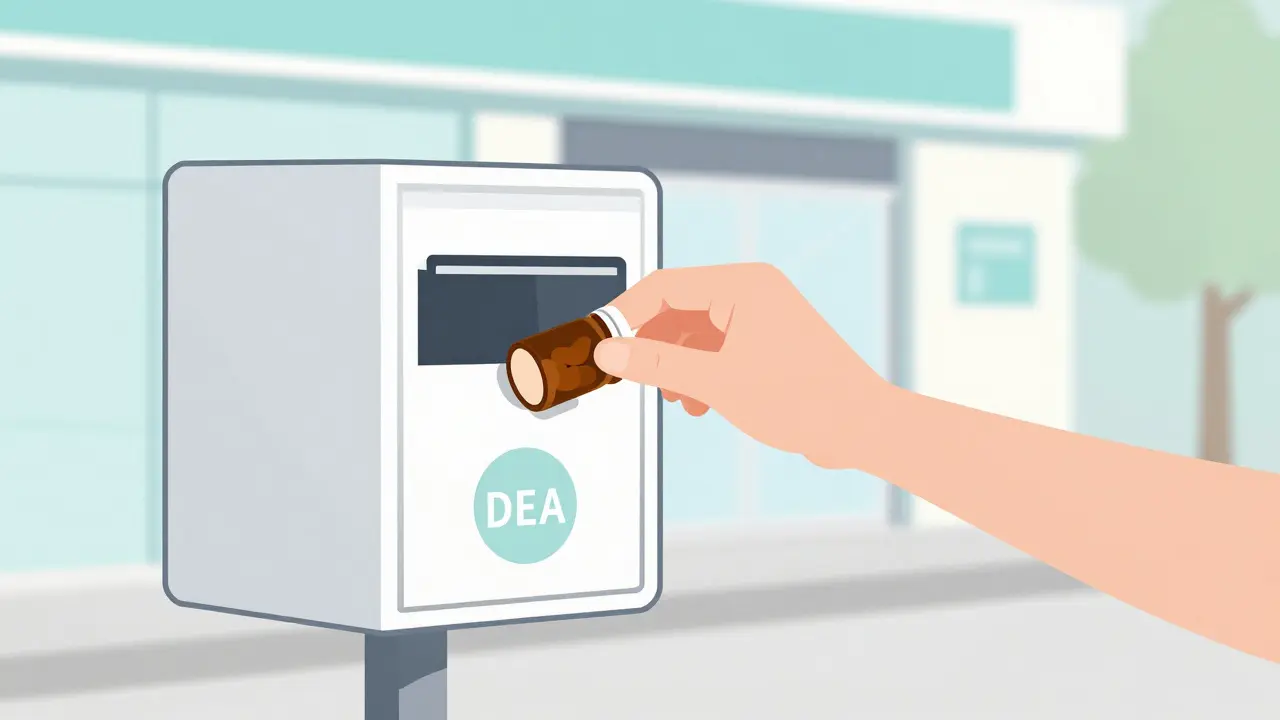
Every year, millions of unused or expired medications sit in medicine cabinets across homes - not because people want to keep them, but because they don’t know what to do with them. Flushing them down the toilet? Throwing them in the trash? Both are common, but neither is safe. That’s where drug take-back programs come in. These are simple, free, and secure ways to get rid of unwanted medicines so they don’t end up in waterways, fall into the wrong hands, or accidentally poison children and pets.
What Exactly Is a Drug Take-Back Program?
A drug take-back program is a government-backed system that lets you drop off expired, unused, or unwanted medications at designated locations. These programs were created to solve two big problems: preventing drug abuse and protecting the environment. The U.S. Drug Enforcement Administration (DEA) launched the National Prescription Drug Take Back Day in 2010 after seeing a spike in teens using prescription painkillers they found at home. Since then, these programs have grown into a nationwide network of permanent drop boxes and seasonal collection events.You don’t need a prescription to use them. Whether it’s leftover antibiotics, old painkillers, or that bottle of vitamins you never opened, almost all household medications can be dropped off. The collected drugs are then transported to licensed facilities and destroyed by high-temperature incineration - a process that ensures nothing leaks into soil or water.
Where Can You Drop Off Medications?
There are three main ways to dispose of medications safely:- Permanent drop boxes - These are locked, secure containers usually found inside pharmacies, hospitals, or police stations. You can use them any day of the year. Walgreens, CVS, and other major pharmacy chains have installed thousands of these across the country. In fact, Walgreens alone has over 1,600 drop boxes in 49 states.
- Biannual collection events - The DEA runs two National Prescription Drug Take Back Days each year, in April and October. On those days, hundreds of temporary collection sites open up - often at police stations or community centers. In April 2025, nearly 4,600 sites collected over 620,000 pounds of medications.
- Mail-back programs - Some states and pharmacies offer prepaid envelopes you can order online or pick up in-store. You pack your meds, seal the envelope, and drop it in any mailbox. The company handles the rest. This option is especially useful in rural areas where drop boxes are scarce.
As of 2025, there are more than 16,500 permanent collection sites nationwide. That’s up from just 5,000 in 2020. The shift from one-day events to year-round access has made these programs far more effective.
What Can and Can’t You Drop Off?
Not everything goes in the drop box. Here’s what’s accepted:- Prescription pills and liquids
- Over-the-counter medicines
- Vitamins and supplements
- Pain patches (like fentanyl or nicotine patches)
- Topical ointments and creams
- Pet medications
And here’s what you can’t drop off:
- Asthma inhalers or other aerosols
- Thermometers (especially mercury ones)
- Hydrogen peroxide
- Iodine-based medicines
- Alcohol or illegal drugs
If you’re unsure, check the DEA’s website or call your local drop-off location. Most pharmacies post clear guidelines near their collection boxes.
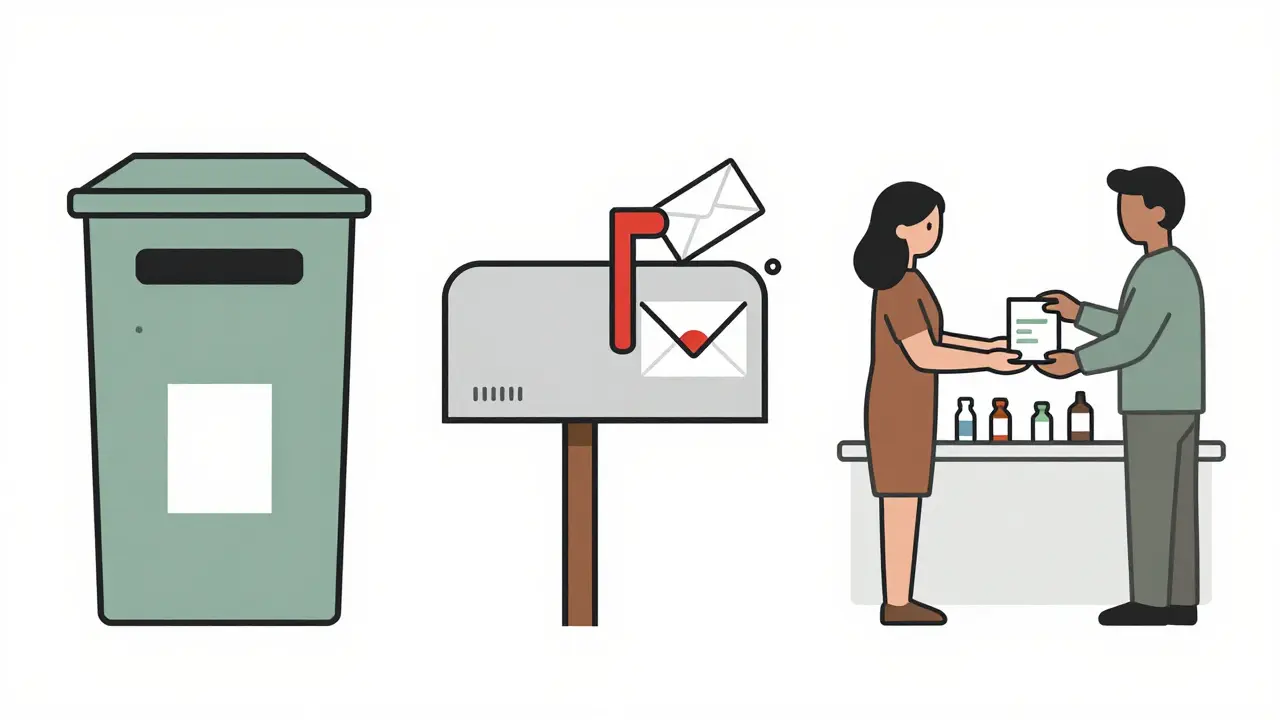
How to Prepare Your Medications for Drop-Off
You don’t need to empty bottles or sort pills. Here’s the simple process:- Keep medications in their original containers if possible.
- If the container is damaged or missing, transfer pills to a sealed plastic bag or empty pill bottle.
- Remove or black out your name, address, and prescription number with a marker - but leave the drug name and dosage visible.
- Don’t remove pills from blister packs. Just drop the whole pack in.
- Bring them as-is - no need to crush, dissolve, or mix them with anything.
That’s it. No prep work. No special tools. Just drop and go.
Why Take-Back Programs Beat At-Home Disposal
You might have heard advice like “mix pills with coffee grounds and throw them in the trash.” That used to be the FDA’s backup suggestion - but it’s no longer the best option.Here’s why take-back is better:
- Environment - Flushing or tossing meds can contaminate water supplies. Studies show pharmaceuticals are now found in rivers, lakes, and even drinking water. Incineration at regulated facilities prevents this.
- Safety - Trash collectors, kids, and pets can dig through trash. A sealed drop box can’t be accessed by anyone except authorized staff.
- Effectiveness - Communities with permanent drop boxes see 25% more participation than those relying only on one-day events. And in places like Denton, Texas, unintentional poisonings dropped by 17% after drop boxes were installed.
The FDA now says: “The best way to dispose of most unused medicines is through a drug take-back program.” At-home disposal should only be a last resort - and even then, only for a few specific drugs (like fentanyl patches) that are extremely dangerous if misused.
Why Some People Don’t Use These Programs
Despite how simple they are, only 28% of Americans know permanent drop boxes even exist. That’s a huge gap.Here’s what’s holding people back:
- Lack of awareness - Most people still think flushing or trashing meds is fine.
- Location - Rural communities have 58% fewer drop boxes than cities. In some areas, you might have to drive 30 miles to find one.
- Trust issues - Some people avoid police station drop boxes because they’re afraid of being judged or questioned. Pharmacies are more welcoming - participation jumps 41% when collection is at a pharmacy instead of a police station.
- Cost and funding - Each permanent drop box costs between $1,200 and $2,500 to install. Many local programs struggle to keep them running due to budget cuts.
Some places are fixing this. Broward County, Florida, uses mobile collection units that visit schools, churches, and senior centers. Their participation rate jumped 73% compared to fixed drop boxes.
What’s Changing in 2025 and Beyond
The push for year-round access is working. The DEA’s “Every Day is Take Back Day” campaign has turned biannual events into a permanent system. Here’s what’s next:- Mail-back expansion - A new bill in Congress (H.R. 4278) would require Medicare Part D plans to cover the cost of mail-back envelopes. That could help 48 million seniors who struggle to get to drop sites.
- Pharmacy growth - More chains are installing drop boxes. CVS and Rite Aid are expanding their networks, and some independent pharmacies are joining too.
- Cultural outreach - Programs in Texas and California that offer materials in Spanish and other languages saw Hispanic participation rise by 39%.
- Integration with healthcare - Hospitals and clinics are starting to hand out take-back envelopes at discharge. This could cut per-site costs by 35% and make disposal part of routine care.
But challenges remain. Only 37% of Americans live within five miles of a permanent drop box. And 57% of local programs say funding is their biggest problem.
How to Find a Drop-Off Location Near You
It’s easy. Just go to DEA.gov/takebackday and use their searchable map. You can filter by zip code, city, or type of location (pharmacy, hospital, police station).Or call your local pharmacy. Most now have drop boxes and can tell you hours and what’s accepted. If you’re in a rural area, ask your county health department - they often know about mobile collection schedules.
Don’t wait for April or October. Permanent drop boxes are open all year. If you’ve got old meds sitting around, take them in today. It’s one small step that helps protect your family, your community, and the environment.
Can I drop off my pet’s medications at a drug take-back program?
Yes. Most drug take-back programs accept pet medications, including pills, ointments, and patches. Just make sure they’re in their original containers or sealed in a bag with the label visible. Never mix human and pet meds in the same container unless instructed by the collection site.
What if I can’t find a drop box near me?
If you’re in a rural area with no drop box, check if your state offers a mail-back program. Some states send free envelopes to residents. If neither option is available, follow the FDA’s at-home disposal steps: remove pills from packaging, crush or dissolve them, mix with something unappetizing like coffee grounds or kitty litter, seal in a plastic bag, and throw it in the trash. Never flush unless it’s on the FDA’s flush list - only about 15 drugs qualify.
Are drug take-back programs free?
Yes. All DEA-approved drop boxes and collection events are completely free. No ID, no receipt, no questions asked. The cost is covered by federal grants, pharmacy partnerships, or local government funding. If someone asks you to pay, it’s not a legitimate program.
Can I drop off needles or sharps in a drug take-back box?
No. Drug take-back boxes are only for medications - not needles, syringes, or lancets. These are considered sharps waste and require special disposal. Many pharmacies and health departments offer separate sharps collection programs. Check with your local pharmacy or county health office for options.
Do I need to bring my ID to drop off medications?
No. You don’t need to show ID, a prescription, or prove ownership. The programs are designed to be anonymous and stigma-free. Just drop off the meds and leave. Your privacy is protected.
How do I know a drop box is legitimate?
Look for the official DEA logo or the words “Drug Take Back” on the box. Legitimate collection sites are listed on DEA.gov/takebackday. If you’re unsure, call the location before dropping anything off. Never use a box that looks homemade, unmarked, or is located in a private home.
Can I drop off controlled substances like opioids?
Yes. Controlled substances, including opioids like oxycodone or hydrocodone, are accepted at all DEA-approved take-back locations. These programs are specifically designed to safely collect high-risk medications and prevent diversion or misuse. Don’t hesitate - bring them in.
What happens to the medications after they’re dropped off?
Collected medications are picked up by licensed waste handlers and transported to facilities that incinerate them at extremely high temperatures (over 1,000°C). This destroys the drugs completely, leaving no chemical residue. Nothing goes to landfills, water systems, or recycling centers. The process is regulated by the EPA and DEA to ensure environmental safety.
If you’ve got old meds gathering dust, don’t wait. Find a drop box today. It’s the safest, simplest way to protect your family and your community.
Josias Ariel Mahlangu
People still flush pills? I mean, really? You wouldn't dump motor oil down the drain, so why treat medicine like trash? It's not just laziness-it's a basic failure of civic responsibility.
Cassandra Collins
wait… so the govt is collecting ALL our meds?? what if they’re just stockpiling them for the next pandemic? or worse-selling them on the dark web? i’ve heard the DEA uses these boxes to track who’s hoarding oxy… and then they show up at your door with a warrant. no thanks. i’m keeping mine. 😈
Joanna Ebizie
you guys are acting like this is some revolutionary idea. it’s not. i’ve been dropping off my grandma’s leftover painkillers at the CVS dropbox since 2018. it’s literally the easiest thing ever. just toss it in, no questions, no judgment. why is this even a conversation? 🤦♀️
Aditya Kumar
interesting. but i’m not driving 20 miles to drop off a bottle of expired ibuprofen. if it’s not convenient, it’s not real.
Colleen Bigelow
THIS IS A BIG GOVERNMENT POWER GRAB. THEY WANT TO KNOW EVERY SINGLE PILLS YOU OWN. THEY’RE BUILDING A DATABASE OF EVERY AMERICAN’S MEDICAL HISTORY. THEY’LL USE IT TO DENY YOU INSURANCE, CONTROL YOUR BEHAVIOR, OR EVEN INJECT YOU WITH MICROCHIPS LATER. I’VE SEEN THE DOCUMENTS. THE DEA’S OWN INTERNAL MEMOS SAY ‘MAXIMIZE SURVEILLANCE THROUGH PHARMACEUTICAL COLLECTION.’ DON’T BE A SHEEP.
Billy Poling
It is my considered opinion, based on an extensive review of federal guidelines, state-level implementation protocols, and environmental impact assessments conducted by the EPA and DEA jointly, that the current infrastructure for pharmaceutical disposal, while commendable in intent, remains insufficiently standardized across municipal jurisdictions, leading to a fragmented public perception of efficacy and legitimacy, particularly in rural and underserved regions where logistical barriers and lack of signage contribute to systemic underutilization of available resources.
Randolph Rickman
Love this post. Seriously. I run a community outreach group in Ohio, and we’ve seen a 60% drop in accidental overdoses among teens since we put drop boxes in the high school nurse’s office. It’s not glamorous, but it saves lives. If you’ve got old meds, just go. No one’s judging. You’re doing the right thing. 🙌
sue spark
My mom had a whole drawer full of pills from her chemo. We took them to the pharmacy last year. No one asked anything. It felt good to finally clear it out. I wish more people knew how easy it was
Tiffany Machelski
i think u meant ‘drop box’ not ‘drop off’ in the mail-back section… just sayin 😅
SHAMSHEER SHAIKH
Esteemed colleagues, I must express my profound admiration for the structural integrity of this public health initiative. The convergence of federal oversight, pharmaceutical partnership, and community accessibility represents a paradigmatic model of ethical governance. One must, however, remain vigilant against the specter of underfunding, which, if left unaddressed, may erode the very foundation upon which this noble endeavor rests. Let us not permit bureaucratic inertia to silence the voice of compassion.
James Rayner
It’s weird how something so simple-just dropping off old pills-can feel like a quiet act of rebellion against a system that tells us to hoard, to fear, to isolate. We’re taught to be afraid of medicine… but also afraid to get rid of it. These boxes? They’re not just containers. They’re a promise: you’re not alone. 🤍
Souhardya Paul
Great breakdown. I’ve been pushing this at my workplace-we’re setting up a monthly drop-off at the HR office. If anyone wants to help coordinate with local pharmacies in our area, DM me. We can make this easier for everyone.