Chronic pain is exhausting. It drains your energy, disrupts your sleep, and often makes the idea of exercising feel impossible. You might worry that moving will hurt more, so you stay still. But staying still can actually make stiffness worse. This is where gentle movement therapies, specifically low-impact practices like yoga and tai chi designed to improve mobility and reduce pain without strain, change the game. These aren't just stretches; they are scientifically backed tools that help retrain your brain and body to handle discomfort differently.
If you have been prescribed opioids or rely on painkillers daily, you know the side effects are tough. The good news? Research from Harvard Health and the National Center for Complementary and Integrative Health (NCCIH) shows that consistent practice of these disciplines can significantly lower pain scores. In fact, many major hospitals now list them as first-line treatments alongside physical therapy. Let’s look at exactly how they work, which one fits your needs, and how to start safely.
How Gentle Movement Actually Reduces Pain
You might wonder how slow movements can fix deep-seated pain. The answer lies in what experts call "mind-body interventions." When you practice Tai Chi or Yoga, you are doing two things at once: conditioning your muscles gently and calming your nervous system.
Chronic pain often keeps your body in a state of high alert, like a car engine revving even when parked. This stress tightens muscles, which creates more pain-a vicious cycle. These practices break that cycle. By focusing on breath awareness and synchronized movement, you signal to your brain that you are safe. This reduces the production of stress hormones like cortisol, which are known to amplify pain signals.
Florida Atlantic University researchers identified this dual benefit clearly. They found that these interventions address somatic symptoms (the physical ache) and psychological aspects (the anxiety about pain) simultaneously. Unlike running or heavy lifting, which can jar joints, these methods use fluid motion to lubricate joints and improve blood flow without impact.
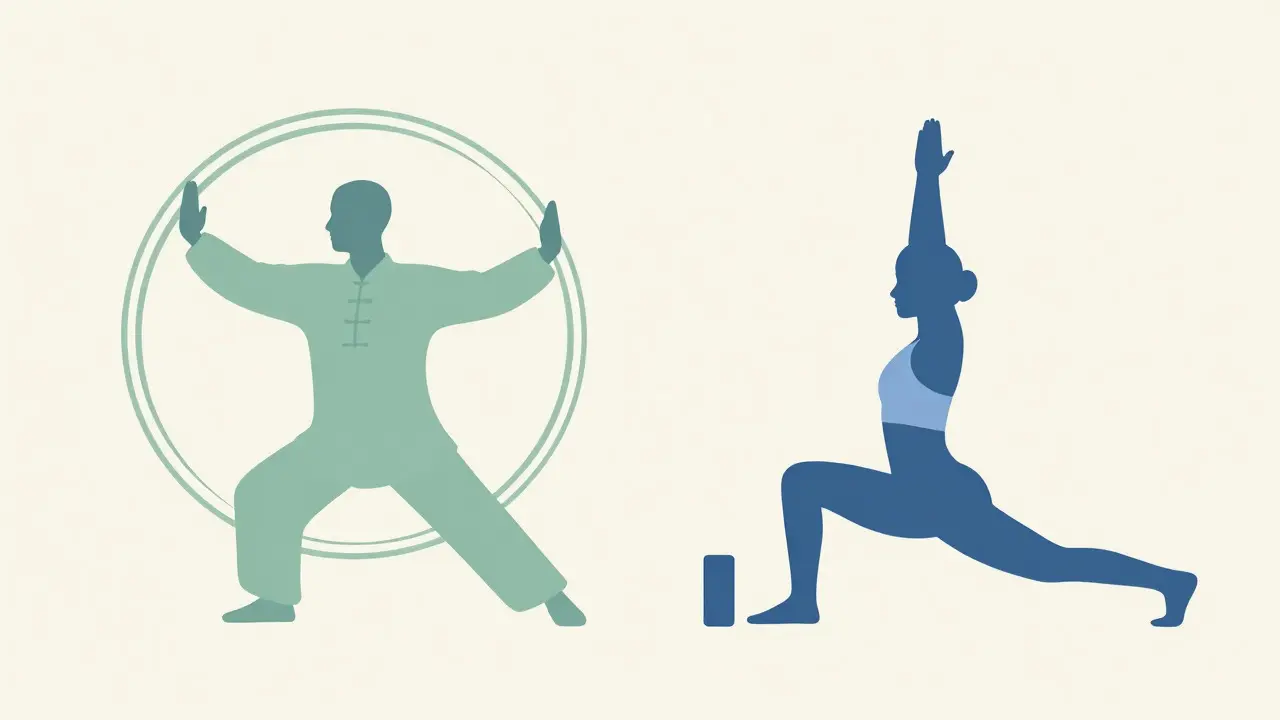
Tai Chi vs. Yoga: Which Is Right for Your Pain?
While both are powerful, they feel very different. Choosing the right one depends on your specific condition and personal preference.
| Feature | Tai Chi | Yoga |
|---|---|---|
| Movement Style | Continuous, flowing sequences; martial arts roots | Static postures (asanas) held for time; flexibility focus |
| Best For | Balance issues, knee osteoarthritis, fibromyalgia | Back pain, neck pain, stress-related tension |
| Learning Curve | High; requires memorizing forms and weight shifting | Low to Medium; easier to modify individual poses |
| Equipment Needed | None; comfortable shoes recommended | Nonslip mat, blocks, straps (optional but helpful) |
| Typical Session Length | 30-60 minutes | 45-90 minutes |
Tai Chi is often described as "meditation in motion." It originated in China centuries ago as a martial art but has evolved into a therapeutic practice. The key is slow, repetitive movements that emphasize balance and weight shifting. If you struggle with dizziness or fear falling, Tai Chi is exceptional. A 2021 NCCIH review showed it improved balance metrics by 18-25% in people with knee osteoarthritis compared to control groups.
Yoga, originating in ancient India, offers more variety. You can choose Hatha yoga for slower, static poses or Restorative yoga, which uses props to support your body completely. Yoga is particularly effective for back pain. A 2024 systematic review found that yoga combined with heat therapy reduced neck pain intensity by 42% more than standard physical therapy alone.
Scientific Evidence: What the Studies Say
It is easy to be skeptical of alternative therapies. That is why looking at the data matters. The evidence for these practices is no longer anecdotal; it is robust.
For Fibromyalgia, a landmark study published in the New England Journal of Medicine (2018) changed the conversation. Over 12 weeks, participants who practiced Tai Chi reported 27% greater pain reduction and 31% fewer depression symptoms than those who did stretching exercises. Dr. Chenchen Wang from Tufts Medical Center called this evidence "robust enough to recommend it as a first-line non-pharmacological intervention."
For Chronic Back Pain, the results are equally promising. A Florida Atlantic University study involving over 3,000 subjects found that longer-duration, high-dose yoga interventions significantly reduced back pain compared to standard care. Interestingly, Tai Chi showed particular efficacy for acute lower back pain in younger males, outperforming simple stretching.
However, not every result is perfect. A 2022 NCCIH review noted that yoga's effect on Rheumatoid Arthritis remains inconclusive. Some studies showed improvement, while others found no significant change. This highlights why personalized approaches matter-what works for joint inflammation may differ from what works for muscle tension.
How to Start Safely Without Making Pain Worse
The biggest mistake people make is trying too hard, too soon. If you jump into an advanced class, you risk injury. Here is a realistic plan to start.
- Start Small: Harvard Health recommends beginning with just 15-20 minutes daily for the first two weeks. Consistency beats intensity. You want to build tolerance, not exhaust yourself.
- Choose the Right Style: For Yoga, avoid hot yoga or power yoga initially. Look for "Hatha" or "Restorative" classes. For Tai Chi, seek "Yang-style" or "Sun-style," which are gentler than the faster "Chen-style."
- Use Modifications: Do not feel pressured to stand if it hurts. Chair-based adaptations are widely available and highly effective. One user with rheumatoid arthritis noted, "I can do seated Tai Chi on high-pain days when standing yoga isn't possible."
- Find Qualified Instructors: This is critical. A general fitness instructor may not understand your limitations. Look for teachers certified through organizations like Yoga Alliance or the National Certification Commission for Acupuncture and Oriental Medicine (NCCAOM). Tell them about your pain before class starts.
- Expect Flares: About 39% of new users report minor pain flares during the first few weeks. This is normal as tissues adjust. If pain persists beyond 48 hours, scale back and consult your doctor.
Practical Tips for Success and Sustainability
Integrating these practices into your life requires strategy. Here is how to keep going when motivation dips.
Combine with Conventional Care: Don't view Yoga or Tai Chi as a replacement for your doctor. The American Chronic Pain Association notes that combining these practices with conventional treatments yields 30-40% better outcomes than either approach alone. Use them to enhance your medication or physical therapy, not replace it entirely.
Leverage Digital Tools: Access can be a barrier, especially in rural areas. Apps like "Tai Chi for Arthritis" (from the Arthritis Foundation) or "Yoga for Chronic Pain" (from Yoga Medicine) offer guided sessions. A 2023 survey found that 62% of users supplement in-person instruction with these apps. They are great for maintenance between live classes.
Check Insurance Coverage: Coverage is expanding. Blue Cross Blue Shield expanded coverage for medically supervised programs to 12 states in 2022. Additionally, the American Medical Association included coding for these therapies in 2024, meaning some doctors can now bill for referring you to these programs. Call your insurer and ask if "mind-body movement therapy" is covered under your plan.
Join a Group: The social aspect matters. Dr. Karen J. Sherman noted that the community feel of group Tai Chi contributes significantly to pain reduction. It combats the isolation that often comes with chronic illness. If in-person groups aren't accessible, consider online live-streamed classes where you can interact with others.
Frequently Asked Questions
Is Tai Chi or Yoga better for knee osteoarthritis?
Tai Chi is generally considered superior for knee osteoarthritis due to its focus on balance and low-impact strengthening. A 2021 NCCIH review of 16 studies found that Tai Chi protocols ranging from 30-60 minutes, two to four times weekly, significantly improved function and reduced pain. Yang-style Tai Chi is the most commonly studied and recommended form for this condition.
Can I do Yoga if I have severe back pain?
Yes, but you must choose the right style. Avoid dynamic flows like Vinyasa initially. Instead, opt for Restorative or Iyengar Yoga, which use props like blocks and bolsters to support your spine. Always inform your instructor about your condition so they can suggest modifications. Start with short sessions (15 minutes) to gauge your body's response.
How long does it take to feel pain relief?
Measurable pain benefits typically emerge after 6-8 weeks of consistent practice, with maximum effects seen around 12 weeks. This timeline aligns with the time needed for neural adaptation and muscle strengthening. Patience is key; do not expect immediate results after the first session.
Do insurance plans cover Yoga and Tai Chi classes?
Coverage varies widely. While many plans do not cover recreational classes, some insurers like Blue Cross Blue Shield cover medically supervised programs in certain states. With the 2024 AMA coding updates, some physicians can now bill for referrals to these therapies. Check with your provider specifically for "medically necessary mind-body therapy" coverage.
What if I am too frail to stand?
Both practices have excellent seated adaptations. Seated Tai Chi allows you to perform weight-shifting and arm movements from a chair, maintaining all the mental and circulatory benefits. Chair Yoga uses similar principles. These modifications are ideal for seniors or those with severe mobility limitations, ensuring safety while still providing therapeutic value.
Are there any risks associated with these practices?
The main risk is improper technique leading to strain, especially if you push through pain. This is why qualified instruction is vital. Additionally, some users experience temporary pain flares as their bodies adjust. If you have specific conditions like glaucoma or heart issues, consult your doctor before starting, as certain inverted poses in Yoga may need modification.