Ever wonder why some prescription pills at the pharmacy cost almost half as much as the brand-name version-even when they look and work exactly the same? That’s not a mistake. It’s an authorized generic.
What Exactly Is an Authorized Generic?
An authorized generic isn’t just another generic drug. It’s the exact same pill, capsule, or injection as the brand-name version-same active ingredient, same factory, same packaging, same quality control. The only difference? It’s sold without the brand name on the label. Here’s how it works: The company that originally developed the drug-say, Pfizer or Merck-can license its own product to another manufacturer to sell under a generic label. Or, they might sell it themselves under a different name. Either way, it’s made under the original FDA-approved New Drug Application (NDA), not a separate generic application. That means no new testing, no new approval process. It’s the same drug, just cheaper. The FDA tracks these. Every quarter, they publish a list of all authorized generics currently on the market. As of October 2023, there were 137 active ones. That’s not a small side business-it’s a major part of how drugs get priced in the U.S.Why Are They So Much Cheaper?
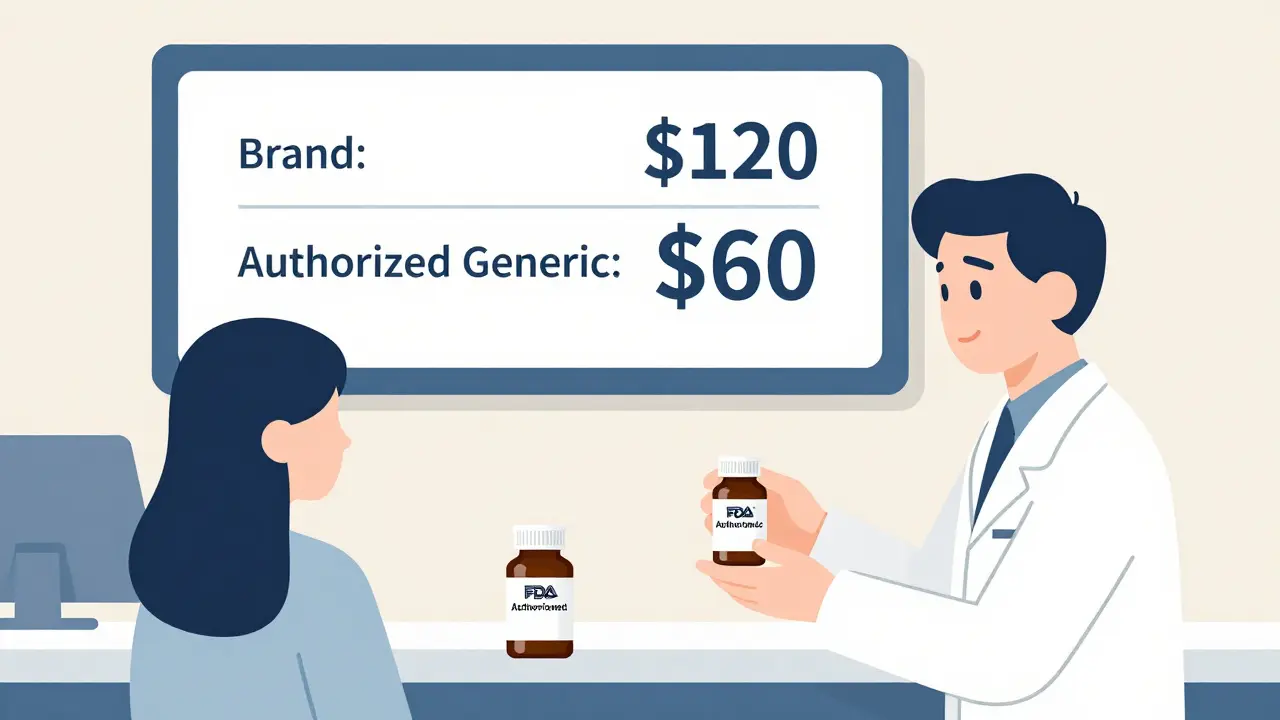
Brand-name drugs carry a lot of hidden costs: advertising, sales reps, patent lawyers, fancy packaging, and years of R&D recovery. Authorized generics don’t have to pay for any of that. They’re built on the brand’s existing infrastructure, so the manufacturer saves big. But here’s the real kicker: the price drop isn’t just because they’re generic. It’s because of competition. When a brand-name drug’s patent expires, the first company to file a generic version gets 180 days of exclusive rights to sell it. During that time, they can charge almost as much as the brand-sometimes even more-because there’s no competition. That’s where authorized generics come in. If the brand company launches its own authorized generic at the same time as the first generic, it breaks that monopoly. Suddenly, there are two low-cost versions of the same drug on the shelf. That forces the first generic to drop its price fast. And the brand company? They’re still making money, just not as much. Studies from the Federal Trade Commission show that when an authorized generic enters the market at the same time as a traditional generic, retail prices drop 4% to 8% compared to when no authorized generic is present. For pharmacies buying in bulk, the savings jump to 7% to 14%. In some cases, the difference is even starker. When Mylan launched an authorized generic of the EpiPen in 2016, it sold for $300-half the price of the branded version. Before that, the price had jumped from $100 to $600 in under a decade. The authorized generic didn’t just lower the price-it forced the entire market to reset.How Do They Compare to Regular Generics?
Regular generics have to go through a separate FDA approval process called an Abbreviated New Drug Application (ANDA). That takes time, money, and paperwork. Authorized generics skip all of that because they’re made under the original NDA. That means:- They hit the market faster-often on day one of patent expiry.
- They’re made in the same facility as the brand drug, so quality is identical.
- They’re not subject to the same supply chain delays that sometimes hit traditional generics.
Who Benefits the Most?
Patients do. A 2022 analysis of 1.2 million Medicare Part D users found that when authorized generics were placed on the same tier as traditional generics, medication adherence improved by 8.2 percentage points. People filled their prescriptions more often because they could afford them. Pharmacies benefit too. Authorized generics often have better profit margins than brand-name drugs, especially when they’re priced below the Maximum Allowable Cost (MAC) set by PBMs. That’s the maximum amount a pharmacy can be reimbursed for a drug. When the MAC is high, and the authorized generic is priced lower, the pharmacy pockets the difference. Even insurers win. Lower drug costs mean lower overall spending. That’s why some health plans now actively prefer authorized generics over brand-name drugs.Are There Downsides?
Yes. Some experts worry authorized generics are used as a tactic to delay real competition. In patent litigation, brand companies sometimes strike deals with the first generic manufacturer: “We’ll let you launch, but only if you don’t challenge our other patents-and we’ll launch our own authorized generic to keep prices low.” This is called a “pay-for-delay” agreement. It’s legal in some cases, but the FTC has called it anti-competitive. There’s also the issue of transparency. Most patients don’t know the difference between a regular generic and an authorized generic. Pharmacists aren’t always trained to explain it. And PBMs don’t always make it clear which version is cheaper. In 2023, 32 U.S. states passed laws requiring PBMs to disclose how they set drug prices and how they rank authorized generics on their formularies. That’s a step forward-but it’s not nationwide yet.
Real-World Examples
- Harvoni and Epclusa (Gilead): Before their patents expired, Gilead launched authorized generics of these hepatitis C drugs to keep market share as cheaper alternatives loomed. The move helped them retain customers without raising public backlash. - Viagra (Pfizer): When Pfizer’s patent expired, they launched an authorized generic called sildenafil citrate. It sold for 30% less than the brand and quickly became the most-prescribed version. - Abilify (Otsuka): When generics entered, Otsuka released an authorized version. Within months, the brand’s market share dropped from 90% to under 40%. These aren’t outliers. In fact, 67% of major pharmaceutical companies have used authorized generics for at least one drug since 2010.What Should You Do?
If you’re paying for a brand-name drug, ask your pharmacist: “Is there an authorized generic for this?” If there is, ask your insurance plan: “Is the authorized generic on the lowest cost tier?” If you’re on Medicare, remember: the Inflation Reduction Act caps your out-of-pocket drug costs at $2,000 per year starting in 2025. Authorized generics can help you stay under that limit. Don’t assume all generics are the same. Some are made in the same factory as the brand. Some are made in different countries with different standards. Authorized generics are the closest thing to the brand-without the brand markup.Final Thought
Authorized generics aren’t a loophole. They’re a market tool. And they work. They force prices down. They increase access. They save people money. The system isn’t perfect. PBMs, patent lawyers, and corporate strategies still shape prices in ways that aren’t always fair. But if you know what to look for, you can use authorized generics to your advantage. Next time you fill a prescription, check the label. If it says “generic” but the manufacturer is the same as the brand-congrats. You’re already saving money. Now make sure your insurance lets you keep saving.Are authorized generics the same as brand-name drugs?
Yes. Authorized generics are identical to brand-name drugs in active ingredient, dosage, strength, safety, effectiveness, and how they’re made. They’re produced in the same facility using the same process. The only difference is the label.
Why are authorized generics cheaper if they’re the same drug?
They don’t carry the marketing, advertising, or R&D costs of the brand. The manufacturer doesn’t need to recoup billions spent on developing the drug. Plus, their presence forces competition, which drives prices down further.
Can I get an authorized generic through my insurance?
Yes, but only if your plan’s Pharmacy Benefit Manager (PBM) lists it on a lower cost tier. Sometimes, PBMs group authorized generics with the brand name, so you pay the same. Always ask your pharmacist or check your plan’s formulary.
Are authorized generics available for all brand-name drugs?
No. Only brand companies that choose to launch one can. Many don’t, especially if they expect strong competition from multiple generic makers. But for high-cost drugs with low generic competition, authorized generics are common.
How do I know if a drug is an authorized generic?
Check the manufacturer name on the label. If it matches the brand-name manufacturer, it’s likely an authorized generic. You can also search the FDA’s quarterly list of authorized generics or ask your pharmacist to verify.
Do authorized generics affect the quality of the drug?
No. Since they’re made under the original FDA-approved New Drug Application, they must meet the same strict quality standards as the brand. There’s no compromise in safety or effectiveness.
Dayanara Villafuerte
So let me get this straight - we’re paying $600 for an EpiPen because Big Pharma is evil, but then they drop a $300 version with the exact same stuff inside and suddenly we’re supposed to be grateful? 😒
Meanwhile, my insurance still charges me $50 copay for the 'generic' because they put it on Tier 2. Thanks, PBMs. 🙄
Danny Gray
Isn’t it fascinating how capitalism turns compassion into a spreadsheet? The authorized generic isn’t a gift - it’s a tactical retreat. The brand doesn’t want to lose market share; it wants to control the降价 curve. We call it 'affordability,' but it’s really just a more elegant form of monopolistic triage.
Who benefits? The system. Not you. Not me. The algorithm that balances shareholder returns against patient survival.
And yet… we still cheer when the price drops by 50%. We’ve been conditioned to celebrate survival as if it were justice.
Zoe Brooks
I love how this post breaks it down so clearly! 😊
Just last week I switched my cholesterol med to the authorized generic - same pill, half the price, and my pharmacist actually pointed it out. I didn’t even know to ask!
Now I always check the manufacturer name. If it’s Pfizer, but the label says 'sildenafil citrate'? That’s my guy. 🙌
Knowledge is power, folks. And power = savings.
Kristin Dailey
Stop letting foreign factories make our medicine. If it’s made in the USA, it should cost more - because we pay for quality. These generics are just another way China owns our health system.
Wendy Claughton
Wow, this is such an important topic… I never realized how much the PBM system messes with what we actually pay.
It’s like… the drug is literally the same, but the paperwork decides if it’s cheap or expensive? 🤔
And honestly? I feel bad for pharmacists - they’re stuck in the middle, trying to explain this mess to confused patients every day.
Maybe we need a national standard… or at least a simple label that says: 'Same as brand, made in same factory, 60% cheaper.'
Why is that so hard? 😔
Aysha Siera
Authorized generics? Don't be fooled. This is how the CIA and Big Pharma work together to keep you docile. They release a 'cheap' version so you don't riot when your insulin costs $300. Meanwhile, they're patenting your DNA through your prescriptions. The FDA list? A distraction. They control what you see. Wake up.
rachel bellet
The structural inefficiency here is staggering. Authorized generics represent a suboptimal regulatory arbitrage: leveraging the NDA pathway to circumvent ANDA timelines while maintaining pricing leverage through PBM tiering dynamics.
What’s more concerning is the moral hazard embedded in the incentive structure - manufacturers internalize R&D sunk costs while externalizing patient access costs via formulary manipulation.
And yet, the consumer is expected to navigate this labyrinth with zero transparency. This isn’t healthcare reform. It’s behavioral economics dressed in pill form.
Pat Dean
Why are we even talking about this? If you can’t afford your meds, you shouldn’t be taking them. People who can’t pay for brand-name drugs are just lazy. Work harder. Get a second job. Stop expecting handouts from Big Pharma. This country doesn’t owe you a prescription.