Antibiotic Safety Calculator for Myasthenia Gravis
Assess Antibiotic Safety
Safety Assessment Results
Key Considerations:
- Fluoroquinolones and macrolides may be acceptable for stable patients with simple infections
- Penicillins remain the safest first-choice antibiotics
- Aminoglycosides should be avoided unless absolutely necessary
- Always consult your MG specialist before taking any new antibiotic
When you have myasthenia gravis (MG), even a simple infection can turn dangerous. Your muscles are already fighting a losing battle-fewer acetylcholine receptors mean your nerves can’t signal your muscles to move properly. Now add an antibiotic into the mix, and things get even trickier. Some of the most common antibiotics out there can make your weakness worse, sometimes dangerously so. But here’s the twist: not treating the infection can be just as risky. So what do you do?
Why Antibiotics Can Make MG Worse
Myasthenia gravis isn’t caused by germs. It’s your own immune system attacking the spots where nerves talk to muscles. That’s why even small infections-like a urinary tract infection or a sinus cold-can trigger a flare-up. But some antibiotics don’t just fight infection. They also mess with the same nerve-muscle connection that’s already damaged in MG. These drugs interfere in one of three ways: they block calcium channels that help release acetylcholine, they bind to the remaining acetylcholine receptors, or they stop muscles from responding to the signal at all. For someone with MG, whose receptors are already scarce, this is like removing the last few working light switches in a dark house. The result? Worsening drooping eyelids, trouble swallowing, slurred speech, or even breathing problems. In rare but serious cases, this leads to myasthenic crisis-when your breathing muscles fail, and you need a ventilator. That’s why doctors have long warned against certain antibiotics in MG patients.Which Antibiotics Are Riskiest?
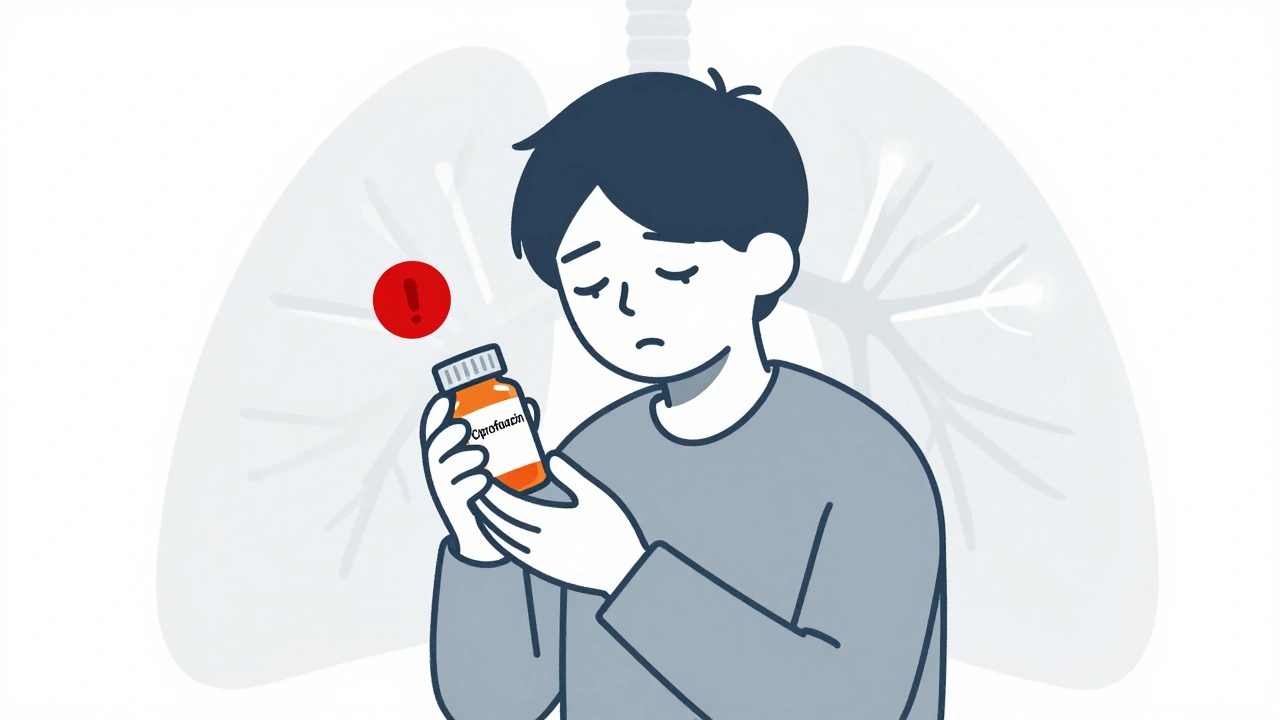
Not all antibiotics are created equal when you have MG. Some carry clear red flags. Others are safer than you might think.- Fluoroquinolones (ciprofloxacin, levofloxacin, moxifloxacin): These have been on the FDA’s black box warning list since 2008. Studies show about 2.4% of MG patients on ciprofloxacin had worsening symptoms. In one 2023 NIH study, 6 out of 918 antibiotic courses led to near-crisis or crisis events.
- Macrolides (azithromycin, erythromycin, clarithromycin): Also flagged by the FDA. Around 1.5% of MG patients on these drugs saw symptom spikes. Azithromycin, once thought safer, now carries the same caution as others in this class.
- Aminoglycosides (gentamicin, tobramycin, neomycin): These are the worst offenders. Used mostly in hospitals for severe infections, they directly block muscle receptors. Avoid them unless there’s no other option.
- Telithromycin: This antibiotic was pulled from the market in 2007 after multiple MG-related deaths. It’s still listed as absolutely contraindicated.
The New Evidence: Penicillins Might Be Safer Than You Think
Here’s where things change. For years, doctors told MG patients to avoid fluoroquinolones and macrolides entirely. But a 2024 study from the Cleveland Clinic-tracking 365 patients over 20 years and nearly 1,000 antibiotic courses-found something surprising. The overall rate of MG worsening after taking fluoroquinolones or macrolides was about 2%. The rate with amoxicillin? Just 1.3%. That’s not a big difference. And in many cases, the worsening wasn’t even caused by the antibiotic-it was the infection itself. This challenges old guidelines. It doesn’t mean fluoroquinolones are safe for everyone. But it does mean blanket bans may be outdated. For a stable MG patient with a simple infection, amoxicillin might not be the only safe choice.Who’s at Highest Risk?
Not every MG patient reacts the same way. The Cleveland Clinic study found three big red flags:- Recent hospitalization or ER visit (within the last 6 months): These patients are more fragile. Their MG is less controlled. Their risk jumps.
- Female sex: Women with MG are more likely to have antibiotic-triggered flares. Why? Still unclear, but the data is consistent.
- Diabetes: Poor blood sugar control seems to make the nervous system more sensitive to drug effects.
What Antibiotics Are Safer?
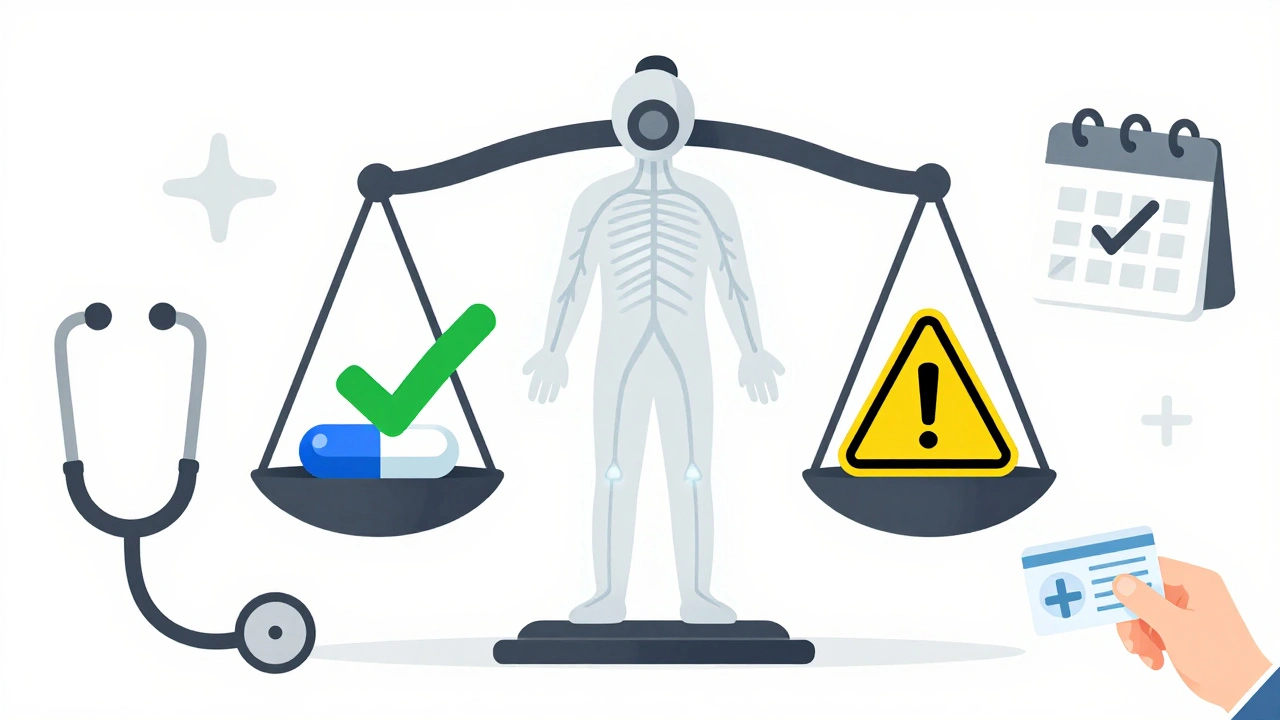
The good news? Several antibiotics show very low risk in MG patients:- Penicillins (amoxicillin, ampicillin, penicillin V): These are the go-to choices. Low risk, widely available, and effective for common infections like strep throat or skin infections.
- Cephalosporins (cefalexin, cefdinir): Generally considered safe. No strong links to MG worsening in large studies.
- Clindamycin: Used for skin and dental infections. Appears low-risk, though data is more limited.
- Vancomycin: Used for serious infections like MRSA. No known neuromuscular effects in MG patients.
What Should You Do Before Taking Any Antibiotic?
This isn’t about avoiding antibiotics. It’s about choosing wisely.- Talk to your MG specialist first. Don’t wait for your primary doctor to prescribe. Your neurologist or MG clinic knows your history and can advise on the safest option.
- Don’t self-prescribe. Even over-the-counter antibiotics (like some topical creams) can contain risky ingredients. Always check with a pharmacist.
- Know your triggers. If you’ve had a bad reaction to an antibiotic before, write it down. Keep a list of safe and unsafe drugs in your phone or wallet.
- Watch for early warning signs. If your vision gets blurrier, your voice gets weaker, or swallowing feels harder within 48 hours of starting an antibiotic, call your doctor. Don’t wait.
- Make sure your records say “MG.” Add it to your electronic health record. Tell every new provider-even your dentist. Pharmacists can flag dangerous interactions if they know your condition.
When Is the Infection More Dangerous Than the Antibiotic?
Here’s the hard truth: sometimes, not treating the infection is the bigger threat. About 88% of MG flares after antibiotic use were actually caused by the infection-not the drug. If you have pneumonia, a kidney infection, or sepsis, delaying treatment can kill you faster than a temporary muscle weakness. That’s why the Myasthenia Gravis Foundation says: “Treating the infection is more important than avoiding the antibiotic.” The goal isn’t to avoid all risky drugs. It’s to use them safely. If you need a fluoroquinolone for a severe infection, your doctor might give it to you-but with close monitoring. You might go to the clinic daily for the first 3 days. Your breathing and swallowing will be checked. You’ll know exactly what signs to watch for.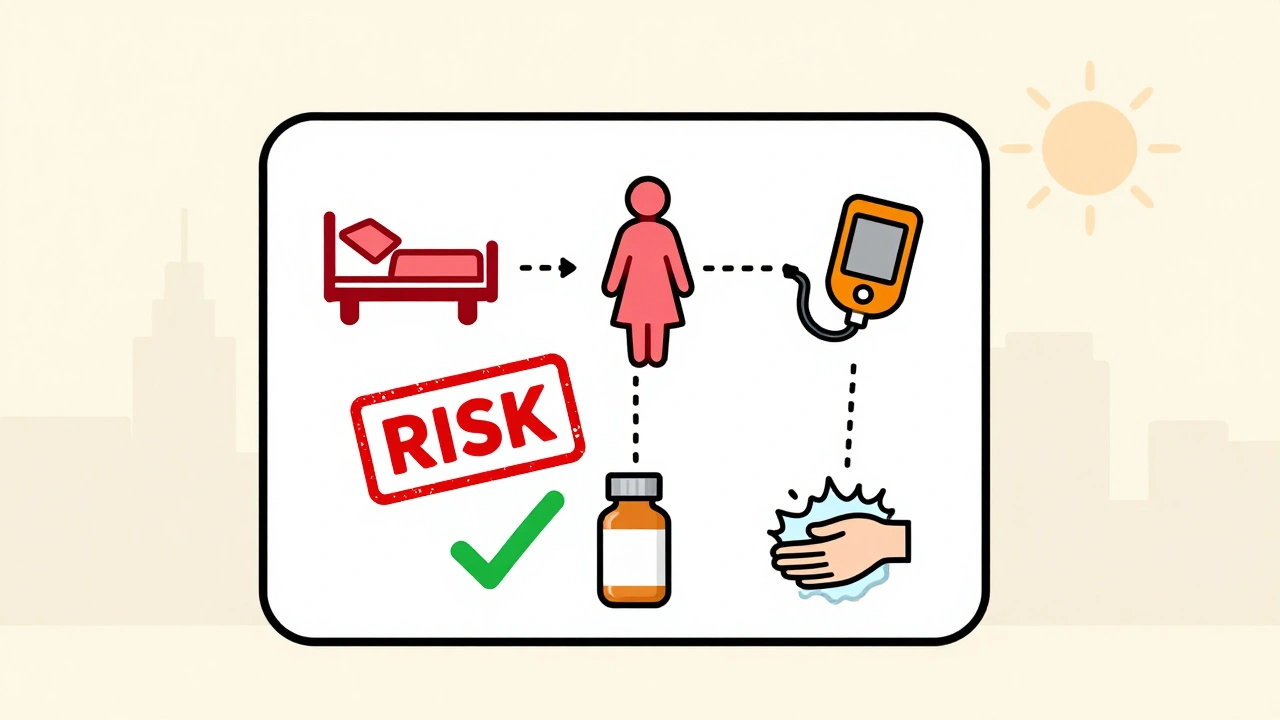
What’s Changing in Clinical Practice?
The old rule was: “Never use fluoroquinolones in MG.” The new rule? “Use them carefully, with awareness.” The Cleveland Clinic study is changing how neurologists think. Instead of blanket restrictions, they’re now using a risk-based approach. If you’re stable, young, and healthy, your risk is low. If you’ve been hospitalized recently, your risk is higher-and you need more support. The Myasthenia Gravis Foundation still lists fluoroquinolones as “cautious use, if at all.” But they’re updating their guidelines based on new data. Their “Cautionary Drugs” list is reviewed every quarter. This shift matters. Too many MG patients have gone without needed antibiotics because doctors were scared. That led to worse outcomes-longer infections, more hospital stays, more complications. The goal now is balance: treat the infection, protect the muscles, and avoid unnecessary fear.What About Other Drugs?
Antibiotics aren’t the only drugs that can trigger MG flares. Some antivirals, antifungals, and even muscle relaxants carry risks. But antibiotics are the most common offenders because they’re so widely prescribed. Tetracyclines, trimethoprim-sulfamethoxazole, and linezolid fall into a gray zone. They’re not as dangerous as aminoglycosides, but they’re not as safe as penicillins. Use them only if needed, and monitor closely. And remember: immunosuppressants used to treat MG-like prednisone or mycophenolate-make you more prone to infections. So you’re caught in a loop: you need antibiotics to treat infections, but the drugs you take for MG make you more likely to get them. That’s why prevention matters. Get your flu shot. Wash your hands. Avoid crowds when possible. And always tell your doctor you have MG before any new prescription.Final Thoughts: It’s About Smart Choices, Not Fear
You don’t have to live in fear of every antibiotic. But you do need to be informed. The latest evidence shows that for many MG patients, the risk of antibiotics is low-especially if you’re stable. Amoxicillin remains the gold standard. Fluoroquinolones and macrolides aren’t automatic no-gos anymore. But they’re not risk-free either. Your best tools? Knowledge. Communication. Monitoring. Keep a list of safe and unsafe drugs. Talk to your MG specialist before any new prescription. Watch for changes in your strength. And don’t let fear stop you from getting the care you need. Infections will happen. Antibiotics will be needed. The key isn’t avoiding them-it’s choosing the right one, at the right time, with the right support.Can antibiotics cause myasthenic crisis?
Yes, certain antibiotics can trigger myasthenic crisis-a life-threatening worsening of muscle weakness that can lead to breathing failure. Fluoroquinolones, macrolides, and aminoglycosides carry the highest risk. But crisis events are rare, occurring in less than 1% of antibiotic courses in most studies. The infection itself is often the main trigger, not the drug.
Is amoxicillin safe for people with myasthenia gravis?
Yes, amoxicillin is considered one of the safest antibiotics for MG patients. A 2024 Cleveland Clinic study found only a 1.3% rate of symptom worsening with penicillins like amoxicillin-lower than fluoroquinolones and macrolides. It’s often the first choice for common infections like strep throat or sinusitis.
Should I avoid azithromycin if I have MG?
Azithromycin has been flagged for potential risk, but recent data suggests the danger is lower than once thought. If you’re stable and have no recent hospitalizations, your doctor may prescribe it for a respiratory infection. But if you’ve had a recent flare or are diabetic, avoid it unless absolutely necessary. Always consult your MG specialist first.
What should I do if I start feeling weaker after taking an antibiotic?
Call your doctor or go to the nearest emergency room immediately. Signs include worsening double vision, slurred speech, trouble swallowing, shortness of breath, or feeling unusually fatigued. Don’t wait. Early intervention can prevent a crisis. Bring your antibiotic list and MG records with you.
Can I take over-the-counter antibiotics for a minor infection?
No. There are no FDA-approved oral over-the-counter antibiotics. Some topical creams or ointments may contain antibiotics like neomycin or bacitracin, which can be risky for MG patients. Always check with your pharmacist or doctor before using any product containing antibiotics-even if it’s sold without a prescription.
Do I need to tell every doctor I see that I have MG?
Yes. Always. Even for dental work, minor surgeries, or urgent care visits. Many doctors don’t know MG can be affected by common antibiotics. Add your diagnosis to your electronic health record and carry a medical alert card. Pharmacists can flag dangerous interactions if they know your condition.
Are there any new antibiotics being studied for MG patients?
There are no antibiotics specifically developed for MG patients, but researchers are working on tools to help doctors choose safer options. Future studies aim to identify genetic markers that predict who’s most at risk. Some hospitals are testing AI-driven decision systems that flag dangerous antibiotics based on your MG history and other health factors.
Sean McCarthy
Amoxicillin is fine. Fluoroquinolones are not. End of story. Stop overcomplicating it.
soorya Raju
they say amoxicillin is safe but what if its a cover up? big pharma owns the cleveland clinic and the fda. they want you on antibiotics forever so you keep buying them. remember 2003? they said fluoroquinolones were safe too. then everyone went blind. its all connected.
Kshitij Shah
So let me get this straight - in India we just take whatever the pharmacist hands us and pray to Shiva. Here you got spreadsheets, risk assessments, and a 20-year study to decide if you can take a pill for a sinus infection. Bless your overthinking hearts.
Dennis Jesuyon Balogun
The systemic epistemological rupture here is profound. The biomedical paradigm continues to reify pharmacological reductionism while ignoring the bio-psycho-social entanglement of neuromuscular homeostasis. MG is not merely a receptor deficit - it's a manifestation of immune dysregulation amplified by pharmaceutical hegemony. We must decolonize therapeutic decision-making.
Grant Hurley
man i had mg last year and i took azithromycin for a cough and nothing happened. maybe i just got lucky? or maybe the docs are still stuck in 2010? anyway hope everyone's doing okay out there 💪
Lucinda Bresnehan
i wrote down all my safe meds on a little card and keep it in my wallet. i showed it to my dentist last week and he said 'wow i wish more patients did this.' please do this. it saves lives. also, if you're on prednisone, wash your hands like your life depends on it. because it does.
Shannon Gabrielle
Oh great. Another article telling us to trust doctors. Next they'll say vaccines are safe and the moon landing wasn't faked. If you're not terrified of antibiotics, you're not paying attention.
Nnaemeka Kingsley
bro i had a UTI last month and my doc gave me cipro. i was scared but i told him i had mg. he said 'we'll watch you close' and i went to clinic every day for 3 days. nothing happened. i'm alive. point is: don't panic. talk to your team.
Linda Migdal
This is why America is falling apart. You can't trust science anymore. If you're a woman with diabetes and MG, you're basically a walking liability. Why even bother treating you? Just let nature take its course.
Tommy Walton
The ontological weight of pharmacological agency in MG is not merely clinical-it’s existential. We are not patients. We are nodes in a bio-chemical network. The antibiotic is not a tool. It is a disruption of the Dasein of neuromuscular being.
James Steele
The Cleveland Clinic study is methodologically flawed. Small sample size, selection bias, lack of longitudinal biomarker tracking. Also, amoxicillin is just a glorified penicillin derivative-how is that 'safe'? It's a beta-lactam, for crying out loud. The real solution is IVIG, not antibiotics.
Louise Girvan
I've been MG for 17 years. I've had 3 crises. All from antibiotics. All from doctors who 'thought it was fine.' You think you're safe? You're not. You're just lucky. And luck runs out.
ANN JACOBS
I just want to say, to every single person living with myasthenia gravis, that you are not alone. Your strength, your resilience, your quiet courage in the face of daily uncertainty-this is what moves mountains. The science evolves, the guidelines shift, but your spirit? That remains unshakable. Please keep advocating for yourself. Keep asking questions. Keep sharing your story. You are seen. You are valued. And you are worthy of the very best care that medicine has to offer-no compromises, no fears, no silences. You are not a risk factor. You are a person. And that matters more than any antibiotic ever could.