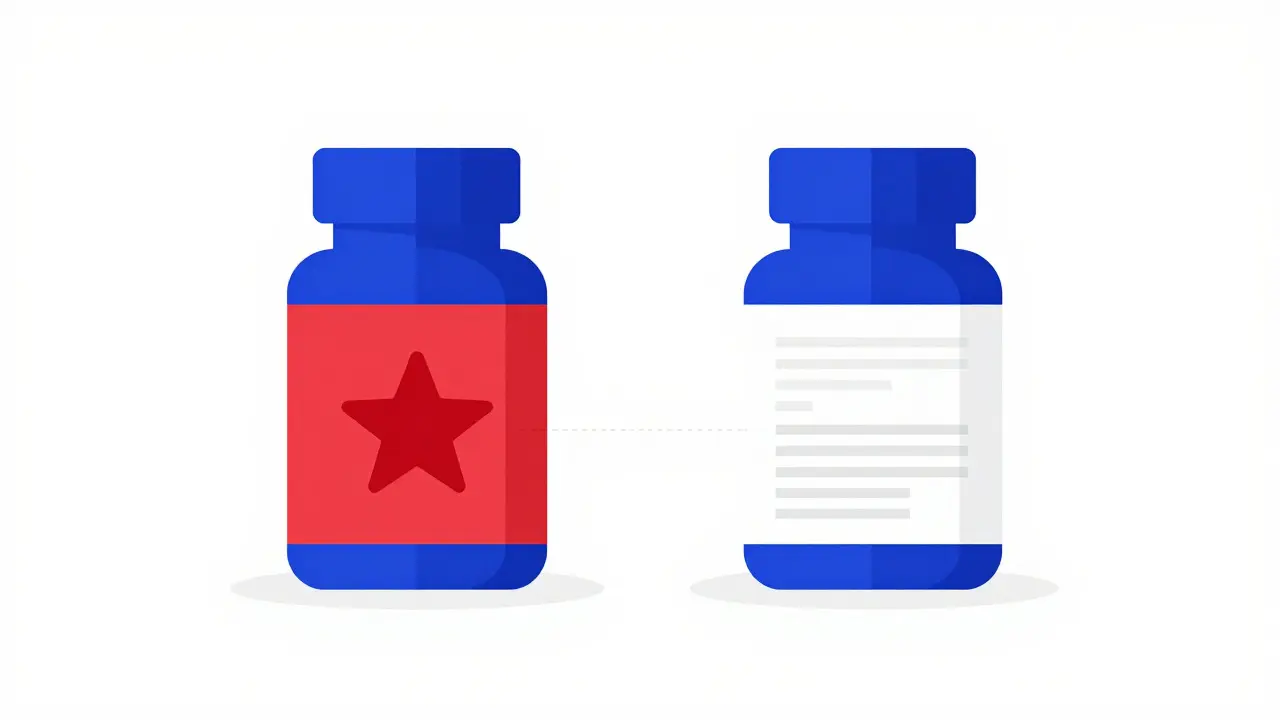
You’ve probably seen the price tag on your prescription drop significantly when a generic version becomes available. But here’s a twist you might not expect: sometimes, the company that makes the expensive brand-name drug is also selling a cheaper “generic” version of its own product. This is called an authorized generic a brand-name drug marketed without the brand name on its label but with identical ingredients and formulation to the original branded product. It sounds confusing, doesn’t it? How can a drug be both a brand and a generic?
This article breaks down the real differences between authorized generics and traditional generics drugs approved through the Abbreviated New Drug Application (ANDA) process that are bioequivalent to the brand-name reference listed drug but may have different inactive ingredients. We’ll look at how they are made, how the FDA the U.S. Food and Drug Administration, the federal agency responsible for protecting public health by regulating food, drugs, medical devices, and cosmetics views them, and what this means for your wallet and your health.
The Core Difference: Identity vs. Equivalence
The biggest difference lies in what is actually inside the pill or liquid. An authorized generic is, chemically and physically, the exact same product as the brand-name drug. It has the same active ingredient, the same inactive ingredients (like fillers, binders, and dyes), and comes from the same manufacturing facility under the same quality control standards. The only thing missing is the brand name on the label. Think of it like buying a high-end designer shirt where the label has been removed; the fabric, stitching, and cut are identical to the one hanging in the boutique window.
Traditional generics, on the other hand, are copies made by different companies. To get approval, these manufacturers must prove their product is bioequivalent having similar bioavailability to a reference drug, meaning it reaches the bloodstream at the same rate and extent to the brand-name drug. This means the active ingredient works the same way in your body. However, traditional generics often use different inactive ingredients. These differences can change the color, shape, or size of the pill, and in rare cases, affect how sensitive individuals react to the medication due to allergies to specific fillers or dyes.
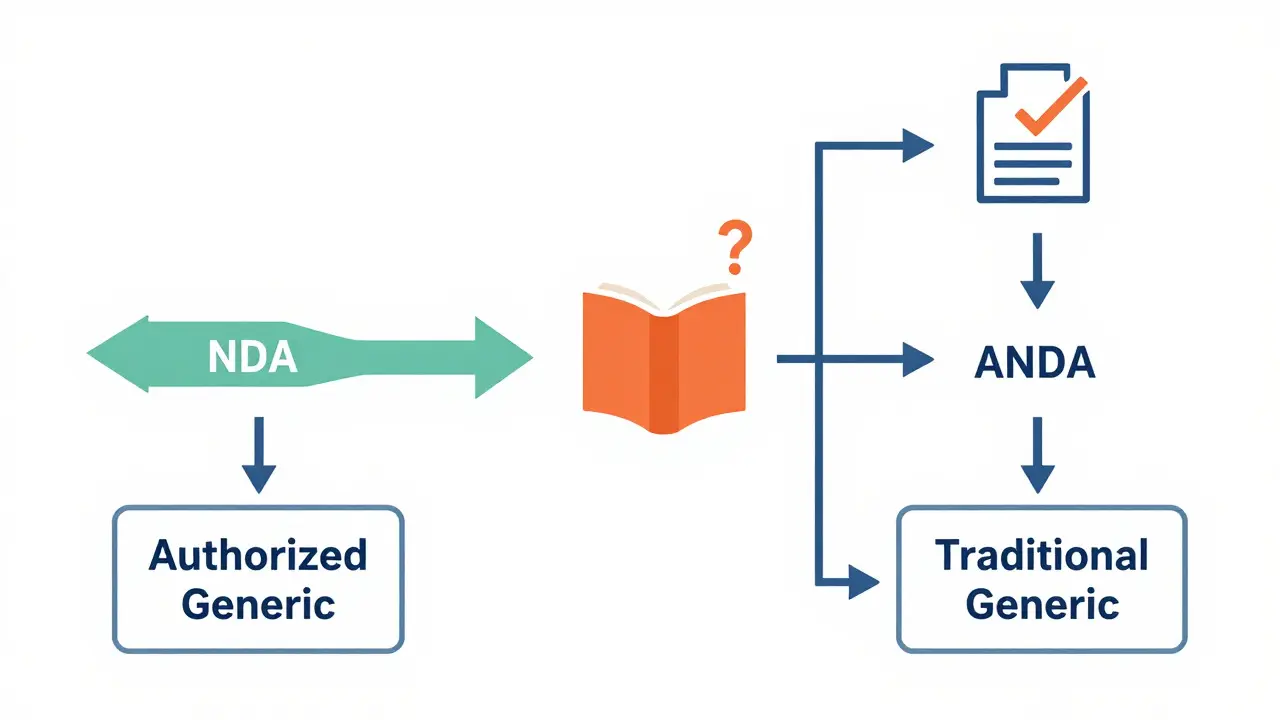
How They Get Approved: NDA vs. ANDA
The path to getting these drugs onto pharmacy shelves is completely different. Authorized generics ride on the coattails of the original brand-name approval. The brand manufacturer holds a New Drug Application (NDA) an application submitted to the FDA seeking permission to market a new drug product based on data demonstrating safety and effectiveness. Since the FDA has already deemed the brand-name drug safe and effective, the manufacturer simply notifies the FDA that they plan to sell an unbranded version. No new clinical trials are needed. No new safety data is required. It’s a streamlined process that allows the brand company to enter the generic market quickly.
Traditional generics take a different route. Manufacturers submit an Abbreviated New Drug Application (ANDA) an application filed by generic drug manufacturers to demonstrate that their product is bioequivalent to an already approved brand-name drug. This pathway was established by the Hatch-Waxman Act the Drug Price Competition and Patent Term Restoration Act of 1984, which created the legal framework for generic drug approval in the United States. While the ANDA process skips full clinical trials, it still requires rigorous testing to prove bioequivalence. The manufacturer must show that the generic drug delivers the same amount of active ingredient into a patient’s bloodstream in the same amount of time as the brand-name drug. This process is less costly than developing a new drug from scratch but still involves significant regulatory hurdles and time.
The FDA Orange Book: Where You Find Them
If you’re a pharmacist or a healthcare provider trying to verify therapeutic equivalence, you likely check the FDA Orange Book the official list of approved drug products with therapeutic equivalence evaluations published by the FDA. Here is where things get tricky. Traditional generics are listed in the Orange Book with a code indicating their therapeutic equivalence to the brand-name drug. If two drugs share the same code, pharmacists know they can be substituted for each other safely.
Authorized generics, however, do not appear in the Orange Book as separate entries because they are part of the original NDA. They are considered therapeutically equivalent to the brand-name drug by definition, since they are the same drug. This absence can cause confusion. A pharmacist might see a prescription for a brand-name drug and substitute a traditional generic from the Orange Book, never realizing that an authorized generic-an identical twin of the brand-might also be available from the original manufacturer. The FDA maintains a separate, quarterly-updated list of authorized generic drugs, but it is not as widely referenced as the Orange Book.
Pricing Strategy and Market Timing
Why would a brand-name company sell its own drug at a lower price? It’s a strategic move to protect market share. When a patent expires, traditional generic competitors flood the market, causing the brand-name drug’s price to plummet. By launching an authorized generic, the brand manufacturer can capture some of that generic market volume themselves. They often launch these products just before or right after traditional generics enter the market. This allows them to compete directly with third-party generic makers while maintaining control over production quality.
For consumers, this competition usually means lower prices across the board. Authorized generics are typically priced higher than traditional generics but lower than the brand-name drug. They offer a middle ground: the cost savings of a generic with the peace of mind of knowing it’s the exact same formulation as the brand. Traditional generics are usually the cheapest option available, driving the most significant cost reductions in the pharmaceutical market. In 2022, the U.S. generic drug market was valued at approximately $120 billion, with traditional generics dominating the majority of sales volume due to their widespread availability and low cost.
When Does It Matter Which One You Get?
For most medications, especially common ones like blood pressure pills or cholesterol meds, it doesn’t matter much whether you get an authorized generic or a traditional generic. Both are safe and effective. However, there are exceptions. For drugs with a narrow therapeutic index a small range between the dose that provides a therapeutic effect and the dose that causes toxicity, requiring precise dosing, such as warfarin or levothyroxine, consistency is critical. Minor variations in inactive ingredients or manufacturing processes can sometimes lead to slight differences in how the drug is absorbed. Patients on these medications often prefer staying with one specific manufacturer to avoid fluctuations in blood levels. In these cases, an authorized generic offers the advantage of guaranteed consistency with the brand-name product, whereas switching between different traditional generic manufacturers might introduce variability.
Allergies and sensitivities are another factor. If you have a known allergy to a specific dye or filler used in a traditional generic, an authorized generic eliminates that risk because it uses the brand-name formula. Conversely, if you had a reaction to a brand-name drug’s inactive ingredient, switching to a traditional generic with different excipients might resolve the issue. Always discuss any sensitivity concerns with your pharmacist.
| Feature | Authorized Generic | Traditional Generic |
|---|---|---|
| Manufacturer | Brand-name company | Third-party generic company |
| Ingredients | Identical active and inactive ingredients to brand | Same active ingredient; inactive ingredients may differ |
| Approval Pathway | New Drug Application (NDA) notification | Abbreviated New Drug Application (ANDA) |
| FDA Orange Book Listing | No (listed separately by FDA) | Yes (with therapeutic equivalence code) |
| Price Point | Lower than brand, higher than traditional generic | Lowest available price |
| Bioequivalence Testing | Not required (already proven via brand NDA) | Required to match brand-name performance |
Insurance Coverage and Substitution Laws
Your insurance plan plays a huge role in which generic you receive. Most formularies group authorized generics and traditional generics together under the same tier, meaning your copay will likely be the same for either. However, substitution laws vary by state. In many states, pharmacists are allowed-or even required-to substitute a generic for a brand-name prescription unless the doctor writes “Dispense As Written” (DAW). If you specifically want the authorized generic because you trust the brand manufacturer, you need to talk to your doctor and pharmacist. Otherwise, you might end up with a traditional generic from a different company, which is perfectly fine for most people but might not be what you were expecting.
Some health plans may cover an authorized generic instead of the brand-name medicine to save costs, recognizing it as a lower-cost alternative that maintains brand-quality standards. This is particularly common in specialty pharmacies dealing with complex respiratory or autoimmune medications where formulation consistency is highly valued by patients.
What Experts Say About the Debate
Dr. Aaron Kesselheim, a Professor of Medicine at Harvard Medical School, has highlighted that authorized generics provide the same clinical effect as brand-name drugs but with greater price transparency. He argues that they serve as a valuable bridge for patients who are hesitant to switch to traditional generics due to fears about efficacy or side effects. On the other hand, industry analysts note that authorized generics allow brand manufacturers to segment the market, competing directly with traditional generics rather than cannibalizing their own brand-name sales too aggressively.
Critics argue that authorized generics don’t add true competition because they come from the same source as the brand. However, supporters point out that they do increase supply options and can help stabilize prices during the transition period after a patent expires. The FDA’s stance remains neutral but clear: authorized generics are not “typical” generics, and vice versa. Understanding this distinction helps patients make informed choices about their medication.
Practical Tips for Patients
If you’re concerned about which generic you’re receiving, here are a few steps you can take:
- Talk to your pharmacist: Ask if the generic they dispensed is an authorized generic or a traditional generic. Pharmacists can check the manufacturer and packaging details.
- Check the packaging: Authorized generics often look very similar to the brand-name drug, sometimes differing only in color or imprint. Traditional generics may look entirely different.
- Review the FDA list: The FDA publishes a quarterly list of authorized generic drugs. You can search this list to see if your medication has an authorized generic version available.
- Monitor your response: If you switch from a brand-name drug to a generic and notice changes in effectiveness or side effects, report them to your doctor. This is rare but important for narrow therapeutic index drugs.
- Understand your insurance: Check your formulary to see if there are any restrictions or preferred generic manufacturers.
The Future of Generic Drugs
The landscape of generic drugs is evolving. Between 2010 and 2020, 217 unique authorized generic products were launched in the United States, showing a growing trend among brand manufacturers to use this strategy. As more patents expire, we can expect to see more authorized generics entering the market, particularly for oral solid drug products where traditional generic competition is intense. This increased competition should continue to drive down costs for consumers while providing more options for those who prioritize formulation consistency.
Regulatory clarity is also improving. Recent FDA guidance updates have clarified reporting requirements for authorized generics, ensuring better transparency for healthcare providers and patients. While traditional generics will remain the backbone of the generic market due to their low cost and wide availability, authorized generics offer a unique niche for patients seeking brand-level consistency at a reduced price.
Are authorized generics safer than traditional generics?
Both authorized generics and traditional generics are safe and effective. Authorized generics are identical to the brand-name drug, so they carry no risk of variation in inactive ingredients. Traditional generics must meet strict bioequivalence standards set by the FDA, ensuring they work the same way in the body. For most patients, safety is comparable. However, for individuals with specific allergies to fillers or dyes, an authorized generic might be preferable since it uses the brand-name formulation.
Why are authorized generics not listed in the FDA Orange Book?
The FDA Orange Book lists drugs approved through the Abbreviated New Drug Application (ANDA) process, which applies to traditional generics. Authorized generics are marketed under the original brand-name drug’s New Drug Application (NDA). Since they are the same product as the brand, they are considered therapeutically equivalent by definition and do not require a separate entry in the Orange Book. The FDA maintains a separate list of authorized generic drugs for reference.
Can my pharmacist substitute an authorized generic for a brand-name prescription?
Yes, in many states, pharmacists can substitute an authorized generic for a brand-name prescription unless the doctor specifies “Dispense As Written.” Because authorized generics are identical to the brand, they are often viewed as a safe and cost-effective alternative. However, since they are not always clearly labeled as “authorized,” patients may not realize they are receiving the brand manufacturer’s product. Always ask your pharmacist if you have preferences.
Do authorized generics cost less than brand-name drugs?
Yes, authorized generics are typically priced lower than brand-name drugs but higher than traditional generics. The brand manufacturer sells them at a reduced price to compete with third-party generic competitors while maintaining profit margins. This pricing strategy allows patients to access the exact brand formulation at a more affordable cost, though traditional generics usually offer the lowest price point.
How do I know if my generic medication is an authorized generic?
You can identify an authorized generic by checking the manufacturer information on the bottle. If the manufacturer is the same company that produces the brand-name drug, it is likely an authorized generic. Additionally, the FDA publishes a quarterly list of authorized generic drugs online. You can cross-reference your medication with this list. Pharmacists can also confirm the type of generic they are dispensing upon request.