Ever wonder why your doctor keeps asking about your salad? If you take Warfarin, a common blood thinner used to prevent clots, your plate of greens isn't just food-it's a variable in a delicate chemical equation. The goal is simple: keep your International Normalized Ratio (INR) stable so your blood doesn't clot too much or bleed too easily. But here’s the catch. You don’t need to banish all green vegetables from your life. You just need to stop treating them like occasional treats and start treating them like part of your medication routine.
The Core Mechanism: How Vitamin K Fights Back
To understand why your INR jumps around, you have to look at how Warfarin actually works. It blocks an enzyme called VKORC1, which is responsible for recycling Vitamin K in your liver. Without active Vitamin K, your body can’t produce four key clotting factors: II, VII, IX, and X. When these factors drop, your blood takes longer to clot, which is exactly what you want if you’re preventing a stroke or deep vein thrombosis.
However, every time you eat spinach, kale, or broccoli, you are flooding your system with fresh Vitamin K1 (phylloquinone). This new supply bypasses the blockage created by Warfarin, allowing your liver to restart production of those clotting factors. The result? Your INR drops, meaning your blood is clotting faster than intended. Conversely, if you suddenly skip your usual greens, your INR spikes, raising your bleeding risk. The enemy isn’t Vitamin K itself; it’s inconsistency.
Decoding Food Labels: High vs. Low Impact
Not all foods impact your INR equally. The American Heart Association categorizes foods based on their Vitamin K content per serving. Understanding these tiers helps you plan meals without anxiety.
| Food Item | Serving Size | Vitamin K Content (mcg) | Impact Category |
|---|---|---|---|
| Spinach (cooked) | 1 cup | 889 | High |
| Kale (cooked) | 1 cup | 547 | High |
| Broccoli (cooked) | 1 cup | 220 | Medium-High |
| Lettuce (iceberg) | 1 cup | 17 | Low |
| Cauliflower | 1 cup | 30 | Low |
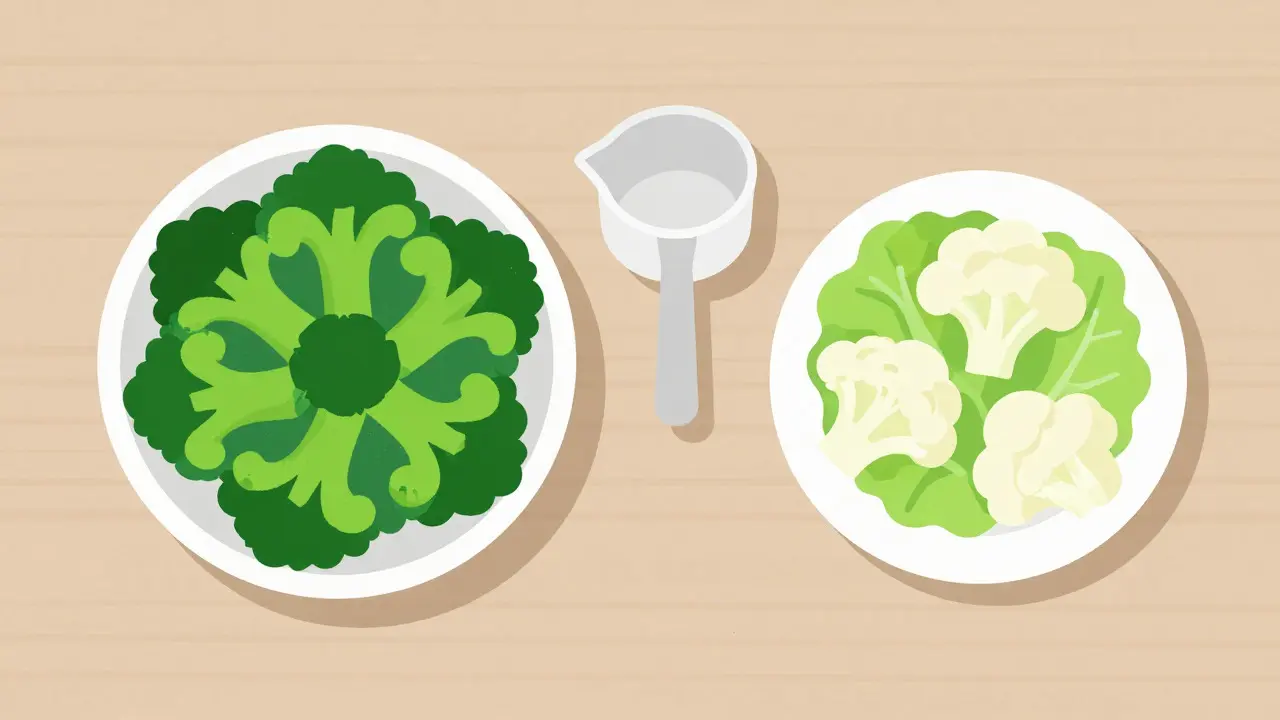
Foods with more than 60 mcg of Vitamin K per serving are considered high-impact. If you eat these, you must do so consistently. For example, if you love a big bowl of cooked spinach three times a week, that becomes your baseline. If you only eat it once a month, your INR will fluctuate wildly. On the other hand, "low-impact" foods like iceberg lettuce or cauliflower contain less than 35 mcg per serving. These are safer to vary because they contribute minimally to your total daily intake.
Consistency Over Restriction: The Modern Approach
Old advice often told patients to avoid leafy greens entirely. That’s outdated. Current guidelines from the American College of Chest Physicians emphasize consistency over restriction. The target is to keep your daily Vitamin K intake within a 10-15% variation range. Why? Because your body adapts to your average intake. If your average is high, your Warfarin dose is adjusted to match it. If your average is low, the dose is lower. The problem arises when you deviate significantly from that average.
Consider this scenario: Patient A eats 1 cup of cooked broccoli (220 mcg) every single day. Their Warfarin dose is calibrated for this level. Patient B eats no broccoli for two weeks, then has a large salad with 2 cups of kale (over 1,000 mcg) at a friend’s dinner. Patient B’s INR will likely drop sharply, potentially falling below the therapeutic range of 2.0-3.0. This is where the danger lies-not in the vegetable, but in the surprise.
Practical Strategies for Daily Management
Managing your diet doesn’t require becoming a nutritionist, but it does require some structure. Here are actionable steps to maintain stability:
- Keep a Food Log: Use an app or a simple notebook to track your Vitamin K intake. Apps like CoumaDiet are specifically designed for this purpose and can alert you if you’re straying from your pattern.
- Standardize Portions: Use measuring cups instead of eyeballing. One cup of cooked spinach is very different from a handful. Consistency in volume is key.
- Mind Cooking Methods: Boiling can reduce Vitamin K content by 30-50% compared to steaming. If you switch from boiling to roasting, you might inadvertently increase your effective intake. Stick to one method for specific dishes.
- Plan Restaurant Meals: Restaurants are unpredictable. Before eating out, check menus online or ask the server about side dishes. Avoid hidden sources like pesto sauces or large salads unless you know the portion size.
When Things Go Wrong: Handling Fluctuations
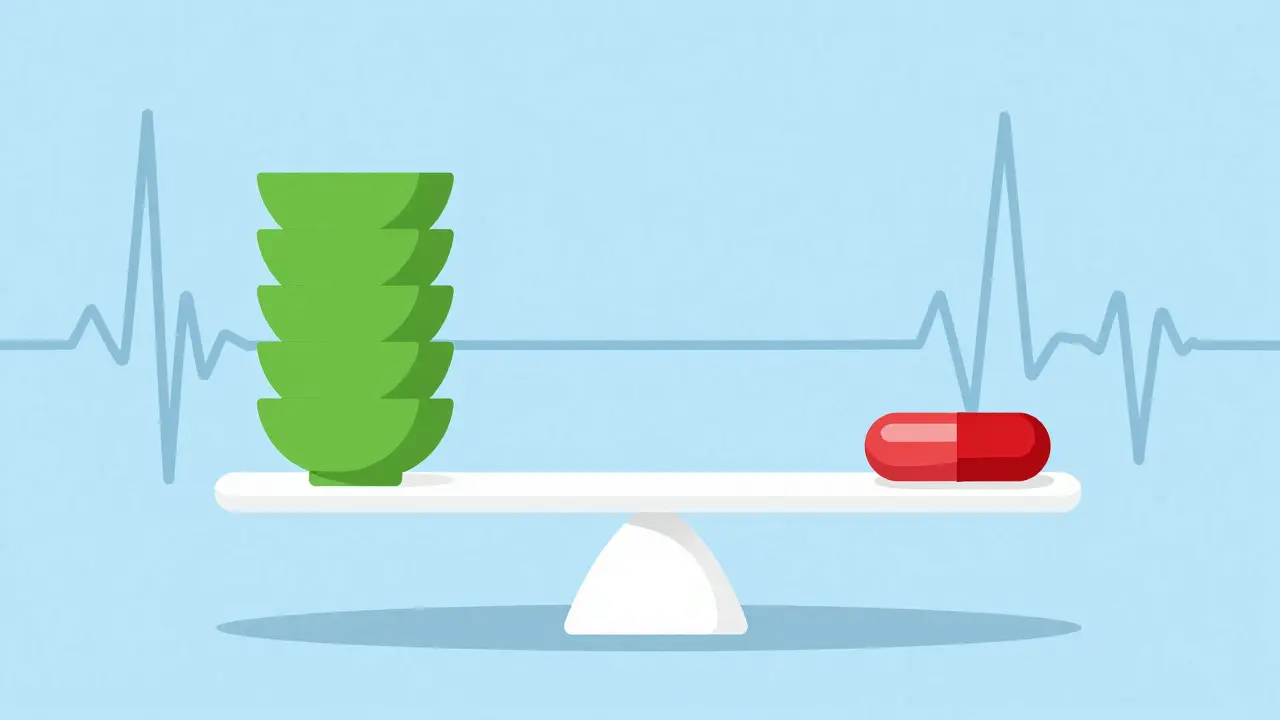
Even with the best planning, life happens. Maybe you travel, get sick, or simply forget your usual meal. What should you do if you suspect your INR might be off? Don’t panic, but do act. If you miss a few days of your usual high-Vitamin K foods, your INR may rise. If you consume a massive amount of greens unexpectedly, it may fall. In both cases, contact your anticoagulation clinic. They may adjust your Warfarin dose temporarily or schedule an earlier INR test. Never change your medication dose on your own based on dietary changes alone.
For patients who struggle with erratic diets despite their best efforts, doctors sometimes prescribe low-dose oral Vitamin K supplements (100-200 mcg). This acts as a buffer, ensuring a baseline level of Vitamin K is present regardless of what you eat that day. This strategy has shown success in stabilizing INR levels for patients with inconsistent habits.
The Future of Anticoagulation Care
While direct oral anticoagulants (DOACs) are gaining popularity, Warfarin remains the gold standard for mechanical heart valves and antiphospholipid syndrome. With approximately 3.5 million Americans still relying on it, mastering the interaction between Vitamin K and Warfarin is not optional-it’s essential. Research continues to refine our understanding, including personalized dietary protocols based on genetics. Until then, the simplest rule remains: eat the same way every day. Your blood counts on it.
Do I need to stop eating leafy greens while on Warfarin?
No. You should not eliminate leafy greens. Instead, aim for consistency. Eat the same amount of high-Vitamin K foods every day. Sudden changes in intake are what cause INR fluctuations, not the presence of Vitamin K itself.
What is a safe amount of Vitamin K to consume daily?
There is no single "safe" number for everyone. Your target is whatever amount keeps your INR stable. For most people, this means maintaining a consistent intake, whether that’s 100 mcg or 300 mcg per day. Work with your dietitian to find your personal baseline.
Does cooking affect Vitamin K levels?
Yes. Boiling vegetables can leach out 30-50% of their Vitamin K content. Steaming or roasting preserves more of the nutrient. If you change your cooking method, monitor your INR closely, as your effective intake may change.
Can I take Vitamin K supplements?
Only if prescribed by your doctor. For some patients with unstable INRs, low-dose supplements help stabilize levels. However, taking them without medical guidance can interfere with your Warfarin dosage and lead to under-anticoagulation.
How often should I check my INR?
Frequency depends on your stability. Once your INR is stable, checks might happen every 4-12 weeks. During periods of dietary change or dose adjustment, you may need weekly or bi-weekly tests. Always follow your anticoagulation clinic’s schedule.
Amy Zalkin
ok so this is actually super helpful because i always feel like my salad is a landmine waiting to go off 💣
i used to think i had to pick between being healthy and not bleeding out but apparently its just about consistency? that feels way less scary than the old advice of 'never touch spinach again' which honestly sounded like a punishment
the part about boiling vs steaming made me want to cry because i boil everything in a panic when i cook
thanks for breaking it down without making me feel stupid
Kaylyn Mello
totally agree with the consistency thing ive been on warfarin for three years now and the first year was pure chaos
my doctor finally sat me down and said stop guessing start measuring and life got so much easier
using a little app to track my greens saved me from so many unexpected clinic visits
its really not about restriction its just routine
joyce Hogewoning
oh wow so you are telling me that the reason my INR went crazy last month wasnt because i ate too much kale at that fancy dinner party where everyone was judging my portion sizes but because i didnt eat kale the other six days of the week which is absolutely ridiculous because who plans their entire weekly vegetable intake around a single leafy green anyway
it makes you feel like you have to become a nutritionist just to survive your own body and honestly that is such a huge burden to carry when you are already dealing with the stress of knowing your blood is basically playing russian roulette every single time you swallow a pill
i spent hours reading labels in the grocery store last week trying to figure out if that bag of mixed greens was high impact or low impact and the cashier looked at me like i was insane but maybe she was just confused why i was holding up the line with a calculator
it is exhausting trying to be consistent when restaurants keep changing their recipes and sometimes the pesto sauce is hiding more vitamin k than the actual salad itself which feels like a conspiracy against people on anticoagulants
but yeah i guess i will try to stick to one cooking method and stop switching between roasting and boiling just because i felt like it on a tuesday night
thanks for the reminder that the enemy is inconsistency not the food itself even though it feels like the food is the enemy half the time
Thhomas Fox
Good breakdown. The 'consistency over restriction' angle is key.
I see patients struggle with the fear factor more than the actual mechanics.
Just keep the baseline steady and the dose follows.
Owen John
Typical American oversimplification. They ignore the genetic variance in VKORC1 expression which means your 'consistent' diet might still fluctuate wildly based on your haplotype. The big pharma companies would love for you to think a simple food log solves everything, but they know the real money is in frequent blood tests and unnecessary adjustments. It's all about keeping you dependent on the clinic schedule. Don't trust the 'stable INR' narrative, it's just a control mechanism.
Maneesh kv
great point about the genetics 🧬 but dont let it scare you too much 😅
most people find their personal baseline after a few months of tracking
just stay consistent and listen to your doctor
you got this 💪
John Park
let us be honest here the whole concept of 'stable INR' is a myth created by doctors who want to bill for more appointments
if your diet changes even slightly your body reacts chaotically because biology is inherently unstable
trying to force consistency is fighting nature and losing
just accept that your health is a gamble and stop pretending you can control it with a notebook
Kathleen McGrath
I think you are being a bit harsh there! My INR has been super stable for two years now.
All I do is eat the same amount of broccoli every day.
It really does work if you just make it a habit.
You should give it a chance before giving up!
Lemuel Gomez
To add to the previous points, the cooking method detail is often overlooked, yet critical.
Boiling leaches nutrients into the water, which we usually discard, whereas steaming retains them.
If you switch methods, treat it as a dietary change and monitor closely.
Small details matter significantly in this context.
Emmanuel Umana
In many cultures, meal consistency is natural due to traditional diets.
Warfarin management is harder where meals vary daily.
Education is key for global stability.
Lilian Binda
so basically western medicine wants us to eat the same boring food every day to keep our blood thin right
why cant they just fix the drug so it works no matter what you eat
its unfair to people who love variety in their meals
they should stop blaming the patient for eating vegetables
Fabian Saldana
While the challenge is real, the solution is empowering. Consistency builds confidence in your regimen.
View your diet as a partner in your health journey, not an adversary.
With mindful planning, you can enjoy diverse meals while maintaining stability.
Stay positive and proactive!
Colin Finch
This is such a relief to read! I was convinced I had to live on rice and chicken forever.
Knowing that broccoli is okay if I'm consistent gives me hope.
Thanks for the clear table, it's very easy to follow.
Betty Childers
I appreciate the practical tips, especially the restaurant advice.
Hidden sources like pesto are sneaky.
I'll definitely check menus online before eating out now.
Alex Brown
The interplay between pharmacology and lifestyle is fascinating.
Warfarin remains essential for specific conditions despite newer alternatives.
Mastery of dietary consistency is not merely a task but a form of self-care.
Understanding the mechanism empowers patients to take active roles in their health management.
Stability is achieved through informed choices rather than arbitrary restrictions.