Bisphosphonate Safety Timer
Upright Position Timer
Safety Checklist
Follow these steps before starting your timer:
Imagine swallowing a pill that is literally acidic enough to burn a hole in your throat if it gets stuck. That is the reality for many people taking oral bisphosphonates, a class of drugs used to treat osteoporosis by inhibiting bone resorption. For those who already suffer from gastroesophageal reflux disease (GERD), this combination can feel like a medical minefield. You need the medication to prevent brittle bones, but you fear the heartburn or worse, an esophageal ulcer.
The good news? You don't have to choose between strong bones and a healthy esophagus. The risk of severe injury is low when you follow specific protocols. This guide breaks down exactly why these drugs irritate the esophagus, how GERD complicates things, and the precise steps you must take to stay safe.
Why Bisphosphonates Burn the Esophagus
To understand the risk, you have to look at the chemistry. Alendronate (often known by the brand name Fosamax) and similar drugs like Risedronate (Actonel) are not absorbed well by the body. In fact, less than 1% of an oral dose is actually absorbed into the bloodstream. The rest stays in the digestive tract.
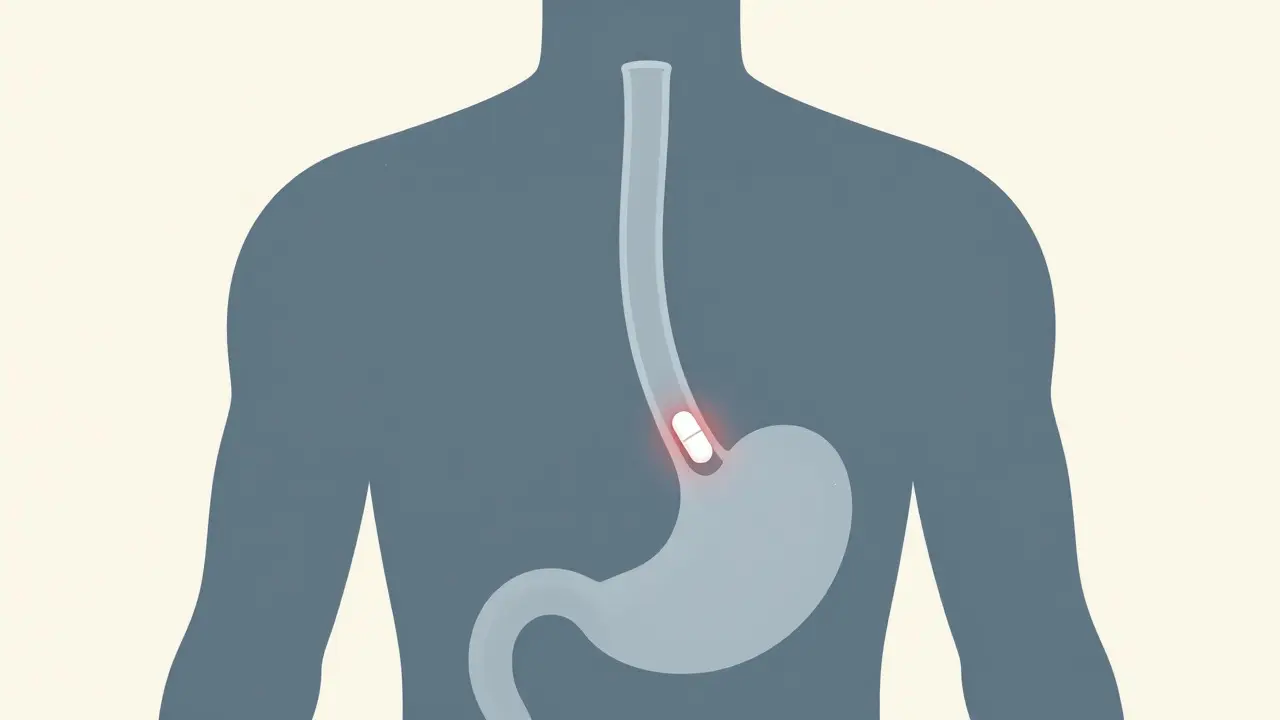
Here is the problem: these medications are salts. When they hit stomach acid, specifically when the pH drops below 2.0, alendronate converts into its free acid form. This free acid is highly irritating to the delicate lining of the esophagus. If the pill dissolves in your stomach as intended, the acid washes away quickly. But if the pill gets stuck in the esophagus, even for a few minutes, it creates a localized chemical burn.
This isn't just theoretical. Studies published in journals like JAMA Internal Medicine show that while the overall incidence of esophagitis is low (around 0.7% for alendronate users versus 0.4% for placebo), the consequences can be severe. We are talking about ulcers that bleed or strictures that make swallowing difficult. The key differentiator is usually whether the pill moved through the esophagus fast enough.
The GERD Factor: Why Your Reflux Matters
If you have GERD, your esophagus is already compromised. Chronic exposure to stomach acid weakens the mucosal barrier. Adding a corrosive pill to the mix increases the stakes significantly.
Research indicates that patients with pre-existing esophageal conditions, such as hiatal hernias or motility disorders, are at a higher risk. A review in Alimentary Pharmacology & Therapeutics noted that delayed esophageal transit-meaning food and pills move slower than normal-is a major risk factor. In elderly populations, this impaired transit affects 15-20% of people. If your esophagus doesn't clear pills quickly, the drug sits there, converting to acid and burning the tissue.
Furthermore, GERD symptoms can mimic bisphosphonate side effects. Chest pain, difficulty swallowing (dysphagia), and retrosternal burning are common in both conditions. This makes it hard to tell if your GERD is acting up or if the medication is causing new damage. This diagnostic confusion led some early studies to show conflicting data on risks, highlighting the need for careful monitoring.
| Treatment Type | Administration | Esophageal Risk | Cost Estimate (Monthly) |
|---|---|---|---|
| Oral Bisphosphonates (e.g., Alendronate) | Oral Pill | High (if instructions ignored) | $15 - $25 (Generic) |
| Denosumab (Prolia) | Subcutaneous Injection | None | $1,500+ |
| Zoledronic Acid (Reclast) | Intravenous (IV) | None | Variable (Clinic visit) |
| Romosozumab (Evenity) | Subcutaneous Injection | None | $5,000+ (per injection) |
The Golden Rules for Taking Oral Bisphosphonates
You can safely take oral bisphosphonates even with GERD, provided you are religious about administration. The FDA issued a safety communication in 2011 emphasizing that most injuries result from non-adherence to these rules. Here is the protocol you must follow:
- Use Plain Water Only: Take the pill with a full 6-8 ounce glass of plain water. Do not use mineral water, coffee, juice, or milk. Minerals in hard water or calcium in dairy can bind to the drug, reducing absorption and potentially altering how it dissolves. Stick to tap or filtered water.
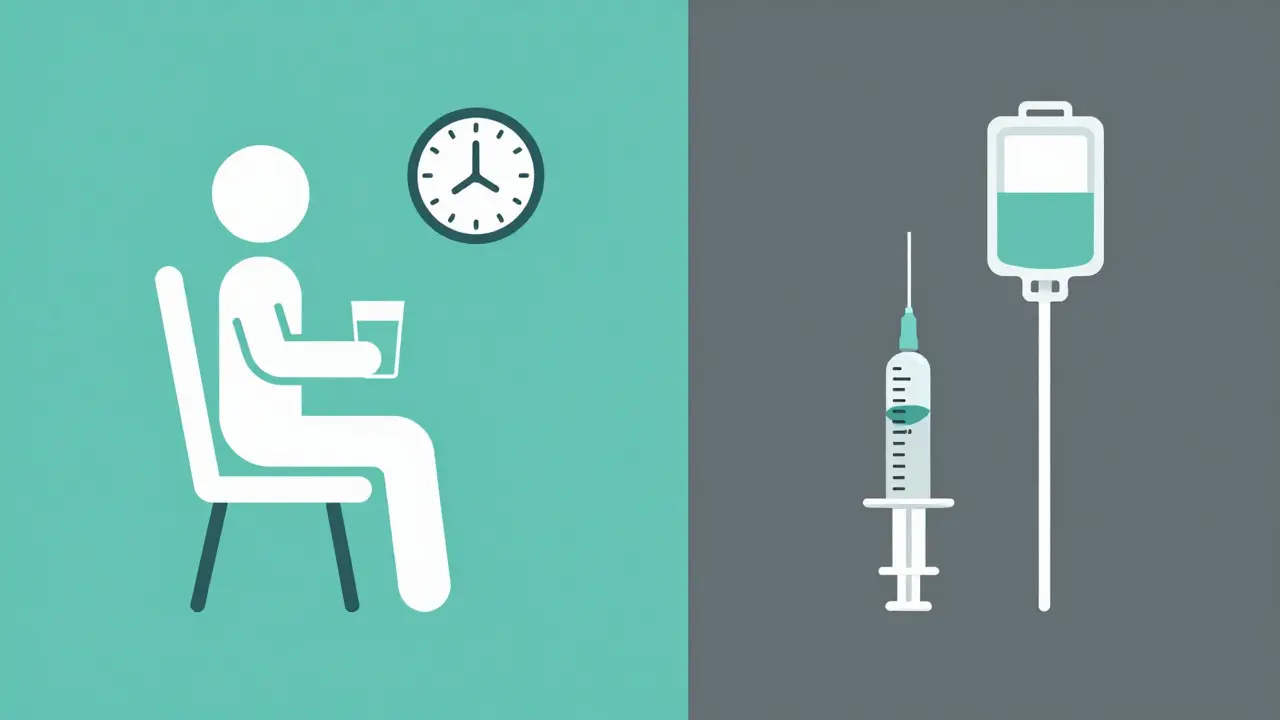
- Stay Upright: After swallowing the pill, you must remain fully upright. Sitting straight or standing is fine; leaning back on the couch is not. Gravity is your best friend here. You need to stay upright for at least 30 to 60 minutes. The 2023 FDA label update explicitly recommends staying upright for at least 60 minutes and until after your first food of the day.
- Fast Before Eating: Do not eat, drink anything else, or take other medications for at least 30 to 60 minutes after taking the bisphosphonate. Food slows down gastric emptying and can interfere with absorption. More importantly, eating might tempt you to lie down or relax your posture too soon.
- Morning is Best: Take the medication first thing in the morning, before breakfast. This ensures you have the longest window of time to stay upright before your daily activities might involve reclining.
Studies show that ignoring these instructions increases the risk of esophageal injury by more than three times. One patient case study documented a woman who developed desquamative esophagitis (a severe shedding of the esophageal lining) simply because she took her alendronate and then lay down. She required hospitalization. It was entirely preventable.
When to Switch to Alternatives
If you have tried following the rules perfectly and still experience chest pain, difficulty swallowing, or persistent heartburn, it may be time to talk to your doctor about switching treatments. Not everyone is a candidate for oral bisphosphonates.
Denosumab (Prolia) is a monoclonal antibody given as an injection every six months. Because it bypasses the digestive system entirely, it carries zero risk of esophageal irritation. It is highly effective, though significantly more expensive than generic oral options.
Zoledronic Acid (Reclast) is another option. It is administered intravenously once a year. This eliminates esophageal contact completely. However, IV bisphosphonates carry a small risk of kidney issues, so your renal function will need to be checked regularly.
Newer agents like Romosozumab (Evenity) offer powerful fracture reduction but come with cardiovascular warnings and high costs. They are typically reserved for patients at very high risk of fracture who cannot tolerate other therapies.
Monitoring and Red Flags
Be vigilant about your symptoms. While mild indigestion can happen, certain signs require immediate medical attention:
- Dysphagia: Any sensation that food is getting stuck in your chest.
- Odynophagia: Pain when swallowing.
- Retrosternal Pain: Sharp or burning pain behind the breastbone that is distinct from your usual GERD pattern.
- Bleeding: Vomiting blood or having black, tarry stools.
If you experience these, stop taking the oral medication and contact your healthcare provider immediately. An endoscopy may be needed to check for ulcers or inflammation. The American Gastroenterological Association now recommends esophageal pH monitoring for patients with persistent symptoms despite proper administration technique, to distinguish between worsening GERD and drug-induced injury.
Frequently Asked Questions
Can I take my bisphosphonate with my PPI (proton pump inhibitor)?
Yes, but timing matters. Proton pump inhibitors like omeprazole reduce stomach acid, which can theoretically affect how well bisphosphonates dissolve and absorb. However, most doctors recommend taking them together if needed for GERD control. Just ensure you take the bisphosphonate first with water, wait the required 30-60 minutes, and then take your PPI and eat breakfast. Always consult your pharmacist for specific timing advice based on your prescription.
Does drinking more water help prevent esophageal irritation?
Yes. Using a full 6-8 ounce glass of plain water helps push the pill quickly through the esophagus and into the stomach. Sipping a small amount is not enough. The volume of water acts as a vehicle to ensure the pill doesn't get stuck. Avoid carbonated water, as bubbles can cause bloating and discomfort.
How long does it take for esophageal irritation to heal?
If caught early, mild irritation often resolves within a few days to a week after stopping the oral medication and starting acid-suppressing therapy (like PPIs). Severe ulcers may take several weeks to heal. During this time, you will likely be switched to an injectable or IV osteoporosis treatment to maintain bone health without further damaging the esophagus.
Are weekly doses safer than daily doses?
Weekly doses (like 70mg alendronate) are generally preferred over daily doses (10mg) because they reduce the total number of times you expose your esophagus to the pill. Fewer exposures mean fewer opportunities for error or irritation. Monthly formulations exist as well, offering even less frequent dosing.
What should I do if I forget to stay upright for 30 minutes?
Don't panic, but monitor yourself closely. If you lay down shortly after taking the pill and develop chest pain or difficulty swallowing, contact your doctor. If you feel fine, continue to stay upright for the remainder of the hour. Going forward, set an alarm on your phone to remind you of the 30-60 minute window to ensure compliance.
Earl Oleary
You are all missing the point because you are too busy reading the marketing fluff. The article says stay upright for 60 minutes. It does not say 'try your best'. If you lay down after 30, you are gambling with your esophagus and you are an idiot for doing so. The chemistry is simple. Acid burns tissue. Gravity helps it move. If you ignore gravity, you get burned. It is that basic. Stop making excuses about being tired or having a busy morning. Your bones are brittle enough without adding chemical burns to the mix. Read the FDA label again. It was updated in 2023 for a reason. People were getting hurt because they thought they knew better than the instructions.
Crystal Tadlock
They want us to be slaves to the clock. Wake up early, stand like a statue for an hour, drink only water, no food, no joy. It is a conspiracy to make life miserable so we buy the expensive shots. The big pharma companies do not care if your throat burns. They just want your money. I bet the doctors take kickbacks from the injection companies. It is all rigged against the little person who just wants to live their life without standing straight for an hour every week. It is unnatural.
Laura Odom
lol @crystal tadlock u really think big pharma is watching u sleep? its just chemistry dumbass. but also this advice is kinda boring. why cant we just eat pizza and be happy? life is short. maybe the pills are evil spirits trying to possess our skeletons. i feel like the real problem is that we trust science too much. what if standing up makes us weak? what if lying down is the key to enlightenment? idk just throwing ideas out there. my spelling is bad bc i type with my nose sometimes.
Sean Allwurden
Hey everyone! Let's look at the data here. The bioavailability of oral bisphosphonates is indeed less than 1%, which is a critical pharmacokinetic parameter. This low absorption rate necessitates the strict administration protocols outlined in the text. When we consider the pathophysiology of GERD, the mucosal barrier integrity is already compromised. Therefore, the synergistic effect of acid reflux and the local irritant properties of alendronate creates a high-risk environment for esophagitis. It is highly recommended that patients adhere to the 60-minute upright posture guideline to mitigate this risk. Collaboration between patient and provider is key. We should view these guidelines not as restrictions, but as essential safety measures for optimal therapeutic outcomes. Keep the conversation positive and focused on health optimization!
Megan Crossland
i took mine with coffee once. mistake. huge mistake. my chest felt like it was on fire for days. dont be stupid. just follow the rules. plain water. stand up. wait. it is not hard. why do people make everything so complicated. i am sick of seeing people complain about taking meds correctly. just do it right. save yourself the pain. end of story.
Katie Caruthers
It is just so sad how people neglect their bodies. You have to respect the vessel. If you treat your body like trash, it will show you. I always make sure I am perfectly hydrated and upright. It shows discipline. Lack of discipline leads to decay. You can see it in their eyes when they talk about skipping steps. They are lazy. They deserve the heartburn. It is a moral failing to not take care of your health properly. The world needs more people who stand tall, literally and figuratively.
Tad Cronn
So you are saying if I have a hiatal hernia I am doomed? My doctor never mentioned the pH level dropping below 2.0. He just handed me the pill and said take it. Now I am wondering if he is incompetent or if the system is designed to fail us. I need to know exactly what is happening in my stomach. Does the mineral content in my tap water matter? What if I use distilled water? Is that safer? I need details. Vague advice is useless. Tell me the exact mechanism of failure so I can avoid it. Don't leave anything out.
Jairam Prasad
In India, we often rely on IV treatments due to cost and availability, but the principle remains universal. The sarcasm in the article about 'medical minefield' is appropriate given the stakes. However, let us not forget that cultural habits vary. In many households, sitting immediately after medication is common. Education is the bridge. The article provides good technical details, but perhaps lacks the philosophical weight of accepting bodily limitations. We must adapt to the drug, not force the drug to adapt to us. A humorous approach might help compliance, but the danger is real. Respect the chemistry.
Gary Hull
nah this is overblown. i know plenty of people who lie down right away and nothing happens. survival bias is real. the article sounds like it was written by someone who has never had fun. also why is the injection so expensive? $1500? thats robbery. they are price gouging. we should boycott these drugs until prices drop. its unfair to the working class. just swallow the pill and go to bed. stop worrying so much.
Padraic Cepek
This is typical American healthcare nonsense. Too many rules, too much fear. In other countries, they just give you the shot and you are done with it. No standing around like a robot. The system is broken. Doctors are lawyers now. Just take the damn pill. If it burns, tough luck. Get back to work. Stop whining about side effects. Real men don't complain about heartburn. Fix your diet instead of blaming the medicine. Weakness.
Mildred Fierce
The emotional toll of this disease is ignored. You feel trapped. Upright for an hour. No food. No coffee. It isolates you from your morning routine. And then you worry about bleeding. It is terrifying. The article lists symptoms like dysphagia and odynophagia but doesn't capture the dread. You sit there waiting for the burn. It is a psychological torture. And the alternatives are injections which are invasive. We are losing our humanity to these protocols. It is a cold, clinical nightmare disguised as medical advice. I hate feeling this vulnerable.
Vineet Hawelia
Thank you for sharing this comprehensive guide. The distinction between oral and injectable options is crucial for patients with pre-existing gastrointestinal conditions. It is important to note that while oral bisphosphonates are cost-effective, the potential complications can lead to higher overall healthcare costs if esophageal injury occurs. Patients should discuss their specific risk factors, such as hiatal hernia or delayed gastric emptying, with their healthcare providers. Adherence to the administration protocol significantly reduces the incidence of adverse events. Regular monitoring is advised for any persistent symptoms.