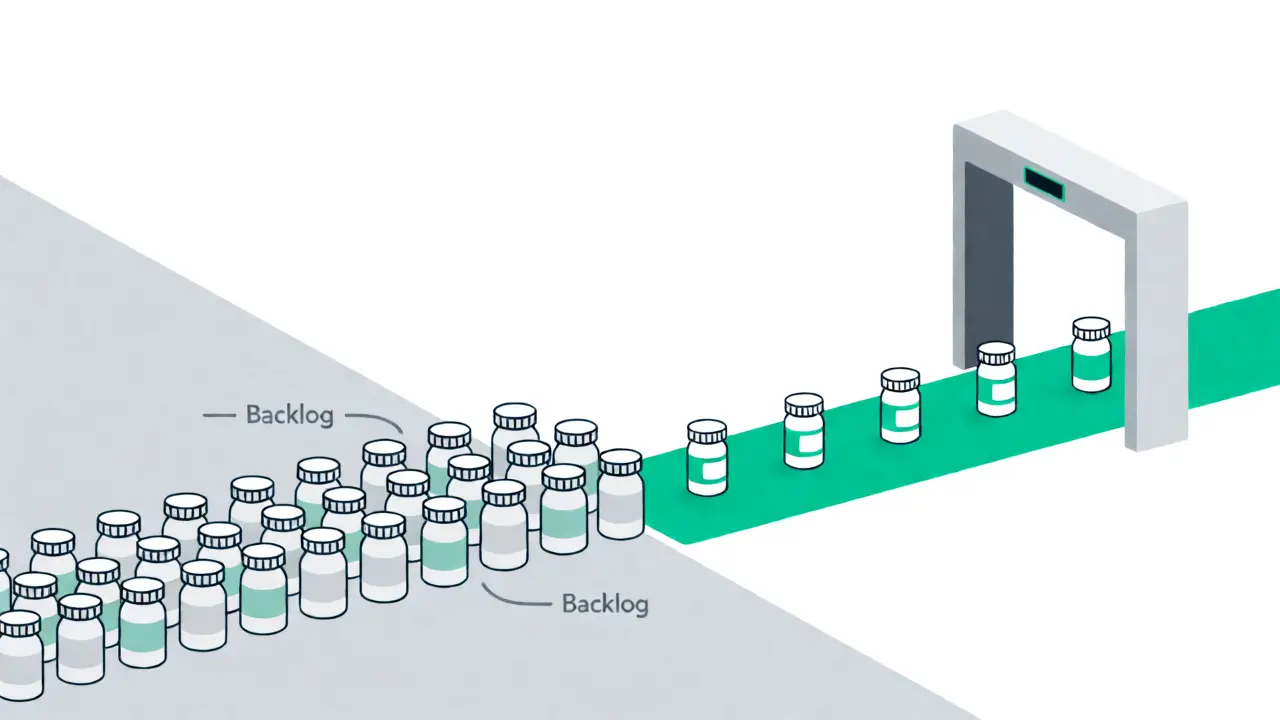
You might think the FDA is a government agency that simply works for tax dollars. But when it comes to generic drugs, the money often comes directly from the companies trying to get their products approved. This isn't a backroom deal; it's a legislative framework known as the Generic Drug User Fee Amendments, or GDUFA. If you are in the pharmaceutical industry, or just curious about why some generic pills hit shelves faster than others, understanding this law is non-negotiable.
The core problem GDUFA solves is simple: speed and capacity. Before 2012, the FDA was drowning in a backlog of Abbreviated New Drug Applications (ANDAs). Congress realized that relying solely on appropriations couldn't keep up with the sheer volume of submissions. So, they passed legislation allowing the FDA to collect fees from manufacturers to fund specific review activities. It’s a user-pays model designed to make the system more efficient. But how exactly does this legal structure impact your ability to bring a product to market? And what changed with the latest iteration, GDUFA III, which runs through 2027?
What Exactly Is GDUFA and Why Does It Exist?
At its heart, GDUFA is a series of laws that authorize the FDA to collect fees from generic drug manufacturers. These fees aren't general taxes; they are strictly earmarked for the review of generic applications and the inspection of manufacturing facilities. The first version, GDUFA I, was signed into law in 2012 under President Obama. Its goal was explicit: reduce the massive backlog of pending applications and improve the quality of reviews by hiring more staff and upgrading IT systems.
Think of it like paying for express lane access at an airport security checkpoint. You still have to go through the same rigorous checks, but the dedicated resources mean you move through them faster. For the FDA, these funds allowed them to hire specialized reviewers who understand the nuances of generic equivalence. Without GDUFA, the review process would likely still be bogged down by bureaucratic delays caused by funding gaps. The law requires reauthorization every five years, ensuring that the program stays relevant and responsive to industry changes. We are currently in the era of GDUFA III, which extends through September 30, 2027.
The Evolution: From GDUFA I to GDUFA III
Not all iterations of this law are created equal. Each five-year cycle has refined the approach based on what worked and what didn't. Understanding this history helps predict future regulatory hurdles.
GDUFA I (2013-2017) established the foundation. It introduced annual facility fees and application fees. While it successfully reduced the backlog, economists later pointed out a side effect: it created barriers to entry. Small manufacturers struggled with the fixed costs, while large incumbents with multiple products could spread those costs thinner. This led to concerns about market concentration.
GDUFA II (2018-2022) tried to fix this. Congress modified the fee structure to help smaller companies compete. They also expanded the scope to include more complex inspections. However, critics argued that the administrative burden remained high for new entrants.
GDUFA III (2023-2027) is the current standard. It places a heavier emphasis on transparency and performance metrics. The FDA now publishes monthly and quarterly reports showing exactly how well they are meeting their review goals. A major addition here is the Pre-ANDA Program, which allows companies developing complex generics to interact with the FDA before formally submitting their application. This early dialogue can save months of potential rejection and resubmission time.
| Feature | GDUFA I (2013-2017) | GDUFA II (2018-2022) | GDUFA III (2023-2027) |
|---|---|---|---|
| Primary Focus | Backlog reduction | Competitive balance | Transparency & Complex Generics |
| Key Program | Standard ANDA Review | Modified Fee Structure | Pre-ANDA Program |
| Reporting | Annual Reports | Quarterly Updates | Monthly/Quarterly Performance Data |
| Impact on Small Biz | High barrier to entry | Moderate relief | Continued focus on accessibility |
Who Pays and How Much?
If you are a manufacturer, GDUFA turns regulatory compliance into a direct line-item cost. The fee structure is complex because it differentiates between domestic and foreign entities, and between Active Pharmaceutical Ingredients (APIs) and Finished Dosage Forms (FDFs).
Under the initial GDUFA I rules, a domestic FDF facility paid around $175,000 annually, while a foreign one paid $190,000. Why the difference? Inspecting a factory in India or China costs the FDA significantly more than inspecting one in Ohio. Travel, logistics, and language barriers add up. The law builds this disparity into the fee schedule to cover actual inspection costs.
Beyond annual facility fees, there are one-time fees:
- ANDA Application Fee: Paid when you submit your main application.
- Prior Approval Supplement (PAS) Fee: Paid if you need to make significant changes to an already approved product.
- Drug Master File (DMF) Fee: Paid by API suppliers when their file is first referenced in an ANDA.
These costs are not negligible. For a small startup, paying hundreds of thousands of dollars upfront just to register facilities can be a make-or-break financial decision. This is why many small players partner with larger firms or delay market entry until they have sufficient capital.
How Fees Impact Review Times and Quality
The promise of GDUFA is predictable timelines. In exchange for paying these fees, manufacturers expect the FDA to meet specific performance goals. Under GDUFA III, the FDA commits to reviewing standard ANDAs within 10 months of submission. For priority reviews, the target is even shorter.
Has it worked? Generally, yes. The average review time has dropped significantly since 2012. The FDA now uses risk-based inspections, meaning they prioritize factories with a history of compliance issues or those producing critical sterile injectables. This smarter allocation of resources means fewer unnecessary visits to low-risk facilities and more scrutiny where it matters most.
However, predictability doesn't always mean speed. If your application has deficiencies, the clock stops. You enter a "refuse-to-receive" or "complete response" phase, which can add months to the timeline. The fees ensure the FDA has the staff to look at your file quickly, but they don't guarantee your file is perfect the first time.
Compliance Challenges for Manufacturers
Navigating GDUFA isn't just about writing a check. It requires robust regulatory affairs infrastructure. One of the biggest pain points for manufacturers is the self-reporting requirement. Every facility involved in making a generic drug-whether it makes the API or packages the final pill-must be registered and reported to the FDA.
This creates an unprecedented level of visibility into the global supply chain. The FDA knows exactly who is supplying whom. For manufacturers, this means strict data integrity is required. If you fail to report a facility change, you could face enforcement actions, including warning letters or even withdrawal of approval.
Another challenge is the complexity of modern generics. As branded drugs lose patent protection, the remaining opportunities are often in complex forms like inhalers, transdermal patches, or long-acting injectables. These require more scientific expertise to review. GDUFA III recognizes this by offering enhanced pathways for complex generics, but the bar for evidence is higher. You need more data, more testing, and more interaction with the FDA.
The Future: What Happens After 2027?
GDUFA III expires in September 2027. That sounds far away, but in regulatory terms, it's close. Negotiations for GDUFA IV will likely begin in 2026. Industry groups are already lobbying for adjustments.
Expect debates around digital submissions. The FDA is pushing for fully electronic processes, which could streamline reviews but requires manufacturers to invest in compatible software. There will also be continued pressure to adjust fees for small businesses. The trend toward consolidation in the generic market means fewer, larger players dominate, potentially reducing the political influence of small manufacturers in fee negotiations.
Ultimately, GDUFA represents a shift in how public health is funded. It acknowledges that keeping drug prices low and safety high requires consistent, dedicated funding streams. For the consumer, this means more affordable options. For the manufacturer, it means a clear, albeit expensive, roadmap to market entry.
Do all generic drug manufacturers have to pay GDUFA fees?
Yes, generally. Any company that manufactures or processes generic drugs for sale in the United States must register with the FDA and pay annual facility fees. Additionally, companies submitting Abbreviated New Drug Applications (ANDAs) must pay application fees. There are very few exemptions, primarily for certain nonprofit organizations or specific research contexts.
Why are fees higher for foreign facilities?
The FDA charges higher fees for foreign facilities to offset the additional costs associated with international inspections. Sending inspectors overseas involves travel expenses, visa processing, translation services, and longer durations compared to domestic inspections. The law explicitly allows for this differential to ensure the program remains financially sustainable.
What happens if a manufacturer fails to pay their GDUFA fees?
Failure to pay annual facility fees can result in severe consequences. The FDA may refuse to accept new applications from that manufacturer. In extreme cases, existing approvals could be withdrawn, and the facility may be barred from importing products into the United States until all outstanding fees are settled.
How does GDUFA III differ from previous versions regarding complex generics?
GDUFA III introduces specific enhancements for complex generic products, such as inhalers and injectables. It includes the Pre-ANDA Program, which allows for early scientific interactions between the FDA and sponsors. This helps clarify expectations for bioequivalence studies and other technical requirements before the formal application is submitted, reducing the likelihood of costly rejections.
Is the money collected through GDUFA used for all FDA activities?
No. By law, GDUFA funds are strictly ring-fenced for generic drug-related activities. This includes the review of ANDAs, inspections of generic drug facilities, and related oversight functions. The FDA cannot use these fees to fund the review of brand-name drugs, medical devices, or food safety programs.
Adam Cox
So let me get this straight. The FDA is basically a pay-to-play club now? If you don't have the cash to bribe the system with "fees," your generic drug just sits in limbo forever while big pharma laughs all the way to the bank. It’s not about safety, it’s about who can afford the subscription service for approval. I bet half these inspections are just rubber stamps for whoever paid the premium tier.
Tobi Oyewole
I appreciate the structured breakdown of GDUFA III. It is indeed fascinating how legislative frameworks evolve to address market inefficiencies.
The introduction of the Pre-ANDA Program seems like a logical step toward reducing redundant scientific inquiries. However, one must consider if the increased transparency truly democratizes access or merely favors those with sophisticated regulatory affairs teams. The philosophical underpinning here shifts from public duty to transactional efficiency, which carries inherent risks for smaller entities.
Sarah Kinch
honestly its just another tax on innovation disguised as help. small guys cant compete with the fees so they either sell out or die. sad but true.
Lolo Del
You're missing the nuance, friend. This isn't corruption; it's resource allocation. Before GDUFA, we had massive backlogs because Congress wasn't funding the FDA properly. Now, the industry pays for the speed they demand. It’s a trade-off. You want fast approvals? You pay for the reviewers. Simple economics, really. Don't overcomplicate it with conspiracy theories.
Pearl Richardson
👀 Wait a minute... 🤔 Why do foreign facilities pay MORE? 🌍 Is the FDA using our money to subsidize their international travel budgets? ✈️ And why are the reports only quarterly/monthly? 📅 What happens in between? 🕵️♀️ I smell a rat in the fee structure differential. 💸 They say it's for inspection costs, but maybe it's to discourage imports? 🚫 Or keep prices high for domestic monopolies? 🏭 We need full audit trails NOW! 🔍
fred eden
This is actually super helpful info! 😊 I never realized how much went into getting generics approved. It makes sense that they need dedicated staff for such complex reviews. 👍 Glad there's a focus on quality and not just speed. 🙌
larry williams
I think it is crucial for us to remember that behind every delayed generic is a patient waiting for affordable medication, and while the fee structure feels heavy for startups, the ultimate goal of bringing safe, effective, and accessible drugs to the American public remains the north star that guides this entire regulatory dance.
We should celebrate the fact that GDUFA has significantly reduced review times compared to the pre-2012 era, where applications could sit gathering dust for years without any clear timeline or accountability mechanism in place.
The shift towards risk-based inspections is also a positive development because it allows the FDA to allocate their limited resources more effectively, focusing on the facilities that pose the greatest potential risk to consumer safety rather than treating every factory with equal suspicion regardless of their compliance history.
Yes, the barriers to entry are real, and yes, small manufacturers struggle, but the consolidation trend might eventually lead to more robust companies with better infrastructure, which could ultimately benefit consumers through more reliable supply chains and higher quality standards across the board.
Let's not forget that the alternative-underfunded agencies causing bottlenecks-is far worse for public health than a user-fee model that ensures consistent staffing and expertise within the agency itself.
As we look toward GDUFA IV, I remain optimistic that the dialogue between industry and regulators will continue to mature, finding a balance that supports innovation while protecting the vulnerable populations who rely on these medications for their daily survival and well-being.
Stephen Horn
One must recognize that this system inherently favors capital-intensive entities. The 'user-pays' model is merely a euphemism for oligarchic control over public health outcomes. By placing the financial burden on manufacturers, the FDA effectively privatizes the gatekeeping function, allowing large conglomerates to absorb these costs while stifling competition from agile, smaller innovators. This is not efficiency; it is systemic exclusion masked as bureaucratic modernization. The data integrity requirements further exacerbate this disparity, creating an insurmountable administrative moat around established players.
hareesh kumar
OMG WAIT!!! 🚨 Do u realize what this means?? 🤯 The FDA is literally selling slots!! 💰 If u cant pay $190k for a foreign facility u r OUT!! 🚪 Its not about safety anymore its about WHO PAYS THE MOST!! 💸 And dont get me started on the 'risk based' inspections... sounds suspicious to me!! 🕵️♂️ Maybe they just inspect who they like?? 👀 Or who bribes them best?? 🎁 I saw a report once that said inspections were skipped due to budget cuts even WITH fees... LIES!! 🤥 Everything is rigged against the little guy!! 😡 We need to protest this!! ✊ GDUFA is just Big Pharma protectionism wrapped in legal jargon!! 📜 Wake up people!!! ⏰
Gurjit Singh
It is morally questionable to charge patients indirectly through higher drug prices to fund government operations that should be covered by taxes. When we allow corporations to buy expedited reviews, we compromise the ethical standard of equal access to healthcare. The spirit of public service is lost when efficiency is purchased rather than provided. We must advocate for fully funded regulatory bodies to ensure that justice is not sold to the highest bidder.
Morgan Law
Hey everyone, great discussion here! 🌟 Just wanted to add that for many of us working in mid-size firms, the Pre-ANDA program has been a total game-changer. Seriously, having that early feedback loop saved us months of guesswork on bioequivalence studies.
It doesn't eliminate the cost hurdle, sure, but it definitely reduces the risk of costly rejections later down the line. For anyone looking to enter the US market, especially with complex generics, engaging early with the FDA is probably the smartest move you can make right now. Don't wait until submission to find out you missed something obvious!
Sarah Leitschuh
I hear the frustration regarding the fees, and it's valid. But let's look at the bigger picture: without GDUFA, the backlog would likely still be crippling the generic market today. The key is ensuring that the fee waivers for small businesses are actually accessible and not buried in red tape.
We need to push for more support for new entrants so that the system doesn't become a closed shop for giants. Transparency is good, but actionable support for smaller players is better. Let's keep the pressure on for equitable adjustments in the next cycle.
Kimberly Thomas
Your optimism is naive. The 'small business relief' mentioned in GDUFA II was largely cosmetic. In practice, the administrative overhead required to qualify for those waivers often exceeds the savings. Most small manufacturers simply cannot navigate the labyrinthine reporting requirements without hiring expensive consultants, which negates the benefit entirely. The system is designed to filter out the weak, not empower them. Accept it.